

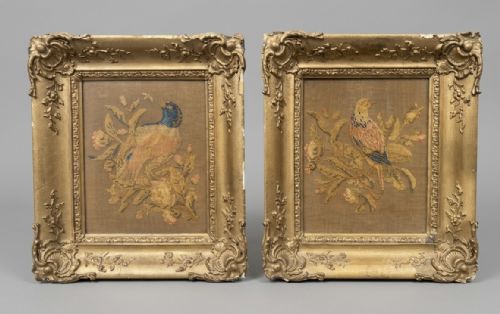


Gold Needlepoint Picture
A gold needlepoint picture brings richly textured metallic thread and delicate silk work into interiors, offering centuries of decorative needlecraft.
Gold Needlepoint Picture
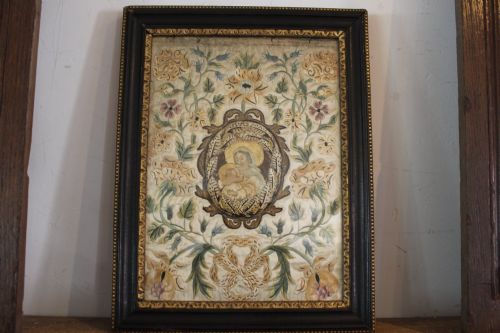
A gold needlepoint picture encompasses historic textile art framed for wall display, ranging from seventeenth century stumpwork panels to nineteenth century Berlin woolwork and silk embroideries.
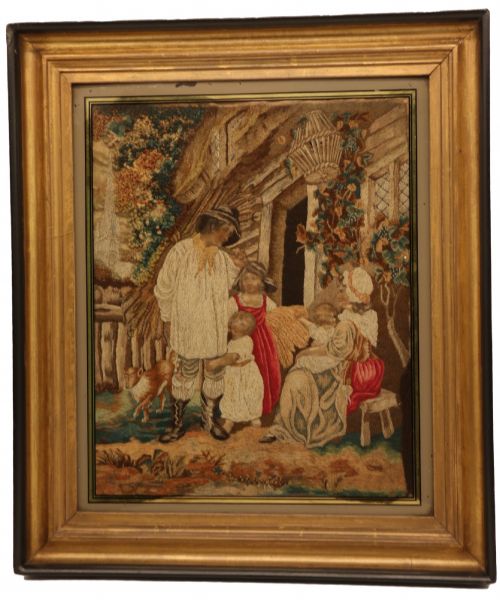
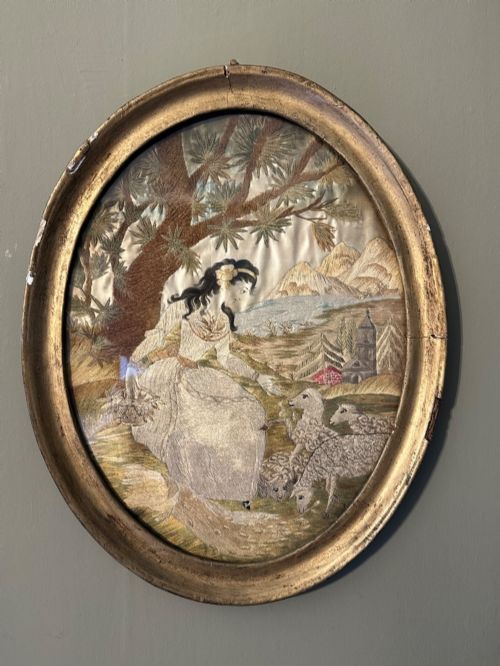
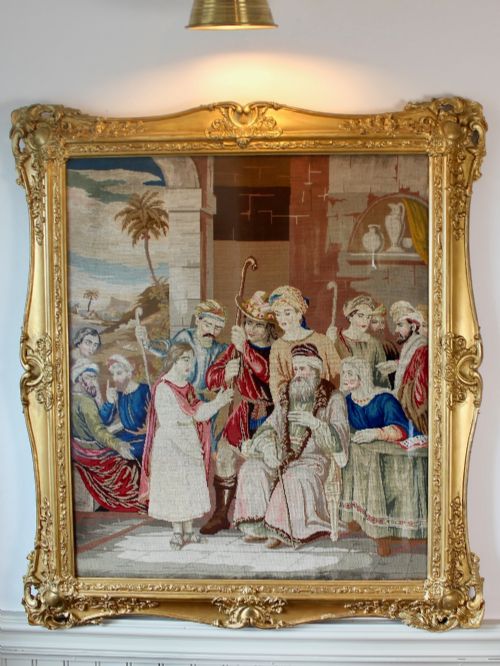
The versions most frequently encountered on this page date from the nineteenth century and the Georgian period, often depicting pastoral scenes, portraits, or historic subjects within period frames.
Makers utilised canvas, silk, and wool alongside metallic thread to construct these detailed wall hangings, housing them in glass-fronted giltwood or black glass frames.
How they were made
Craftsmen worked stitches onto a canvas or silk ground, integrating wool and metallic thread to highlight specific areas of the design such as royal garments or architectural elements.
Many examples combine needlework with hand-painted silk or watercolour details, capturing facial expressions and background landscapes directly onto the fabric before framing.
Completed textile panels were secured behind glass and mounted within giltwood frames, occasionally incorporating water gilding or mezzotint borders to complement the shimmering threads.
Listings feature eighteenth century silk embroideries in octagonal gilt wood frames and nineteenth century Berlin woolwork pictures.
What varies in quality
The preservation of the delicate silk and metallic threads dictates the visual impact of the piece, as age and light exposure can alter textile integrity.
Original frames, particularly period giltwood or black glass surrounds, elevate the authenticity and visual harmony of the artwork compared to later replacements.
The complexity of the stitchwork, from long stitch and crewel work to intricate stumpwork, separates standard decorative panels from masterworks of needlecraft.
The Gold Needlepoint Picture Glossary
- Stumpwork
- Raised embroidery popular in the seventeenth century, often depicting historical or royal figures with padded three-dimensional elements. It required specialist needle skills.
- Berlin woolwork
- A type of needlepoint popular in the nineteenth century worked on canvas from printed coloured grid patterns. It utilised bright wools to create vivid pictorial scenes.
- Giltwood
- Wood carved and coated with gold leaf or gold paint, frequently used for picture frames during the Georgian and Victorian periods. This finish added reflective warmth to interiors.
- Crewel work
- Embroidery executed with wool yarn on a fine linen or canvas ground, known for flowing floral and fauna motifs. It has a long history in English textile art.
- Mezzotint glass
- Dark glass borders used in framing, particularly popular in the Regency period around silk embroideries. It created a deep, contrasting frame around the textile.
Gold Needlepoint Picture: Frequently Asked Questions
How should I hang a needlework picture?
Keep textile art away from direct sunlight and damp environments to protect the fragile silk, wool, and metallic threads from fading and deterioration.
Ensure the frame is securely hung from structural wall fixings rather than lightweight picture wire, given the combined weight of the wood, glass, and panel.
What periods do these pictures come from?
The selections span several centuries, including seventeenth century stumpwork, eighteenth century classical compositions, and nineteenth century Victorian and Regency works.
Victorian and nineteenth century examples are the most common variants found within these listings, reflecting the popularity of domestic needlecraft during those eras.
Are the frames original to the pieces?
Many retain their period giltwood, oval, or black glass frames, which were selected by makers to complement the metallic threads and silk backgrounds of the needlework.
Examining the joinery and backing of the frame helps determine whether the presentation matches the era of the textile artwork inside.
What materials make up these artworks?
The primary components include canvas or silk grounds stitched with wool, silk, and metallic threads, sometimes accompanied by hand-painted watercolours.
Protection is provided by glass panels set within wooden frames, which safeguard the historic textiles from dust and physical handling.