

Framed Needlepoint Tapestry
Framed needlepoint tapestry brings centuries of hand-stitched artistry to your walls, offering textured scenes of classical portraits, animals, and landscapes.
Framed Needlepoint Tapestry
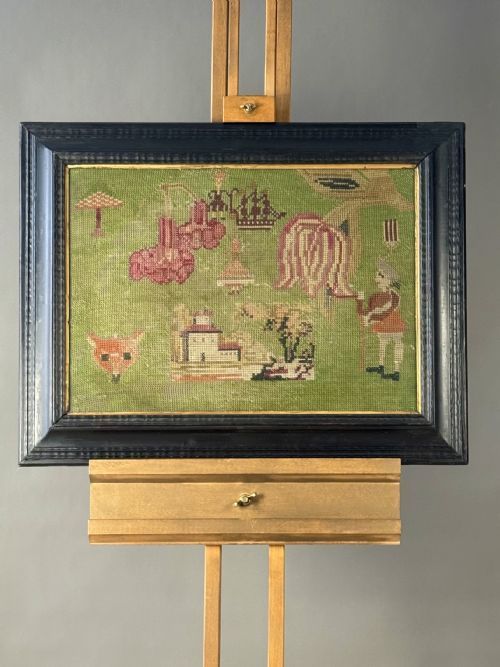
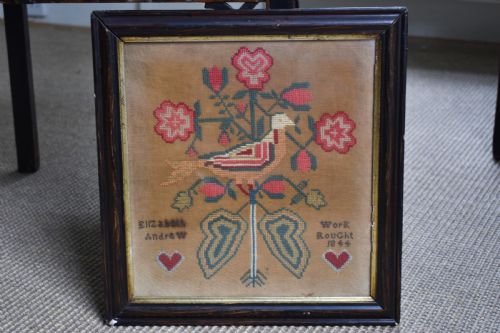
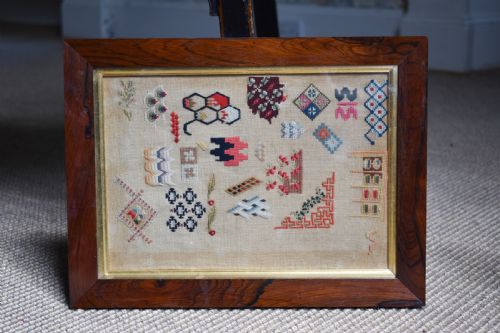
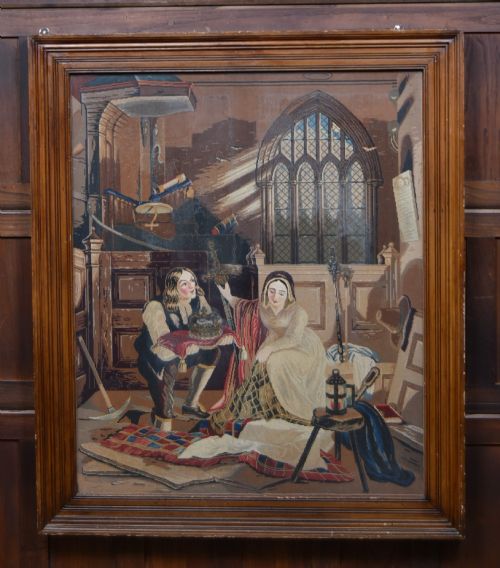
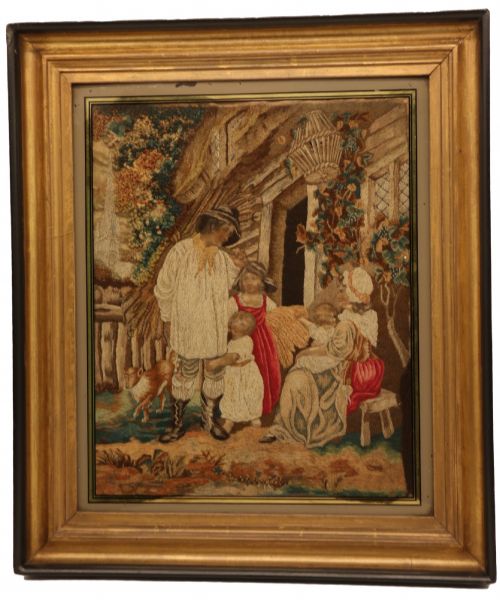
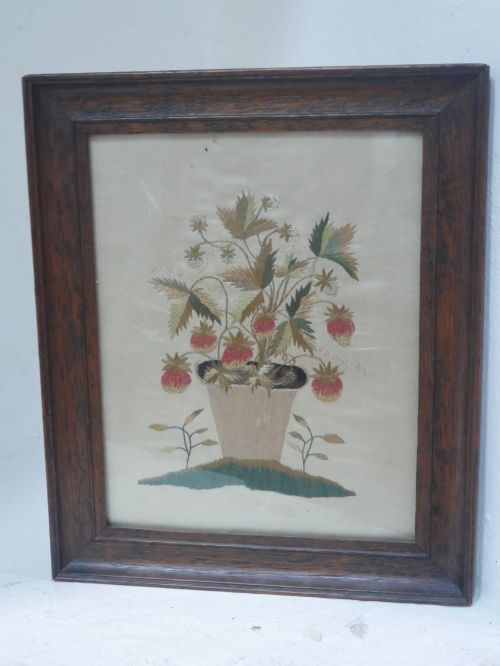
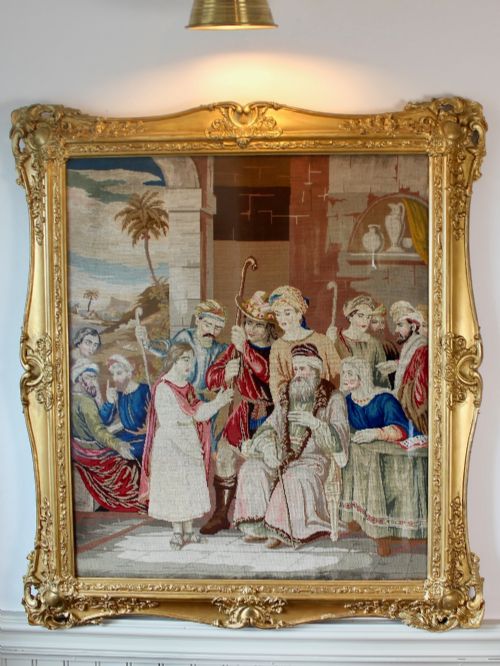
A framed needlepoint tapestry typically presents as a textile wall hanging, decorative panel, or sampler executed on canvas or linen. When you search for framed needlepoint tapestry, you encounter works ranging from 17th-century classical embroidered panels and 18th-century silk pictures to Victorian Berlin woolwork and 19th-century portraits.
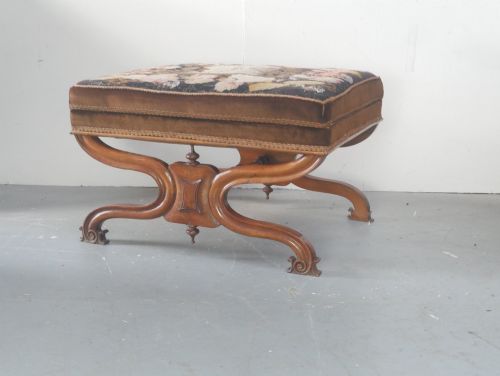
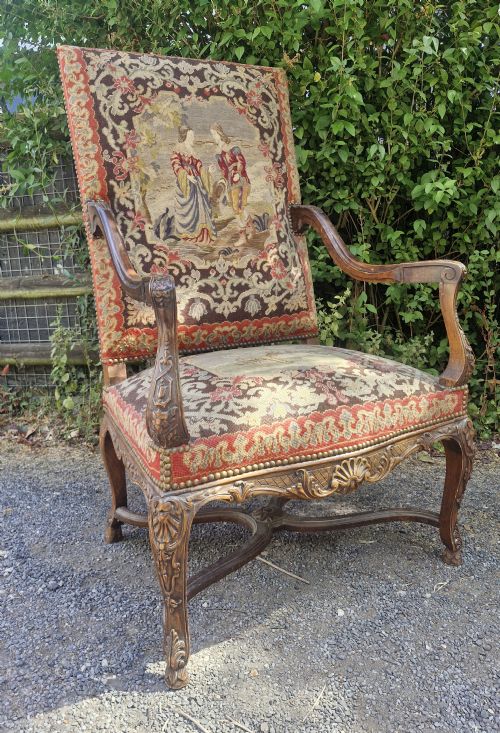
The format also extends to functional pieces where the textile is incorporated into furniture such as armchairs, stools, and salon chairs. On this page, wall art panels and framed pictures dominate the selection alongside occasional upholstered seating.
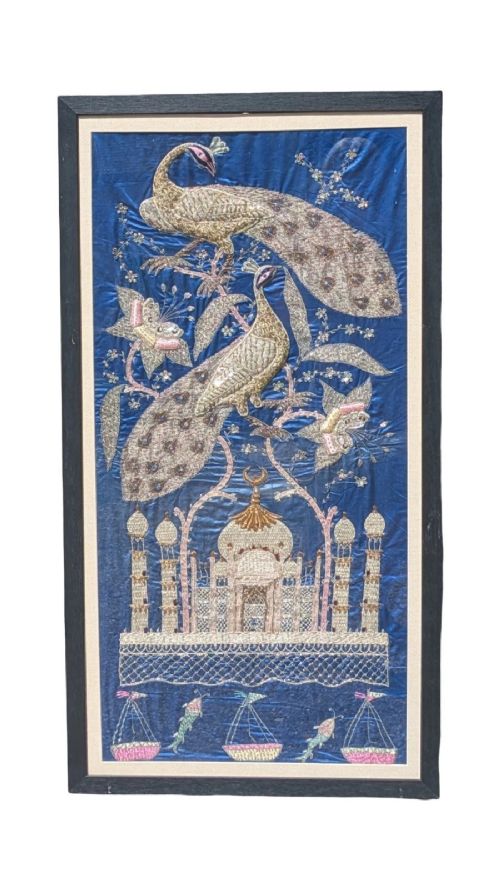
Origins span across Britain, France, Italy, Sweden, China, and Scotland, showcasing diverse regional aesthetics from Scottish baronial subjects to Tuscan noblemen and Dutch silk embroidery.
Materials and Techniques
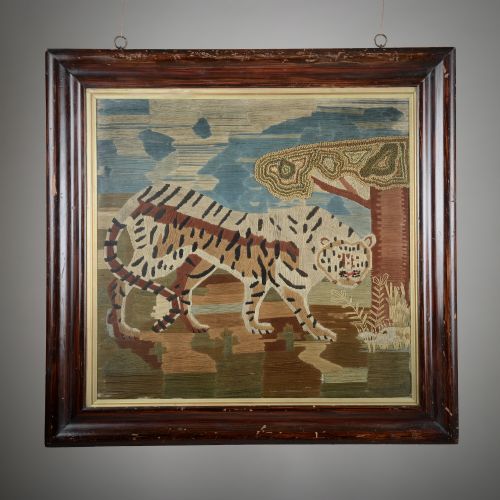
Makers utilised natural foundations of linen and canvas, working stitches in wool, silk, and metal thread. Woolwork, gros-point, petit point, crewelwork, and plushwork provide varied surface textures from flat silk depictions to raised plush animal coats.
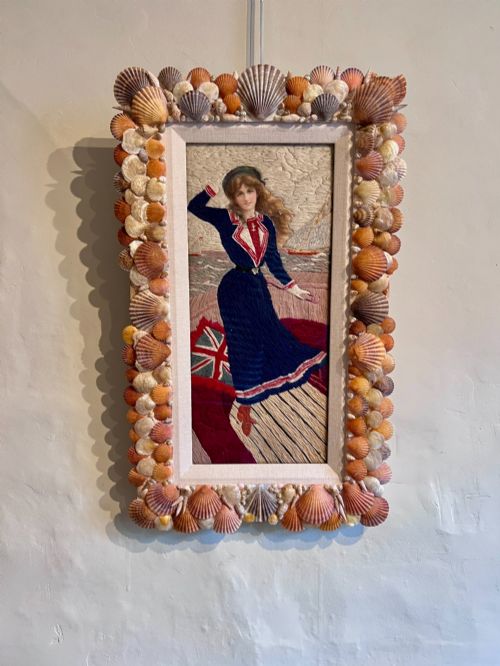
Needlework pictures often incorporated hand-painted silk sections alongside embroidery, while beadwork fragments introduced glass elements to hunting scenes and decorative panels.
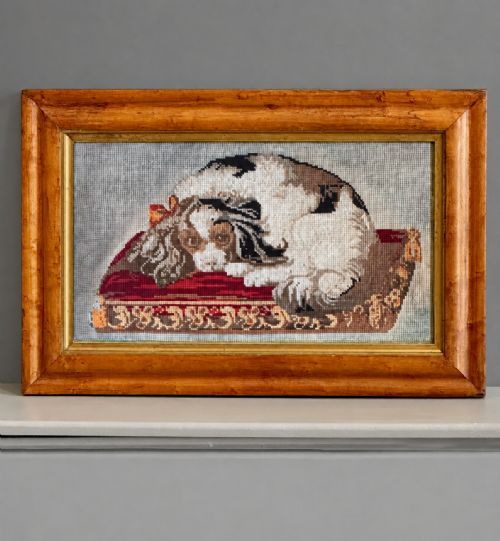
Mounting typically involved bespoke surrounds, including burr maple, walnut, carved wood, giltwood, and specialised Verre Églomisé glass frames that protected the delicate textiles.
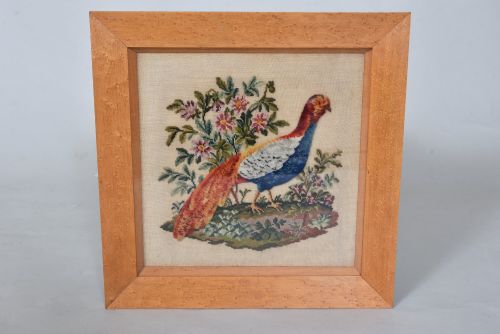
King Charles Spaniels stare out from Victorian frames, immortalised in wool alongside pheasant plushwork and Napoleon.
Evaluating Needlepoint Tapestry
Quality rests upon the fineness of the stitch execution and the complexity of the design, where dense petit point work achieves greater facial and tonal detail than coarser Berlin woolwork. The fidelity of proportion in human and animal figures distinguishes master execution from simpler folk art interpretations.
The preservation of original colour saturation in the silk and wool threads separates superior examples from those with extensive fading or repairs. Furthermore, the presence of the original period frame, such as burr maple or giltwood, enhances the integrity of the piece.
The Framed Needlepoint Tapestry Glossary
- Berlin Work
- A style of charted needlepoint popular in the 19th century that utilised brightly coloured wools. It allowed makers to stitch elaborate pictorial scenes using printed grid patterns.
- Petit Point
- A fine needlepoint stitch worked over a single thread of the canvas mesh. This technique permits intricate detail and shading in faces and complex motifs.
- Crewelwork
- Traditional embroidery executed with wool yarn on a linen or cotton substrate. It often employs a variety of curved stitches to render floral and botanical designs.
- Plushwork
- A specialised embroidery technique featuring looped or cut pile stitches. It creates a raised, tactile surface frequently used to depict animal fur and plumage.
- Verre Églomisé
- A gilded and painted glass technique used for decorative framing borders. It adds a reflective, dark perimeter that frames the central textile work.
Framed Needlepoint Tapestry: Frequently Asked Questions
How do I date an old tapestry?
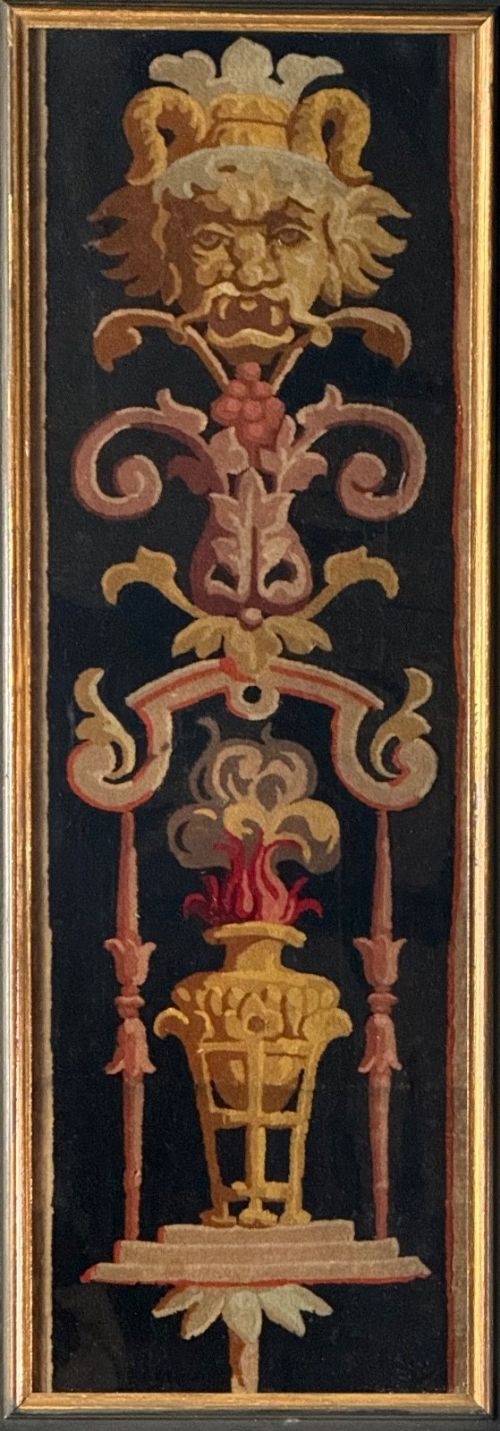
Dating relies on stylistic clues, framing materials, and subject matter. 17th-century pieces often feature classical masks and grotesques, while 19th-century works frequently display Berlin woolwork or Victorian sentimental subjects.
Examination of the backing canvas, thread types, and construction of the wooden frame provides further chronological indicators.
Where should I hang these textiles?
These works suit interior walls in libraries, hallways, or living spaces where they add historic texture and colour. Protection from direct sunlight is essential to prevent the fading of wool and silk threads.
Maintaining stable room humidity ensures the preservation of both the textile and its wooden or gilt frame.
What is Berlin work?
Berlin work refers to a needlepoint method that gained immense popularity during the Victorian era. It involved stitching coloured wool onto canvas by following a numbered grid pattern.
This innovation allowed domestic makers to produce elaborate pictorial scenes of animals, historical figures, and floral compositions with ease.
Are these works hand stitched?
Historical needlepoint tapestries and framed pictures are entirely hand-stitched creations. Makers laboured over canvas and linen using needles and various yarns to build up the pictorial surface stitch by stitch.
Machine replication of these specific historical needlework techniques did not exist during the periods represented in these pieces.