


Gold Mounted Desk
Gold mounted desk pieces combine practical writing surfaces with precious metal fittings, offering both utility and refined craftsmanship for a study.
Gold Mounted Desk
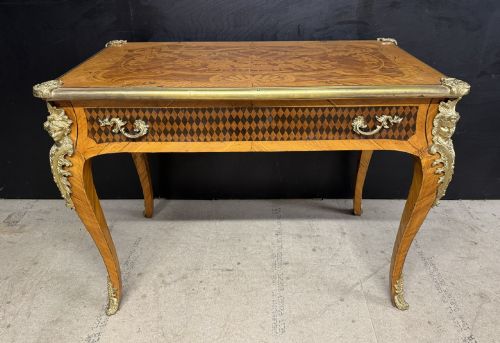
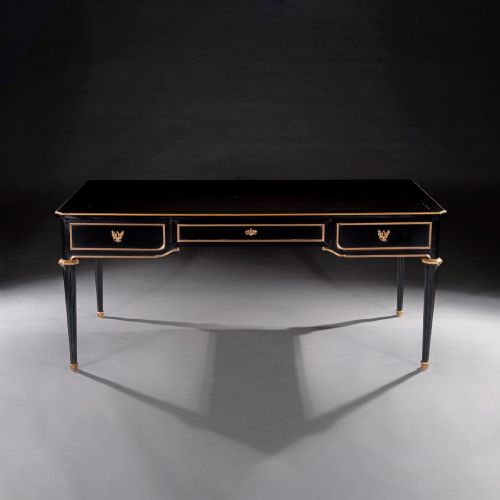
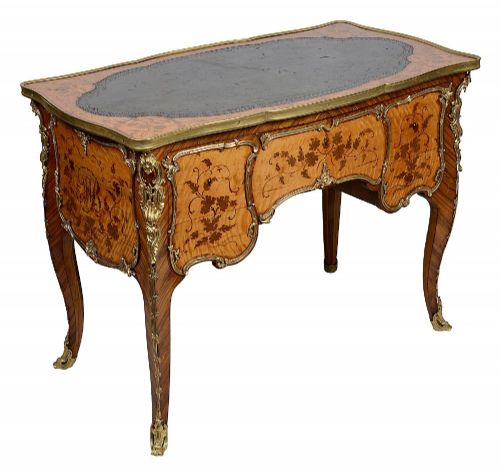
A gold mounted desk typically takes the form of a bureau plat or writing table, often created in French styles such as Louis XV or Louis XVI. These pieces provide a dedicated writing surface combined with decorative metal mounts that enhance their architectural lines.
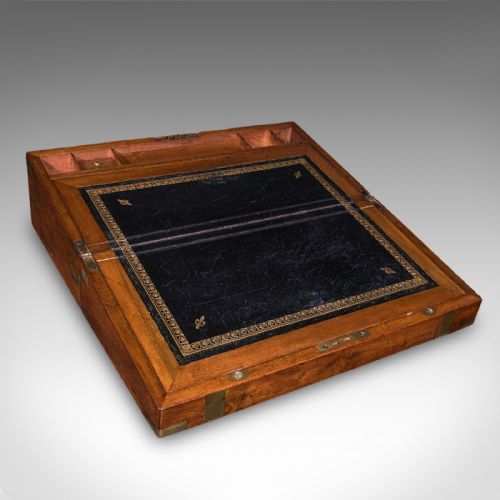
The selection frequently includes related writing furniture and accessories like writing slopes and bureau de dame examples from the nineteenth century. Buyers encounter various woods alongside applied bronze, brass, and gold elements.
Originating largely from European workshops during the Victorian and Edwardian periods, these tables serve both decorative and functional roles in traditional interiors. Their defining characteristic remains the integration of metal mounts onto wooden frames.
Materials and construction methods
Cabinetmakers utilised hardwoods such as mahogany, kingwood, walnut, and ebonised timber to build the foundational carcasses of these writing tables. Marquetry and wood inlay frequently embellish the flat surfaces, providing intricate geometric or floral patterns.
Metal mounts in ormolu, gilt bronze, brass, and gold are cast and chased separately before being applied to the corners, edges, and aprons of the furniture. These metallic elements accentuate the structural contours and protect vulnerable areas of the wooden frame.
Distinctions in quality
The refinement of the metal mounts largely determines the standard of a piece, with finely chased ormolu displaying crisp detail and deep articulation compared to simpler brass castings. Artisans who spent hours hand-finishing bronze mounts achieved a level of depth that elevates the entire object.
Joinery execution and timber selection reveal the skill of the original workshop, particularly in how marquetry veneers align across drawers and tops. Cohesive design between the wooden carcass and the applied metal elements separates standard production items from masterworks.
Cartier·Louis Goret·Paul Sormani·Montblanc
The Gold Mounted Desk Glossary
- Bureau plat
- A freestanding writing table, typically with drawers along the frieze, designed to sit in the centre of a room rather than against a wall.
- Ormolu
- Gilded bronze applied as a decorative mount to furniture, clocks, and lighting fixtures during the eighteenth and nineteenth centuries.
- Marquetry
- The art of applying pieces of veneer to a structure to form decorative patterns, often using exotic woods.
- Bureau de dame
- A lady's small writing desk, frequently fitted with compartments and drawers for correspondence.
- Frieze
- The middle horizontal member of a classical entablature, often adapted to form the drawer section beneath a desk top.
Gold Mounted Desk: Frequently Asked Questions
How do I care for wood and ormolu?
Maintain wooden surfaces with appropriate waxes and keep them away from direct sunlight and sudden temperature changes. Dust metal mounts gently with a soft brush without using abrasive cleaning agents.
Proper humidity control prevents the wood from warping and protects the stability of applied bronze and gold elements.
Are these desks suitable for daily use?
Many antique writing tables remain sturdy enough for contemporary laptop use or correspondence. Leather or fabric inserts on the top provide durable writing surfaces.
Consider the height and knee clearance of nineteenth-century models, as older desks often sit lower than modern standard office furniture.
How do I identify French revival styles?
French revival pieces from the nineteenth century emulate the curved cabriole legs and floral marquetry of Louis XV or the geometric symmetry of Louis XVI. Look for characteristic ormolu sabot feet and mounts echoing earlier court furniture.
Craftsmen during the Victorian and Edwardian eras revived these aesthetics using period timber and traditional casting techniques.