
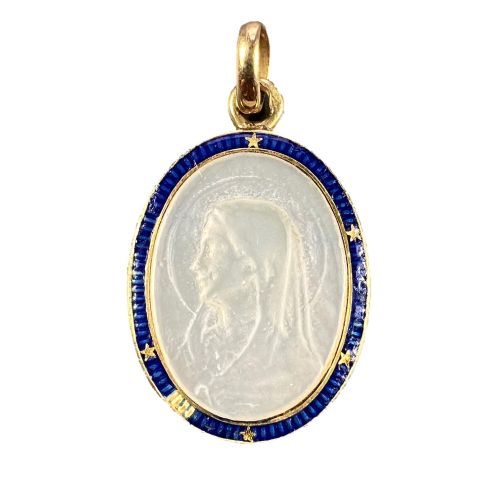
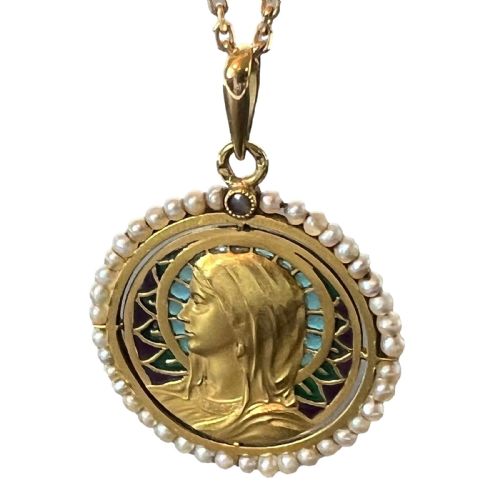
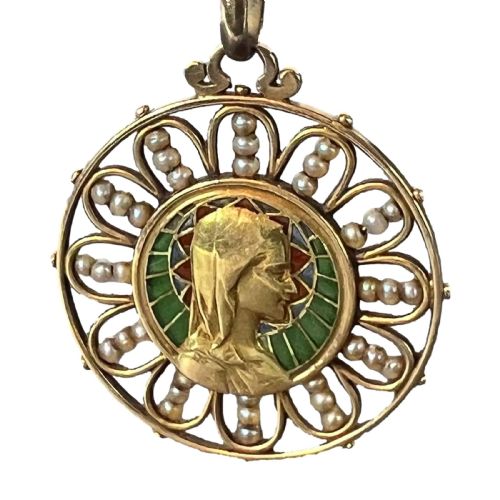


Gold Madonna Pendant
These gold madonna pendant pieces combine French devotional artistry with fine metalwork, offering collectors wearable historical devotion.
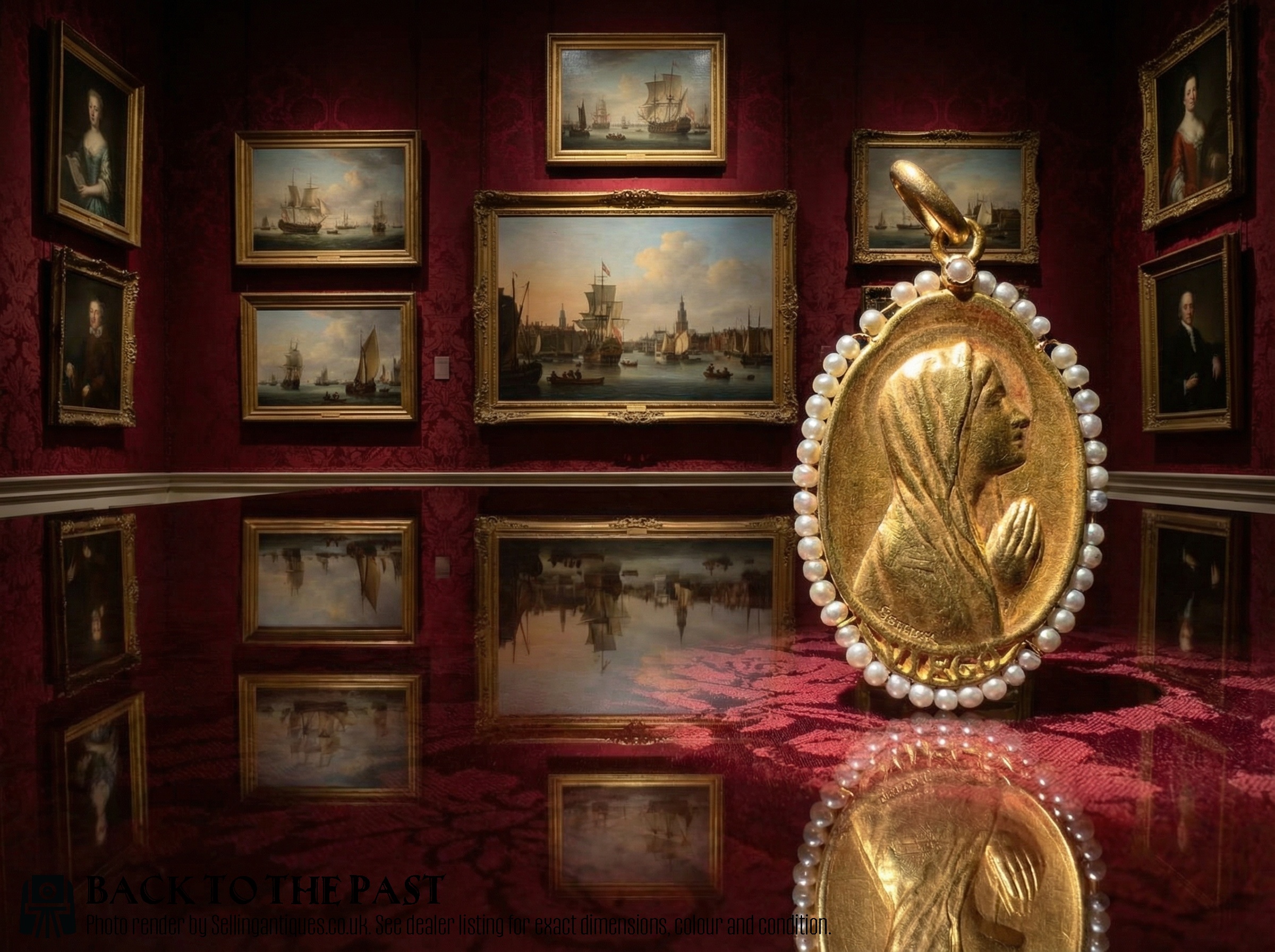
Gold Madonna Pendant
A gold madonna pendant represents a distinct category of devotional jewellery, predominantly originating from French workshops during the late nineteenth and early twentieth centuries. These objects typically take the form of small medals or charms depicting the Virgin Mary, the Madonna and Child, or the Sacred Heart.
Most examples found in current collections date from the period between 1890 and 1950, spanning styles from Art Nouveau to mid-century ecclesiastical design. They serve as personal religious tokens that double as miniature works of medallic art.
Materials and Construction Techniques
The primary structural metal across these pieces is 18ct yellow gold, sometimes paired with white or rose gold accents, shaped through stamping, casting, and piercing. Artisans integrated translucent plique-a-jour enamel and iridescent mother of pearl to create luminous backgrounds for the sacred figures.
Fine surface detailing frequently incorporates tiny seed pearls and delicate engraved borders. These techniques allowed makers to produce intricate devotional imagery within a compact, wearable format.
Gold Madonna Pendant Retail Price Guide 2026
Typical asking prices for gold madonna pendant among the pieces listed under this phrase on Sellingantiques today, from the lower quarter to the upper quarter. They describe what is for sale here now, not the wider market.
Tiny seed pearls were often hand-stitched or prong-set to frame the tiny halo of the Virgin Mary.
Evaluating Quality and Craftsmanship
Quality in a gold madonna pendant is determined by the crispness of the medallic relief and the finesse of the metal piercing. Pieces designed by recognised sculptors or medallists exhibit superior facial expression and anatomical precision in the figures.
The complexity of the surrounding enamel work and the integration of secondary materials like seed pearls further distinguish standard production items from exceptional workshop examples.
Emile Monier·Emile Dropsy·Oscar Roty
The Gold Madonna Pendant Glossary
- Plique-a-jour
- An enamelling technique where the enamel is applied without a backing, allowing light to shine through the transparent or translucent colour much like stained glass.
- Medal
- A flat piece of metal struck or cast with an inscription and pictorial design, frequently pierced at the top for suspension as a pendant.
- Seed Pearl
- Very small natural or cultured pearls, often used in historic jewellery to outline motifs or accent frames.
- Sacred Heart
- A Christian devotional symbol representing the physical heart of Jesus Christ as a representation of his divine love for humanity.
- Art Nouveau
- An international style of art and architecture that peaked in popularity around the turn of the twentieth century, characterised by asymmetrical organic lines and natural motifs.
Gold Madonna Pendant: Frequently Asked Questions
What metals are used in these pendants?
These devotional pieces are constructed primarily from 18ct yellow gold, with occasional variations featuring white gold, rose gold, or higher gold purities.
Makers frequently combined the warm tone of yellow gold with contrasting materials such as mother of pearl, enamel, and seed pearls to enhance the visual depth of the religious imagery.
How were these religious medals worn?
Historically, these items functioned as personal devotional objects worn close to the heart on a chain or ribbon.
Many examples include integrated suspension loops designed specifically for attachment to charm bracelets or fine necklaces.
How do I identify the period of a pendant?
Dating relies heavily on stylistic markers, such as the flowing organic curves typical of Art Nouveau pieces from around 1900 compared to later mid-century designs.
Maker marks and workshop signatures stamped into the gold frame also provide precise chronological reference points.
Who made these French devotional medals?
A significant portion of these items originated in specialised French workshops and studios that employed master medallists and sculptors.
Renowned artists such as Emile Dropsy and Oscar Roty designed many of the most detailed religious reliefs found on these pieces.