



Gold Leaf Salon Chair
A gold leaf salon chair brings enduring French decorative influence into a room through gilded woodwork and traditional seating forms.
Gold Leaf Salon Chair
A gold leaf salon chair comprises seating forms intended for formal entertaining, appearing in variations from the eighteenth century through the twentieth century. These pieces encompass open armchairs, bergères, fauteuils, and side chairs created within European revivalist aesthetics.
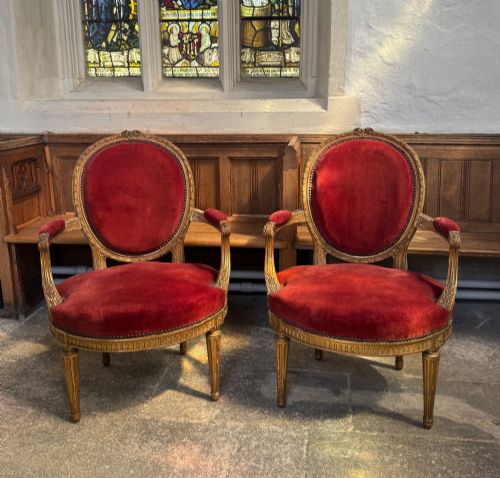
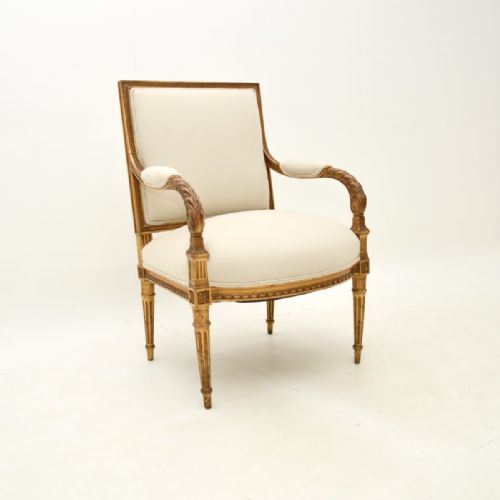
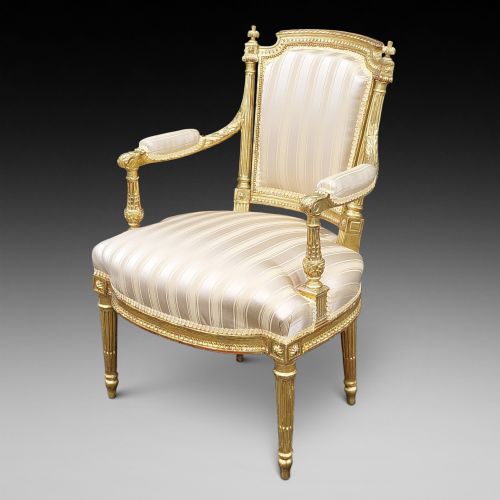
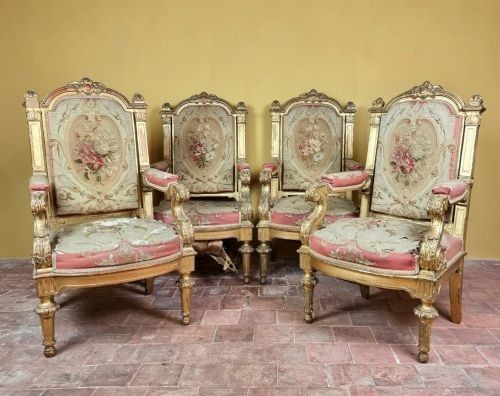
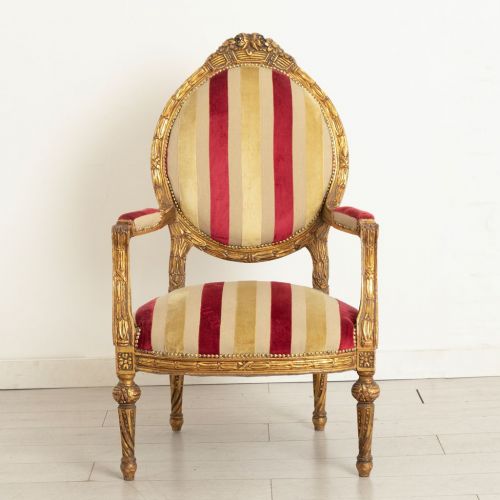
The most common examples on this page are nineteenth-century French armchairs following Louis XVI style, featuring carved giltwood frames and upholstered seats. Buyers also encounter pairs and larger sets alongside occasional side chairs and complete salon suites.
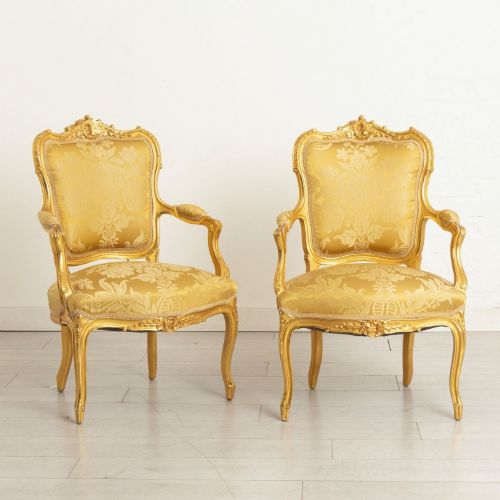
Origins span French, English, and Italian workshops, reflecting historical revivals of Rococo, Baroque, and neoclassical designs. Such chairs function as decorative focal points while offering functional seating in reception spaces.
How they were made
Construction relies upon timber frames, predominantly beech or general wood, shaped through traditional joinery and hand carving. Artisans applied thin sheets of gold leaf or gilding over prepared surfaces to achieve a lustrous metallic finish.
Upholstery techniques incorporate textiles such as silk, velvet, and fabric to line the seats and backs. Many pieces retain period upholstery or have been newly recovered in complementary silk designs.
Gold Leaf Salon Chair Retail Price Guide 2026
Typical asking prices for gold leaf salon chair among the pieces listed under this phrase on Sellingantiques today, from the lower quarter to the upper quarter. They describe what is for sale here now, not the wider market.
Materials recorded across the inventory include solid wood, beech timber, giltwood, and various textiles such as silk and velvet.
What varies in quality
The sophistication of the hand carving on the wooden frame distinguishes standard production from exceptional examples, with deeper relief work and crisper floral or classical motifs indicating superior craftsmanship. The precision of the gilt application and the condition of the underlying gesso also separate pieces.
The integration of the upholstery with the timber frame affects the overall coherence of the chair. Suites and matched pairs command distinct interest due to the survival of complete sets over isolated seating.
Blaise Maucuy
The Gold Leaf Salon Chair Glossary
- Fauteuil
- An open-armed upholstered armchair originating in France, characterised by exposed wooden framing around the back and seat. These chairs typically feature padded armrests and were designed for formal domestic interiors.
- Giltwood
- Timber that has been coated with gold leaf or gilding powder over a prepared base. This surface treatment provides a brilliant metallic sheen that defines much nineteenth-century decorative furniture.
- Bergère
- An enclosed armchair with upholstered sides set into a wooden frame, offering a deeper and more enclosed seat than an open armchair. They frequently include loose squab cushions.
- Louis XVI Style
- A neoclassical design vocabulary marked by straight tapered legs, geometric symmetry, and classical motifs such as fluting and ribbaned wreaths. This style experienced widespread revival during the nineteenth century.
- Rococo
- An ornate design movement characterised by asymmetrical C-scrolls, shell motifs, and naturalistic foliage. Revival pieces from the nineteenth century often exaggerate these curving, flamboyant lines.
Gold Leaf Salon Chair: Frequently Asked Questions
What is a gold leaf salon chair used for?
These chairs were historically placed in formal reception rooms and drawing rooms for entertaining guests and social gatherings. Today, they serve as accent seating or decorative statements in living spaces and bedrooms.
Their striking gilded frames and traditional upholstery allow them to function as both practical seats and notable decorative objects within an interior scheme.
How do I identify Louis XVI style?
Louis XVI style is distinguished by straight, fluted legs, symmetrical compositions, and neoclassical motifs like ribbons and acanthus leaves. This contrasts sharply with the curved, asymmetrical lines of earlier Rococo designs.
Frames in this style often display rectangular or oval backs supported by structurally rigorous timber work rather than sweeping serpentine curves.
Are these chairs comfortable to sit in?
Most salon chairs are built with upright proportions intended for formal posture rather than lounging. Their upholstered seats and padded armrests provide moderate comfort suitable for sitting during conversation.
Deep bergère variations offer a more enclosed and relaxed seating experience compared to open-armed fauteuils or rigid side chairs.
How can I tell the age of a giltwood chair?
Dating relies upon examining the timber construction methods, the wear patterns on the gilding, and the stylistic vocabulary of the carving. Nineteenth-century revival pieces often emulate eighteenth-century models but reveal distinct nineteenth-century tool marks and assembly techniques.
Reference to specific historical revivals, such as Regency or Edwardian interpretations, helps anchor the manufacturing period.