




Gold Leaf Pastoral Painting
A gold leaf pastoral painting captures idyllic rural life within a gleaming gilded frame, offering a glimpse into idealised country scenes.
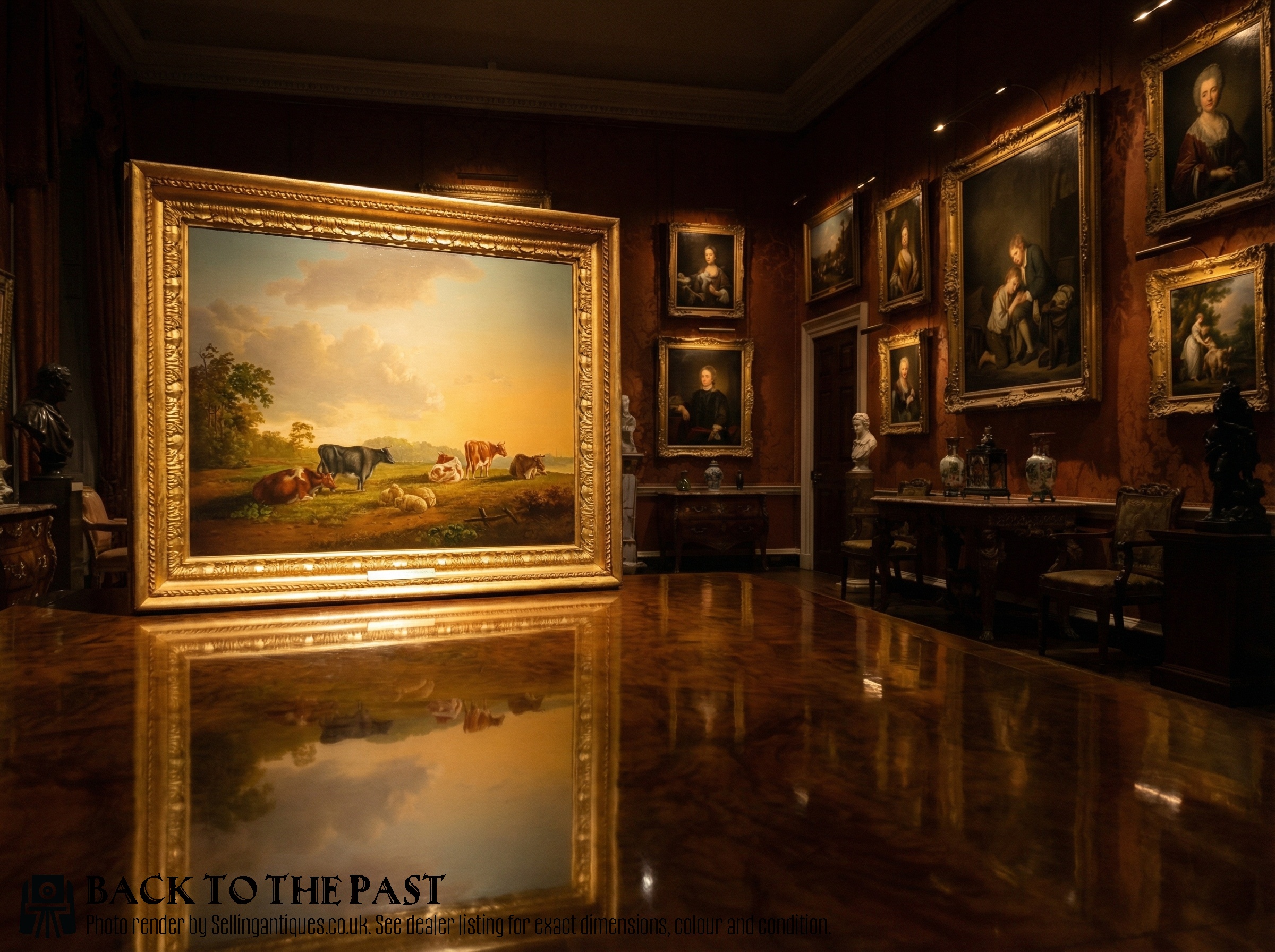
Gold Leaf Pastoral Painting
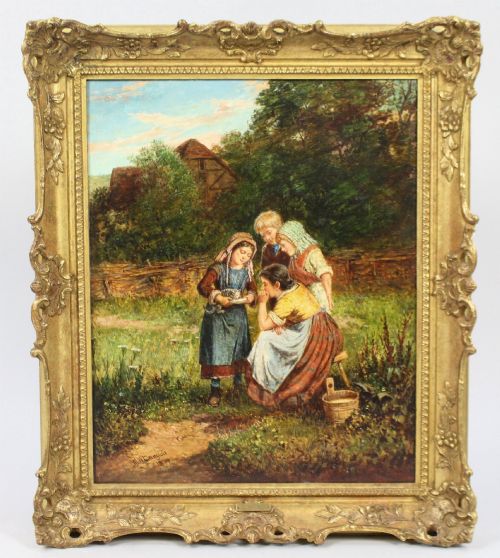
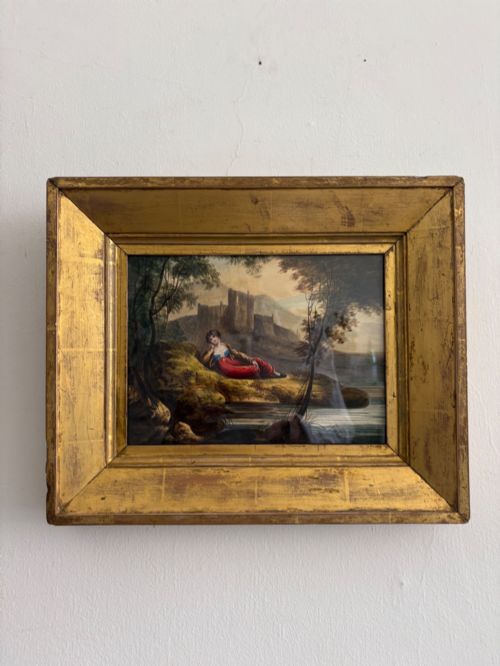
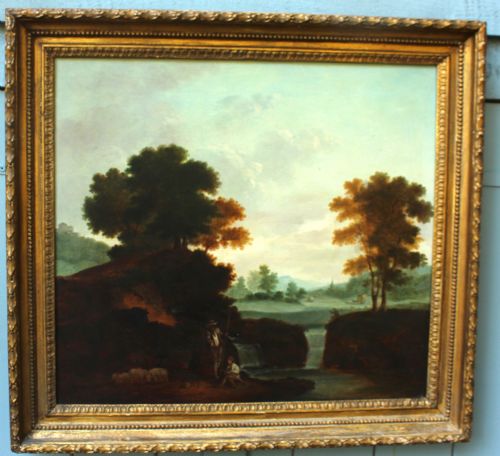
A gold leaf pastoral painting presents idyllic rural scenes, featuring rustic landscapes, gentle livestock, and country figures framed in gilded wood. These works span the eighteenth and nineteenth centuries, taking the form of oil paintings on canvas, watercolours on paper, and miniature artworks.
The aesthetic draws heavily from Romanticism, Victorian realism, and French Rococo Revival styles. Buyers will frequently encounter nineteenth-century British and European interpretations depicting agricultural labours, river landscapes, and quiet woodland gatherings.
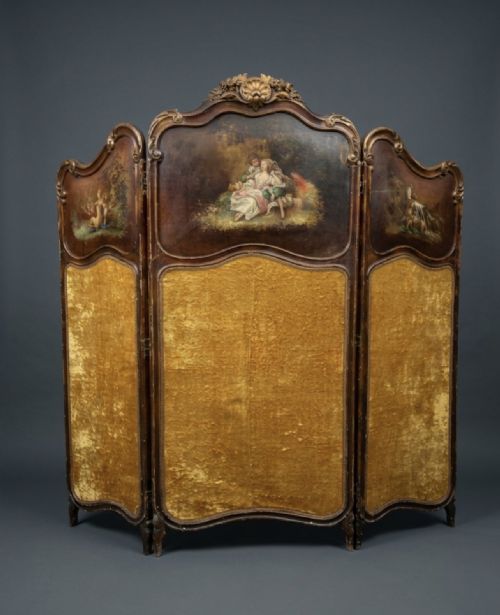
Beyond standard framed wall art, the inventory includes folding screens and modesty screens inset with painted panels. Such pieces blend functional room division with decorative landscape artistry.
Materials and construction
Artists worked primarily with oil paint on canvas, alongside watercolour on paper for smaller or more delicate compositions. These painted surfaces were mounted on wooden supports or set behind protective glass.
Frames and screens utilise gesso and gold leaf to create luminous gilded borders that catch the light. The application of gold leaf elevates the rustic subject matter by introducing a rich, reflective finish.
Cows appear with surprising frequency across these pastoral scenes, keeping a watchful and remarkably calm eye on nineteenth-century rural life.
Assessing quality and execution
Quality rests in the precision of the brushwork and the naturalism of the figures and animals within the landscape. Finer pieces demonstrate careful attention to light, atmospheric depth, and anatomical accuracy in cattle, sheep, and human subjects.
The condition and craftsmanship of the accompanying giltwood frame or screen structure significantly influence the overall standard. Intricately moulded gesso and well-preserved gold leaf indicate superior workshop production.
Mark William Langlois·Thomas Sidney Cooper·Eugene Verboeckhoven·Julius Caesar Ibbetson·Augustus Jules Bouvier·Francois Boucher·David Bates·George Smith·Fred Morgan·Thomas Baker
The Gold Leaf Pastoral Painting Glossary
- Pastoral painting
- Artwork depicting the idealized life of shepherds, farmers, and rural labourers in natural settings. These scenes often emphasise tranquility and harmony between humans and the countryside.
- Giltwood
- Wood that has been treated and coated with a thin layer of gold leaf or gold paint. It forms the decorative base for ornate picture frames and folding screens.
- Gesso
- A plaster-like mixture applied to wood or canvas as a prepared base before gilding or painting. It provides a smooth surface for the subsequent application of gold leaf.
- Watercolour
- A painting method in which the paints are made of pigments suspended in a water-based solution. It appears frequently on paper supports within nineteenth-century British works.
Gold Leaf Pastoral Painting: Frequently Asked Questions
What defines a pastoral painting?
A pastoral painting focuses on rural subjects such as shepherds, cattle, rivers, and agricultural life. The atmosphere tends to be calm and romanticised rather than strictly documentary.
These artworks often use soft light and natural colour palettes to evoke a peaceful country existence.
How do I care for a gilded frame?
Gilded frames require gentle dusting with a soft, dry cloth to prevent the accumulation of dirt. Avoid moisture and chemical cleaning agents, which can damage the delicate gold leaf.
Keep the artwork away from direct sunlight and excessive temperature fluctuations to protect both the canvas and the frame.
Are these paintings original works?
The selection comprises original oil paintings, watercolours, and period miniatures. Many bear the signatures of known nineteenth-century and earlier European artists.
Some pieces are later tributes or interpretations in the manner of earlier masters like Boucher.
Where were modesty screens used?
Modesty screens functioned as moveable partitions in period rooms to block drafts or create private spaces. The painted panels allowed them to serve as decorative furniture items.
They combine practical room management with framed pastoral artistry.