




Vintage Livestock Canvas Painting
These vintage livestock canvas painting works capture pastoral life with horses, cattle, and sheep across the Victorian and Edwardian periods.
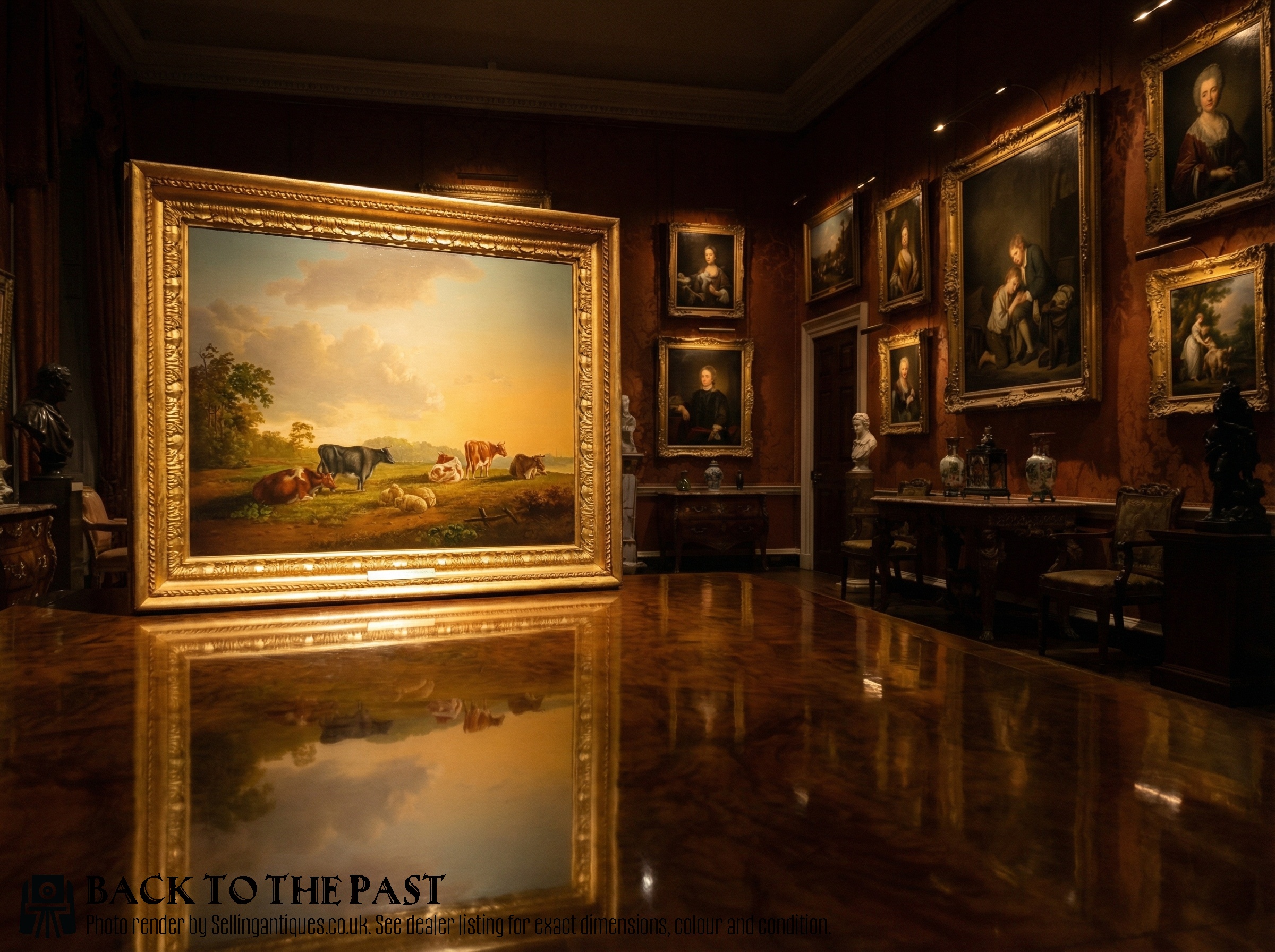
Vintage Livestock Canvas Painting
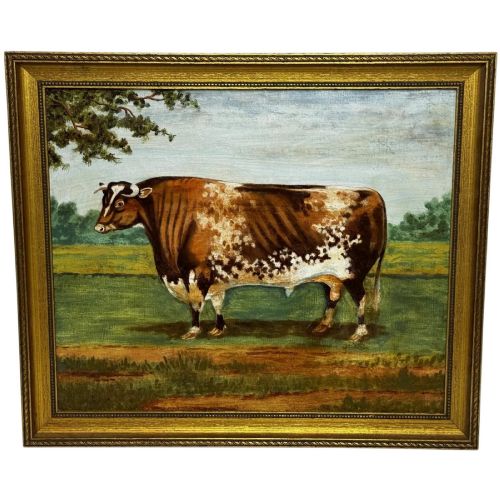
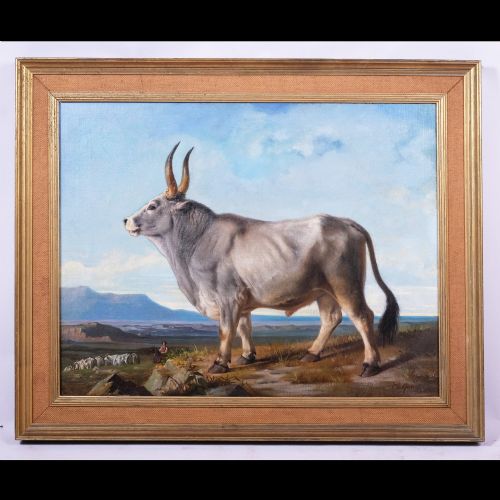
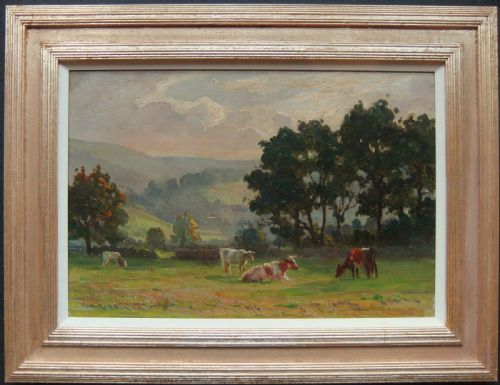
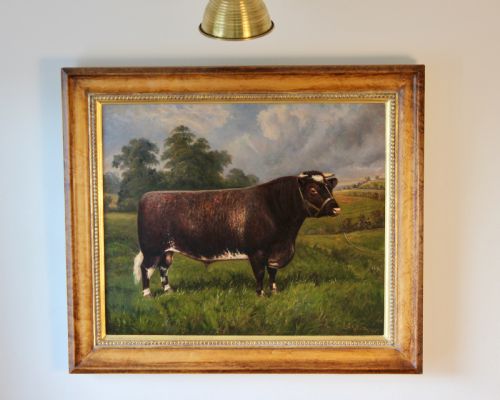
A vintage livestock canvas painting depicts farm animals, cattle, sheep, and horses within rural landscapes and pastoral settings. The examples seen on this page span from the nineteenth century into the 1920s, covering periods such as Victorian, Edwardian, and the 1900s.
The most common subjects are prize bulls, cattle grazing near rivers or streams, and horses with sheep in coastal or country scenes. These artworks often belong to British schools, pastoral realism, and English country traditions.
How they were made
Artists painted these works using oil paint applied to stretched canvas, frequently mounted on wooden frames or bordered with gilt and gesso frames. The combination of oil on canvas allowed painters to build rich textures in animal coats and pastoral landscapes.
Frames often incorporate wood with gilt finishings, reflecting the framing standards of the Victorian and Edwardian eras. The physical construction relies on traditional canvas stretching techniques over wooden supports.
Materials across these listings include oil paint, canvas, wood, gilt, and gesso, spanning the 19th century to 1920.
What varies in quality
Quality in a vintage livestock canvas painting depends on the precision of the animal anatomy and the depth of the surrounding landscape. Works by named painters exhibit finer brushwork and more detailed rendering of light and texture compared to anonymous school pieces.
The preservation of the oil paint surface and the originality of the wood and gilt frame influence the overall integrity of the piece. Stronger examples demonstrate careful handling of light across cattle and rural settings.
A M Gauci·J C Grey·Eugene Joseph Verboeckhoven·Claude Cardon·W A Clark·William Sidney Cooper·Ernest Higgins Rigg·Owen Bowen·Thomas E Francis
The Vintage Livestock Canvas Painting Glossary
- Canvas
- A heavy woven fabric used as a surface for oil painting. It is typically stretched tightly over a wooden frame before application.
- Giltwood
- Wood that has been covered with a thin layer of gold leaf or gilt. This material appears frequently on the decorative frames enclosing these paintings.
- Pastoral Realism
- An artistic style focusing on accurate depictions of rural life, farm animals, and agricultural scenes. It forms a core aesthetic of the nineteenth-century works listed here.
- Gesso
- A plaster-like mixture applied to wood frames to create a smooth surface for gilding. It provides the foundation for ornate Victorian frame mouldings.
Vintage Livestock Canvas Painting: Frequently Asked Questions
What periods do these paintings come from?
The works span from the nineteenth century, including Victorian and Edwardian eras, up to the 1920s. Painters captured rural subjects across these distinct historical periods.
Most examples reflect nineteenth-century romanticism, pastoral realism, and British impressionist traditions.
Who are the artists behind these works?
The inventory includes pieces by named painters such as Eugene Joseph Verboeckhoven, Claude Cardon, W.A. Clark, and William Sidney Cooper. Other works are attributed to the British School or English Country School.
Signatures on the canvas often help identify the specific hand behind the pastoral scene.
What animals appear in the paintings?
Common subjects include shorthorn bulls, cattle grazing by rivers, sheep in landscapes, and horses near coasts. Animals are typically set within rural British scenery or pastoral backdrops.
Scenes frequently incorporate agricultural elements like farms, streams, and Canterbury Cathedral.
How should I frame an oil painting?
Many pieces retain their original wood and gilt frames from the Victorian or Edwardian periods. These frames complement the oil on canvas medium.
Maintaining the original gesso and gilt framing preserves the historical context of the artwork.