



Gold Leaf Marble Table
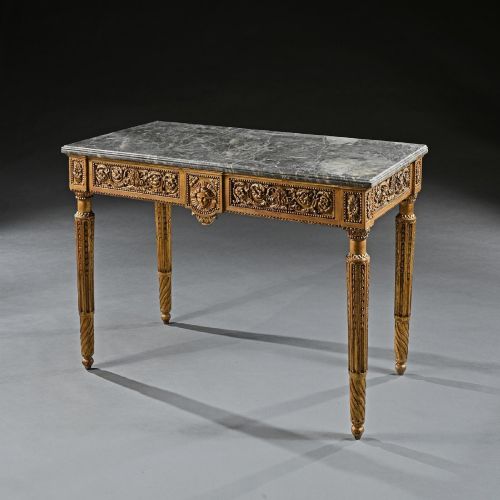
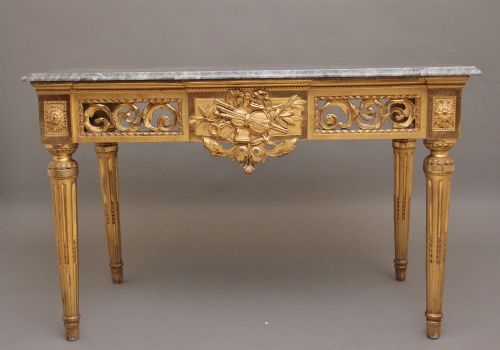
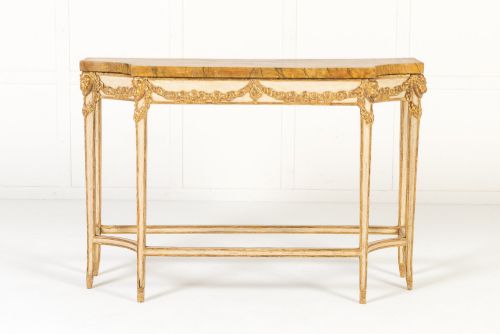
A gold leaf marble table brings sculptural weight and gilded warmth to a room, offering a heavy stone top supported by carved and gilded wood.
Gold Leaf Marble Table
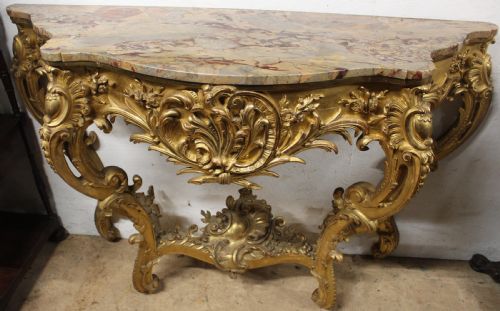
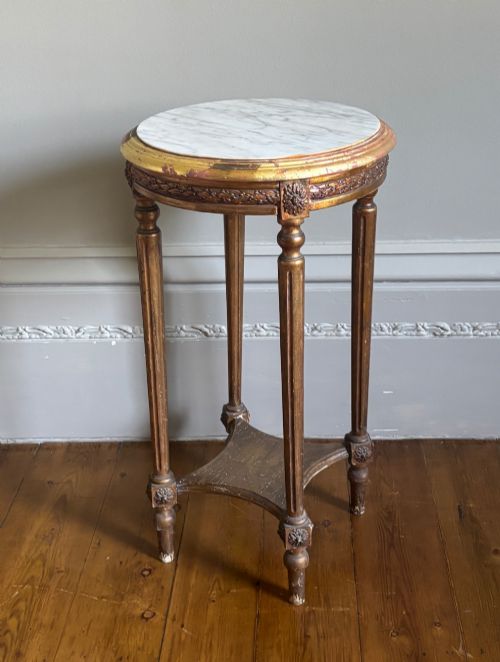
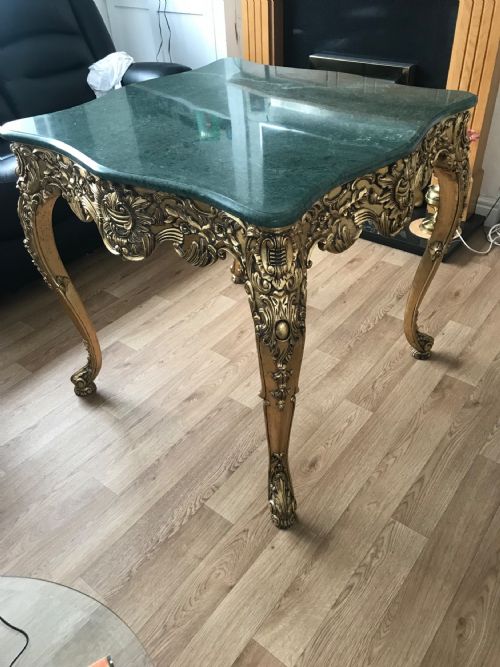
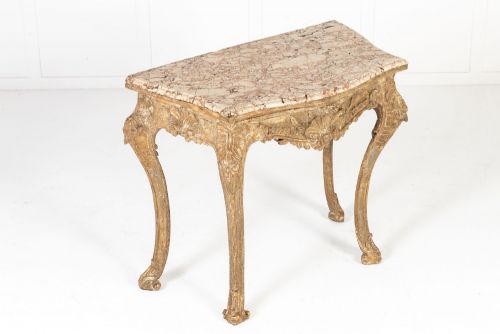
When you search for a gold leaf marble table, you encounter heavy stone surfaces paired with ornate wooden or metal supports. The selection centres heavily on console tables, side tables, and occasional tables designed to stand against walls or anchor principal rooms.
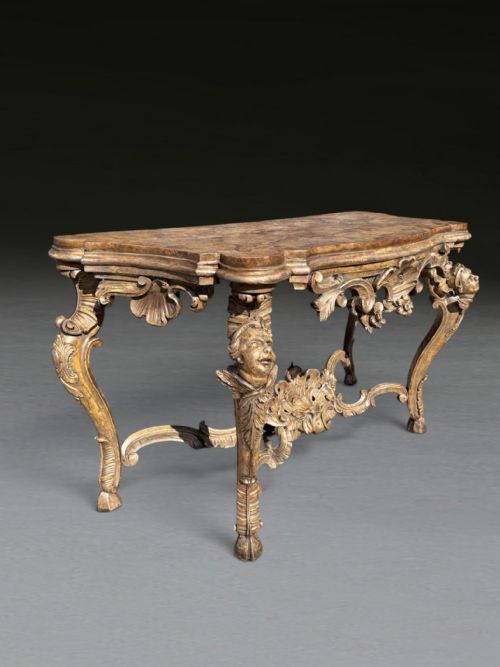
Italian and French workshops dominate the origins, spanning the eighteenth century through the Victorian era and into later twentieth-century interpretations. Baroque, Rococo, and Neoclassical designs appear frequently, showing carved foliage, scrolls, and classical motifs.
Materials and construction
Makers shaped structural carcases from lime wood, pine, or general hardwoods before applying intricate hand-carved details. Giltwood, gesso, and gold leaf finish the wooden elements, giving surfaces a brilliant reflective quality that contrasts with the stone.
Solid marble provides the durable upper surface, appearing in polished green and rouge varieties alongside classic white. Ormolu, gilt bronze, and painted finishes supplement the gilded wood, particularly on French and Italian pieces from the eighteenth and nineteenth centuries.
Rams, maidens, and swans occasionally emerge carved directly into the wooden supports, watching over the stone.
Distinctions in quality
The depth and crispness of the hand-carved woodwork dictate the visual standard of each piece. Superior examples display sharply defined acanthus leaves, figures, and scrolls that retain their original contours beneath layers of gold leaf or gesso.
The weight, thickness, and natural figuring of the marble top establish another tier of excellence. Heavy, solid stone slabs with rich colour variations elevate the status of a console or centre table above simpler counterparts.
The Gold Leaf Marble Table Glossary
- Console table
- A table designed to stand against a wall, frequently secured with brackets and featuring front legs only. These form the primary furniture type within this category.
- Giltwood
- Timber treated with gold leaf or metallic paint over a prepared gesso ground. This finish provides the characteristic metallic sheen seen on frames and table bases.
- Gesso
- A plaster-like mixture applied to wood surfaces to create a smooth base for gilding or painting. It allows carvers to achieve fine detail before applying gold leaf.
- Ormolu
- Gilded bronze or brass mounts applied to furniture decoration. The technique gained widespread use in French and English decorative arts during the eighteenth and nineteenth centuries.
- Demi-lune
- Half-moon shape denoting a semicircular table top. These pieces fit flat against a wall while projecting outward into the room.
- Rococo
- An elaborate design style characterised by asymmetrical scrolls, shell motifs, and natural curves. It flourished across Europe during the eighteenth century and saw major revivals later.
Gold Leaf Marble Table: Frequently Asked Questions
How do I care for a marble top?
Marble requires gentle cleaning with a damp cloth and mild, pH-neutral soap. Avoid acidic substances like citrus or vinegar, which etch the polished stone surface over time.
Using coasters and placemats protects the heavy stone from liquid rings and physical impacts during daily use.
How do I identify a Regency piece?
Regency items reflect early nineteenth-century British taste, drawing heavily on classical Greek, Roman, and Egyptian motifs. Look for restrained proportions, architectural symmetry, and sabre legs.
Ormolu mounts and dark timbers often accompany the gilded elements on tables from this specific period.
Can these tables support heavy items?
Solid marble tops possess significant natural weight and handle heavy decorative objects easily. Console tables often require wall fixings for absolute stability due to this upper mass.
Wall-mounted brackets secure the structure safely, preventing any tipping when placed on uneven historic flooring.