


Gold Lacquered Chest
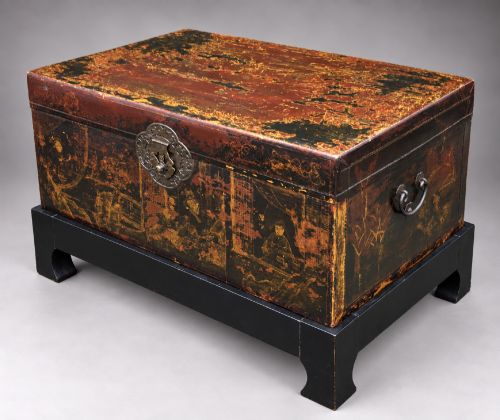
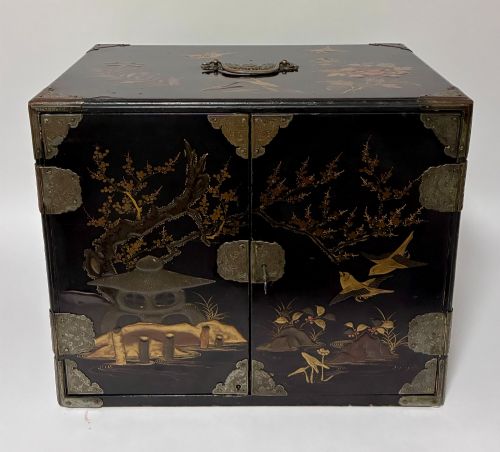
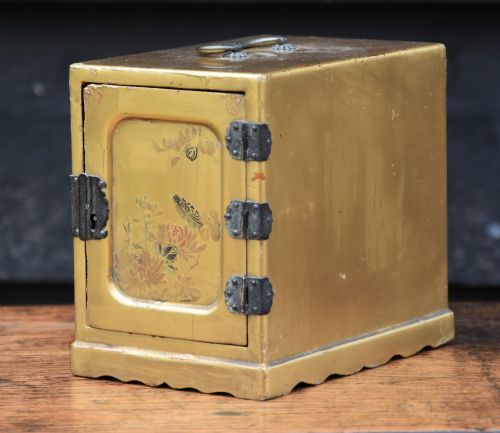
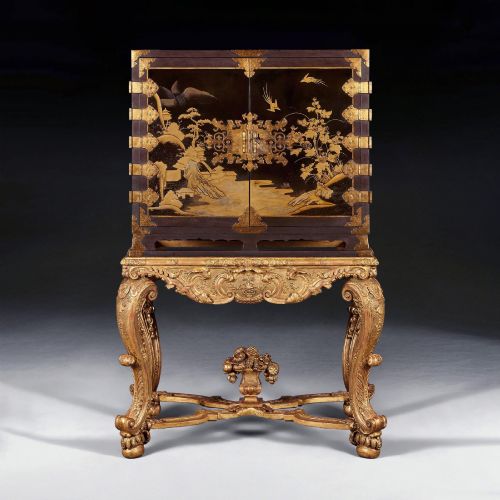
These gold lacquered chest examples span centuries of Asian and European craftsmanship, offering striking storage with gilded narrative scenes.
Gold Lacquered Chest
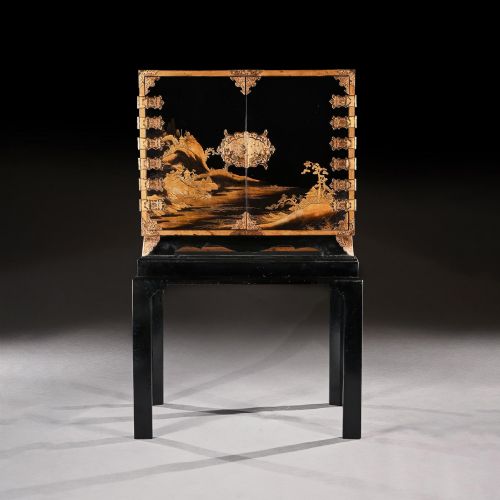
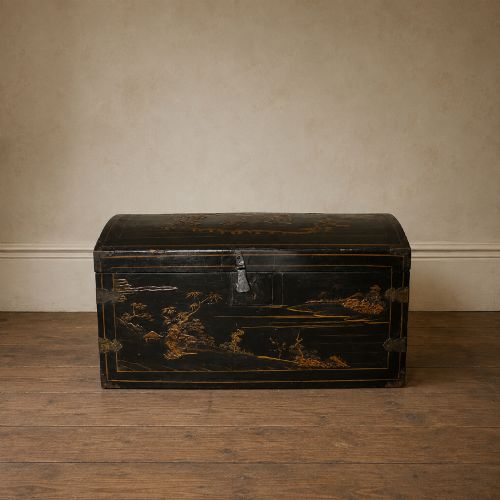
A gold lacquered chest encompasses compact table cabinets, jewellery boxes, tea caddies, blanket boxes, and large cabinets on stands. The pieces available here cross multiple origins and centuries, ranging from seventeenth-century Japanese examples on European stands to eighteenth-century Chinese export coffers and nineteenth-century Anglo-Indian trunks.
Buyers frequently encounter table cabinets and tea caddies decorated with Chinoiserie or Meiji period motifs alongside substantial blanket boxes. These objects serve as functional containers while displaying intricate painted and gilded decoration across wood structures.
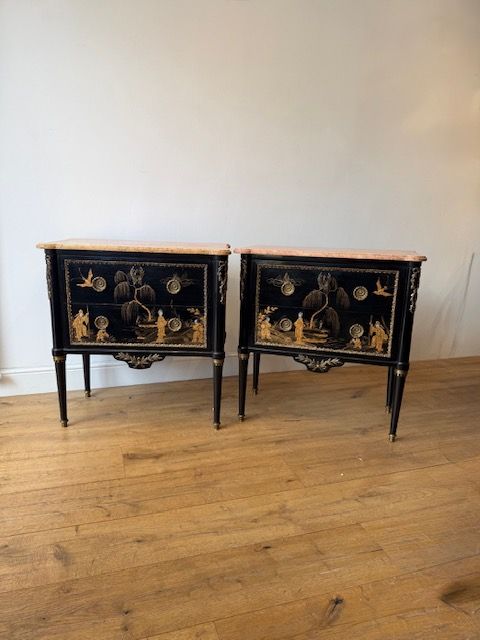
Origin and form dictate the character of each piece, uniting Japanese export work, Chinese craftsmanship, and Regency penwork interpretations under a shared decorative language. The selection spans distinct periods including the Edo period, the Regency era, and the early twentieth century.
Materials and construction methods
Construction relies primarily on wood foundations coated in multiple layers of lacquer, finished with gold leaf, gilt, or painted gilded decoration. Brass hardware such as hinges and carrying handles frequently accentuates the wooden carcasses.
Japanese and Chinese workshops utilised traditional lacquer techniques alongside European centres producing Regency penwork and Japanned surfaces. Additional elements like bone occasionally appear for inlay or detail work within the decorative schemes.
The inventory combines table cabinets, tea caddies, and blanket boxes across Japanese, Chinese, and Regency British origins.
Distinguishing quality across periods
Quality rests in the crispness and depth of the gilded decoration, the preservation of the lacquer surface, and the harmony of any associated stand. Pieces retaining their original stands, such as seventeenth-century examples mounted on French giltwood Regence bases, demonstrate superior provenance and design cohesion.
The fineness of hand-painted Chinoiserie scenes and the structural integrity of the underlying timber define the upper tier of the range. Simpler domestic boxes occupy a different tier compared to elaborate export cabinets created for international markets.
The Gold Lacquered Chest Glossary
- Chinoiserie
- European theatrical interpretation of Chinese and East Asian artistic styles, popular in furniture and decorative objects. This style appears frequently on eighteenth and nineteenth-century pieces.
- Kodansu
- A traditional Japanese small cabinet with multiple internal drawers, often finished in lacquer and gilt. These small storage pieces frequently feature detailed exterior scenes.
- Penwork
- A decorative technique using Indian ink on wood to simulate elaborate carving or engraving, prominent in Regency items. This method creates fine linear detail resembling oriental lacquer.
- Japanned
- European imitation of Asian lacquerwork, achieved through layers of varnish and metallic powder on furniture. This finish was widely adopted during the William and Mary period.
- Cofer
- A traditional large chest or box used for storing valuables, clothing, or documents. These sturdy containers often rest on separate stands.
Gold Lacquered Chest: Frequently Asked Questions
How were these chests used historically?
These chests served primarily for storing valuable textiles, documents, tea, or personal items in elite households. Smaller variants like tea caddies and jewellery boxes sat on tables in reception rooms for daily access.
Larger cabinets on stands functioned as statement furniture pieces designed to display wealth and sophisticated taste to visitors. Their decorative surfaces were intended to be admired as much as the contents they secured.
Where should I place a gold lacquered chest at home?
Position these pieces away from direct sunlight and strong heat sources to protect the delicate lacquer and gold leaf surfaces. A stable environment prevents the wood underneath from shifting and cracking the finish.
Table cabinets and tea caddies work well on sturdy sideboards or desks where their fine details can be viewed closely. Larger boxes on stands require floor space with adequate clearance to showcase their supporting frames.
How do I identify a Japanese Meiji period piece?
Japanese Meiji period pieces display specific craftsmanship traits and stylistic motifs typical of late nineteenth and early twentieth-century production. The lacquer work often exhibits dense pictorial narratives of landscapes or figures.
Comparing the hardware styles and the specific formulation of the lacquer helps separate these from earlier Edo period examples or European Chinoiserie interpretations.
What is the difference between Chinese export and European Chinoiserie?
Chinese export pieces were made within Asian workshops specifically to satisfy Western aesthetic demands using local materials and traditional methods. The lacquer depth and pigments reflect indigenous techniques.
European Chinoiserie and Japanned items represent domestic attempts to replicate those exotic finishes using local timbers and varnishes. These European interpretations often carry distinct regional furniture characteristics from the Regency or Georgian eras.