


Gold Gilt Wall Shelf
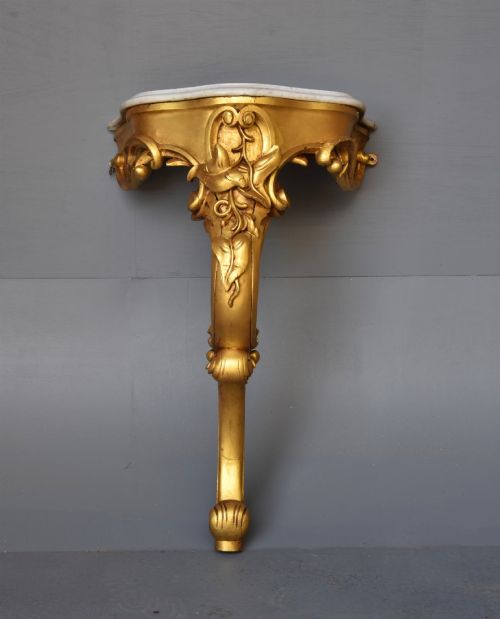
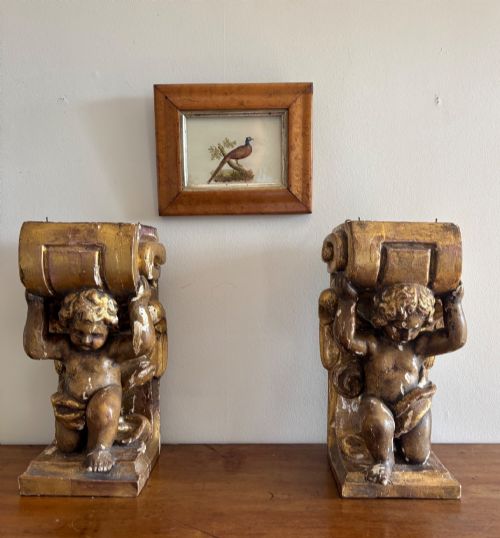
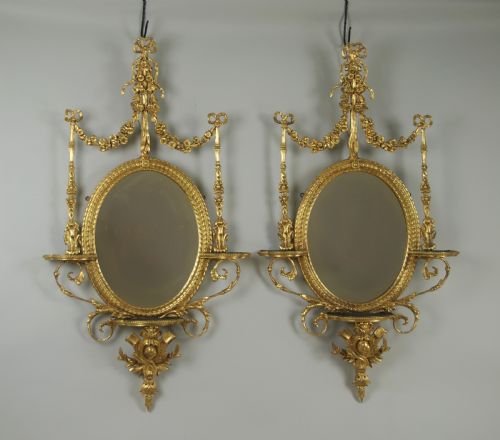
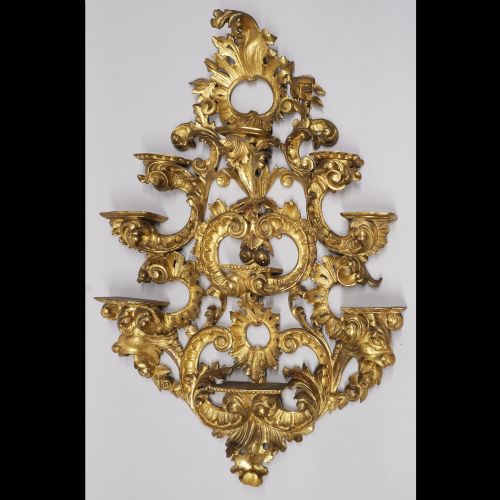
These gold gilt wall shelf examples bring glittering surface and display space to a room, spanning 18th century Italian workshops to Victorian English drawing rooms.
Gold Gilt Wall Shelf
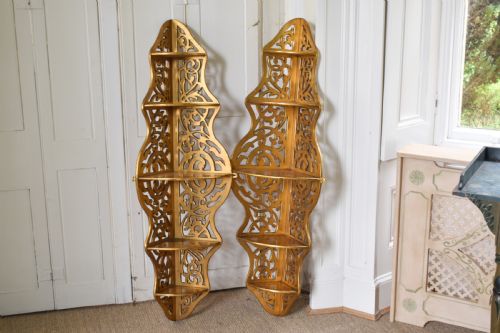
A gold gilt wall shelf combines decorative timber carving with functional display space, lifting ornaments or mirrors off the floor and onto the wall. When searching for a gold gilt wall shelf, you encounter various forms including carved wall brackets, corner shelves, and console tables with integral ledges.
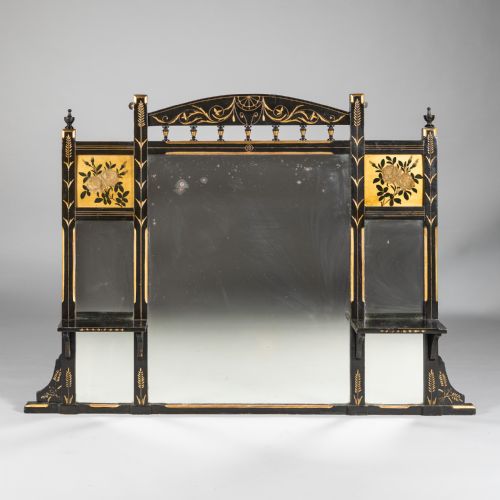
The pieces on this page originate predominantly from the 19th century and Victorian eras, alongside 18th century examples and early 20th century revivals. Styles range from elaborate Rococo and Italian Rococo curves to restrained Neoclassical lines and Aesthetic Movement ebonising.
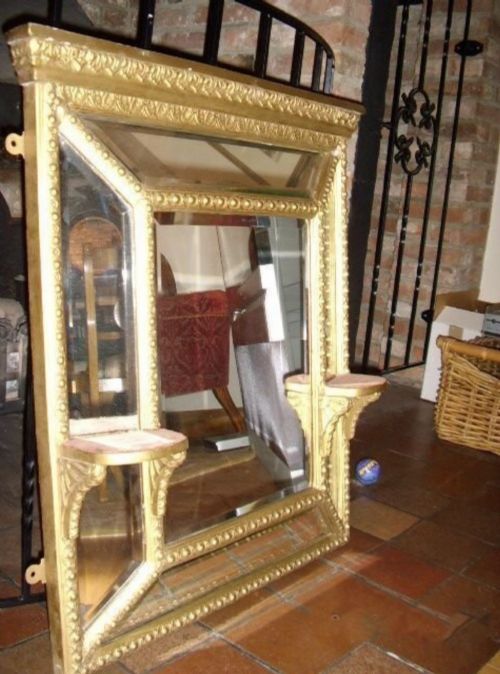
Most items rely on carved wood, gesso, and applied gold leaf or gilt finishes to catch the light. You will find single wall brackets, matched pairs, and complex mirrored display shelves designed to reflect interior illumination.
How they were made
Craftsmen shaped these objects using timber such as wood, which was then coated in gesso to provide a smooth, responsive ground for fine carving and detail work. Artisans applied gold leaf or liquid gilt over the prepared surface to achieve a brilliant metallic sheen.
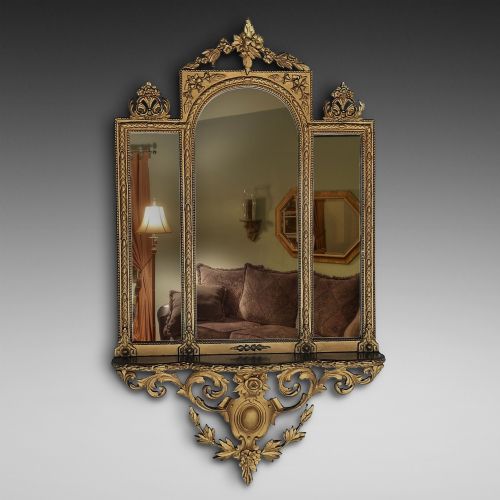
Many items incorporate mirror glass, often bevel-cut and fitted into frames alongside painted wood or ebonised elements. Structural integrity relied on traditional joinery and sturdy wall fixings to support the weight of the timber and the objects placed upon the ledges.
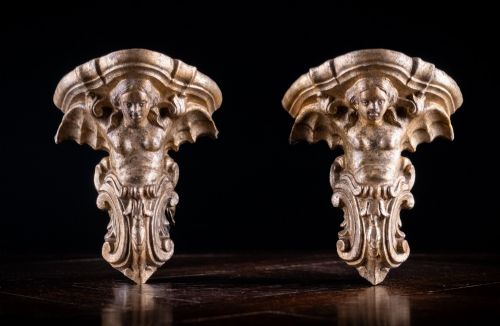
Some winged siren wall brackets demand attention by staring right back at you from the corner.
What varies in quality
The depth and crispness of the carving distinguish finer pieces from simpler production, particularly in the rendering of acanthus leaves, cherubs, or architectural motifs. Hand-applied gesso and genuine gold leaf display a richer texture and warmer tone than flat, modern metallic paints.
Structural stability and the preservation of the original surface finish dictate the standing of an individual shelf. Pieces that retain their historic gilding without excessive over-painting demonstrate superior preservation and craftsmanship.
Strahan of Dublin·Henri Dasson
The Gold Gilt Wall Shelf Glossary
- Giltwood
- Wood that has been coated with gold leaf or a gold-coloured metallic finish. This material forms the primary structure of many traditional decorative brackets and frames.
- Gesso
- A plaster-like mixture applied to wood surfaces to create a smooth base for carving and gilding. It allows artisans to achieve sharp, detailed relief ornamentation.
- Overmantle Mirror
- A large mirror designed to hang specifically above a fireplace mantel. Several examples incorporate built-in display shelves or brackets for small ornaments.
- Ormolu
- Finely chased and gilt bronze mountings used on decorative furniture and brackets. This French technique provides a heavy, lustrous metallic contrast to ebonised wood.
- Étagère
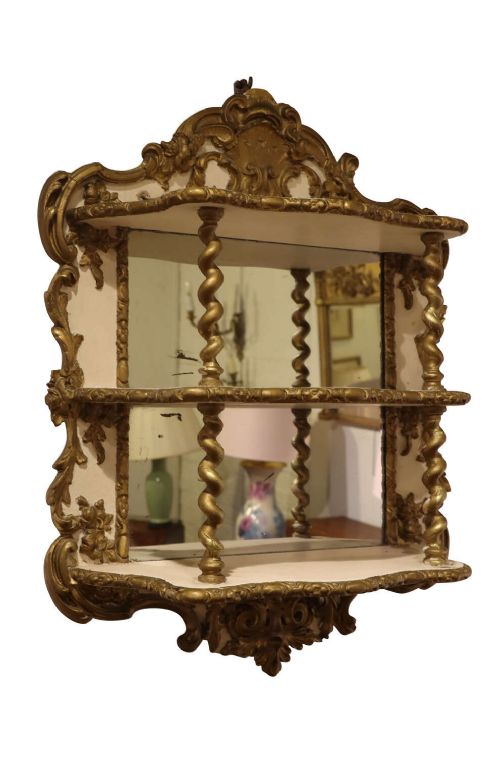
- A piece of furniture consisting of a set of open shelves for displaying small objects. Wall-mounted variants combine this display function with gilded framework.
Gold Gilt Wall Shelf: Frequently Asked Questions
How were gold gilt wall shelves used historically?
These shelves served primarily as ornamental display spaces for prized ceramics, small bronzes, or clocks in formal reception rooms. Their reflective gilded surfaces amplified the flickering light of candles and oil lamps.
Placed above console tables or flanking fireplaces, they created a balanced architectural focal point within the interior decorative scheme.
How do I securely hang a heavy gilded wall bracket?
Due to the substantial weight of carved wood and gesso, these pieces require direct fixing into wall studs or the use of appropriate heavy-duty masonry anchors. Professional installation ensures the bracket supports both its own weight and any objects placed upon the ledge.
Checking the original hanging loops or brackets on the reverse will indicate the intended suspension points devised by the maker.
How do I tell Victorian pieces from 18th century originals?
Eighteenth-century examples often exhibit deeper hand-carved detailing in solid woods and softer, more nuanced patination on the underlying gesso. Victorian interpretations frequently draw on earlier Rococo or Neoclassical revivals with denser, machine-assisted plaster moulds.
Examining the construction joints, timber type, and the wear patterns on the gold leaf helps clarify the true age of the object.
How should I clean and care for antique giltwood?
Giltwood requires very gentle maintenance using a dry, soft artist's brush to remove dust from intricate carved crevices. Moisture and modern chemical cleaners can permanently strip the delicate gold leaf and underlying gesso.
Keeping the shelf away from direct sunlight and damp environments prevents the timber from warping and protects the fragile metallic surface.