





Gold Gilt Trinket Box
A gold gilt trinket box brings small brilliance to a dresser, holding rings, pins or snuff with proper weight.
Gold Gilt Trinket Box
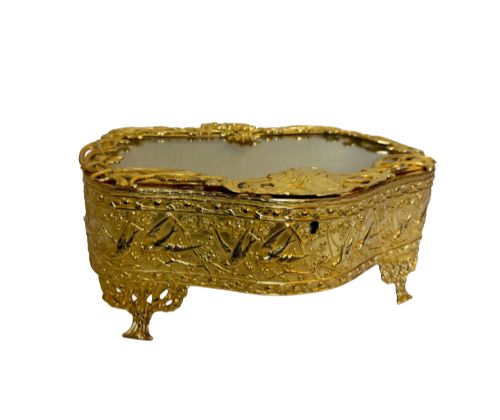
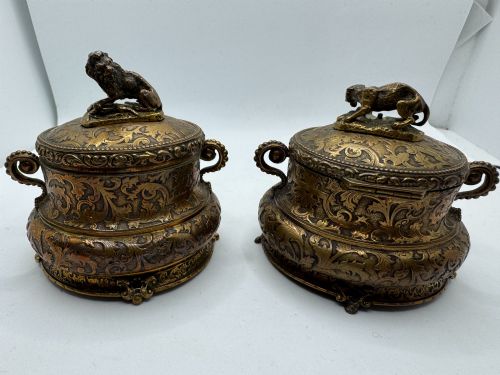
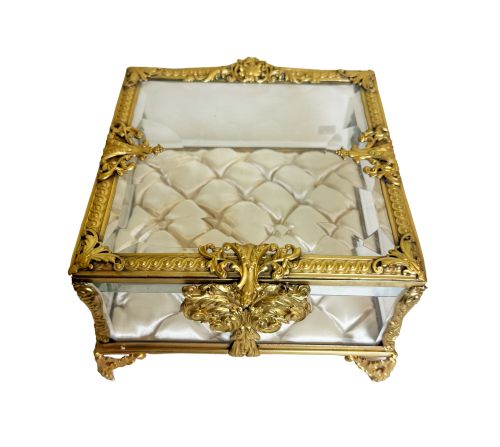
A gold gilt trinket box serves as a small container for keepsakes, rings or snuff, often taking the form of a jewellery casket, vinaigrette or decorative box. You will frequently meet pieces fashioned from sterling silver, silver gilt, or ormolu, shaped during the Georgian, Victorian and nineteenth century periods.
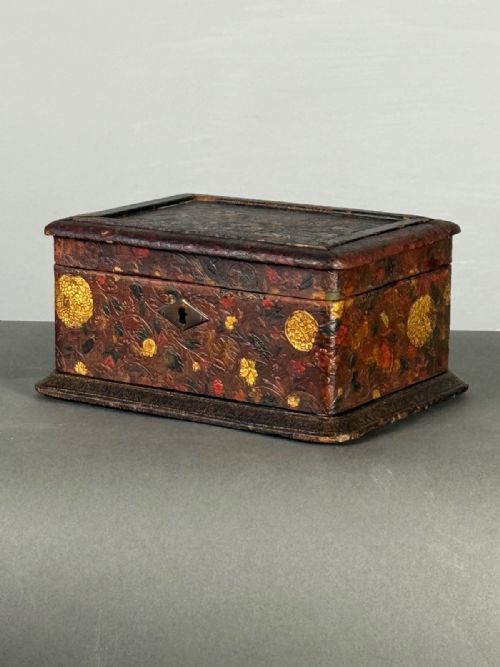
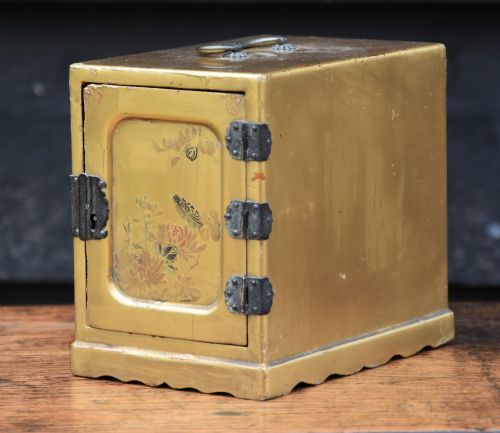
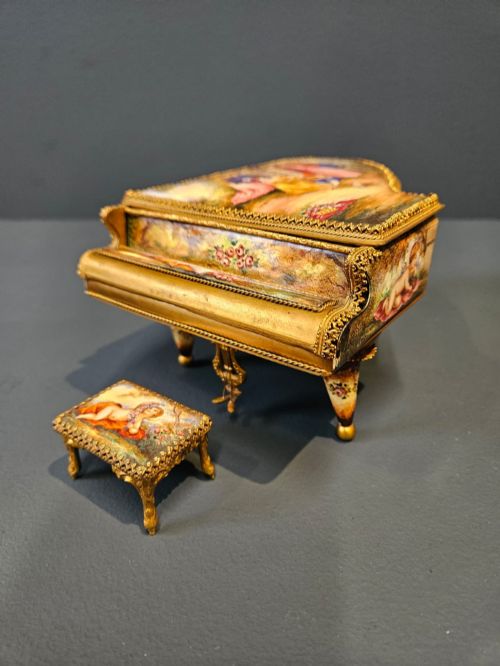
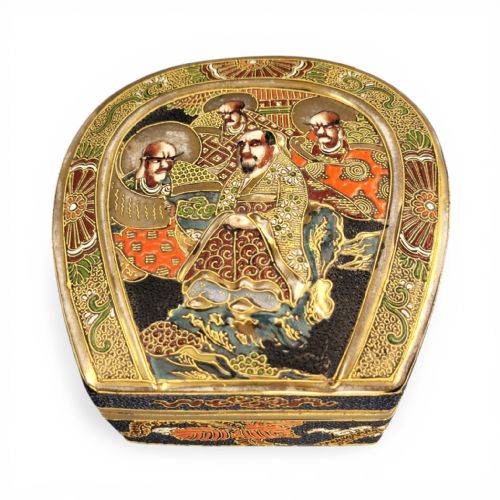
The selection ranges from French Rococo revival caskets and Viennese enamels to Japanese Meiji period lacquered boxes and English silver snuff boxes. These objects were made to sit upon dressing tables, writing desks and parlour surfaces, combining utility with decorative presence.
How they were made
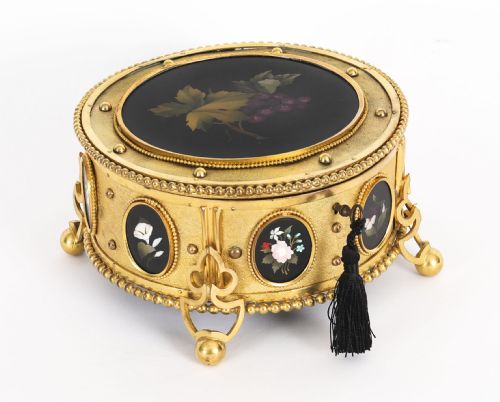
Gilding forms the primary surface technique across these items, applying gold leaf, electroplating or liquid gold over brass, copper, bronze or silver. Ormolu and silver gilt provide deep metallic lustre, often paired with inset panels of porcelain, glass, pietra dura or enamel.
Master craftsmen employed casting, chasing and engine-turned guilloche engraving to pattern the metal frames, while wood and lacquer pieces relied on traditional Asian layering techniques. Cast brass or bronze mounts secure glass panels, porcelain plaques and hinged lids with precise mechanical joints.
Object forms span musical boxes, table cabinets, etuis and jewellery caskets originating from French, English, Austrian and Japanese workshops.
What varies in quality
Quality rests upon the crispness of the chased decoration, the depth and weight of the metal base, and the integrity of the gilding itself. Finer examples display sharp relief work on cast mounts and hand-painted detail on porcelain or enamel insets, rather than soft edges or flat stamped patterns.
The caliber of secondary materials also separates the grades, such as heavy cut crystal, genuine tortoiseshell or flawless hardstone panels like pietra dura fitted neatly into the metal framework. Maker marks, assay stamps and balanced proportions indicate workshop standards from periods including the Georgian and Victorian eras.
Susse Freres Paris·Samson Mordan·Toshozan·Edward Farrell
The Gold Gilt Trinket Box Glossary
- Vinaigrette
- A small hinged box featuring an internal pierced grille, designed to hold a sponge soaked in aromatic vinegar. These silver gilt items date largely from the Georgian and Victorian periods.
- Ormolu
- Finely ground high-carat gold applied to a bronze base using a mercury amalgamation process, or later via electro-gilding. It gives a warm, rich yellow surface to nineteenth-century French caskets.
- Guilloche
- A decorative mechanical engraving technique producing precise, intricate repeating geometric patterns beneath a translucent enamel or metallic glaze. It appears frequently on nineteenth-century silver gilt boxes.
- Pietra dura
- An artistic technique using cut and fitted polished coloured stones to create pictorial designs. It decorates the lids of select nineteenth-century Italian and French caskets.
Gold Gilt Trinket Box: Frequently Asked Questions
What is a silver gilt trinket box?
A silver gilt trinket box is made from sterling silver coated with a thin layer of gold, providing the durability of silver with the rich colour of gold.
These pieces were traditionally used to store small valuables, cosmetics or tobacco on a dressing table.
How do I date an ormolu box?
Dating relies on stylistic clues like Rococo scrolls, Art Nouveau curves or neoclassical motifs, alongside the type of construction and hinges.
Examination of the underlying bronze or brass and any associated hallmarks or French registry marks helps narrow the decade of production.
What were antique vinaigrettes used for?
Vinaigrettes held sponges soaked in vinegar and aromatics to counter unpleasant odours or prevent fainting in crowded rooms.
Their internal gold-washed grilles are often pierced with delicate floral or geometric patterns.
How should I clean a gilded metal box?
Gilded surfaces require gentle dusting with a soft brush, avoiding chemical dips, abrasive polishes or heavy rubbing that strips the gold layer.
Moisture should be kept away from internal fabric linings, paper layers and inset enamel panels.