


Gold Gilt Table Mirror
A gold gilt table mirror brings nineteenth-century French and Italian elegance to a dressing surface, reflecting light and intricate carved detail.
Gold Gilt Table Mirror
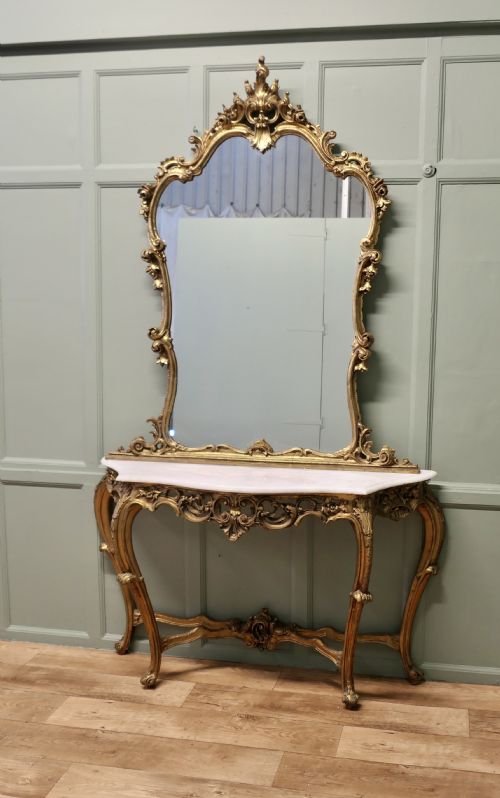
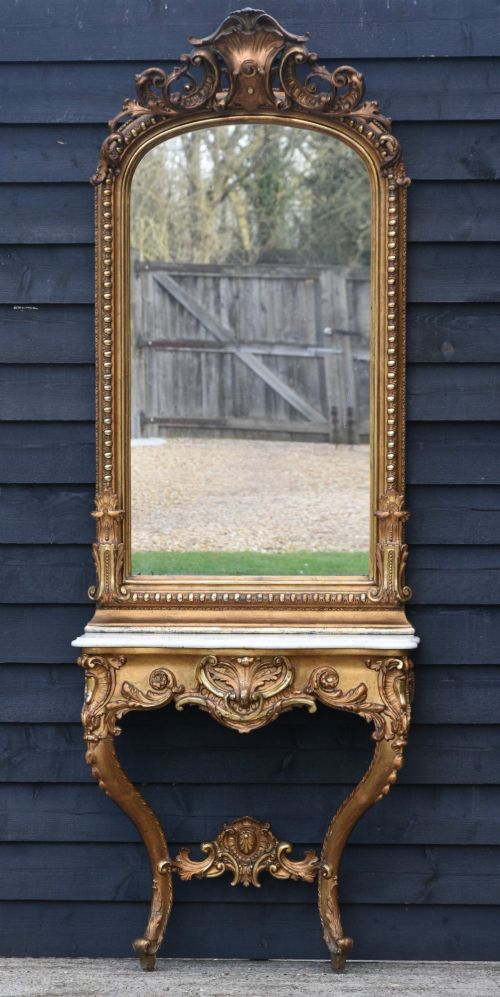
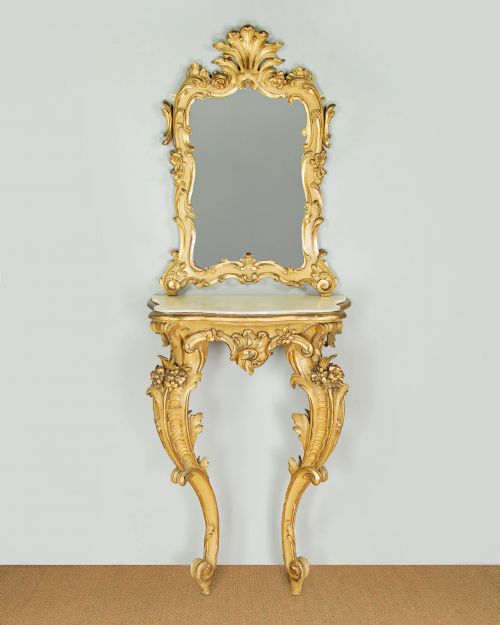
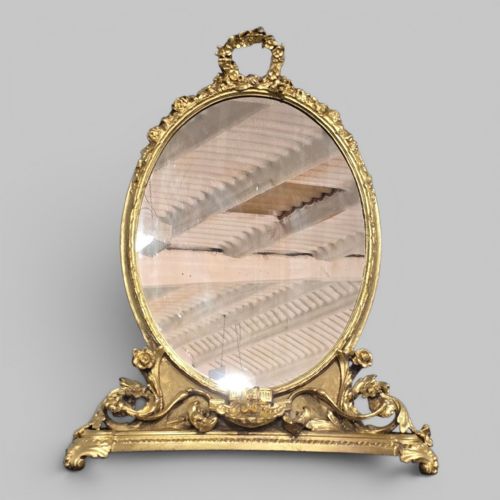
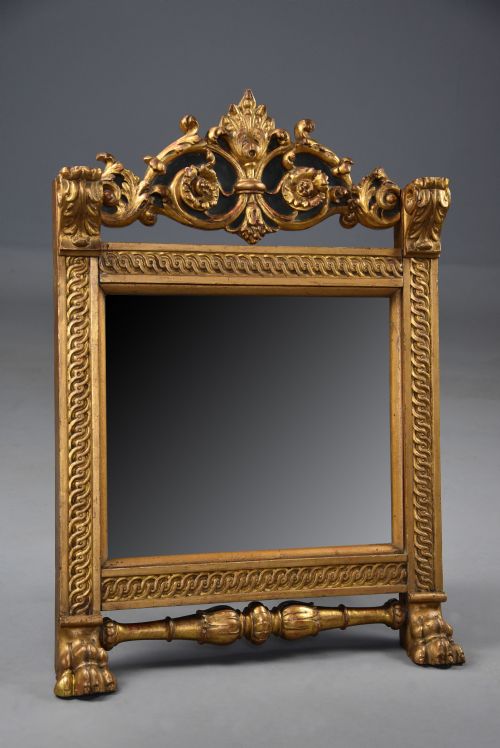
A gold gilt table mirror sits on a dressing table, vanity, or console surface, offering a moveable glass panel framed in gilded wood or metal. These pieces belong to the nineteenth and early twentieth centuries, drawing heavily on French Rococo, Neoclassical, and Renaissance design vocabulary.
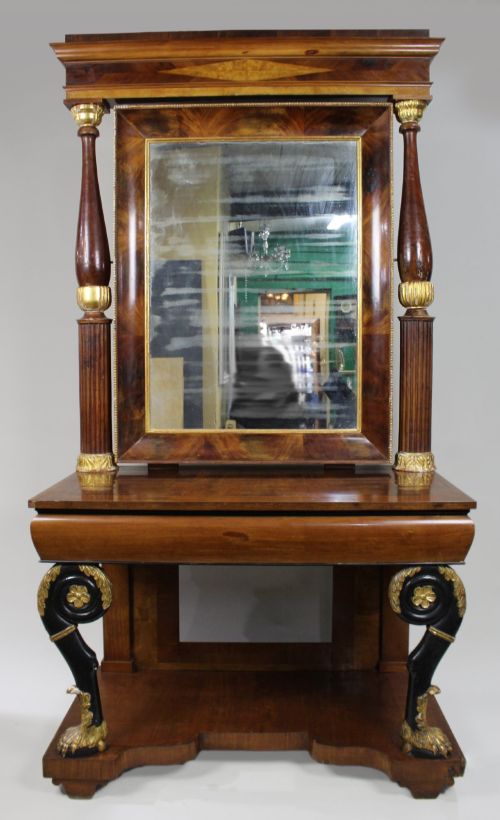
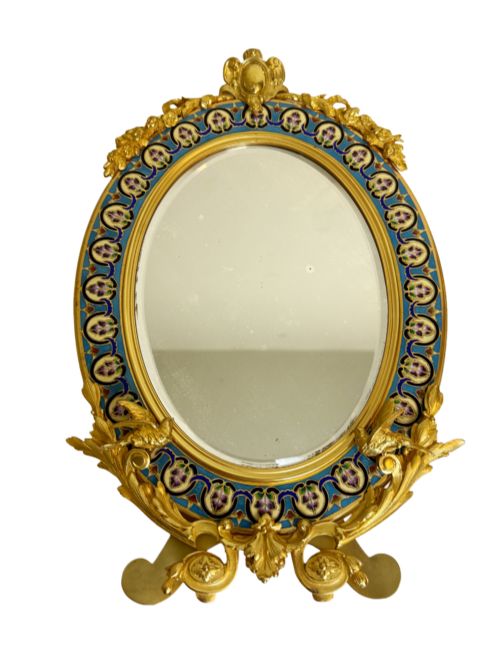
The versions most commonly met here include compact oval dressing mirrors with easel stands, folding triple mirrors, and larger console table and mirror sets designed to sit against a wall. The forms range from simple Victorian toilet glasses to elaborate French ormolu and enamel pieces.
Originating largely from British, French, and Italian workshops, these items span the eighteenth to the early twentieth centuries. They function equally as functional dressing accessories and decorative focal points for a room.
Materials and construction methods
Makers built the primary structures from carved wood, such as giltwood or mahogany, alongside cast metals like gilt bronze and ormolu. Artisans applied thin layers of gold leaf or gesso over carved wooden frames to achieve a brilliant, reflective surface.
Mirrors incorporated bevelled or flat mirror glass, sometimes paired with marble table tops, champlevé, and limoges enamel details. Joinery techniques and hand-carved ornamentation defined the production of frames from the Victorian era through to the early twentieth century.
Folding triple mirrors let you check your profile from three angles at once, proving nineteenth-century vanity had a practical side.
Factors that separate examples
The refinement of the hand-carving in the giltwood or the precision of the cast gilt bronze sets apart the superior pieces from standard production. Crisp detailing in floral motifs, rococo scrolls, and figural enamel work indicates higher artisanal skill.
The integrity of the original mercury or silvered mirror glass and the stability of the easel back or supporting console structure determine the overall survival and condition of the piece.
F Bienvue
The Gold Gilt Table Mirror Glossary
- Giltwood
- Wood that has been coated with gold leaf or gold dust. This finish provides the characteristic metallic gleam seen on nineteenth-century frames.
- Ormolu
- Gilded bronze mounted onto decorative objects and furniture. It gained widespread use in French decorative arts during the eighteenth and nineteenth centuries.
- Gesso
- A plaster-like mixture applied to wood surfaces as a base for gilding or painting. It allows craftsmen to carve intricate relief patterns before applying gold leaf.
- Pier mirror
- A tall mirror designed to be placed on a pier wall between windows, often paired with a matching console table underneath.
- Champlevé
- An enamelling technique where artists hollow out troughs in a metal surface to receive enamel paste before firing. This technique appears on decorative metal frames.
Gold Gilt Table Mirror: Frequently Asked Questions
Where should I place a table mirror?
These mirrors suit dressing tables, chest tops, or dedicated console tables where they can reflect natural light from a window.
Ensure the surface is stable and deep enough to support the weight of the frame and any easel support or matching table base.
Are these mirrors original antiques?
The listings comprise items originating from the eighteenth, nineteenth, and early twentieth centuries.
Examination of the wood backing, glass silvering, and construction methods helps confirm the period of manufacture.
What is the difference between a toilet mirror and a dressing mirror?
Toilet mirrors historically refer to smaller tabletop glass panels designed specifically for personal grooming during the eighteenth and nineteenth centuries.
Dressing mirrors encompass a broader category that includes larger vanity, easel, and triple-folding mirror variations.