




Gilded Wood Table Mirror
These gilded wood table mirror examples bring reflective depth and carved detail to a room, offering both function and decorative presence.
Gilded Wood Table Mirror
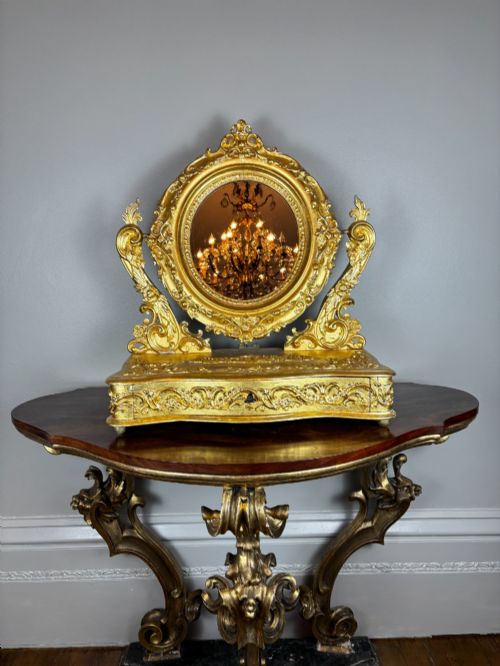
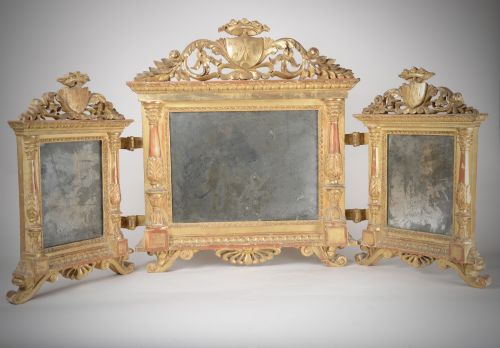
When you search for a gilded wood table mirror, you are looking at decorative looking glasses designed to stand on furniture surfaces rather than hang flat against plaster.
The pieces you are most likely to meet on this page span the eighteenth, nineteenth, and early twentieth centuries, drawing heavily on Rococo, Baroque, and Victorian revival aesthetics.
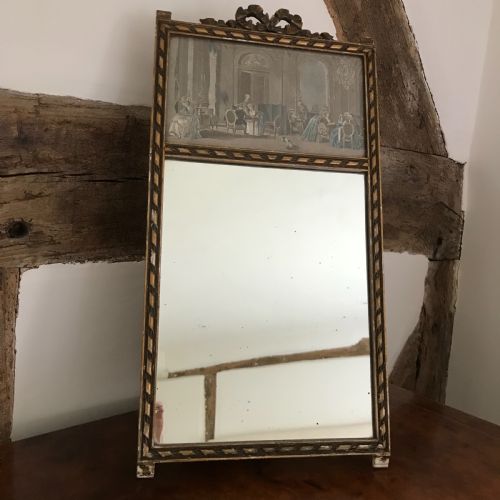
Forms vary from Italian and French table mirrors with carved easel backs to smaller console and dressing pieces that incorporate giltwood frames and sometimes painted accents.
How they were made
These items rely on traditional construction methods combining solid wood frames built up with gesso to receive intricate hand-carved details.
Craftsmen applied gold leaf or paint over the prepared surfaces to achieve the characteristic metallic sheen seen across the periods.
Original mirror glass is set within these frames, often featuring bevelled edges or age-related foxing that reflects the manufacturing techniques of earlier centuries.
Gilded Wood Table Mirror Retail Price Guide 2026
Typical asking prices for gilded wood table mirror among the pieces listed under this phrase on Sellingantiques today, from the lower quarter to the upper quarter. They describe what is for sale here now, not the wider market.
Design styles represented in the current selection range from French and Italian Rococo and Baroque to Victorian and Art Deco interpretations.
What varies in quality
The refinement of the hand-carved ornamentation separates the finer examples from simpler production, particularly in the depth and sharpness of floral scrolls and moulding.
The application and preservation of the gold leaf or paint layer dictate the visual richness of the surface, showing how well the piece has retained its original brilliance.
Structural integrity of the easel supports or framing joints ensures the looking glass stands securely without leaning or putting strain on the wooden joints.
The Gilded Wood Table Mirror Glossary
- Giltwood
- Wood that has been coated with gold leaf or gold dust. This finish gives the frame its bright, reflective metallic appearance.
- Gesso
- A plaster-like mixture applied to wood frames before gilding. It provides a smooth base that carvers can shape into detailed relief patterns.
- Rococo Revival
- A nineteenth-century design movement mimicking the ornate, asymmetrical scrolls of the eighteenth century. It heavily influences many mirrors and console tables of this era.
- Pier Mirror
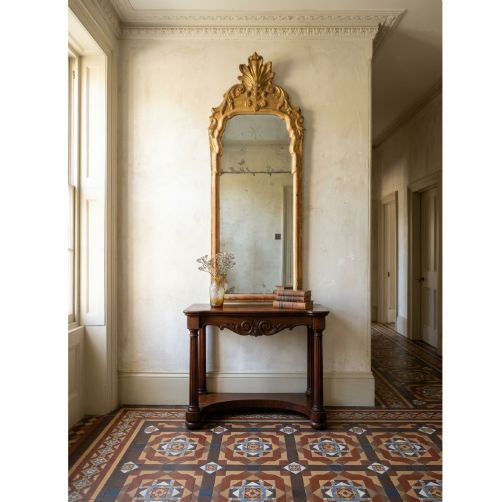
- A tall looking glass traditionally hung on the pier wall between two windows. Several listings pair this form with matching console tables.
Gilded Wood Table Mirror: Frequently Asked Questions
Where should I place a table mirror?
These mirrors sit comfortably on top of chests of drawers, sideboards, or console tables to add height and reflect light into darker corners of a room.
Because they feature self-supporting easel backs or stable bases, they require no wall fixings and can be moved easily between surfaces as your room arrangement changes.
How do I date a gilded mirror?
Dating relies on examining the construction style of the wooden frame, the composition of the gesso layer, and the characteristics of the mirror glass itself.
Earlier eighteenth-century examples often display deep hand-carving and heavier gesso work, whereas nineteenth-century revival pieces lean into more heavily mechanised finishing or distinct stylistic revivals.
Are these mirrors fragile?
While the wooden frames and gesso ornamentation are reasonably robust, the applied gold leaf and historic mirror glass require careful handling during cleaning and repositioning.
Keep them away from direct moisture and extreme temperature fluctuations to protect the delicate gilding and prevent the backing from lifting.
What is the difference between a table mirror and a wall mirror?
Table mirrors are engineered with built-in stands or easel backs designed to rest securely on horizontal surfaces at eye level.
Wall mirrors lack these structural supports and rely on hanging hardware affixed directly to the back of the frame to secure them safely to vertical plaster.