
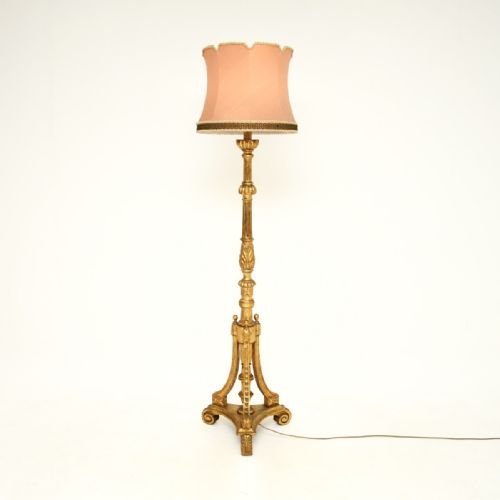


Gold Gilt Standard Lamp
A gold gilt standard lamp brings vertical height and warm metallic reflection to a room, drawing the eye upwards while casting a soft downward pool of light.
Gold Gilt Standard Lamp
A gold gilt standard lamp is a tall floor standing lighting fixture designed to illuminate a corner or sit beside seating furniture. The selection on this page ranges from nineteenth-century examples to pieces made around nineteen-thirty, with Italian Florentine and French styles appearing frequently.
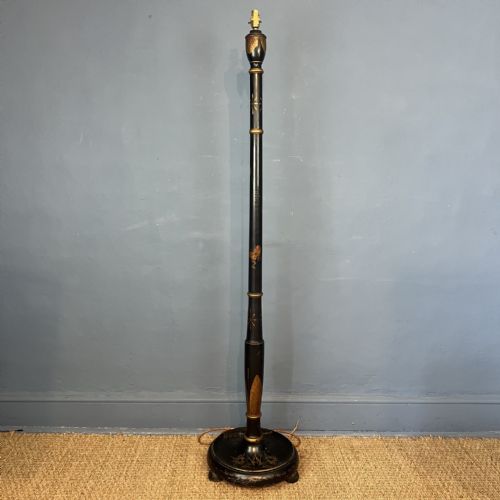
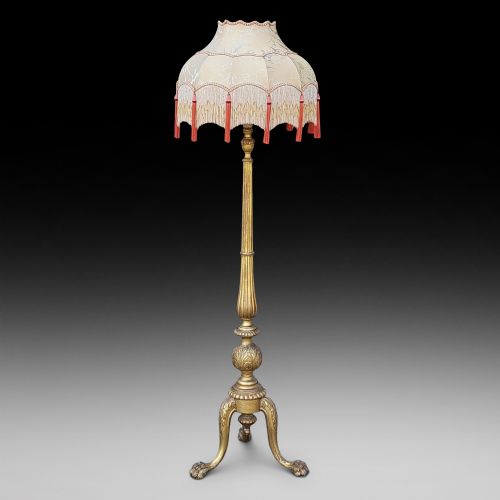
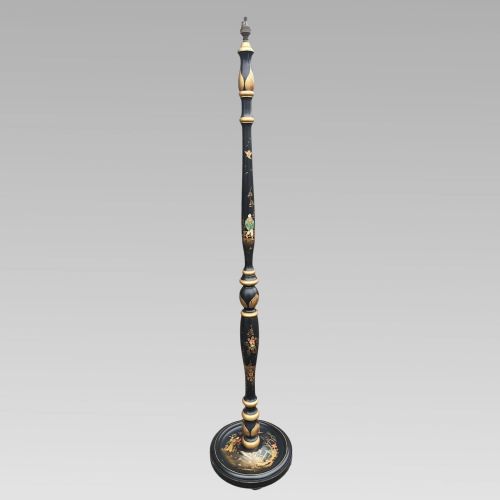
Most pieces function as floor standing lamps, though a small number of related table lamps also feature. Buyers encounter carved wooden shafts finished in giltwood, gesso, and gold leaf, often decorated in neoclassical, rococo, or chinoiserie revival designs.
Origin points span England, France, Italy, and Spain, reflecting nineteenth-century and early twentieth-century tastes for continental European interior decoration. The variety encompasses simple gilded columns alongside elaborate Venetian figures and lacquered frames.
How they were made
Makers shaped these lamps from solid woods such as timber, then applied layers of gesso to create a smooth surface for carving intricate ornamentation. Artisans overlaid thin sheets of gold leaf or applied liquid metal finishes over bole to achieve the characteristic reflective metallic surface.
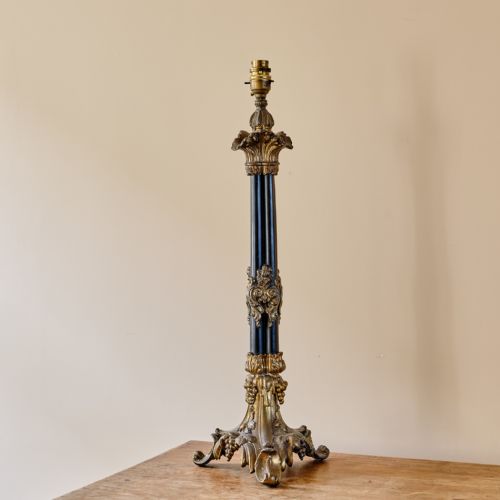
Bronze and brass components appear in structural elements or mounts, utilising cast metal techniques common to the nineteenth and early twentieth centuries. Lacquering techniques provided alternative dark or patterned backdrops for gilding, particularly visible on chinoiserie pieces.
Materials recorded across current pieces include fabric, giltwood, brass, gesso, gold leaf, lacquer, and gilt bronze.
What varies in quality
The depth and hand-carving of the wooden elements distinguish finer examples from simpler production, particularly where acanthus leaves, fluting, or figural details are rendered with crisp precision. Thick, hand-applied gold leaf patinates with a softer warmth over decades compared to mechanical metal paints.
Proportion and structural balance dictate the visual weight of the floor lamp, ensuring the tall shaft meets a stable base without wobbling. Original surface treatments retain their historic character better than later over-gilding or repainting.
The Gold Gilt Standard Lamp Glossary
- Giltwood
- Wood that has been coated with gold leaf, gold powder, or liquid metal. This finish provides the bright reflective sheen seen across many nineteenth-century and twentieth-century lamp bases.
- Gesso
- A plaster mixture applied to wood bases as a preparatory layer before gilding and carving. It allows craftsmen to model sharp decorative details that take gold leaf cleanly.
- Chinoiserie
- A European decorative style reflecting Chinese artistic influences, popular in furniture and lighting during the Edwardian period. Pieces often combine black lacquer with raised gilt motifs.
- Ormolu
- Gilded bronze used for decorative mounts and structural parts on nineteenth-century lighting. The technique involves applying a mercury and gold amalgam to bronze before heating.
- Neoclassical
- A revival style drawing on classical Greek and Roman architecture and motifs. Lamps in this manner frequently display columns, urns, and strict symmetrical proportions.
Gold Gilt Standard Lamp: Frequently Asked Questions
Where should I place a gold gilt standard lamp?
These tall fixtures suit corners of drawing rooms or beside reading armchairs where they provide functional illumination and decorative height.
Their metallic finish reflects ambient light, making them effective for brightening darker spaces without harsh overhead bulbs.
How do I identify a neoclassical standard lamp?
Neoclassical pieces rely on architectural elements like fluted columns, straight lines, and classical motifs derived from ancient Greece and Rome.
They stand apart from flowing rococo or asymmetrical chinoiserie designs through their strict symmetry and formal restraint.
What is the difference between giltwood and ormolu?
Giltwood refers to carved timber coated with gold leaf or metallic paint over a gesso base, offering a warm and organic texture.
Ormolu is cast bronze treated with gold, providing a heavier metallic structure used for durable mounts and refined decorative details.
How do I care for antique gilt surfaces?
Dust the carved wood and gold leaf gently with a dry, soft cloth to prevent abrasive particles from scratching the delicate metallic finish.
Avoid liquid cleaners and chemical polishes, as moisture and solvents can strip away historic gilding and underlying gesso.