


Classical Standing Lamp
A classical standing lamp brings architectural presence to a room, offering tall proportions and formal ornament rooted in antiquity.
Classical Standing Lamp
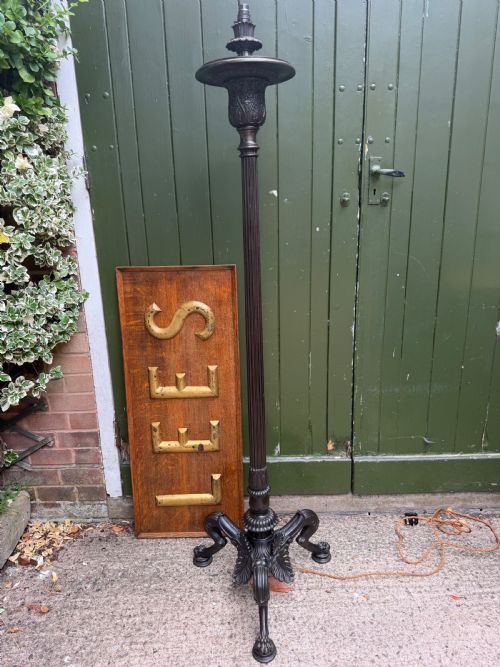
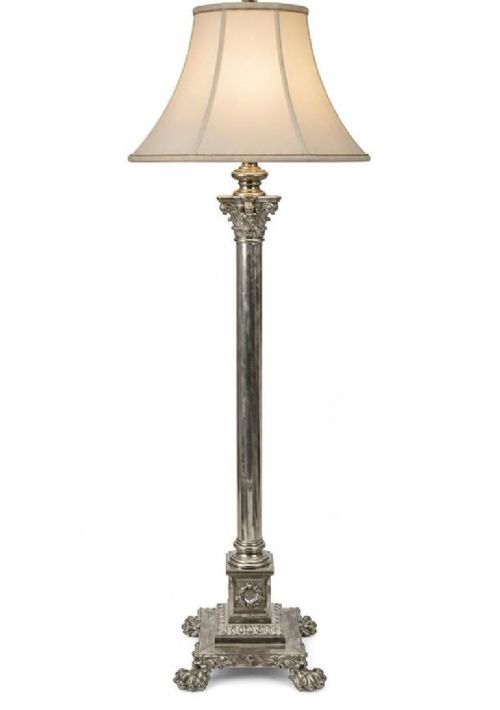
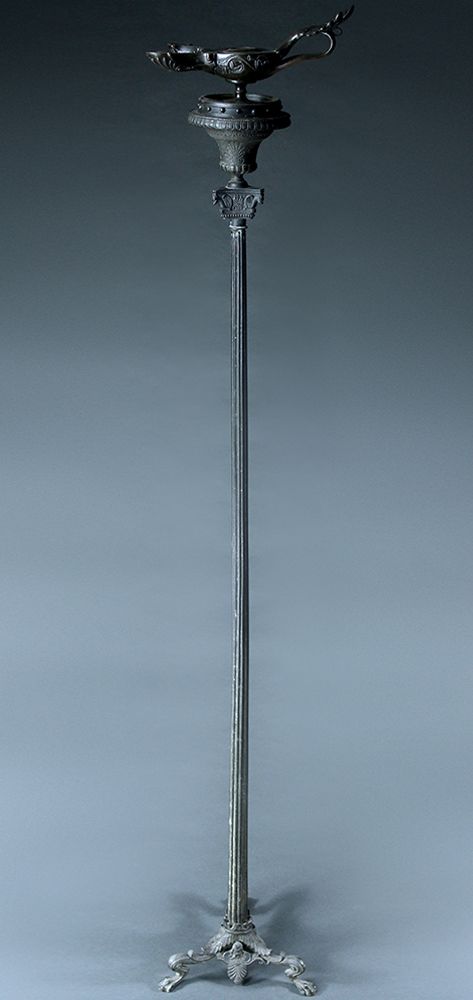
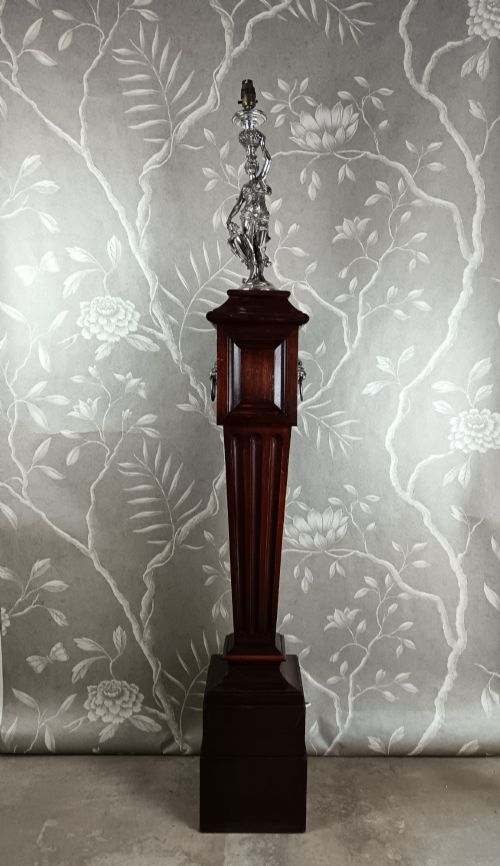
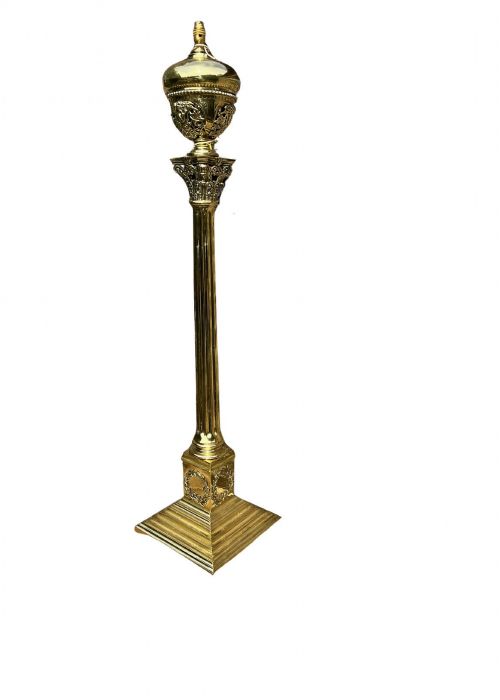
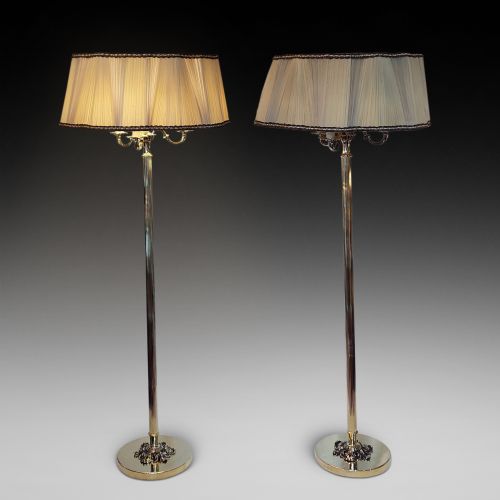
A classical standing lamp is a tall lighting fixture or torchere designed with decorative motifs drawn from Greek, Roman, and neoclassical architecture. Buyers searching for a classical standing lamp encounter forms such as Corinthian columns, slender brass shafts, and sculptural figures.
The pieces appearing here span the nineteenth century through the early twentieth century, taking in Victorian, Edwardian, and Regency revivals. Floor lamps and standard lamps dominate the selection, alongside architectural torcheres.
Alongside standard lighting, the inventory includes related forms like side tables, bedside tables, and gueridons that share the same neoclassical design vocabulary.
Materials and construction
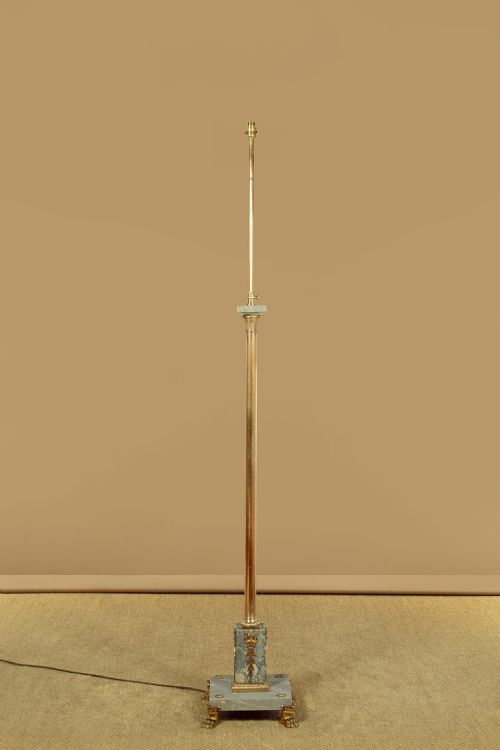
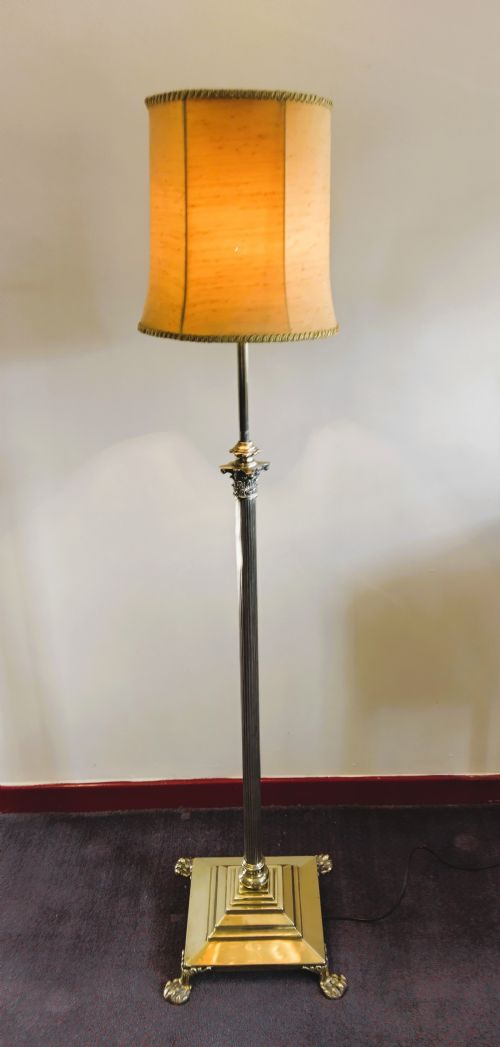
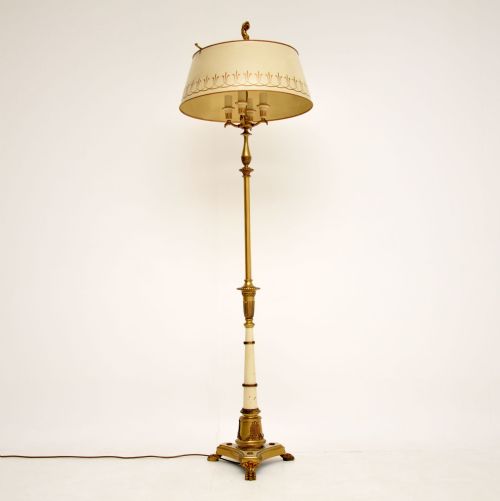
Brass is the predominant metal utilised in these upright lamps, often formed into fluted Corinthian columns or telescopic standards. Bronze, cast iron, silver plate, and silvered finishes provide alternative metallic structures.
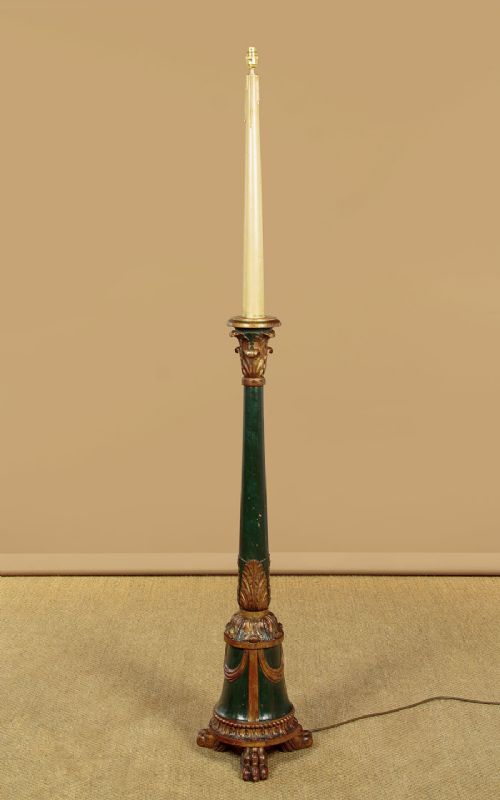
Carved wood, giltwood, parcel gilt, and painted surfaces appear frequently, sometimes paired with marble bases or alabaster figural elements. Fabric components provide the final shade structure on many examples.
Design styles draw heavily on French Empire, Regency, Adam, and Neoclassical revival traditions.
Markers of distinction
Quality rests in the crispness of the cast or carved ornament, from acanthus leaves on capitals to figurative details like rams heads. Heavier gauge metals and solid marble or alabaster bases separate substantial pieces from lighter constructions.
The sophistication of the proportions and the finesse of period details, such as telescopic adjustment mechanisms and signed bronze mounts, dictate the standing of an individual piece.
Humphrey Hopper·WMF·Coutan
The Classical Standing Lamp Glossary
- Torchere
- A tall stand designed to support a light or candle, often taking a slender neoclassical form. These pieces elevate illumination to eye level.
- Standard lamp
- A British term for a floor lamp, consisting of a vertical pole on a stable base supporting a shade. They serve as primary ambient room lighting.
- Corinthian column
- An architectural column style featuring an ornate capital decorated with carved acanthus leaves. It is a defining motif for classical standard lamps.
- Telescopic
- Descriptive of a standard lamp shaft designed with an adjustable height mechanism. This allows the column to extend or retract as needed.
- Gueridon
- A small French table, often circular, supported by one or more columns or figures. They frequently accompany standard lamps in period interiors.
Classical Standing Lamp: Frequently Asked Questions
What is a classical standing lamp?
A classical standing lamp is a tall floor-standing lighting fixture or torchere influenced by ancient Greek and Roman design. These pieces often feature column structures, bronze patination, and formal neoclassical ornament.
They function as both functional light sources and architectural focal points within traditional interior spaces.
How do I date a brass standard lamp?
Dating relies on examining construction techniques, weight, column styles, and fastening methods found on the standard. Victorian and Edwardian examples frequently employ heavy brass casting and telescopic mechanisms.
Earlier nineteenth-century pieces often display hand-finished details, while 1920s and 1930s versions may show simpler turned or painted shafts.
Where were torcheres used?
Torcheres originated as candle stands placed in corners or alongside furniture to illuminate grand rooms. In later periods, they were adapted to hold electric lights or serve purely as decorative sculpture.
They suit hallways, drawing rooms, and corners where vertical height adds balance to the interior scheme.
Are these lamps adjustable?
Many period standard lamps incorporate telescopic brass columns that permit height adjustment. This mechanism allows the overall height to suit different ceiling proportions and seating arrangements.
Non-adjustable versions maintain a fixed height set during original manufacture.