
Gold Gemstone Drop
When you search for gold gemstone drop, you are looking at pendant and earring designs that suspend coloured stones from precious metal.
Gold Gemstone Drop
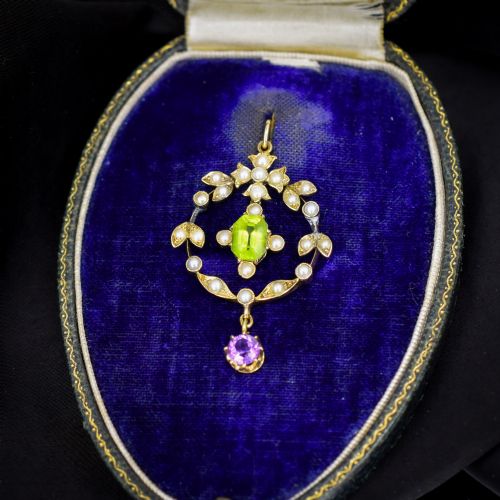
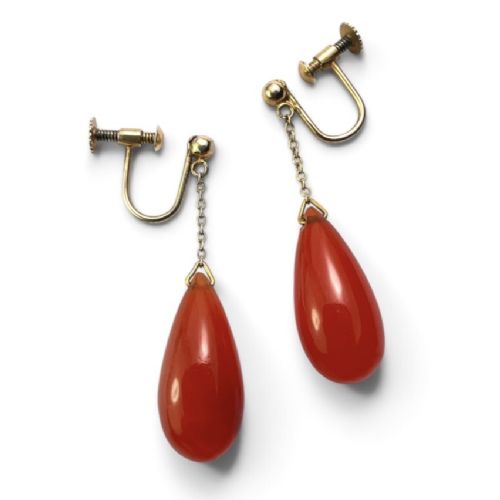
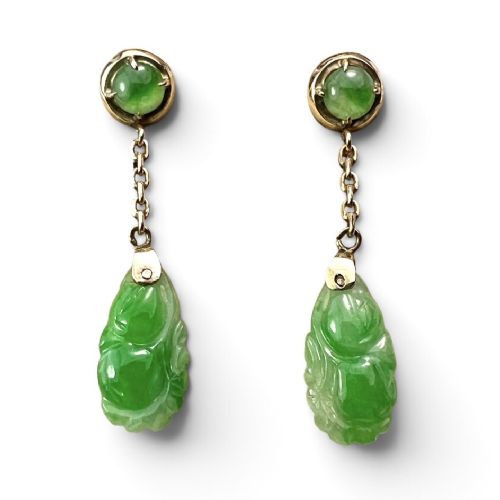
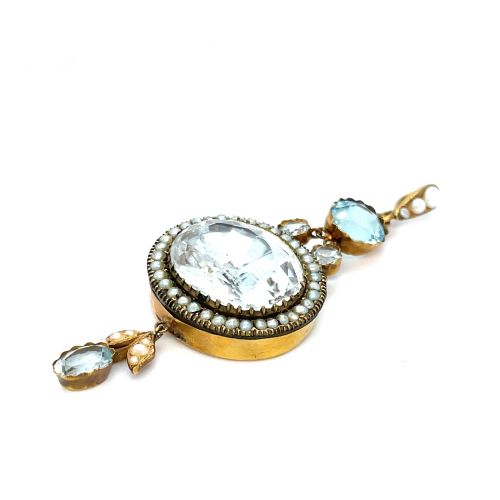
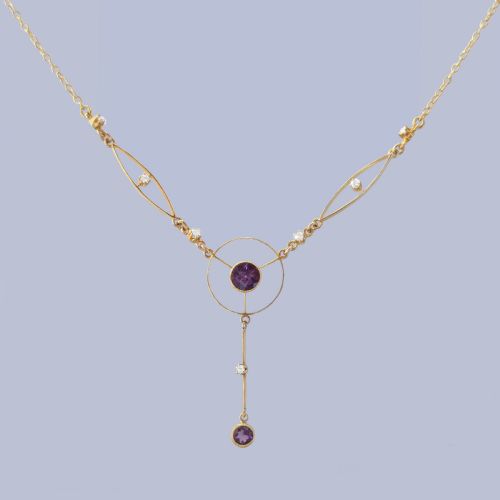
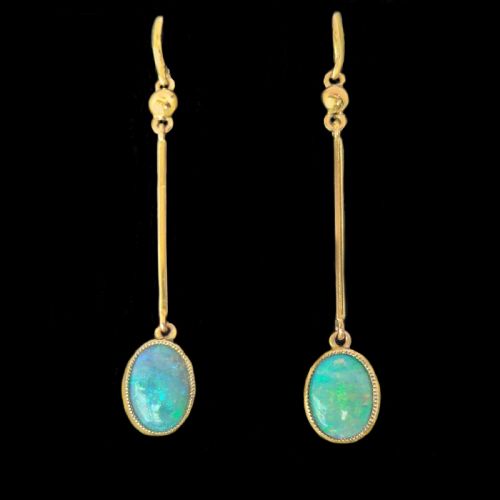
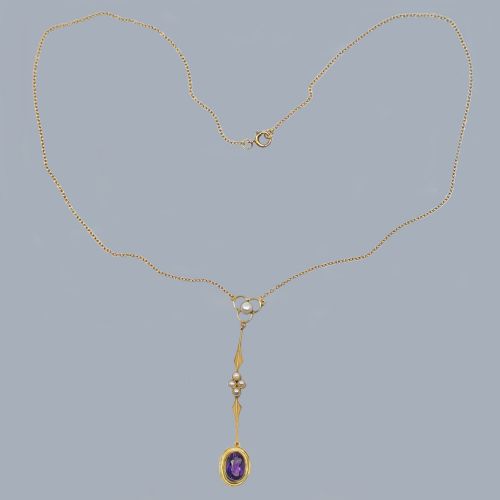
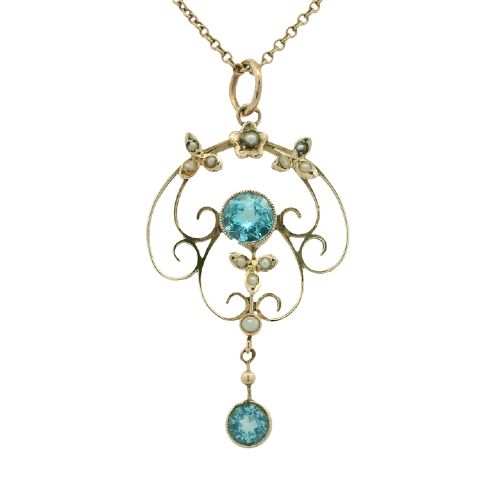
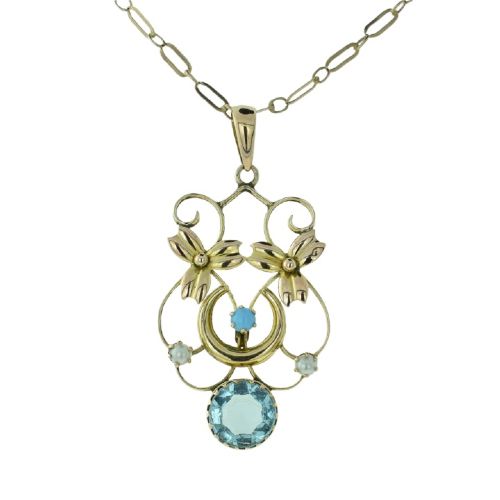
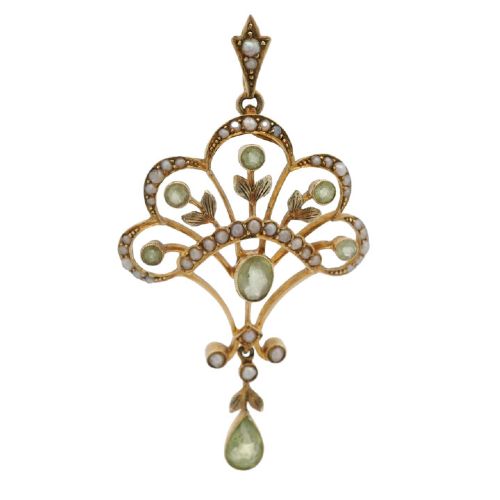
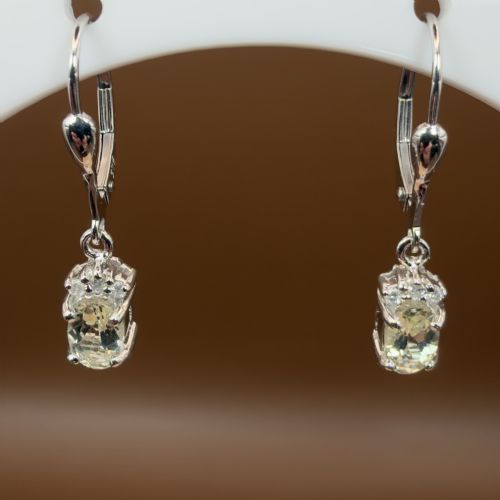
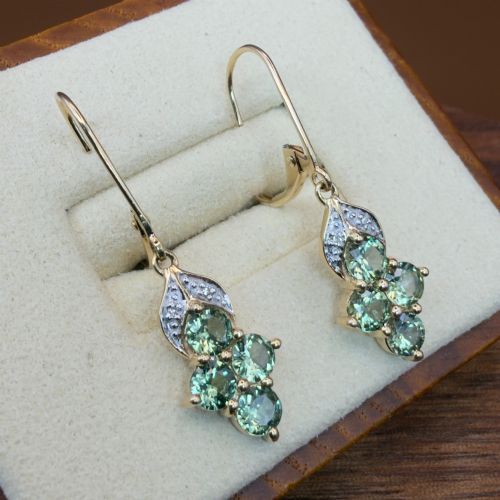
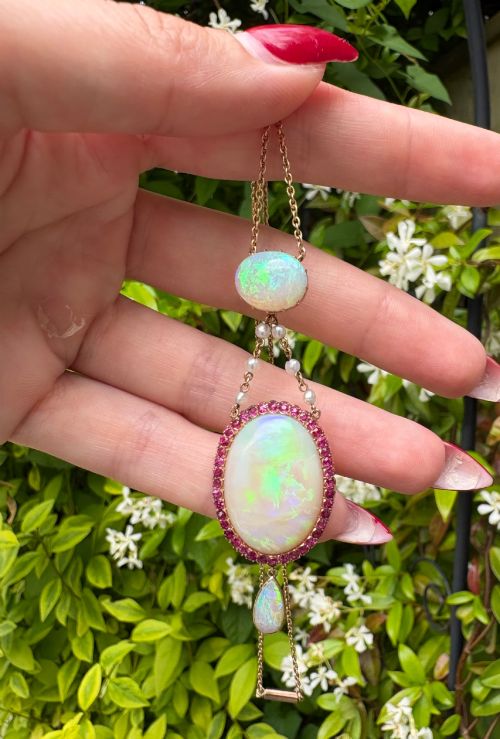
A gold gemstone drop piece brings together precious metals and suspended coloured stones in forms designed to hang from the earlobe or drape from the neck. When you explore this selection, you encounter items ranging from delicate Edwardian lavalier necklaces to mid-century dangle earrings.
The material record spans Victorian, Edwardian, Art Deco and later decades, showing how makers adapted hanging stone configurations across changing stylistic periods. Pendant necklaces, drop earrings and lavaliers dominate the forms present in the inventory.
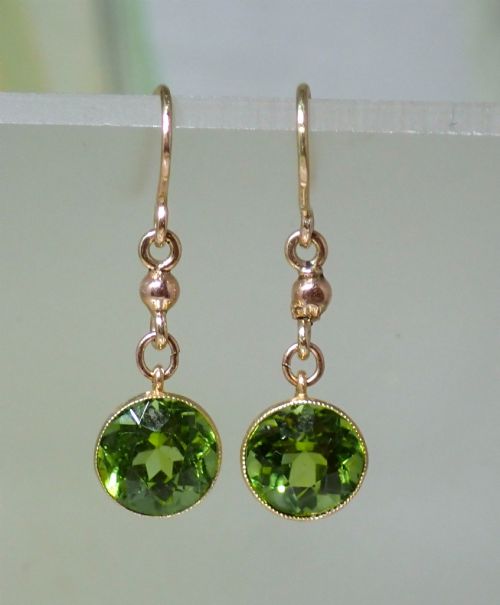
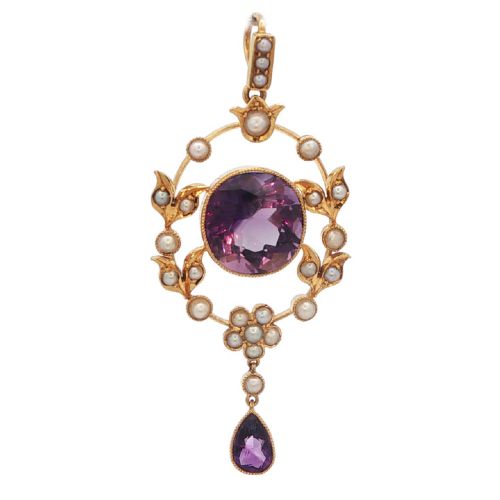
Amethyst, aquamarine, peridot and opal appear frequently alongside seed pearls and diamonds, set into various carats of yellow, rose and white gold. Buyers meet both strict period originals and pieces created in later revivals that echo earlier aesthetics.
Materials and construction methods
Goldsmiths utilised 9ct, 14ct, 15ct and 18ct gold alongside platinum to fabricate the settings, chains and mountings that suspend each stone. Component parts often involve cast or hand-wrought frames soldered to jump rings, hinged backs or lavalier drops.
Gemstones including faceted amethysts, cabochon opals, aquamarines and tourmalines are secured using claw settings, bezel walls or foil backing beneath transparent quartz. Seed pearls are typically threaded on fine wire or silk and held with tiny pegs within the gold framework.
Snakes curl around Victorian drop earrings, proving that even venomous reptiles occasionally moonlight as fine jewellery.
Distinguishing quality in craftsmanship
The distinction between standard commercial pieces and finer examples rests on the precision of the metalwork and the selection of the central stones. Master goldsmiths of the Edwardian and Art Deco periods employed delicate pierced galleries and balanced symmetry that elevated simple drops into intricate miniature sculptures.
Quality also shows in the depth of colour and clarity of the gemstones, as well as the original integrity of the components, such as intact seed pearls and matching stones. Articulated joints and secure hinge mechanisms reveal thoughtful engineering that preserves the movement of the hanging drop.
The Gold Gemstone Drop Glossary
- Lavalier
- A necklace featuring a central pendant suspended below a main chain, popular during the Edwardian and Art Nouveau periods. This design often incorporates multiple dangling stones.
- Foil back
- A technique where a thin sheet of metallic foil is placed behind a gemstone to enhance its brilliance and colour. This method appears frequently in older Victorian jewellery.
- Cabochon
- A gemstone shaped and polished with a smooth, rounded convex surface rather than being faceted. Opals and garnets are frequently cut this way to display their internal play of colour.
- Seed pearl
- A very small, naturally occurring or cultured pearl used extensively in clusters and border arrangements. They add a delicate texture to gold pendant mountings.
- Hinge back
- An earring closure featuring a hinged lever that snaps shut against the post to secure the drop. This mechanism provides reliable fastening for heavier dangling elements.
Gold Gemstone Drop: Frequently Asked Questions
What is a gold gemstone drop pendant?
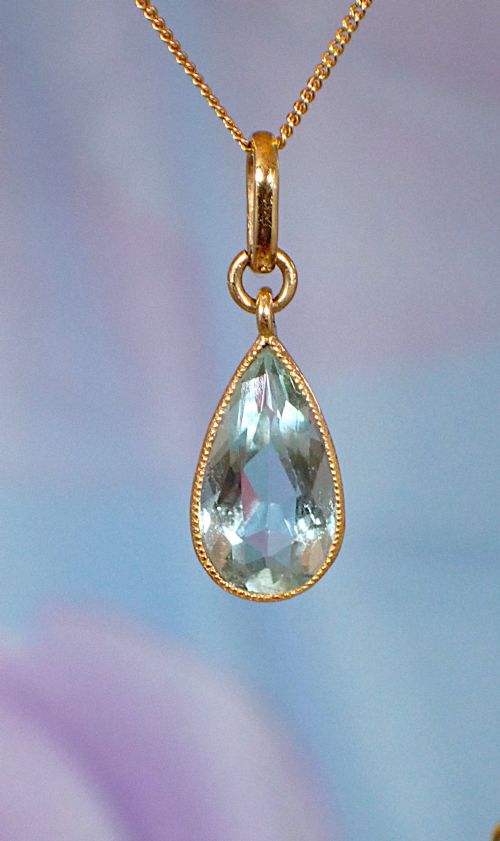
A gold gemstone drop pendant is a necklace where a precious metal chain suspends a setting containing one or more coloured stones. These items hang freely below the main neckline.
Such pieces range from single-stone aquamarine drops to complex Edwardian lavaliers featuring pearls and amethysts. They are designed to draw the eye downward with movement and colour.
How do I care for antique gold drop earrings?
Antique gold drop earrings require gentle cleaning with a soft cloth and warm soapy water, avoiding harsh chemical dips. Many older stones like opals and pearls are porous and sensitive to moisture.
Store each pair separately in a lined box to prevent the dangling elements from tangling or striking other items. Regular inspection of the hooks and settings ensures the stones remain secure during wear.
How can I tell an Edwardian drop from a Victorian one?
Edwardian drops generally display lighter, more airy platinum or white and yellow gold wirework, often incorporating floral garlands or geometric motifs. Aquamarines, peridots and seed pearls predominate in this era.
Victorian pieces tend to use heavier 15ct gold settings with closed backs, foil enhancements or serpent motifs. Their stones often feature deeper hues like garnet, amethyst or turquoise.
Can I wear these drop necklaces every day?
Daily wear depends on the specific materials used in the drop pendant, as softer stones require greater caution. Amethysts and aquamarines handle regular use well, whereas opals and pearls demand a gentler approach.
Checking the jump rings and chain links periodically prevents accidental loss. Storing the necklace flat or hung up avoids kinks in the delicate chain.