
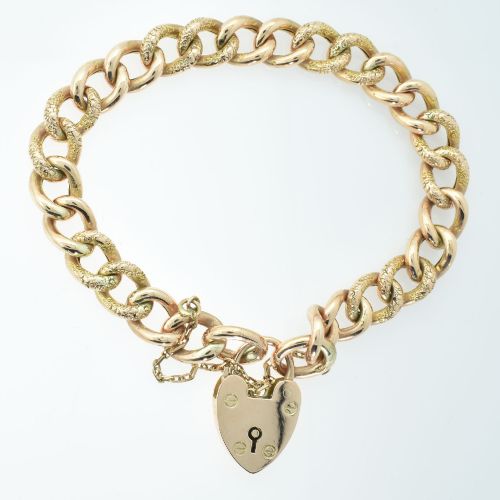
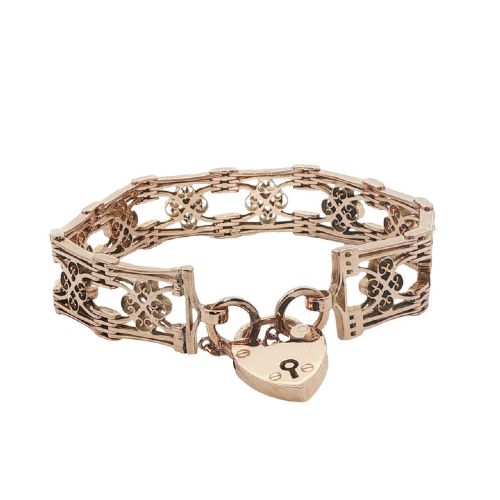
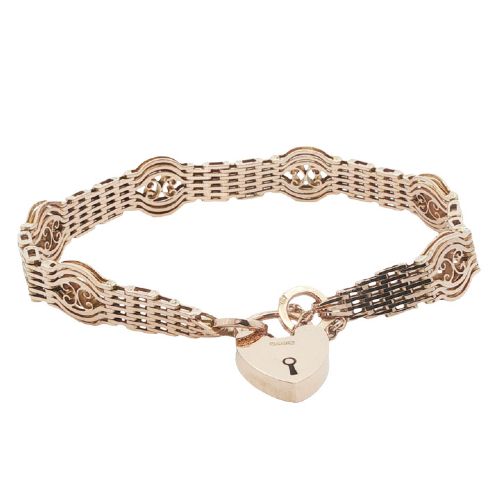
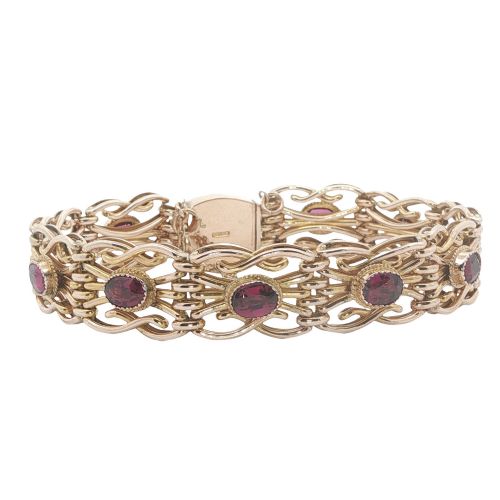


Gold Gate Link Bracelet
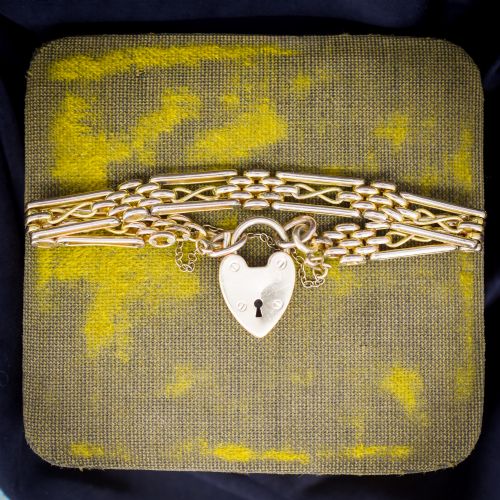
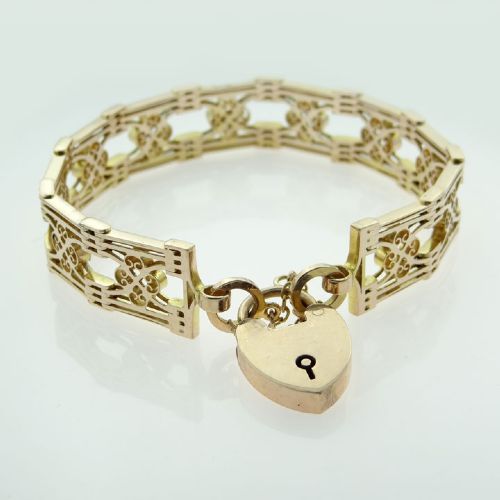
A gold gate link bracelet is a classic hinged wrist adornment valued for its flexible lattice design and secure padlock fastening.
Gold Gate Link Bracelet
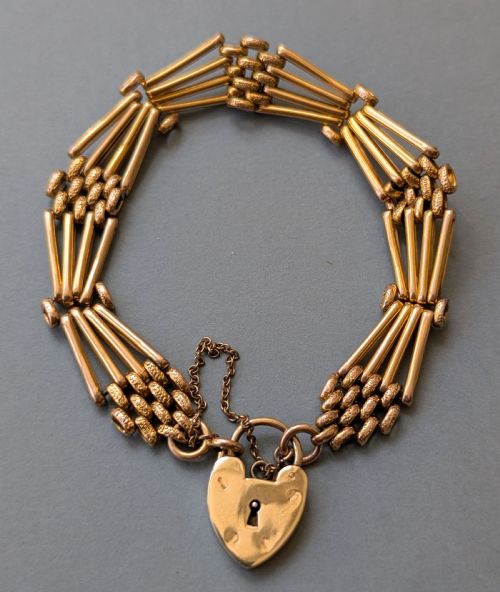
A gold gate link bracelet is defined by its repetitive openwork bars that mimic the appearance of a small agricultural gate, joined by central connecting links. These pieces span several eras, with Victorian and Edwardian examples appearing most frequently alongside pieces from nineteen hundred and nineteen ten.
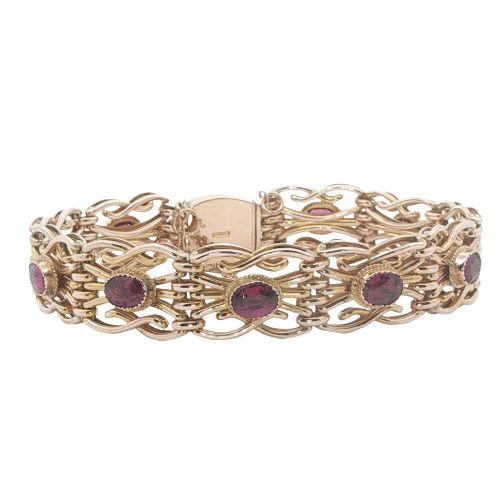
The format ranges from simple multi-bar configurations to elaborate designs set with gemstones like almandine garnet, amethyst, opal, turquoise, and seed pearl. Many examples incorporate a safety chain and a miniature heart padlock as a clasp, reflecting the romantic sentimentality of the nineteenth and early twentieth centuries.
While yellow gold and rolled gold appear regularly, 9ct rose gold dominates the available selection, often presenting a warm pinkish hue developed over more than a century of age. Heavier variations utilise solid 9ct gold or 15ct gold construction, while vintage mid-century items occasionally feature extra wide bar structures.
Materials and construction
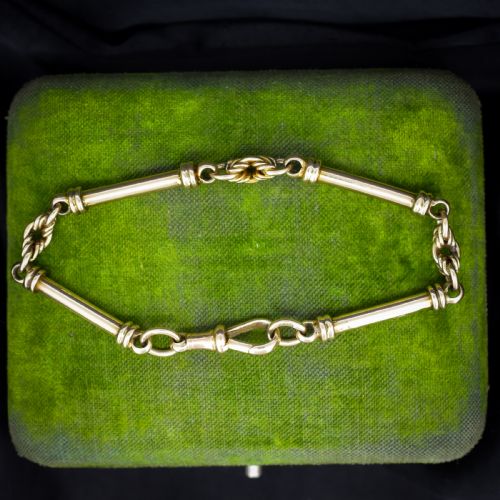
These items rely on durable gold alloys, predominantly 9ct gold and 9ct rose gold, with occasional historical examples utilising 15ct or 18ct gold alongside rolled gold alternatives. Goldsmiths formed individual hollow or solid tubular bars, threading them together with interlocking links to achieve a flexible, draping band.
Gemstones including almandine garnet, amethyst, opal, turquoise, and seed pearl are flush-set, bezel-set, or pinned directly onto the central links or accompanying love knots. Functional elements such as dog clips, jump rings, and spring-loaded heart padlocks were individually cast and hand-finished to ensure secure daily wear.
Listings feature items spanning the Victorian era, Edwardian period, and the nineteen fifties, constructed in 9ct rose gold, yellow gold, and rolled gold.
Assessing quality and craftsmanship
The distinction between standard and superior pieces rests on the weight of the metal and the tightness of the gate link construction. Heavier 9ct and 15ct gold bracelets maintain structural rigidity and resist denting across the individual bars, whereas lighter rolled gold versions show wear more readily.
Hand-engraved surface patterns, crisp hallmarks stamped by assay offices such as London, and the inclusion of intact natural gemstones like almandine garnet or opal elevate the standard of manufacture. The precision of the hinge alignment and the secure snap of the heart padlock mechanism indicate the original skill invested in the piece.
The Gold Gate Link Bracelet Glossary
- Gate link
- A style of linked bracelet formed from parallel bars joined by smaller connecting rings, resembling a traditional farm gate. This construction provides high flexibility around the wrist.
- Heart padlock
- A decorative heart-shaped clasp commonly utilised on Victorian and Edwardian wristwear. It functions as both a secure fastening and a symbolic love token.
- Almandine garnet
- A deep red variety of garnet frequently utilised in late nineteenth-century gemstone jewellery. It provides a dark, wine-coloured contrast to rose gold settings.
- Rolled gold
- A material formed by bonding a thin sheet of gold to a base metal core under heat and pressure. This technique offered the appearance of solid gold at a lower production cost.
- Seed pearl
- A very small natural or cultured pearl used in clusters or floral motifs during the Victorian era. These delicate pearls are typically threaded on fine silk or wire.
Gold Gate Link Bracelet: Frequently Asked Questions
How do I open the heart padlock?
Most heart padlocks on these bracelets operate via a spring-loaded latch activated by pressing a small protruding nib or pulling a hinged bail. The mechanism should spring shut firmly once released.
Avoid forcing the padlock if it feels stuck, as age can make the internal spring fragile. A gentle clean can often free a stubborn clasp.
Are these bracelets suitable for daily wear?
Solid gold variants withstand regular daily wear quite well due to the robust nature of the interlocking bar design. Care should be taken with pieces featuring softer gems like opal or seed pearl.
Checking the safety chain and the padlock clasp regularly ensures the bracelet remains securely fastened on the wrist during movement.
How do I tell Victorian from Edwardian pieces?
Victorian examples often feature heavier rose gold, chased engraving, and romantic motifs like love knots alongside deep red almandine garnets or amethysts. Hallmarks and closed-back settings help confirm the nineteenth-century production date.
Edwardian pieces tend to display lighter, airier openwork designs, sometimes incorporating pearls or opals with crisper stamp marks from nineteen hundred onwards.
What does rolled gold mean?
Rolled gold refers to a durable mechanical plating method where a layer of solid gold is permanently fused to a base metal core. This differs from modern flash plating because the gold layer is substantially thicker.
Items made this way offer the visual warmth of solid gold while maintaining a lighter weight on the wrist.