

Antique Gold Swivel Clasp
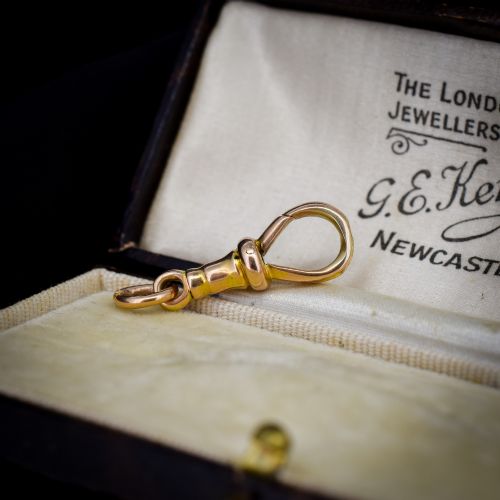
These antique gold swivel clasp pieces are functional fasteners and connectors prized for their secure pivoting mechanism and rich metalwork.
Understanding antique gold swivel clasp designs
When you search for antique gold swivel clasp items, you encounter functional jewellery components and secure attachments designed to connect guard chains, bracelets, and watch chains. These pieces represent essential elements of 19th-century and Edwardian adornment, built to allow a suspended pendant or watch to rotate freely without twisting the supporting chain.
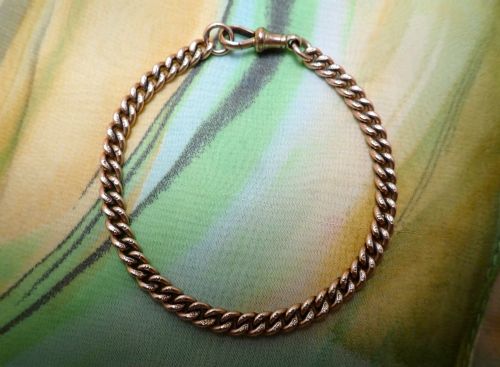
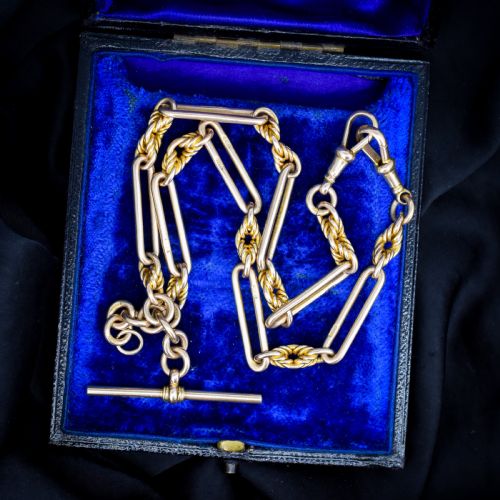
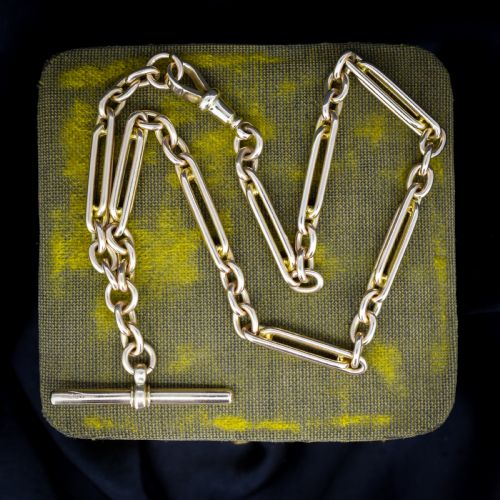
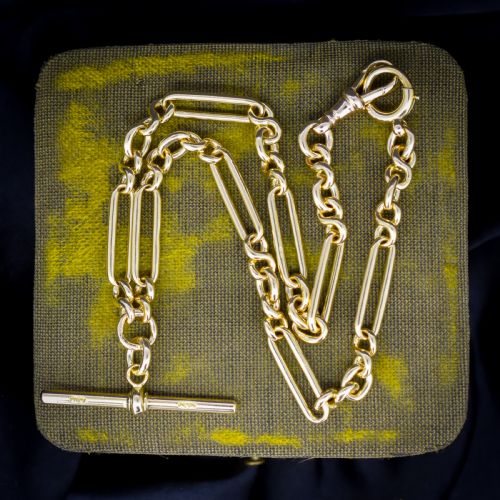
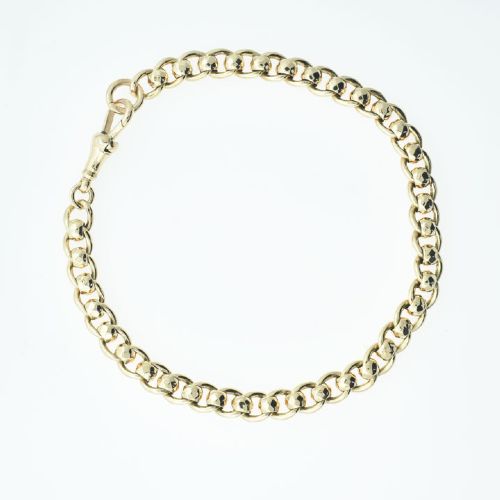
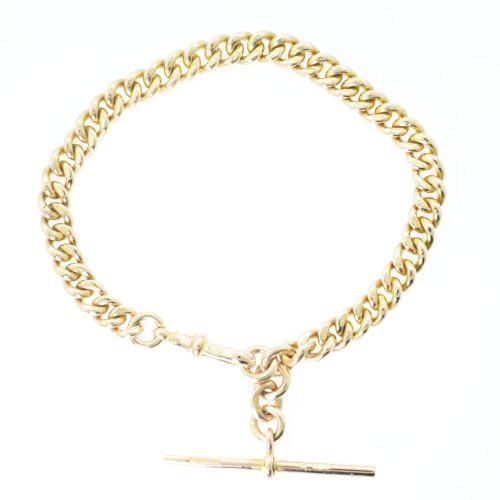
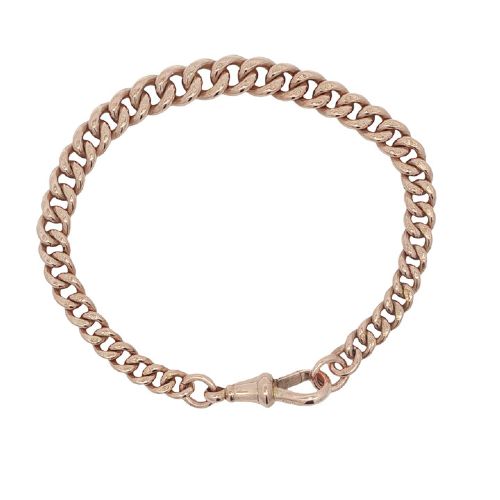
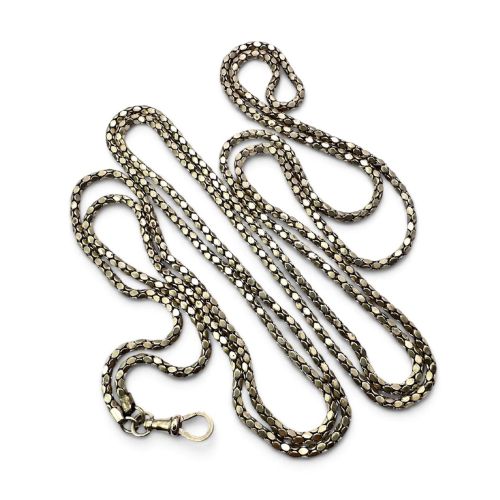
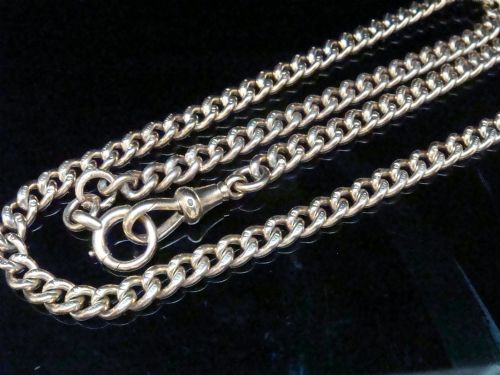
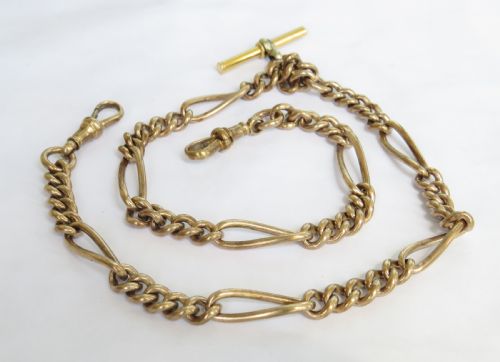
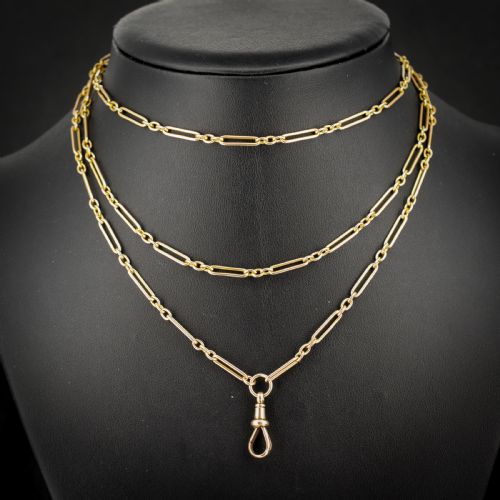
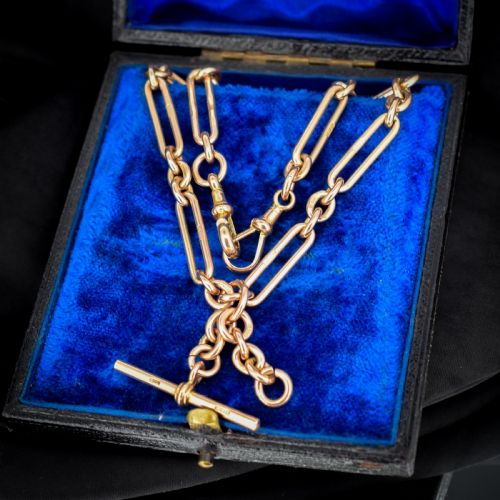
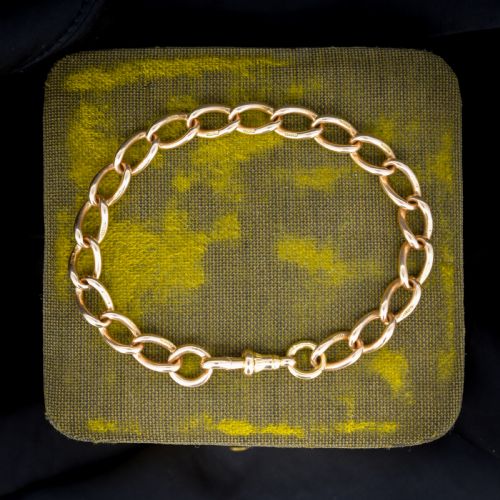
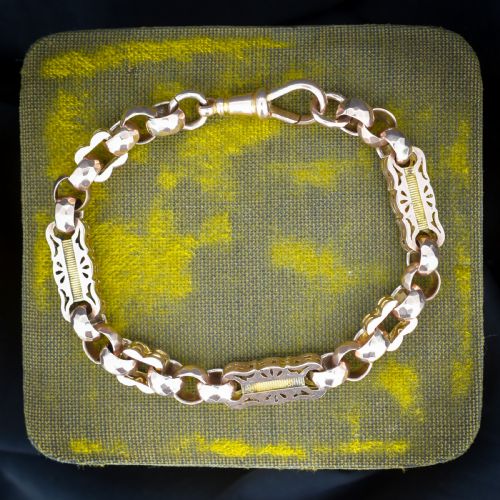
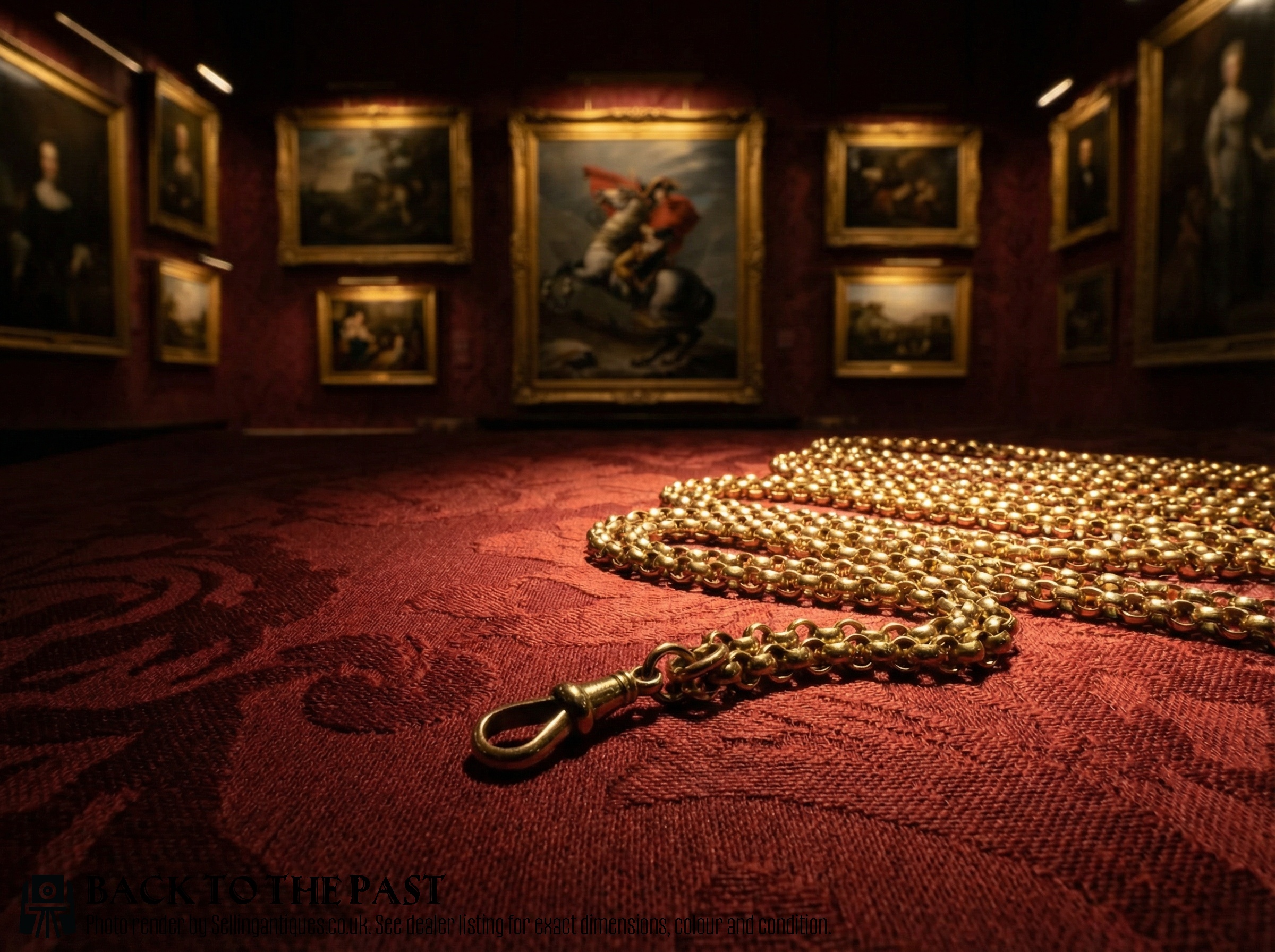
The selections available here include robust dog clips fitted to oval curb bracelets, fancy link stars and bars chain bracelets, and very long guard chains featuring turquoise accents alongside trombone links. These items span the Victorian, Edwardian, and broader 19th-century periods, showcasing the varied forms utility took in historical jewellery.
Materials and construction methods
The construction of these items relies heavily on traditional goldsmithing techniques applied to 9ct gold, 9ct yellow gold, and higher-purity 15ct gold. Goldsmiths shaped yellow gold and rose gold into structured links, heavy belcher chains, and hollow or solid curb patterns designed to distribute weight evenly across the clasp mechanism.
Makers integrated spring-loaded swivel mechanisms into the fastener heads, allowing the loop to rotate independently from the body of the clip. Additional decorative detailing incorporates turquoise gemstones flush-set or beaded into the associated chainwork, combining mechanical durability with period ornamentation.
Retail Price Guide 2026
Typical UK retail prices for gold swivel clasp, calculated from the Sellingantiques database of over a million retail prices indexed since 2003. This retail price guide relies exclusively on Sellingantiques data; no external sources or auction records are used, so the figures do not describe the wider market.
The inventory spans the Victorian and Edwardian eras within the broader 19th century.
Distinctions in quality and execution
Quality in these pieces is dictated by the alloy purity and the mechanical resilience of the swivel action. Higher-grade examples utilise 15ct gold rather than 9ct gold, providing a deeper tone and greater intrinsic metal density that resists wear at the pivot point.
The finesse of the spring mechanism inside the dog clip separates superior items from simpler hardware. A well-made clasp snaps shut with reliable tension and maintains smooth 360-degree rotation without slack in the hinge, reflecting the original maker's precision.
The Antique Gold Swivel Clasp Glossary
- Swivel clasp
- A mechanical fastener featuring a pivoting loop that rotates independently of the main body, preventing chains from twisting during wear.
- Dog clip
- A specific spring-loaded snap fastener commonly found on Victorian and Edwardian watch chains and bracelets.
- Trombone link
- An elongated, rectangular chain link shape with folded ends, characteristic of 19th-century utility jewellery.
- Guard chain
- A long necklace historically used to secure pocket watches, lorgnettes, or other functional accessories.
Frequently Asked Questions
What is an antique gold swivel clasp used for?
These clasps served primarily to attach pocket watches, charms, or pendants to long chains and bracelets while allowing the suspended item to turn freely.
Today, buyers utilise them as secure focal connectors for modern neckchains or to wear historical guard chains in their original configurations.
How do I date these gold clasps and chains?
Dating relies on stylistic markers such as link geometry, hallmark stamps, and associated gemstones like turquoise, which were prevalent during the Victorian and Edwardian eras.
Periods span from the broader 19th century through the early 20th century, identifiable by the specific alloy standards like 15ct gold used at the time.
What is the difference between 9ct and 15ct gold?
The primary distinction lies in the proportion of pure gold within the metal alloy, with 15ct gold containing a higher gold content than 9ct gold.
This higher purity imparts a distinct warmth to the yellow gold or rose gold surfaces and generally indicates an earlier or more substantial piece of jewellery.
Can I wear a swivel clasp every day?
These mechanisms were engineered for daily utility in the 19th century, designed to withstand the constant movement of pocket watches and chatelaines.
Checking the internal spring tension ensures the clasp remains secure for modern daily wear on bracelets or guard chains.