




Gold Garnet Cluster Ring
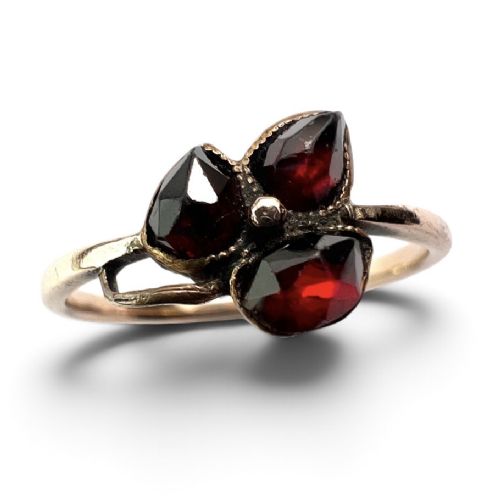
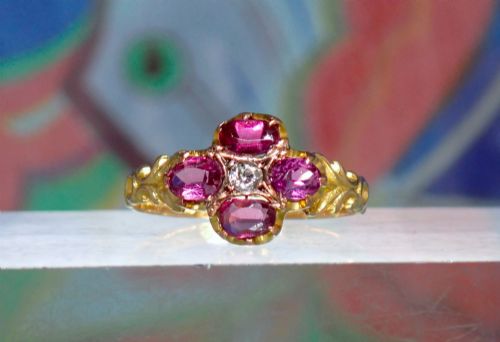
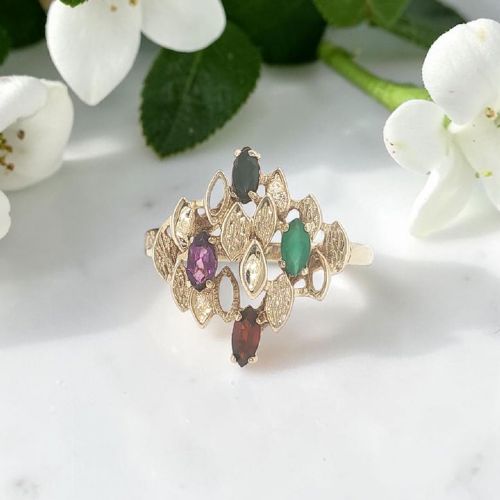
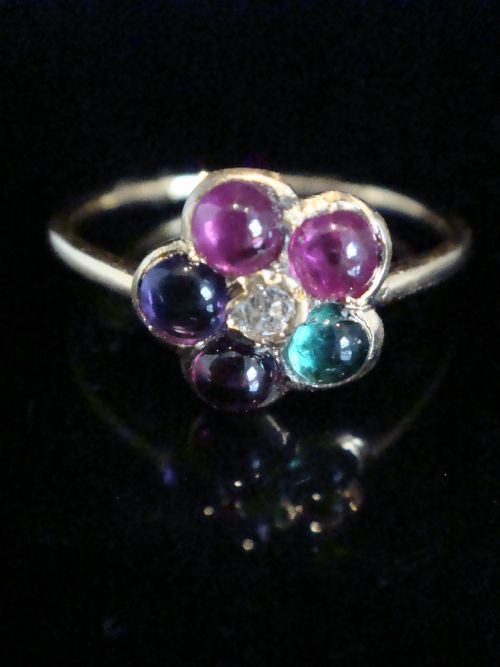
A gold garnet cluster ring brings together deep crimson stones and yellow or white gold in a traditional floral or geometric arrangement.

Gold Garnet Cluster Ring
When you search for a gold garnet cluster ring, you encounter pieces designed around a central red stone surrounded by smaller gems or matching stones. These jewels appear across multiple decades, spanning Victorian, Edwardian, and mid-century periods.
The most common examples on this page utilise 9ct or 18ct gold settings configured into flower, daisy, or tightly packed multi-stone clusters. Alongside standard almandine garnets, variations incorporate seed pearls, diamonds, and occasional coloured gemstones such as emeralds or sapphires.
How they were made
Goldsmiths constructed these clusters using yellow, white, and rose gold in 9ct, 14ct, 15ct, and 18ct purities. Settings range from traditional claw mounts to closed backs typical of older periods.
Stones are selected for colour saturation and cut, incorporating rose-cut garnets, old-cut diamonds, and seed pearls. Master jewellers arranged these components into balanced floral or geometric motifs, securing each gem by hand.
The archive records pieces spanning the Victorian era through the Edwardian period, Art Deco, and 1960s.
What varies in quality
The standard of a cluster ring depends on the depth and matching of the garnet stones, alongside the weight and purity of the gold mount. Higher quality examples show precise stone-setting and substantial metal thickness in the shank.
Design complexity also separates pieces, with intricate filigree work and balanced integration of accent stones like diamonds or seed pearls elevating the construction above simpler massed settings.
The Gold Garnet Cluster Ring Glossary
- Almandine Garnet
- A dark reddish-brown variety of garnet commonly found in antique and vintage cluster rings. It provides the deep crimson tone characteristic of Victorian jewellery.
- Cluster Ring
- A ring featuring a central gemstone surrounded by a group of smaller stones. This layout creates a larger visual presence on the hand.
- Seed Pearl
- A very small natural or cultured pearl used as an accent in antique jewellery. They frequently encircle garnets in Victorian flower-patterned settings.
- Rose-Cut
- A vintage gemstone cutting style with a flat base and a domed crown consisting of triangular facets. It produces a soft glow rather than sharp modern brilliance.
Gold Garnet Cluster Ring: Frequently Asked Questions
What periods do these rings come from?
The listings span several distinct eras, including Victorian, Edwardian, Art Deco, and mid-century decades up to the 1960s. Earlier pieces often feature almandine garnets with seed pearls, while later examples incorporate diverse gold purities and alternative stone combinations.
Examining the construction methods, hallmarks, and mount styles helps distinguish between original antique specimens and later vintage interpretations.
How do I care for a garnet ring?
Garnets measure lower on the Mohs hardness scale than diamonds, meaning they require gentle handling during daily wear. Clean them using warm soapy water and a soft brush, avoiding harsh chemical dips or ultrasonic cleaners.
Store the ring separately from harder gemstones to prevent scratching the gold surfaces and the facets of the garnet.
What gold purities should I expect?
These rings utilise a range of gold standards, including 9ct, 14ct, 15ct, and 18ct variations in yellow, white, and rose tones. Fifteencarat gold is particularly characteristic of Victorian and Edwardian manufacturing before standardisation shifted.
Each purity level offers a different colour depth and durability, influencing how the mounting frames the dark red garnets.
Are pearls in these rings genuine?
Antique cluster rings frequently incorporate natural seed pearls set alongside the garnets in floral or geometric arrangements. These organic elements show subtle variations in lustre and size characteristic of period materials.
Gentle cleaning protects the delicate nacre of the pearls from damage while maintaining the overall appearance of the cluster.