

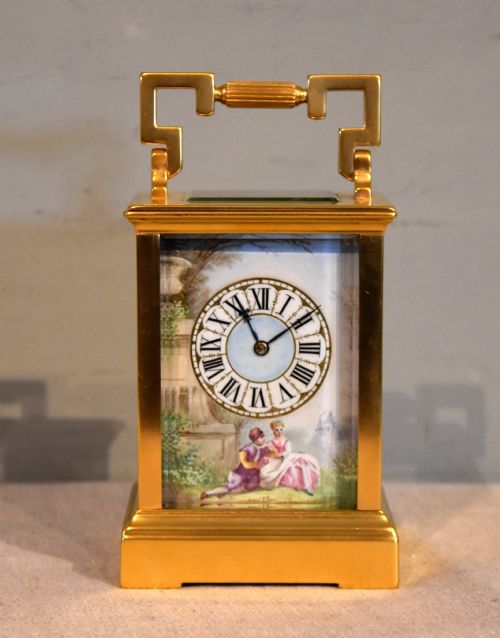
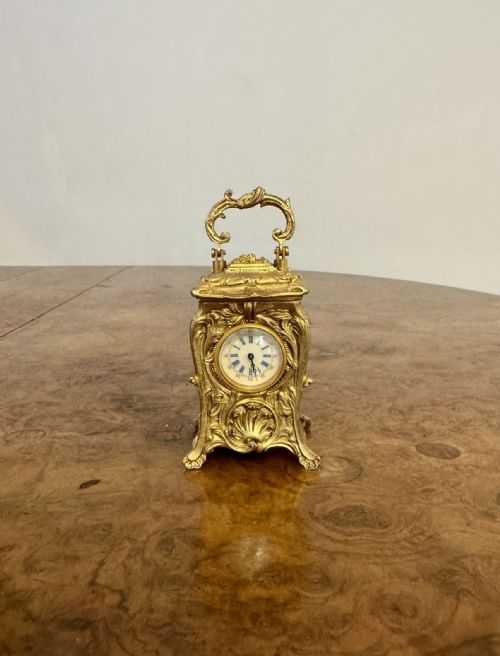

Gold French Carriage Clock
A gold french carriage clock offers portable timekeeping wrapped in heavy metal and bevelled glass, prized for brasswork and repeating bell mechanisms.
Gold French Carriage Clock
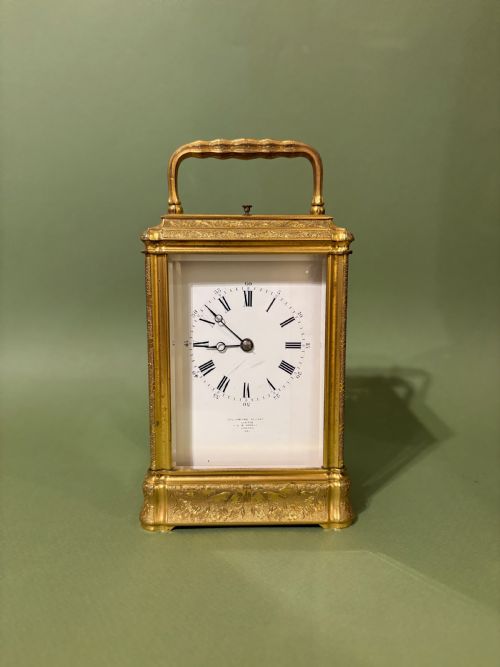
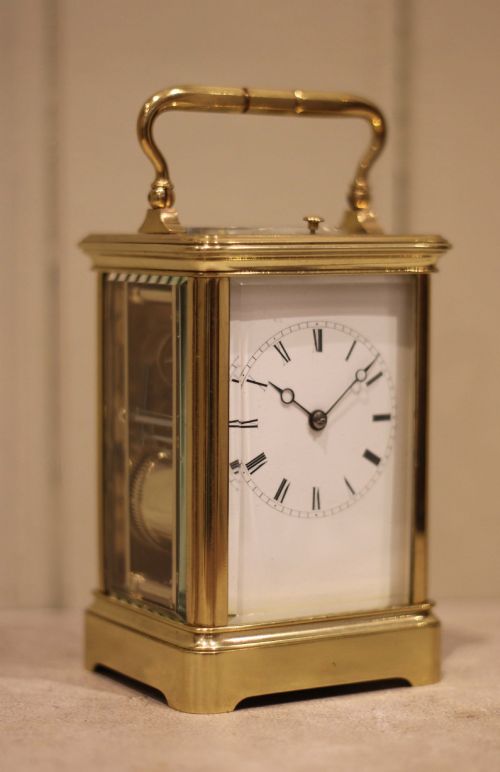
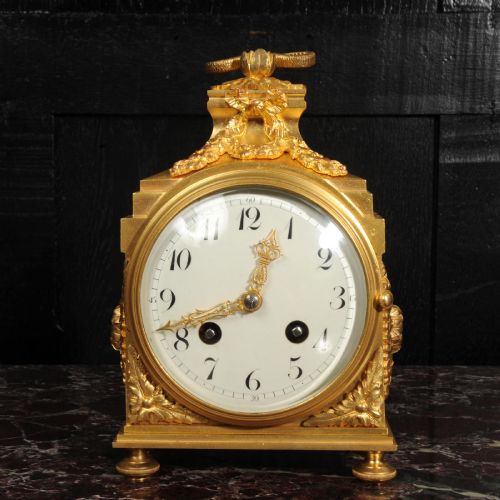
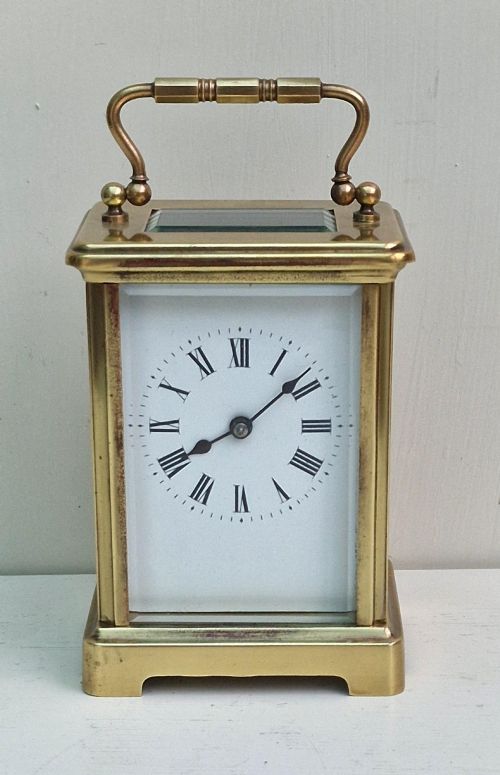
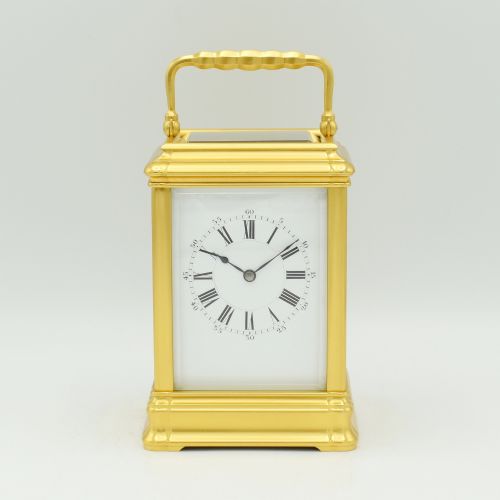
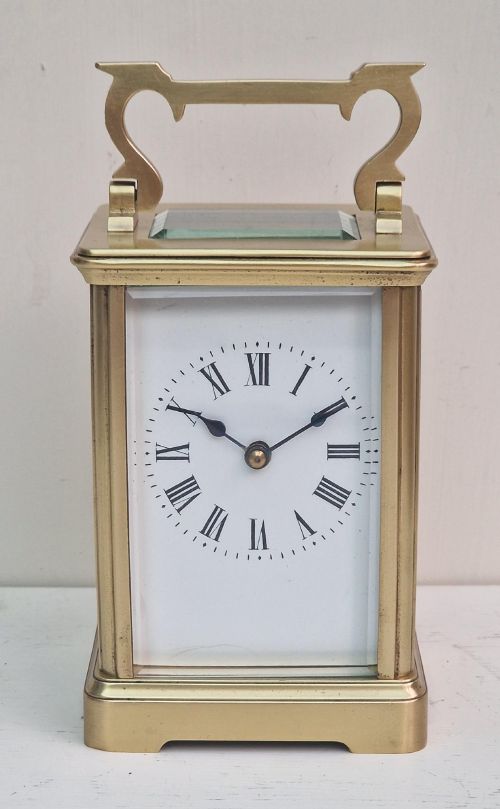
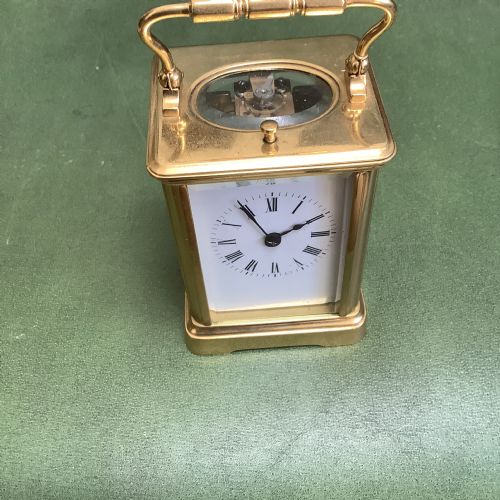
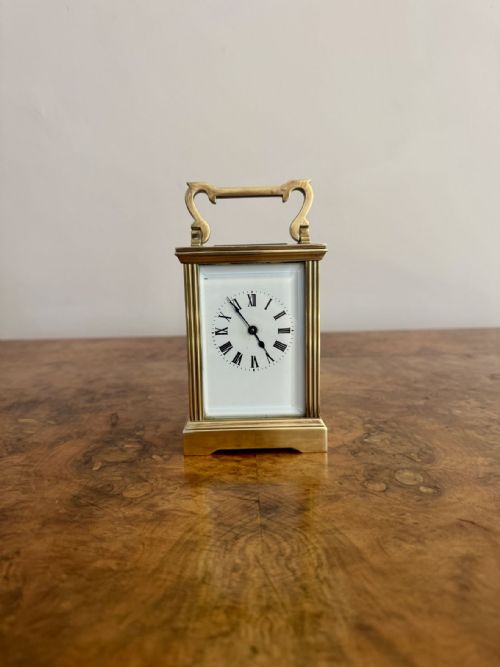
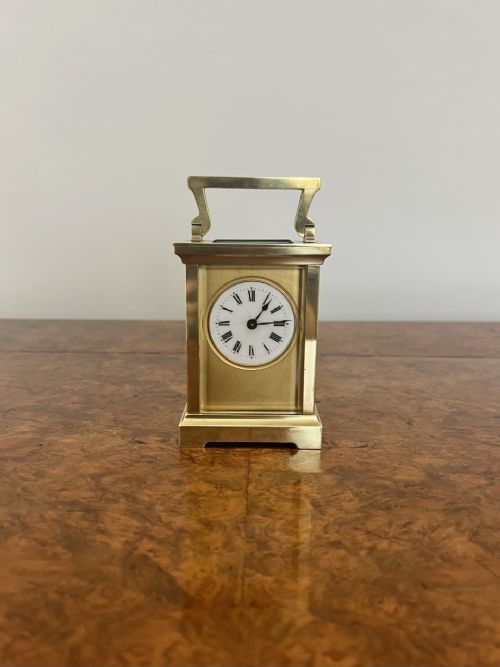
When searching for a gold french carriage clock, a buyer explores portable timepieces designed for travel during the nineteenth and early twentieth centuries. These pieces typically feature glass panels held within brass, gilt brass, or ormolu frames, allowing the internal movement to remain visible from multiple angles.
The versions most commonly met on this page span the Victorian and Edwardian periods, stretching from the eighteen-eighties through to nineteen-ten. They appear primarily as carriage clocks or desk clocks, often housed in traditional rectangular gorge cases or curved serpentine designs.
Originating predominantly from French workshops, many examples incorporate porcelain dials and enamel details alongside their gilded metal frames. Collectors encounter standard timepieces as well as more complex repeating and striking mechanisms produced during the height of the French carriage clock industry.
How they were made
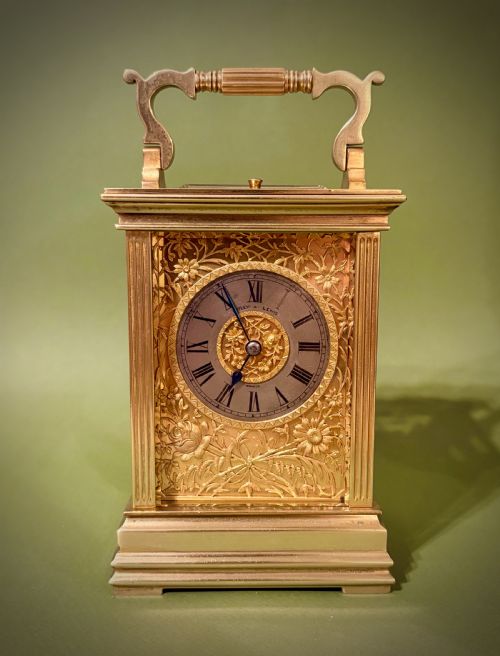
Makers constructed these clocks using heavy brass or gilt bronze frameworks fitted with bevelled glass panels to enclose the mechanical movements. Ormolu and gilt brass finishes provided the bright golden appearance demanded by the period style.
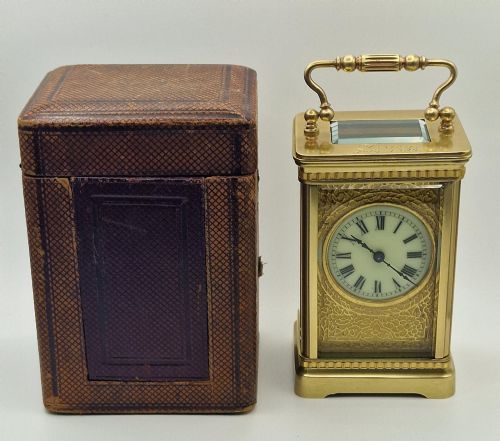
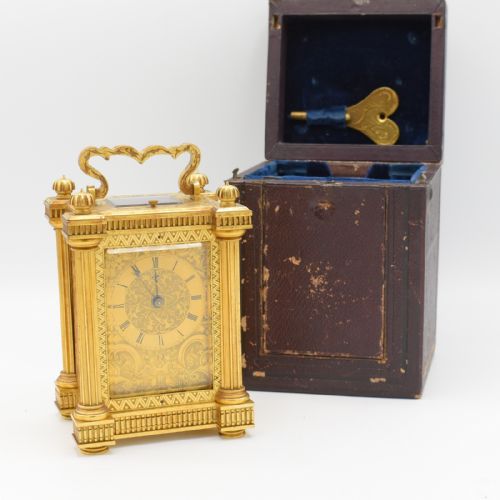
Enamel and porcelain formed the dials, often painted with Roman numerals and paired with delicate steel hands. Travel cases made from leather protected the brass frames during transport.
Travellers once relied on these heavy brass timepieces to survive bumpy carriage rides while still chiming the hours accurately across bumpy nineteenth-century roads.
What varies in quality
The standard of engraving across the gilt brass case dictates much of the visual hierarchy among these timepieces. Heavy, deeply cut foliate designs require considerable skill compared to plain polished frames.
Complexity of the movement separates standard timepieces from higher-tier examples. Integrating repeating mechanisms, alarm functions, or bell strikes adds mechanical layers that increase the desirability of the piece.
HENRI JACOT·Drocourt Paris·C. Detouche Paris·Antoine Redier of Paris·Duverdrey & Bloquel
The Gold French Carriage Clock Glossary
- Carriage clock
- A small, portable spring-driven clock designed for travel by horse-drawn carriage. They usually feature a carrying handle on top and glazed panels on all sides.
- Repeat mechanism
- A mechanical complication that sounds the hours and quarters when a button or pendant is pressed. This feature allowed owners to tell the time in the dark.
- Gorge case
- A distinct rectangular brass case style characterised by stepped mouldings at the top and base. It represents a standard housing for finer nineteenth-century French movements.
- Ormolu
- Gilded bronze produced by applying a mercury and gold amalgam to a bronze base. The technique creates a rich golden surface common on decorative French objects.
- Escapement
- The internal mechanism that controls the release of gear train energy to regulate timekeeping. In these pieces, platform escapements are standard.
Gold French Carriage Clock: Frequently Asked Questions
How do repeating mechanisms work?
A repeating mechanism utilises an internal train of gears and gongs triggered by pressing a button on the top of the case. This action causes the clock to strike the last elapsed hour and quarter.
Such complications allowed nineteenth-century travellers to check the time during dark carriage journeys without lighting a candle.
What is a gorge case?
A gorge case refers to a specific rectangular brass housing featuring stepped architectural mouldings around the top and bottom. It provides structural rigidity while framing the bevelled glass panels.
This housing style is frequently encountered on pieces originating from Parisian workshops during the late nineteenth century.
Why do some clocks have leather travel cases?
Original leather outer cases protected the gilded brass frames and glass panels from the bumps and scrapes of horse-drawn travel. They often featured a cut-out window in the front to allow the dial to remain visible.
Finding a piece with its original fitted case adds an extra layer of historical context for collectors.