



Gold Framed Mezzotints
Gold framed mezzotints bring rich tonal depth and period elegance to your walls, pairing dark inked prints with bright gilt borders.
Gold Framed Mezzotints
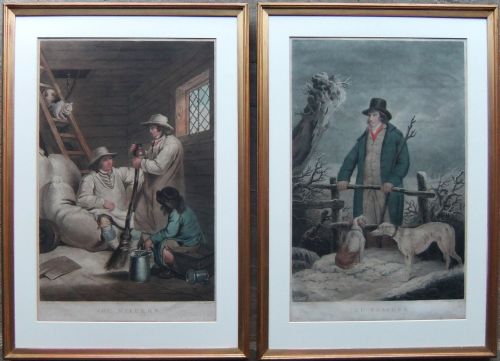
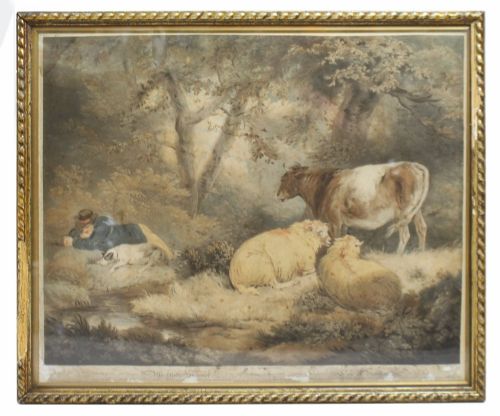
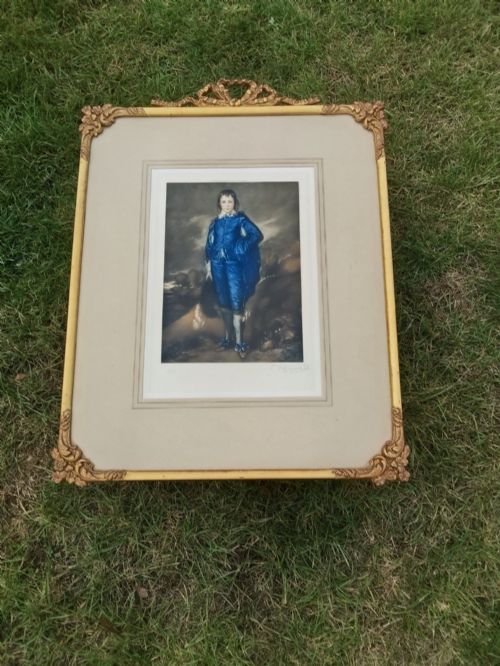
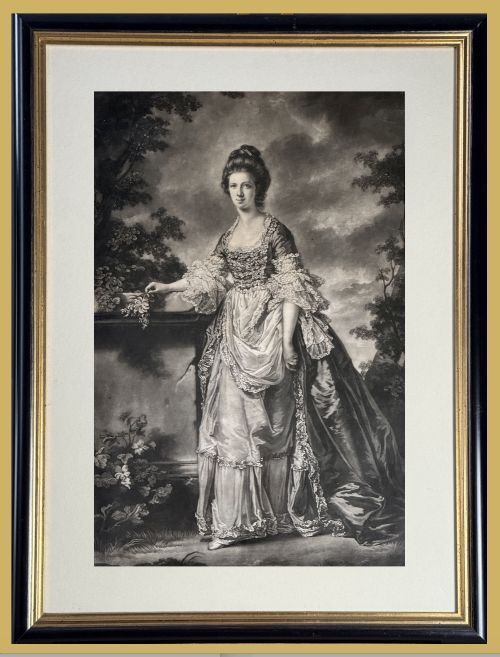
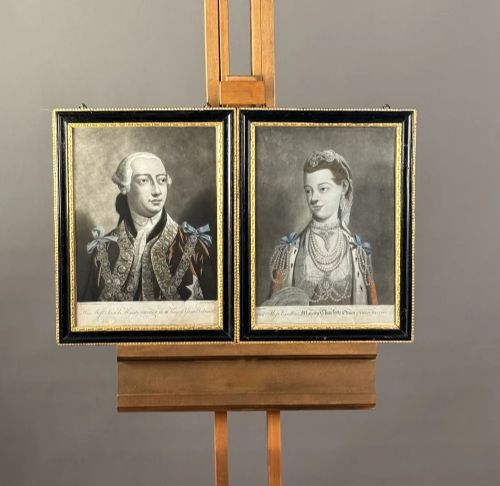
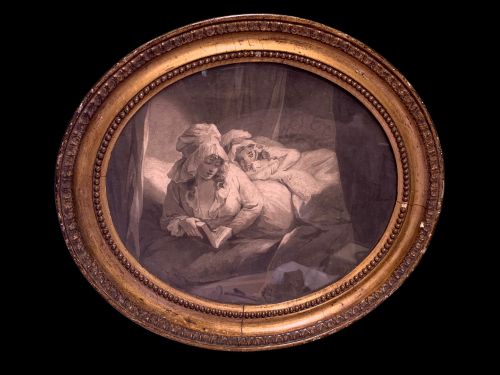
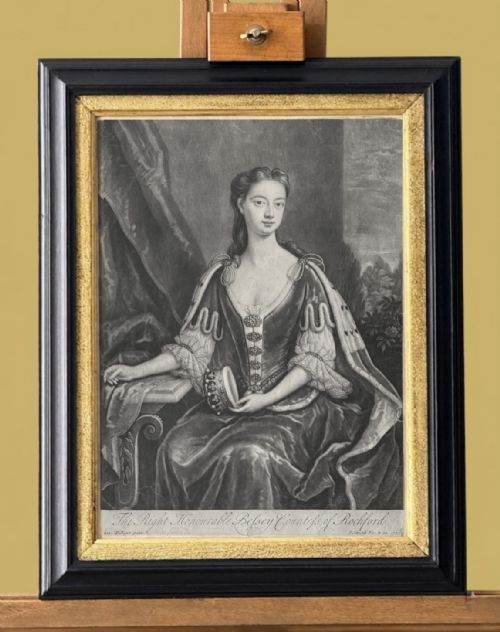
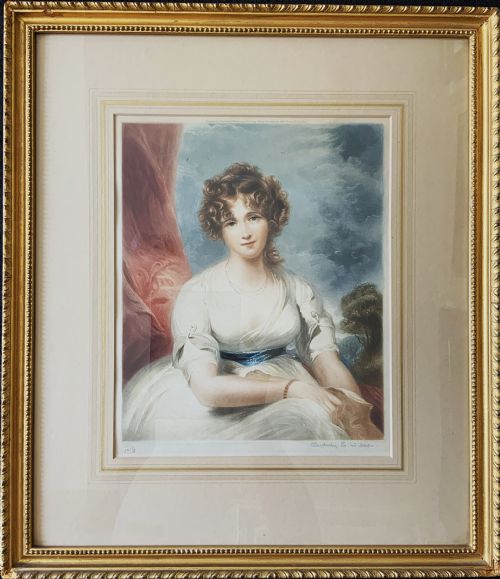
Gold framed mezzotints are intaglio prints produced through a tonal engraving method that yields deep blacks and soft gradients, housed in wooden frames finished with gold leaf, gilt, or giltwood. You will encounter works spanning the eighteenth century, Regency era, and Victorian period, depicting royal portraits, pastoral scenes after artists like George Morland, and elegant ladies.
The selections on this page include Georgian portraits, Regency reverse glass prints, and Edwardian sets, alongside related mediums such as silk embroideries set in gilt frames and Crystoleum pictures. These pieces bring domestic eighteenth and nineteenth century portraiture and landscape into modern interiors with traditional framing intact.
Materials and construction
Makers produced these works on paper using copper plates roughened with a rocker to hold ink across varied tones, sometimes adding hand-colouring or printing in colour. Prints were mounted behind glass to protect the delicate ink and paper surfaces from moisture and atmospheric damage.
Surrounding the prints are wooden frames finished in giltwood or gold leaf, occasionally utilising Hogarth profiles or black glass accents. These enclosures rely on period joinery and original backing boards that help anchor the artwork securely.
Gold Framed Mezzotints Retail Price Guide 2026
Typical asking prices for gold framed mezzotints among the pieces listed under this phrase on Sellingantiques today, from the lower quarter to the upper quarter. They describe what is for sale here now, not the wider market.
Several eighteenth century ladies and royal figures gaze out across the centuries, still surrounded by their original gilt timber.
Judging quality in prints and frames
Quality rests in the crispness of the plate impression and the depth of the tonal range across the inked surface, distinguishing delicate hand-pulled proofs from later impressions. Strong examples maintain rich blacks and clear highlights without excessive fading or paper thinning.
The surrounding frame contributes significantly to the piece, with original giltwood mouldings and undisturbed gold leaf holding greater authority than later replacements. The harmony between the print's era and the frame's construction defines the integrity of the object.
William Barnard·Thomas Frye·James Watson·John Smith·Sydney Wilson·Edward Stodart·Robert Sayer·George Romney·W Ward·I R Smith
The Gold Framed Mezzotints Glossary
- Mezzotint
- An intaglio printing process where the copper plate is roughened evenly and scraped to produce tones from dark to light. This technique allows for subtle gradients and velvety dark areas.
- Giltwood
- Wood carved and coated with gold leaf, gilt, or gold paint. It provides a reflective, ornate border typical of period picture frames.
- Reverse glass print
- An image painted or transferred directly onto the back of a piece of glass to be viewed from the front. This technique produces a glossy, reflective surface finish.
- Intaglio
- A printmaking family where the ink sits below the surface of the plate. Engravings and mezzotints fall under this broad method.
Gold Framed Mezzotints: Frequently Asked Questions
How do I hang gold framed mezzotints safely?
Support the weight of the frame using sturdy picture hooks screwed securely into wall studs or proper wall anchors. Avoid locations with direct sunlight or damp conditions to protect the paper and gilt surfaces.
Ensure the hanging wire or cord attached to the original wooden frame is secure and sound before mounting. Keep the piece at a stable room temperature to prevent the wood and glass from expanding or contracting.
Are these prints original to their frames?
Many examples retain their period giltwood or Hogarth frames, which show matching signs of age alongside the paper print. Original pairings often feature period backing boards and old fixings.
Examine the fit of the artwork within the rebate and look for consistent patination across the wood and metal leaf. Replacement frames do occur, so matching the style and period of the mount to the print date is standard practice.
What is the difference between an engraving and a mezzotint?
Engravings rely on lines cut directly into a metal plate with a burin to form an image through cross-hatching and outlines. They present a clear, linear graphic quality.
Mezzotints build images through areas of tone and shadow rather than lines, created by roughening the entire plate first. This produces velvety dark backgrounds and soft, painterly transitions.