
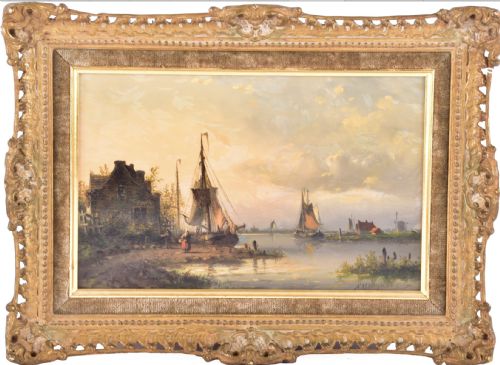
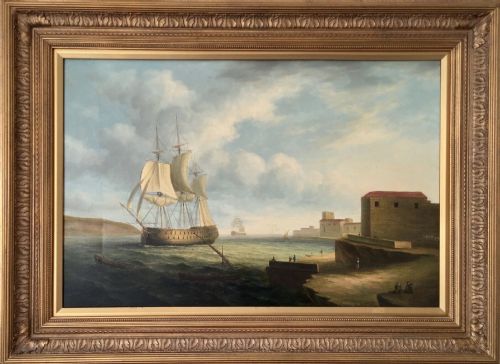

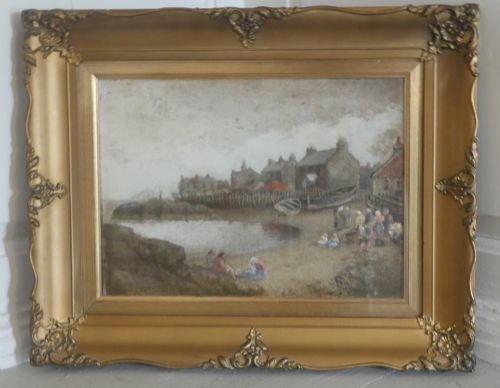

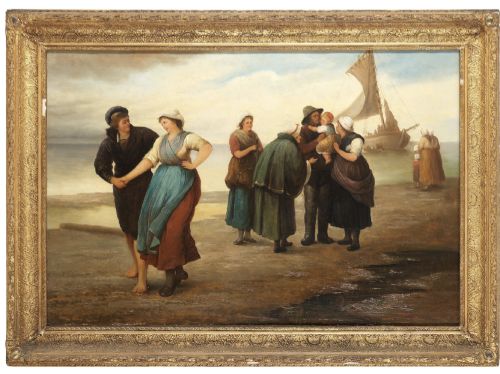

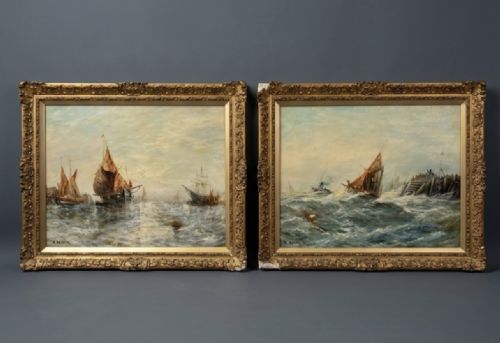
Gold Framed Coastal Artwork
Gold framed coastal artwork captures maritime scenes and seaside views enclosed in gilded wooden surrounds.

Gold Framed Coastal Artwork
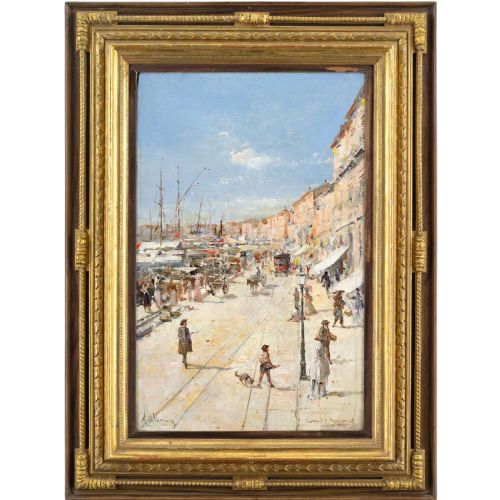
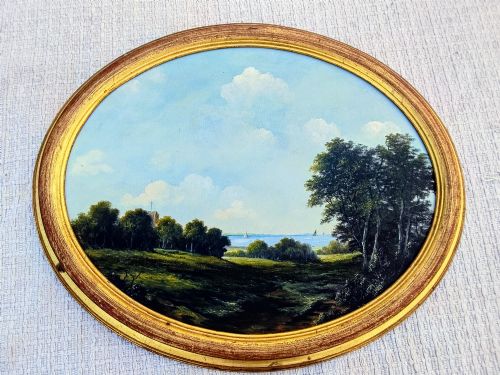
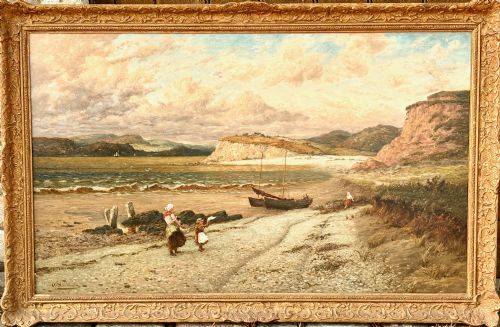
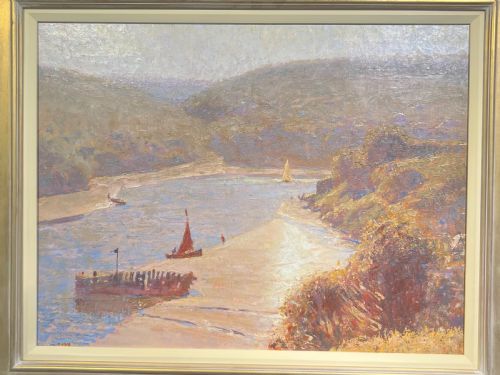
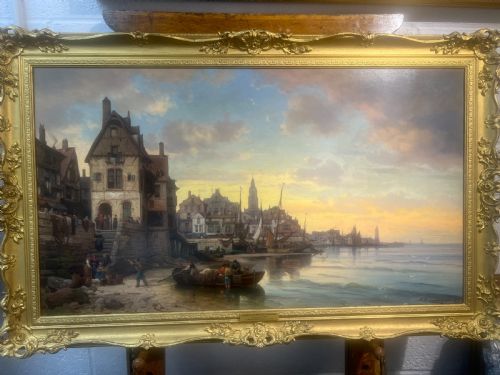
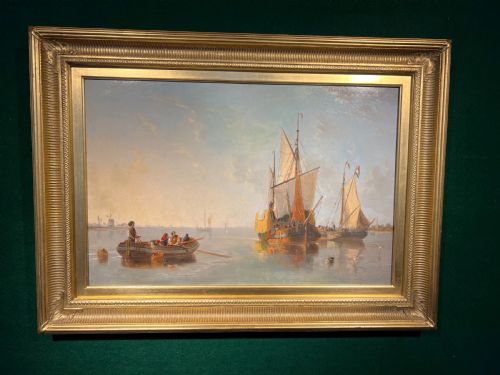
Buyers seeking gold framed coastal artwork encounter maritime scenes, harbour views, and seaside gatherings originating from the nineteenth century onward. These pieces capture waves along shores, fishing boats, and coastal paths rendered by various regional schools.
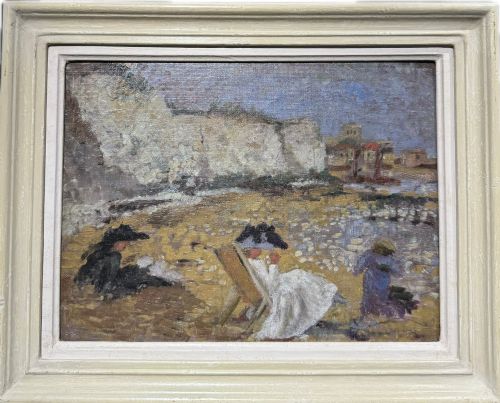
The selections on this page draw predominantly from Victorian, Edwardian, and mid-twentieth-century periods. Works range from traditional British seascapes and Scottish coastal watercolours to French Post-Impressionist views.
Formats include oils on canvas, panels, and boards, alongside detailed watercolours on paper. Each piece relies on its original or period-appropriate gilt wood frame to define the visual boundary of the maritime subject.
Materials and technique
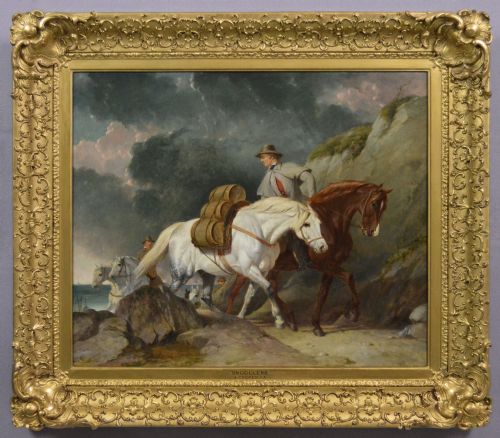
Artists utilise oil paint and watercolour as primary mediums applied to canvas, prepared wooden panels, board, or heavy paper. These pigments capture the shifting light of maritime environments, from calm harbours to stormy gales.
Surrounding the artwork, the frames consist of wood finished with gesso and gilt leaf or metallic paint. This gilded housing creates a warm reflection that complements the blues and greys of the coastal water and sky.
Represented subjects include bustling harbours, quiet beaches, galleon warships, and figures walking along rocky cliffs.
Assessing quality
Quality rests in the precision of the brushwork and the artist's ability to convey movement in water, atmosphere in the sky, and depth within the coastal landscape. Masterful handling of light distinguishes a compelling maritime composition from a standard topographical record.
The construction and condition of the gilt frame contribute heavily to the overall merit of the piece. Hand-carved wooden surrounds with original gilding hold greater aesthetic weight than later replacements or heavily restored mouldings.
Edward Mills·William Banks Fortescue·Augusto Alberici·Bonaventura Peeters·Bernard Benedict Hemy·Ethel Sands·Cecil Allan Mould·Charles Euphraisie Kuasseg·John Wilson Carmichael·Abraham Cooper·William Henry Williamson·John Holland·George Stanfield Walters·Abraham Hulk I·John Moxon·John Bedloe Goddard·Raymond Moritz·William Edward Webb·Charles Napier Hemy·Gustave Vidal·George Turland Goosey·Gustave De Bréanski·Pieter Cornelis Dommersen
The Gold Framed Coastal Artwork Glossary
- Giltwood
- Wood carved and coated with gold leaf or a gold-coloured finish. This material forms the ornate borders common around traditional paintings.
- Gesso
- A plaster-like mixture applied to wooden frames before gilding. It provides a smooth base for the application of gold leaf.
- Seascape
- A work of art depicting the sea, analogous to a landscape on land. These pieces focus primarily on coastal waters and shorelines.
- Watercolour
- Paint consisting of colour suspended in a water-soluble vehicle, typically painted on paper. It creates transparent washes of light and colour.
Gold Framed Coastal Artwork: Frequently Asked Questions
What periods do these artworks cover?
The pieces span from the seventeenth century through the Victorian and Edwardian eras up to the mid-twentieth century. Nineteenth-century works dominate the selection.
Each period brings distinct stylistic approaches to maritime subjects, reflecting the painting conventions of its time.
How should I care for a gilt frame?
Keep gilded wooden frames away from direct sunlight and damp conditions to prevent the gesso and gold leaf from cracking. Dust them gently with a dry, soft brush.
Avoid using liquid cleaners or chemical polishes, as these can strip the delicate metallic finish.
Are watercolours as durable as oils?
Watercolours on paper require protection behind glass to prevent moisture damage and fading from ultraviolet light. Oil paintings on canvas or panel are more robust but still benefit from stable indoor environments.
Both mediums have survived for over a century when properly framed and maintained.
How do I identify a coastal scene's origin?
Look for titled inscriptions on the reverse, artist signatures, or recognizable landmarks such as specific harbours and coastal towers. Many nineteenth-century works explicitly name locations on the mount or canvas.
Stylistic cues, such as the palette of the French Post-Impressionists versus British maritime realism, also indicate geographic context.