
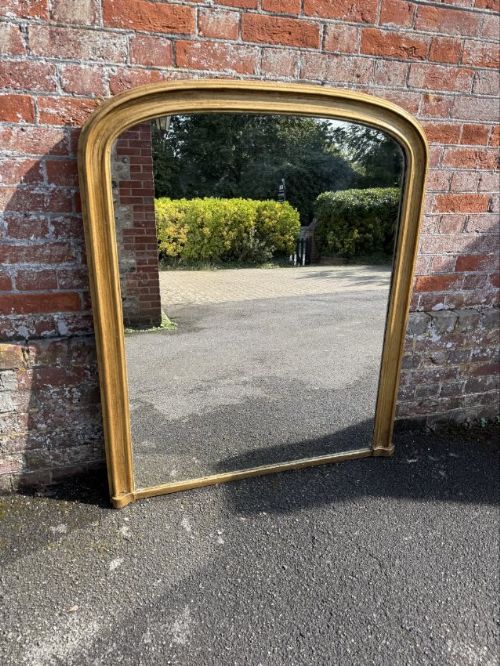
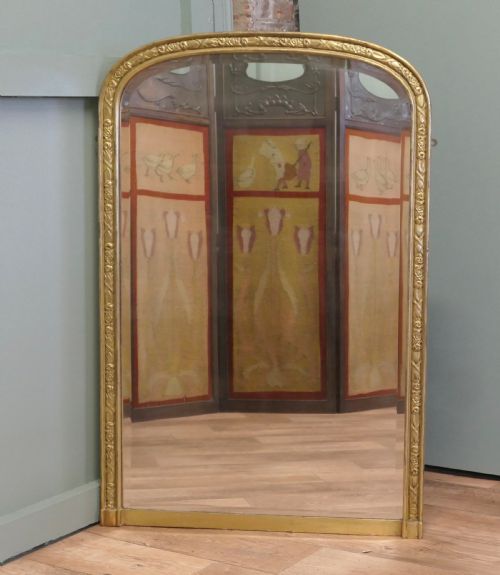

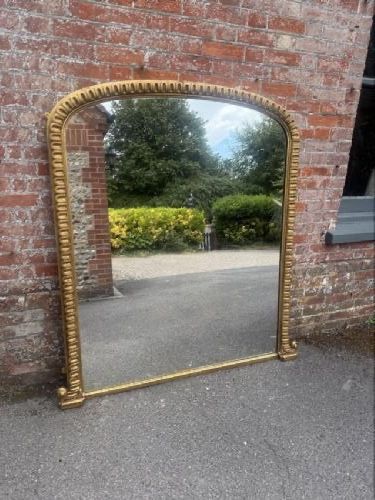
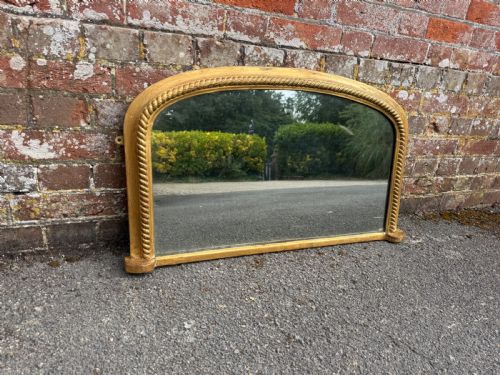
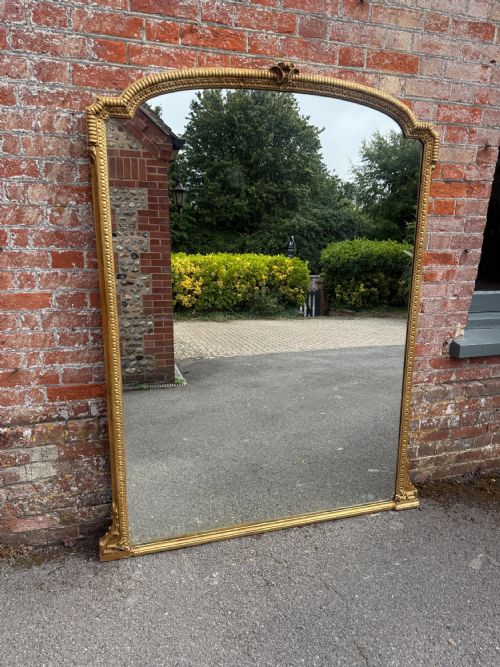
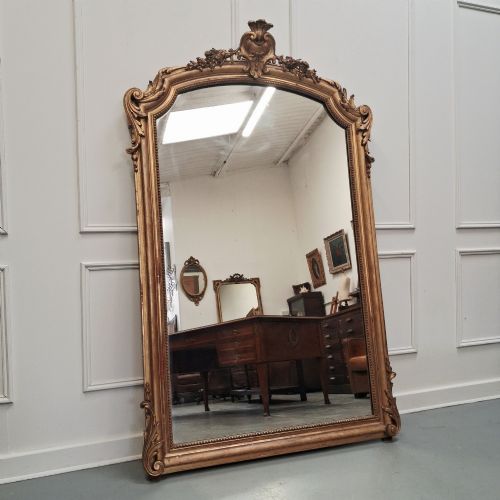
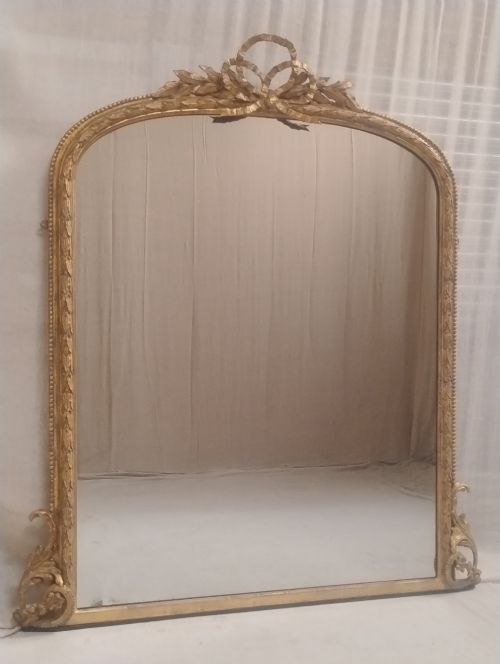
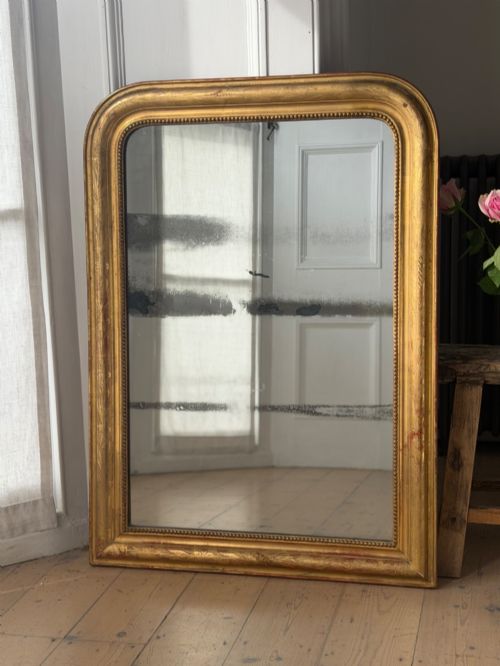

Gold Framed Arched Mirror
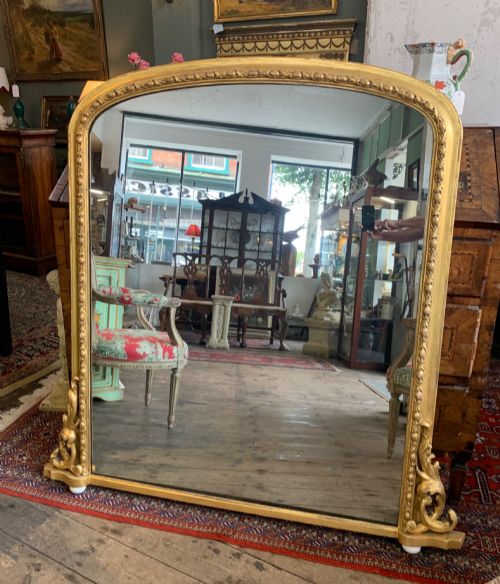
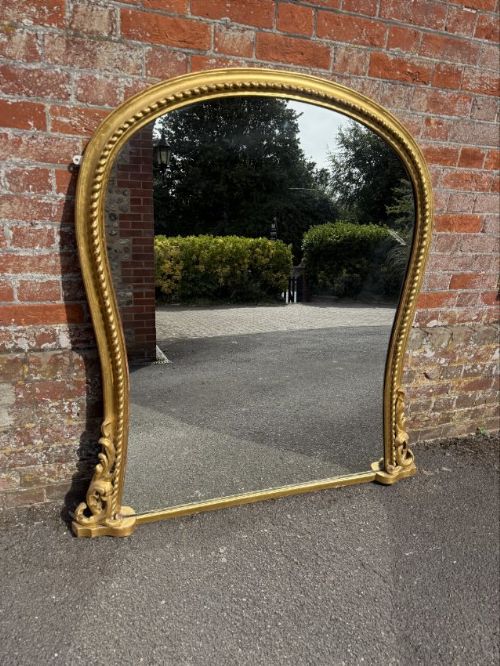
A gold framed arched mirror brings height and reflected light to a room, drawing the eye upwards through its curved top.
Gold Framed Arched Mirror
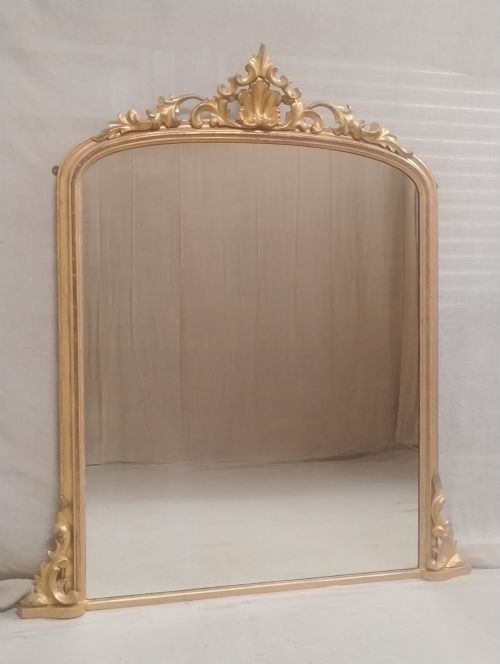
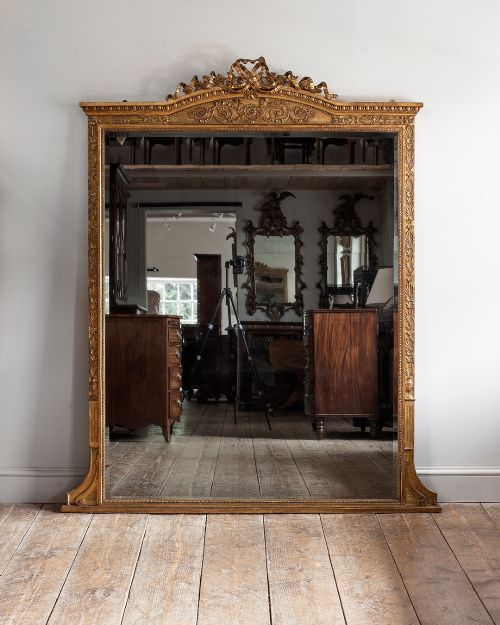
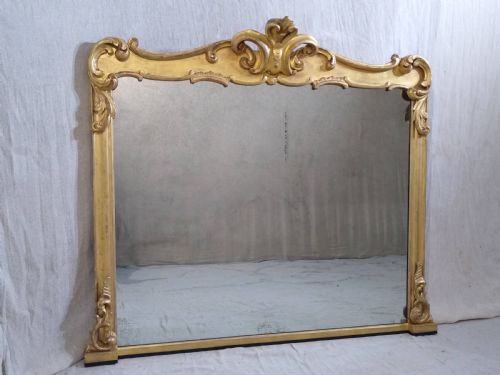
When searching for a gold framed arched mirror, buyers encounter grand overmantel mirrors designed to sit above fireplace surrounds alongside tall French Louis Philippe and Victorian wall mirrors. These pieces date predominantly from the nineteenth century, spanning periods from the 1850s to the 1890s, with Edwardian examples also appearing.
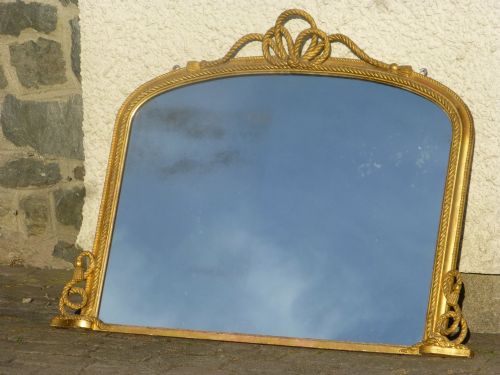
The dominant forms are large architectural overmantel mirrors and pier mirrors intended to lean against a wall or hang above furniture. English examples often feature carved wooden frames with applied gesso and ribbed or rope-twist details, while French pieces present clean lines with subtle cresting.
How they were made
Frames are constructed from wood, frequently reinforced with moulded gesso and plaster to hold crisp decorative details such as rope twists and tulip motifs. Artisans applied gold leaf or gilding over these surfaces to achieve a luminous metallic finish.
Early mirrors utilise mirror glass or mercury glass, which can develop foxing over time as the backing ages. Carving is executed directly into the wood substrate before the application of gesso and preparatory layers.
Listings feature nineteenth-century pieces including Victorian and Edwardian periods, constructed from giltwood, gesso, and glass.
What varies in quality
The depth and precision of the hand-carved woodwork dictate the calibre of a piece, separating straightforward moulded frames from those with intricate rope-twist or ribbed detailing. Crispness in the gesso ornamentation reveals the skill of the original gilder.
The integrity of the original gilding and the character of the glass, whether clear or retaining aged foxing, influence the overall presence of the object. Heavier timber construction and well-preserved joints denote superior nineteenth-century workshop production.
The Gold Framed Arched Mirror Glossary
- Gesso
- A plaster-like mixture applied to wood frames to create a smooth surface for gilding. It allows for intricate mouldings and relief decoration.
- Giltwood
- Timber that has been coated with gold leaf or metallic paint. This finish provides the characteristic golden sheen seen on nineteenth-century frames.
- Louis Philippe
- A French nineteenth-century style characterised by restrained classical proportions and rounded upper corners. These frames typically show minimal ornamentation compared to rococo designs.
- Foxing
- Age-related spots and discoloration within the mirror glass plate. This chemical change occurs behind the glass surface over decades.
Gold Framed Arched Mirror: Frequently Asked Questions
Where should an arched mirror be hung?
These mirrors traditionally anchor spaces above fireplace mantelpieces as overmantels, where their height draws the eye upward. They also function effectively as leaner mirrors placed directly on the floor against a wall.
Positioning them opposite a window maximises natural daylight and opens up smaller rooms. Wall placement requires secure fixings due to the substantial weight of nineteenth-century timber and glass.
How do I identify a Victorian mirror?
Victorian pieces frequently display heavier carved wood and gesso frames with decorative elements such as rope twists, ribbons, or architectural cresting. They date from the mid to late nineteenth century and often serve as large overmantel fixtures.
Examining the construction of the wooden backboards and the type of glass helps confirm the period. English Victorian examples often contrast with the simpler, rounded corners typical of French Louis Philippe designs.
What is mercury glass?
Mercury glass refers to older mirror plates manufactured using a tin and mercury amalgam backing before the modern silvering process was invented. This historical technique produces a distinctive depth and reflective quality.
Over time, exposure to air causes this backing to deteriorate, creating characteristic dark spots known as foxing. This natural ageing process is valued by collectors for the authentic antique character it imparts.
How do French and English mirrors differ?
French mirrors from the nineteenth century, particularly Louis Philippe styles, favour understated frames with gently rounded top corners and minimal surface carving. They rely on elegant proportions rather than heavy ornamentation.
English equivalents from the same era tend to be larger overmantel pieces featuring pronounced wood and gesso decoration, including rope-twist carvings, ribbed mouldings, and architectural crests.