
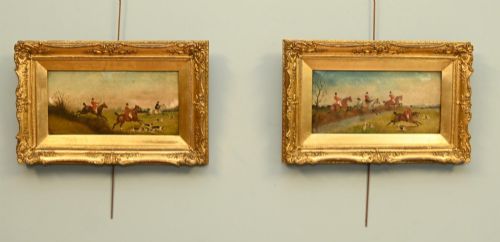
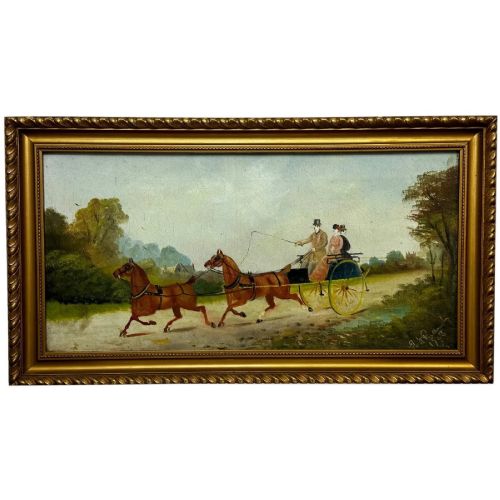
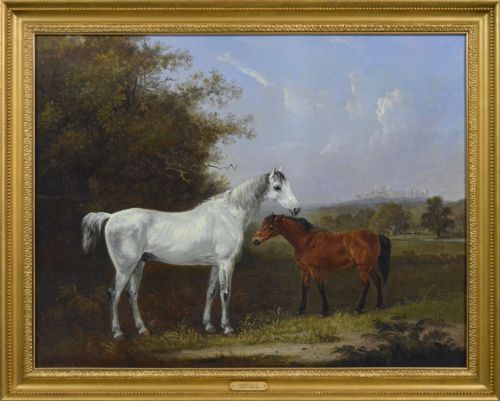
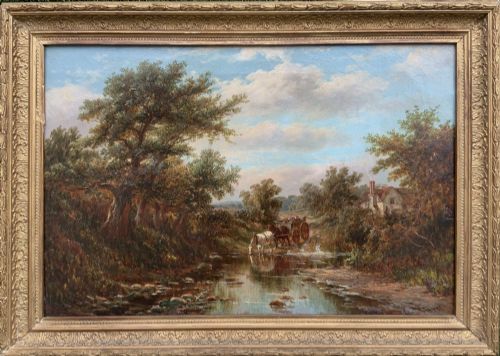
Gold Frame Horse Art
Gold frame horse art brings together historical equine portraiture and sporting scenes preserved in gilded surrounds.
Gold Frame Horse Art
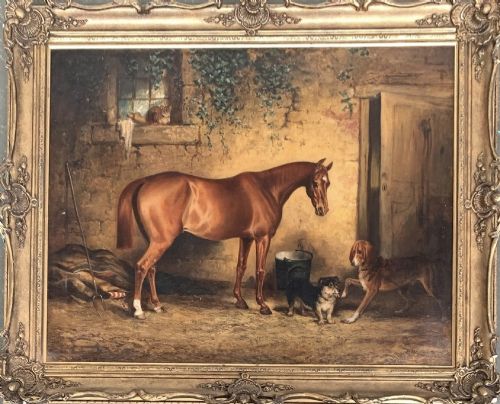
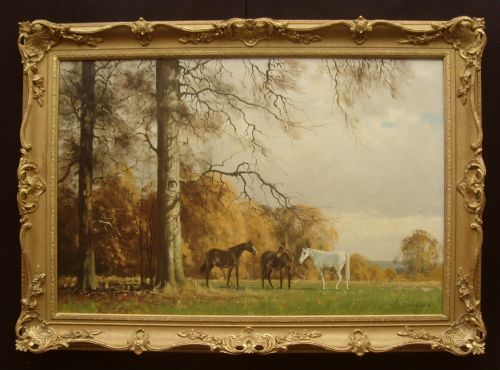
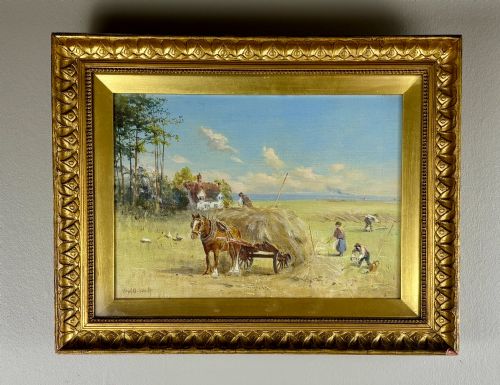
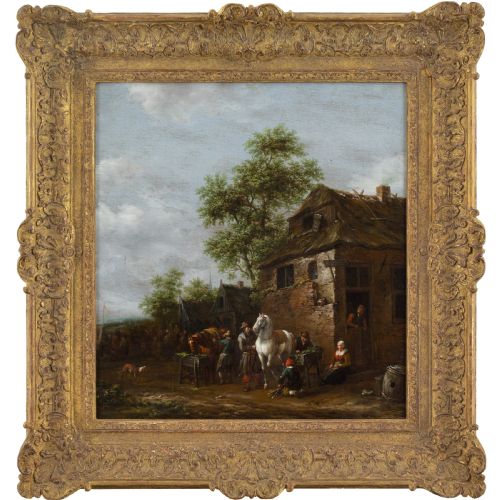
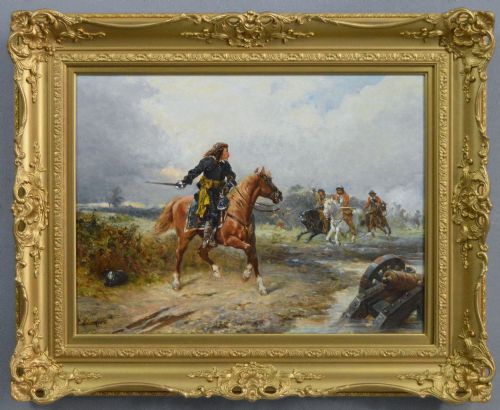
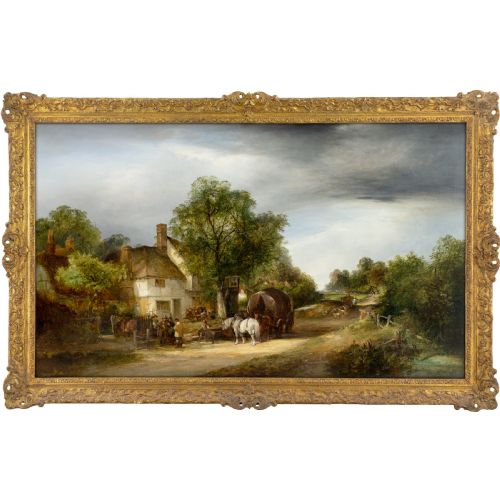
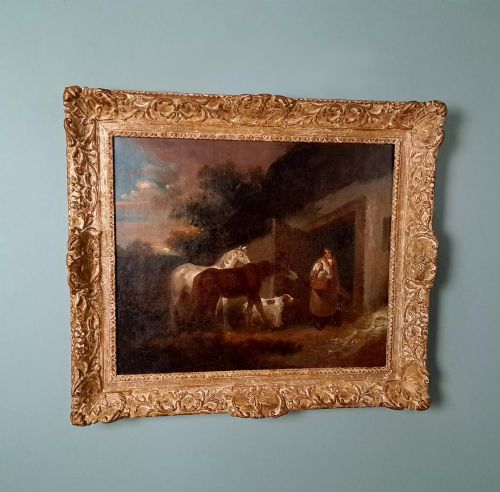
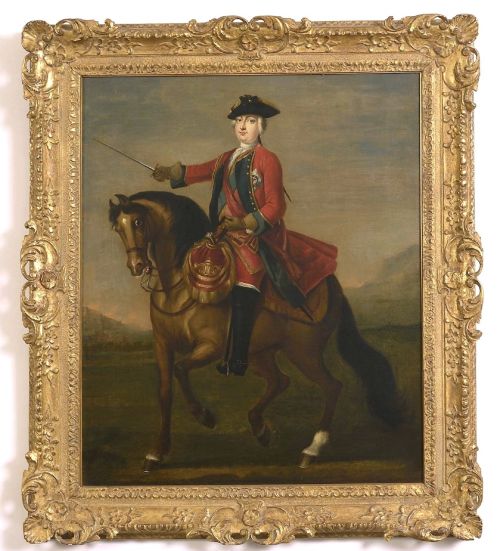
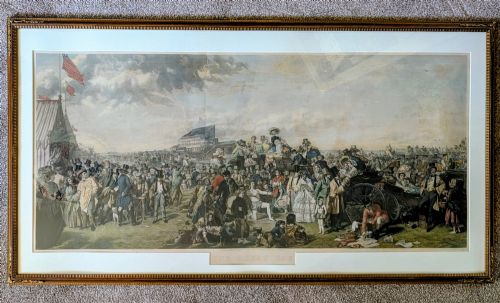
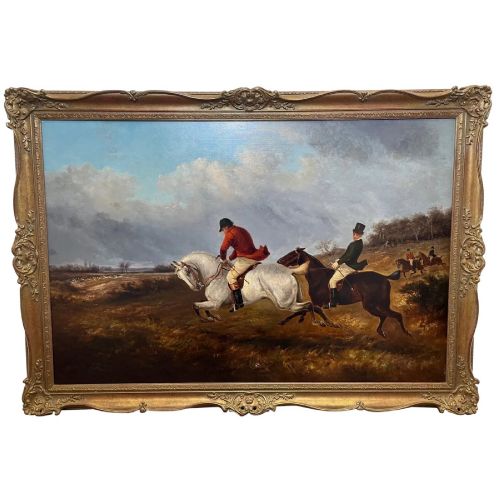
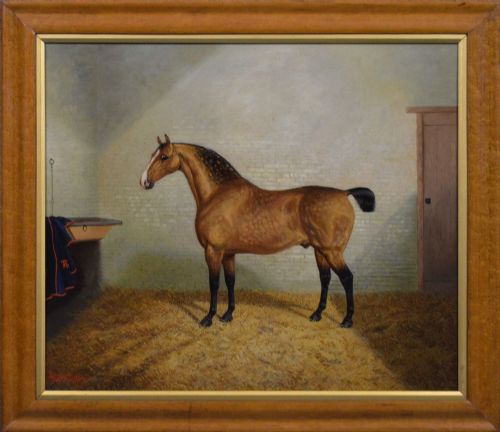
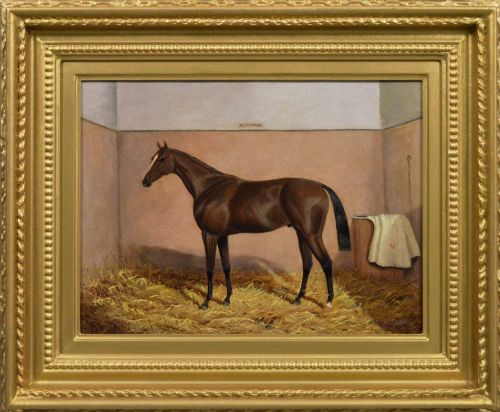
Gold frame horse art encompasses oil paintings, waterworks, and prints depicting equines, ranging from individual portraits of racehorses and mares to bustling coaching scenes and hunting parties. When searching for gold frame horse art, buyers encounter numerous Victorian and Edwardian works alongside earlier Georgian and seventeenth-century compositions.
The subjects span distinct rural and sporting traditions, including bay hunters, stable portraits, and cavalry subjects set against landscapes or architectural backdrops. Most pieces rely on oil on canvas, housed within traditional gilded wooden frames that complement the rich tones of the equine subjects.
Materials and construction
These works are executed primarily in oil paint on canvas, though watercolour and silk needlework also appear alongside prints. The supporting frames utilise wood, often embellished with gesso and finished with gold leaf or gilt.
Makers shaped the wooden mouldings and applied the gesso base before gilding, creating a reflective border designed to project light outward from the painted surface.
Listings feature oil on canvas as the primary medium, supported by traditional wood, gesso, and gold leaf frames across multiple centuries.
Assessing quality
Quality rests upon the anatomical precision of the horse and the handling of light within the landscape or stable interior. Works by recorded equestrian painters demonstrate superior command of animal musculature and movement compared to anonymous studio output.
The integrity and period compatibility of the giltwood frame influence the overall standard, with original frames retaining sharper gesso ornament and deeper patination.
Henry Barraud·Walter Robin Jennings·Edmund Bristow·Robert Alexander Hillingford·Albert Clark
The Gold Frame Horse Art Glossary
- Giltwood
- Wood carved and coated with gold leaf or a gold-coloured finish. This material forms the primary border for traditional equine paintings.
- Gesso
- A plaster-like mixture applied to wooden frames to create a smooth surface for gilding. Artisans carved intricate relief patterns into this layer before applying gold leaf.
- Equine portrait
- A painting or drawing dedicated specifically to recording the likeness of a single horse. These works frequently document named racehorses, hunters, or prize-winning mares.
- Sporting art
- Visual representation of rural pastimes including horse racing, fox hunting, and coaching. This genre forms a significant portion of nineteenth-century British painting.
Gold Frame Horse Art: Frequently Asked Questions
What periods do these pieces date from?
The selection spans several centuries, with particular concentration in the Victorian and Edwardian eras. Earlier pieces reach back to the seventeenth and eighteenth centuries.
Later works extend into the mid-twentieth century, reflecting evolving styles in British equine painting.
How do I identify a Victorian sporting painting?
Victorian sporting works typically feature distinctive attire, hunting hounds, and robust horses rendered in realistic oil on canvas. The palette often emphasises deep greens, browns, and reds.
These canvases frequently bear the signature of established nineteenth-century animal painters or reflect regional hunting traditions.
Are these frames original to the art?
Many pieces retain their period giltwood or gesso frames, which match the estimated age of the canvas. The wear and patination on the gilding generally correspond to the era of the painting.
Subsequent re-framing also occurs, making inspection of the rebate and stretcher bars useful for determining original association.
Where were these equine artworks created?
The vast majority originate from British and Anglo-Flemish workshops, reflecting the deep cultural roots of equestrian sport and breeding. Scenes often depict specific estates, racecourses, or rural counties.
Occasional subjects record international locations, such as stables in India, captured by travelling artists.