


Gold Flower Brooch
A gold flower brooch brings botanical form and warm metal together, offering a wearable piece of garden history that catches the eye.
Gold Flower Brooch
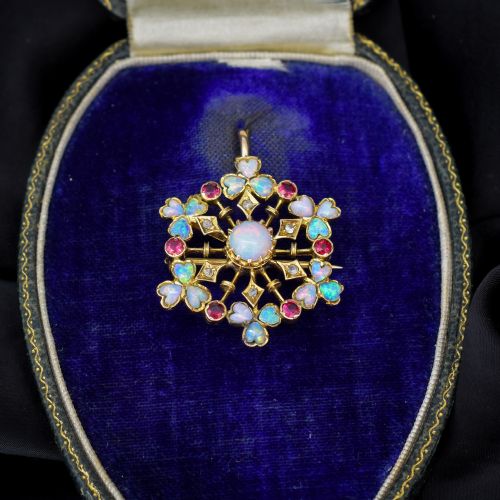
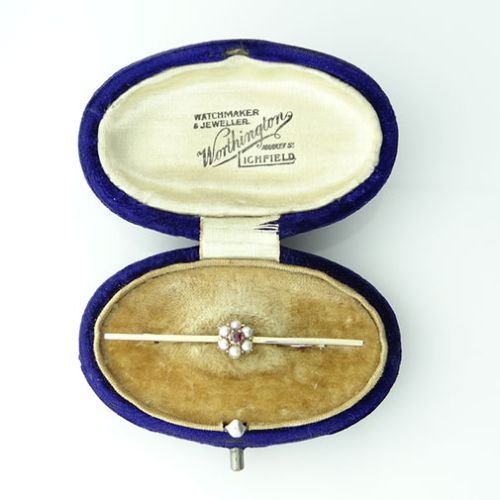
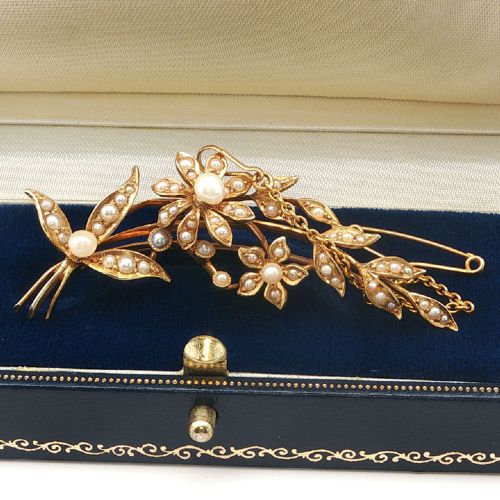
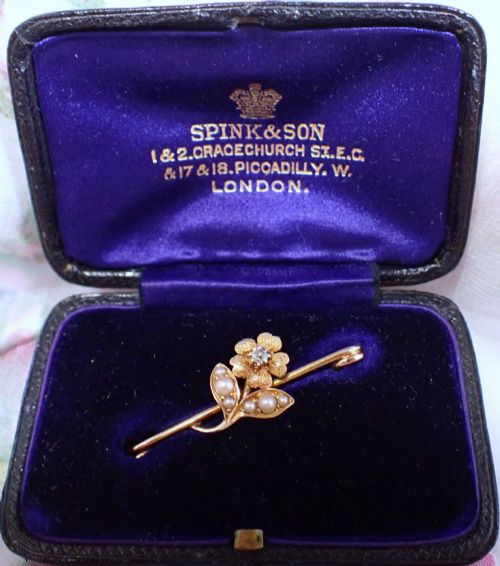
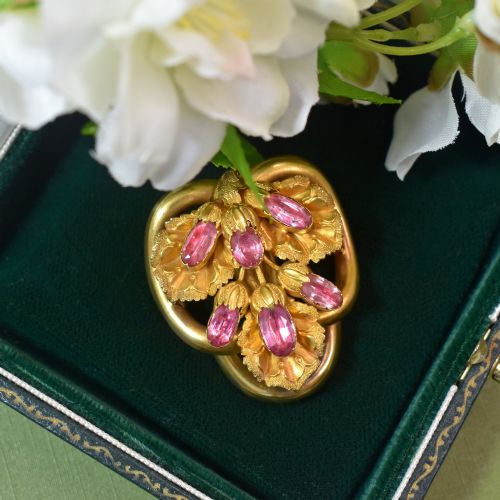
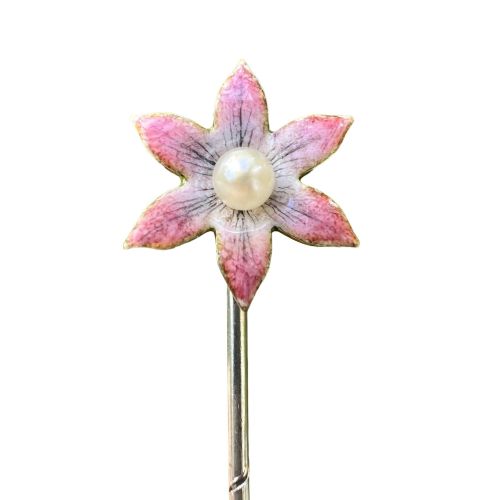
A gold flower brooch is a floral-themed jewel fashioned from yellow, rose, or white gold, often set with gemstones. These pieces range from compact Victorian dress ornaments to elaborate Edwardian sprays.
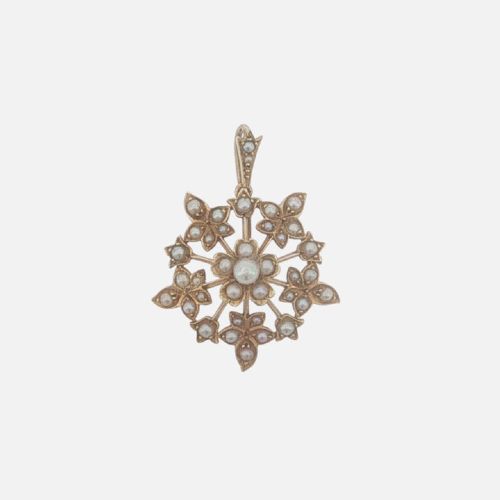
The most common examples on this page date from the Victorian and Edwardian eras, utilising rich carat golds alongside seed pearls, diamonds, and garnets. Many function as both brooches and pendants, offering versatile wear.
Makers across the nineteenth and early twentieth centuries drew inspiration from nature, rendering daisies, buds, and multi-petalled blooms in precious metal. Every piece reflects the stylistic preferences of its period, from naturalistic floral clusters to stylised Art Nouveau stems.
How they were made
Jewellers utilised high and low carat golds, predominantly fifteen carat and nine carat varieties, alongside silver settings for stones. Metal was cast, chased, and wired to form petals, stems, and leaves.
Gemstones such as diamonds, rubies, garnets, and seed pearls were painstakingly hand-set into the gold framework. Techniques like foil-backing enhanced the colour of coloured stones in earlier pieces.
Some Victorian floral brooches secretly house tiny glass compartments intended for locking away a lock of a loved one's hair.
What varies in quality
Quality rests upon the delicacy of the goldsmith's work and the proportion of the floral design. Finer examples display naturalistic movement in the petals and secure, even gem settings.
The selection of materials marks the distinction between standard production and exceptional pieces. Weight of gold and the clarity or match of seed pearls and diamonds elevate the piece.
The Gold Flower Brooch Glossary
- Seed pearl
- Very small, natural marine pearls often drilled and threaded onto fine wire. They are frequently used in clusters to form delicate flower petals.
- Cannetille
- A delicate filigree goldwork technique resembling fine embroidery or lace. It was popular in the Georgian and early Victorian periods for enriching floral motifs.
- Giardinetti
- Italian for little garden, describing a jewellery design shaped like a small flower pot or formal floral arrangement. These pieces typically feature a mix of colourful gemstones.
- Old cut
- A diamond cutting style characterised by a high crown, small table, and deep pavilion. This cut predates modern brilliant cutting and produces a softer, candlelit sparkle.
Gold Flower Brooch: Frequently Asked Questions
How do I wear a vintage gold flower brooch?
Pin the brooch firmly to the lapel of a heavy coat, a chunky knit jumper, or a tailored blazer. Ensuring the fabric is substantial enough prevents the weight of the gold and stones from pulling the material.
Many antique floral pieces include hidden loops on the reverse, allowing them to hang from a chain as a pendant. This gives you two ways to wear the same item depending on your outfit.
How can I tell a Victorian floral brooch from an Edwardian one?
Victorian pieces, particularly those from the mid-nineteenth century, tend to feature heavier gold weights, darker garnet or ruby stones, and robust dimensional casting. The designs often focus on dense floral clusters or symbolic buds.
Edwardian items shift towards lighter frames, platinum-topped gold, and airy arrangements of diamonds and seed pearls. The aesthetic becomes more lace-like and fluid, echoing the transition into Art Nouveau curves.
Are seed pearls delicate?
Seed pearls require careful handling because historic natural pearls are sensitive to moisture, perfumes, and cosmetic acids. Storing them away from other hard jewellery prevents surface scratching.
Cleaning should involve only a dry or very slightly damp soft cloth, avoiding chemical dips that can dissolve the delicate nacre.
Can these brooches be converted into pendants?
Many period pieces were manufactured with integrated loops or hinged bails specifically designed to accept a chain. This dual functionality was very popular in the nineteenth century.
If a conversion is desired without existing loops, a jeweller can often attach a discreet removable pendant fitting to the reverse pin mechanism.