


Antique Botanical Brooch
An antique botanical brooch brings the garden into metal and stone, offering a lasting piece of wearable nature from centuries past.
Antique Botanical Brooch
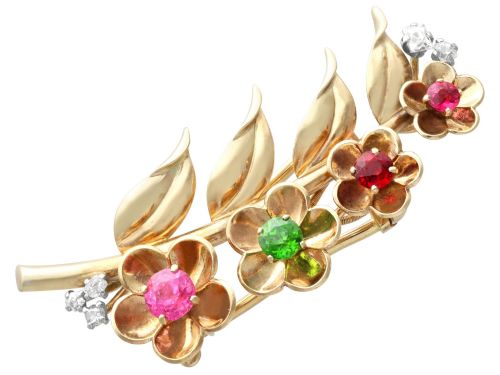
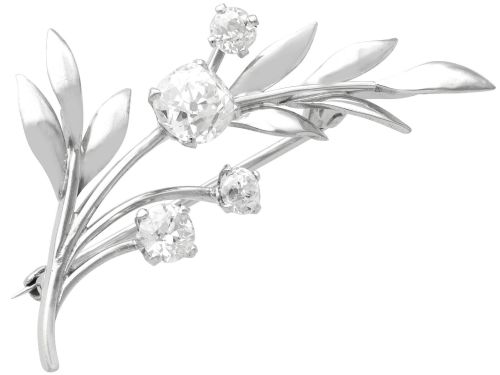
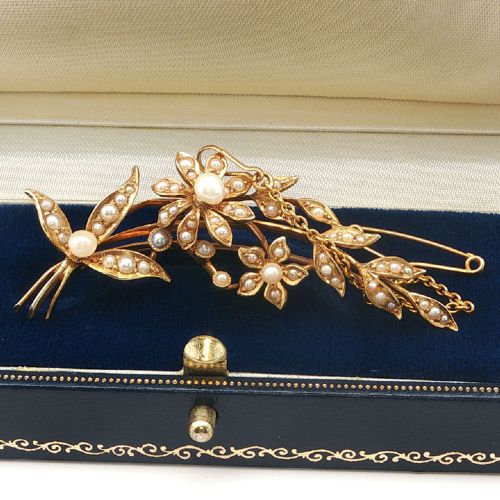
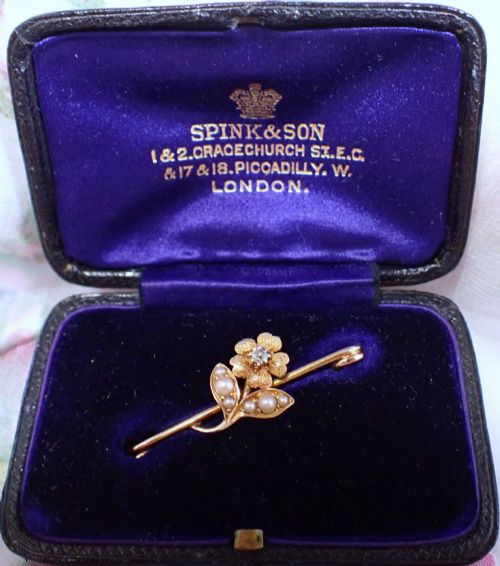
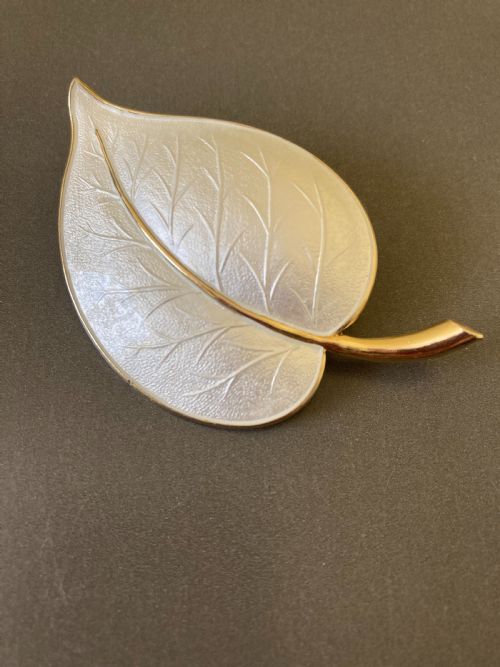
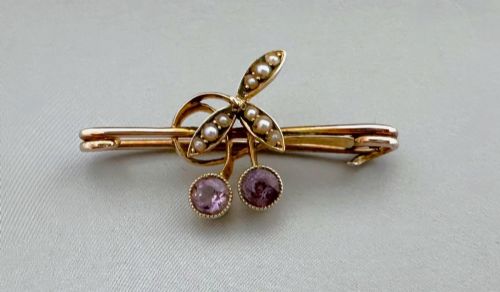
An antique botanical brooch takes the form of leaves, flowers, and sprays, rendered in gold, silver, and precious gems. These ornaments capture natural forms with lasting permanence through the jeweller's art.
The pieces on this page span the Victorian, Edwardian, and Art Nouveau periods, alongside vintage eras. You are most likely to encounter floral sprays and leaf motifs fashioned in gold or silver during your search.
How they were made
Maker's workshops combined goldsmithing with gemstone setting, utilising pearls, diamonds, and chalcedony mounted in various carats of gold and silver. Enamel work, including translucent plique-à-jour, added colour to petals and leaves.
Casting and hand-assembly shaped the metal bases of leaves and stems, while seed pearls and diamonds were carefully set by hand to highlight natural contours.
What varies in quality
Quality rests upon the fineness of the metalwork and the naturalism of the design, where master jewellers achieved a fluid, convincing rendition of petals and stems. Superior examples display meticulous enamel work or well-matched gemstones.
The distinction between standard production and exceptional work lies in the delicacy of the setting and the preservation of intricate details like plique-à-jour or tiny seed pearls.
Meyle & Mayer
The Antique Botanical Brooch Glossary
- Plique-à-jour
- Enamelling technique where enamel is applied to open cells without a backing, allowing light to shine through translucent coloured areas much like stained glass.
- Seed pearl
- Very small natural pearl, often drilled and threaded onto tiny pins or wires to form delicate floral clusters and petals in antique jewellery.
- Chalcedony
- Cryptocrystalline variety of quartz used in jewellery for its smooth, translucent appearance when cut into cabochons.
- Spray
- Jewellery design motif representing a small cluster of gathered flowers and leaves branching outward from a central point.
- Gold gilt
- Thin layer of gold applied to the surface of another metal, such as silver, to provide a rich golden appearance.
Antique Botanical Brooch: Frequently Asked Questions
What periods do these brooches come from?
These brooches originate from the Victorian, Edwardian, and Art Nouveau periods, stretching into the early twentieth century. Each era brought distinct stylistic choices to floral and leaf motifs.
Victorian pieces often feature heavier gold settings with diamonds and pearls, whereas Art Nouveau examples embrace flowing lines and plique-à-jour enamel work.
How were botanical brooches worn historically?
Historically, people pinned these ornaments to the lapels of coats, the collars of high-necked blouses, or the centre of waistbands. They served as prominent focal points on heavy fabrics.
Victorian and Edwardian wearers used them to add colour and personal expression to everyday attire as well as formal wear.
How do I tell Victorian from Edwardian styles?
Victorian botanical brooches tend to be robust, featuring substantial gold weights, deep chasings, and securely bezel-set stones. They often depict solid flower sprays or clover designs.
Edwardian pieces introduce lighter silver and gold settings, frequently incorporating diamonds and colourful enamel to mimic the airy lightness of real blossoms.
Can I wear an antique brooch daily?
Wearing an antique brooch daily requires care, particularly with delicate elements like seed pearls, thin gold stems, or glass enamels. Pinning them to sturdy fabrics helps prevent accidental bending.
Storing them in fitted boxes away from moisture protects the softer gemstones and delicate metalwork from everyday wear and tear.