
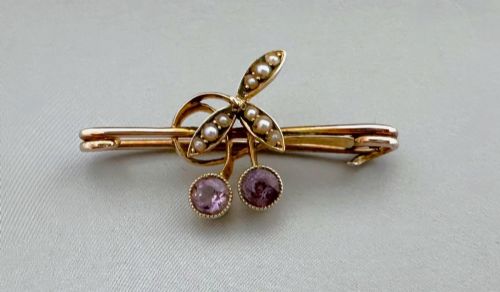


Gold Botanical Brooch
A gold botanical brooch brings natural forms into everyday wear, offering a lasting piece of wearable flora crafted in precious metal.
Gold Botanical Brooch
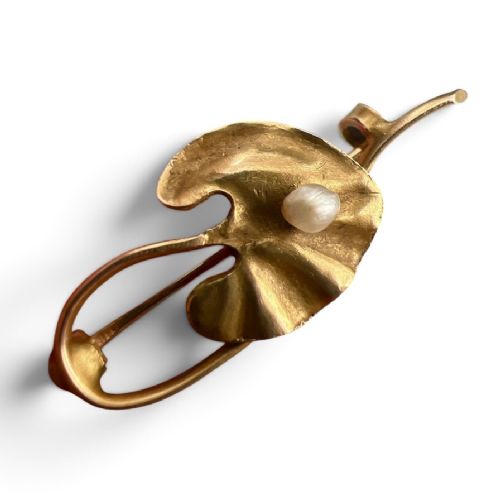
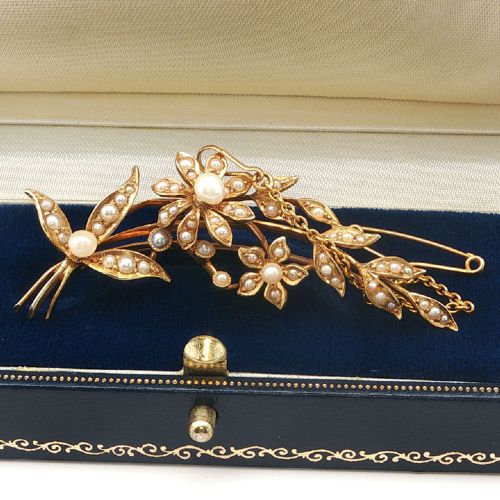
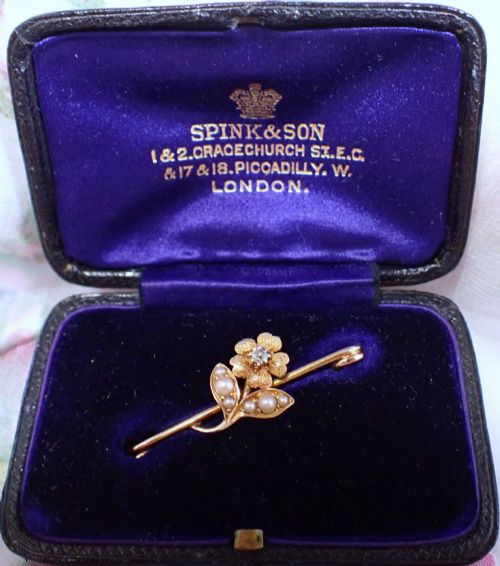
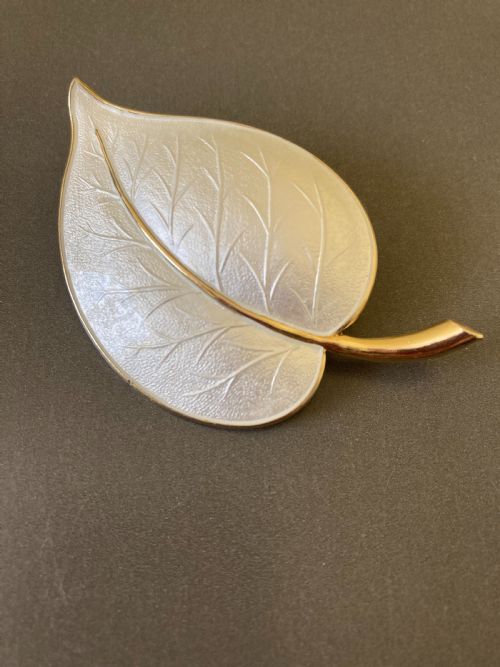
A gold botanical brooch takes the form of leaves, flowers, clovers, and natural sprays rendered in various gold purities and silver combinations. When exploring a gold botanical brooch, buyers encounter pieces spanning the Victorian, Edwardian, and Art Nouveau periods, as well as mid-century Scandinavian designs.
The assortment on this page relies on forms shaped like foliage and floral clusters, often embellished with pearls, diamonds, opals, or vibrant enamel work. These items function as fastening accessories that double as miniature sculptures pinned to lapels and collars.
How they were made
Maker's workshops utilised 9ct, 14ct, 15ct, and 18ct gold, frequently pairing yellow gold with silver settings to enhance the brilliance of mounted diamonds. Seed pearls and larger pearls are secured onto stems and petals using traditional wire-working and setting techniques.
Enamel work, including plique-à-jour methods, introduces translucent colour to leaves and petals, allowing light to pass through the metallic framework. Artisans also incorporated Essex crystals and carved elements to achieve realistic depth in floral sprays and leaf motifs.
Materials recorded in current inventory include 9ct, 14ct, 15ct, and 18ct gold, silver, enamel, diamonds, pearls, and opals.
What varies in quality
Quality rests upon the delicacy of the metalwork and the integration of gemstones within the botanical design. Superior examples display intricate hand-formed veining on leaves and secure flush or claw settings that hold diamonds and pearls firmly without excess solder.
The presence of specialised techniques like plique-à-jour enamel or well-matched pearl sprays distinguishes finer workshop output from standard production pieces. Preservation of the original gold purity and crisp casting details also define the upper tier of these items.
Aksel Holmsen
The Gold Botanical Brooch Glossary
- Seed pearl
- A tiny, naturally small pearl, often pierced and threaded or wired onto jewellery to form the petals of flowers or the bodies of leaves in botanical designs.
- Plique-à-jour
- An enamelling technique where the enamel is applied within a cellular framework without a backing, creating a stained-glass effect that lets light through coloured leaves and petals.
- Essex crystal
- A convex rock crystal reverse-carved and painted with a miniature subject, such as an animal or plant, creating a three-dimensional optical illusion.
- Silver gilt
- Silver that has been coated with a thin layer of gold, combining the cool tone of silver support with a warm golden surface finish.
- Flower spray
- A decorative arrangement depicting cut stems, blossoms, and foliage gathered together, popular as a naturalistic motif in nineteenth and early twentieth-century brooches.
Gold Botanical Brooch: Frequently Asked Questions
What periods do these brooches come from?
These items span several decades from the late nineteenth century through the mid-twentieth century. The selection includes Victorian, Edwardian, and Art Nouveau eras, alongside later vintage and mid-century Scandinavian pieces.
Each era brings distinct aesthetic choices, shifting from naturalistic Victorian floral clusters to the sweeping, organic lines characteristic of Art Nouveau design.
What materials are used in these pieces?
The pieces utilise various purities of gold, including 9ct, 14ct, 15ct, and 18ct, alongside silver and silver gilt. Gemstones such as diamonds, seed pearls, opals, and coloured enamel frequently accent the metallic foliage.
Combinations of yellow gold and silver appear particularly in Edwardian items, where silver settings enhance the white sparkle of mounted diamonds.
How were these brooches worn originally?
Victorian and Edwardian wearers pinned these items to the chests, collars, or lapels of formal garments, coats, and hats. They served as prominent decorative fastenings that added personal flair and colour to daily attire.
Today, they function similarly when pinned to jackets, scarves, or knitwear, bringing historical craftsmanship into contemporary wardrobes.
How do I identify an Art Nouveau piece?
Art Nouveau designs focus on asymmetrical, flowing lines inspired by natural plant stems, curving tendrils, and insect wings. These items often feature techniques like plique-à-jour enamel to mimic translucent petals.
In contrast, earlier Victorian pieces tend to be more symmetrical and structured, focusing heavily on clustered flower sprays set with pearls and diamonds.