




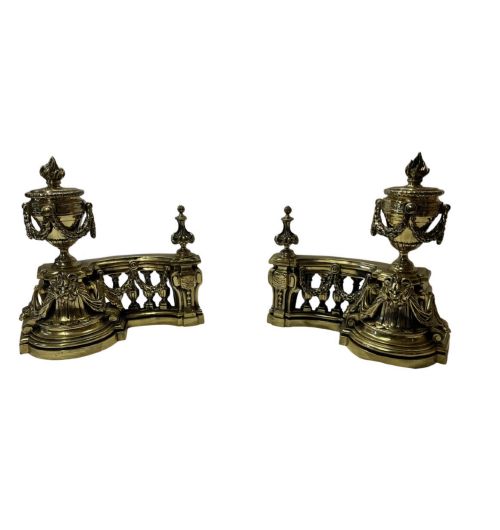


Gold Fireplace Irons
Gold fireplace irons bring hearthside warmth through bright metal finishes, pairing robust fire irons and companion sets with decorative chenets.
Gold Fireplace Irons
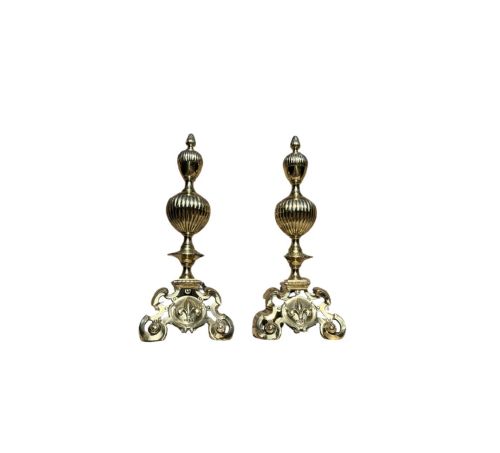
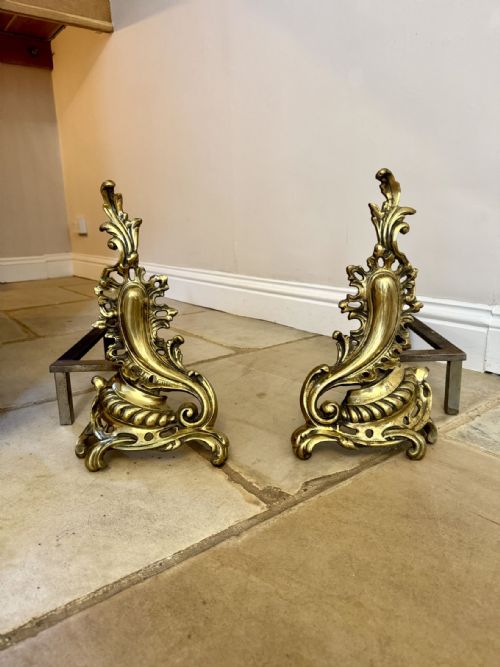
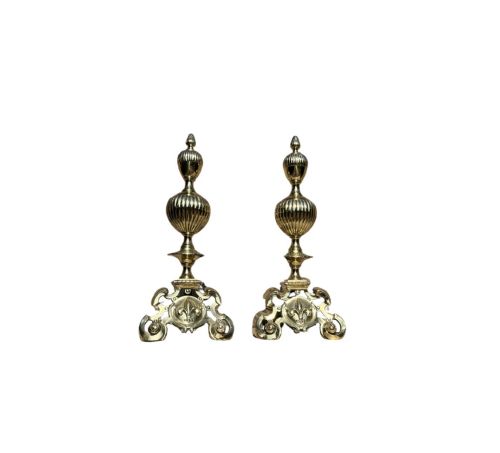
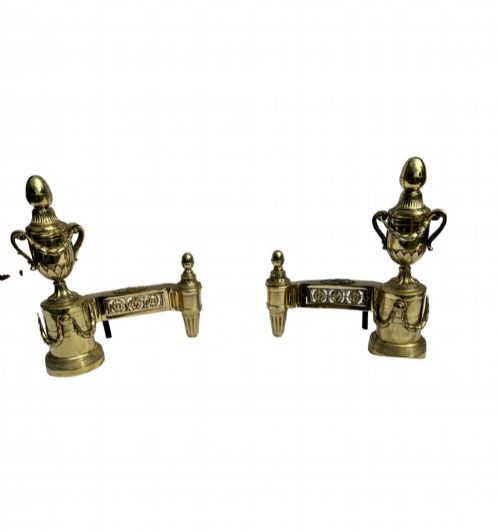
When you search for gold fireplace irons, you encounter hearth furniture finished in brass, ormolu, gilt-bronze and gilt-brass. The selections range from utilitarian companion sets to decorative French chenets and fire dogs designed to support logs.
The objects stem from various eras including Regency, Victorian, Edwardian and the nineteenth century. Most pieces present French Rococo, Neoclassical or Louis XVI styling alongside straightforward Victorian brass work.
Materials and Construction
The pieces rely on cast iron, bronze and brass as core structural metals. Artisans applied fire gilding, ormolu and surface lacquering to achieve the golden tone seen on chenets and companion sets.
Casting methods allowed makers to produce intricate rococo scrolls, acanthus leaf motifs and architectural mounts. Tool handles and stands were turned, filed and assembled to withstand proximity to the hearth.
Gold Fireplace Irons Retail Price Guide 2026
Typical asking prices for gold fireplace irons among the pieces listed under this phrase on Sellingantiques today, from the lower quarter to the upper quarter. They describe what is for sale here now, not the wider market.
French Rococo and Neoclassical styles appear frequently alongside Victorian companion sets.
Markers of Quality
Quality rests in the crispness of the metal casting and the depth of the gilt finish. Finer ormolu and bronze chenets show sharp chiselling and detailed surface work rather than soft, blurred contours.
Complete companion sets retain their matching stands and full complements of original tools. Heavier gauge brass and solid bronze construction distinguish superior pieces from lighter, later reproductions.
The Gold Fireplace Irons Glossary
- Chenet
- An ornamental metal support placed on the hearth, also known as a fire dog. These French accessories often match the decorative style of the fender.
- Ormolu
- Finely ground high-carat gold applied to a bronze base through mercury gilding. This technique produced a bright golden surface popular on nineteenth century French pieces.
- Companion set
- A matched collection of fireside tools usually comprising a poker, tongs, shovel and a standing holder. Sets often accompany matching fire dogs.
- Firedog
- A support for logs in an open fireplace, elevating wood to improve air circulation. They feature prominent decorative fronts visible when the hearth is unlit.
Gold Fireplace Irons: Frequently Asked Questions
What is the difference between fire dogs and chenets?
Fire dogs and chenets serve the same functional purpose of supporting logs within an open hearth. Chenet is simply the French term for these decorative iron or bronze supports.
In practice, pieces described as chenets often display more ornate French styling such as rococo scrolls or gilt-bronze mounts. Both terms appear interchangeably across nineteenth century listings.
How do I maintain brass and ormolu fire tools?
Maintenance involves gentle dusting and occasional cleaning with a soft cloth to preserve the metal finish. Avoid abrasive polishes that can wear away thin gilt layers on ormolu surfaces.
Keep the items dry and positioned safely away from direct moisture to prevent tarnish and corrosion. Regular light care maintains the bright golden appearance of the brass and bronze.
Are these tools suitable for a working fireplace?
Many of these items were constructed for actual hearth use during the nineteenth and early twentieth centuries. Solid brass and iron tools handle regular movement of ash and logs effectively.
Decorative ormolu chenets primarily serve an aesthetic role framing the hearth opening. Assess each piece's weight and construction before subjecting antique metalwork to heavy daily fires.
How can I date a set of brass fire irons?
Dating relies on stylistic clues such as Victorian mass production marks, Edwardian design trends or Regency neoclassical proportions. Material choices like heavy cast brass versus later stamped sheet metal also indicate age.
Construction details, tool handle shapes and any accompanying fire dogs help narrow the period of manufacture. Comparing the forms to established nineteenth century design styles provides further context.