

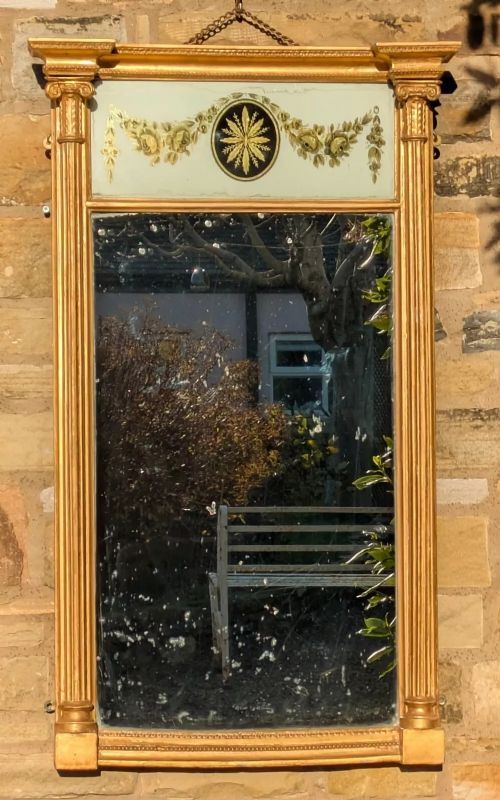
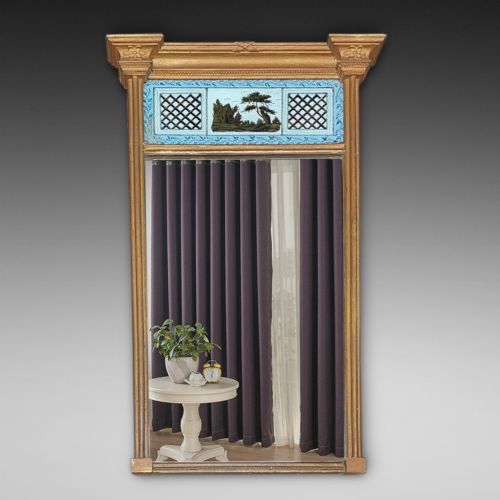


Gold Eglomise Mirror
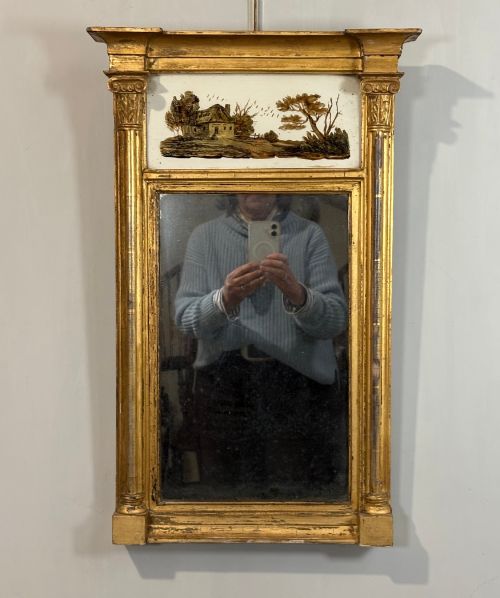
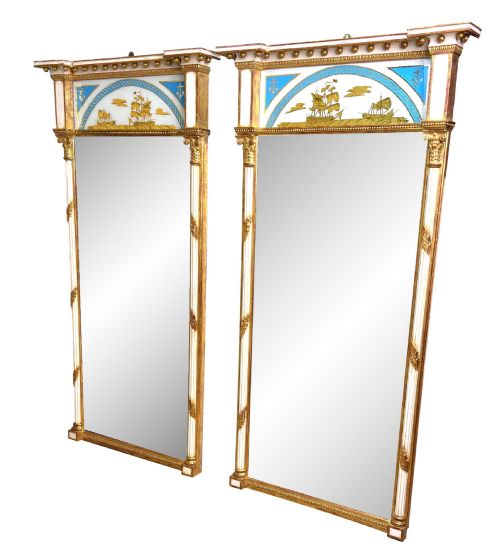
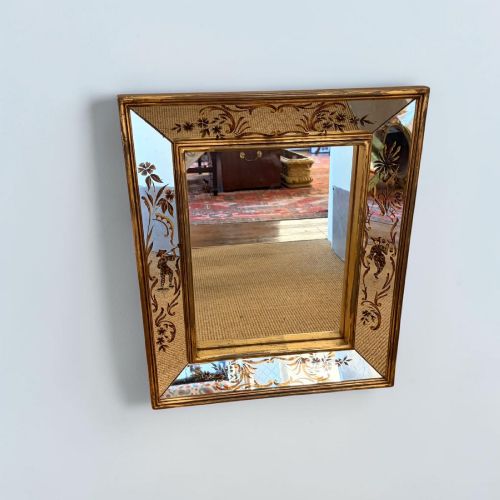
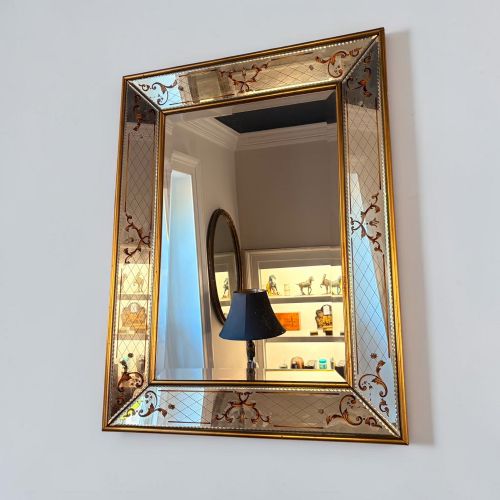
These gold eglomise mirror examples bring gilded warmth and reverse-painted glass panels to a room, offering both historic character and reflective light.
Gold Eglomise Mirror
A gold eglomise mirror combines traditional gilded frames with reverse-painted glass panels, creating layered decorative scenes above or beside the primary reflective plate. When you search for a gold eglomise mirror, you encounter wall mirrors spanning the Regency period through the early twentieth century.
The most common form on this page is the pier mirror, designed to hang on the narrow wall space between windows. These pieces incorporate eglomise decoration within their upper sections, alongside French Chinoiserie, Venetian, and French Rococo Revival stylistic influences.
Originating across different eras, these mirrors range from formal Regency giltwood pier glasses to later 1920 Venetian interpretations and 1910 French Chinoiserie designs. Each piece reflects distinct period aesthetics while maintaining the signature combination of gold leaf and glass painting.
How they were made
Frames are constructed from wood, finished with layers of gesso and gold leaf to create the characteristic giltwood surface. Artisans carved intricate details into the wood before applying the gilding.
The eglomise technique involves painting and gilding directly onto the reverse side of glass panels. These panels are then integrated into the mirror structure, often positioned above the mirror plate.
Gold Eglomise Mirror Retail Price Guide 2026
Typical asking prices for gold eglomise mirror among the pieces listed under this phrase on Sellingantiques today, from the lower quarter to the upper quarter. They describe what is for sale here now, not the wider market.
Some mirrors require careful dusting around tiny gilded acorns.
What varies in quality
The fineness of the carved giltwood frame and the intricacy of the reverse painting on the glass panel distinguish finer examples from simpler ones. Regency pier mirrors demonstrate high standards of woodworking and gesso application.
The integration of the eglomise panel with the mirror plate reflects the maker's skill. Superior execution maintains harmony between the gilded wooden frame and the decorative glass artwork.
The Gold Eglomise Mirror Glossary
- Eglomise
- A technique of applying gold leaf and painting on the reverse side of glass. This process creates a reflective, metallic finish viewed from the front.
- Pier mirror
- A tall, narrow mirror designed specifically to hang on the pier wall between two windows. These pieces often feature decorative upper panels.
- Giltwood
- Wood that has been coated with gold leaf or a gold-coloured metallic finish. It provides a bright, reflective surface on the frame.
- Gesso
- A plaster-like material applied to wood frames as a base for gilding. It allows artisans to carve crisp details before applying gold leaf.
- Trumeau
- A decorative wall mirror or panel featuring a painted or reverse-painted glass section above the main glass. This form is common in French interior design.
Gold Eglomise Mirror: Frequently Asked Questions
What is a gold eglomise mirror?
A gold eglomise mirror is a wall mirror featuring a gilded wooden frame and a reverse-painted glass panel. The eglomise technique uses gold leaf and pigment applied to the back of the glass.
These mirrors date from the Regency era through the early twentieth century, appearing in various styles including Venetian and French Chinoiserie.
Where were pier mirrors placed?
Pier mirrors were built to hang on the narrow stretch of wall between two windows, known as the pier. This placement maximised natural light in a room.
Their tall proportions and decorative upper panels suited this specific architectural space in period homes.
How do I date a giltwood mirror?
Dating relies on examining the framing style, carving techniques, and materials such as gesso and gold leaf. Regency pieces display distinct neoclassical or architectural motifs.
Later nineteenth-century and early twentieth-century examples often adopt French Rococo Revival or Venetian design elements.
How do I live with antique mirrors?
These mirrors suit placement in living spaces, hallways, or dining rooms where they reflect light and add architectural interest. Secure wall fixings are essential due to the weight of wood, gesso, and glass.
Positioning them away from direct sunlight protects the delicate reverse-painted glass panels and the gilded surfaces.