
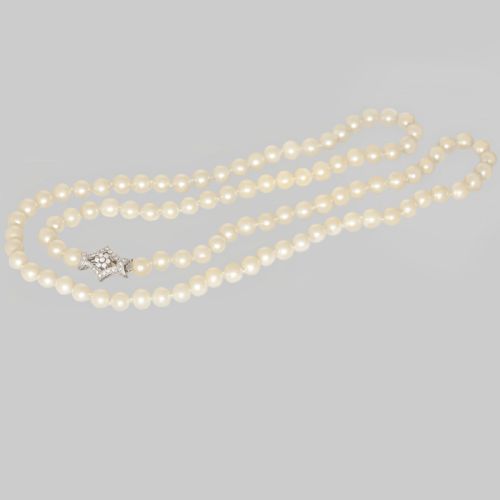
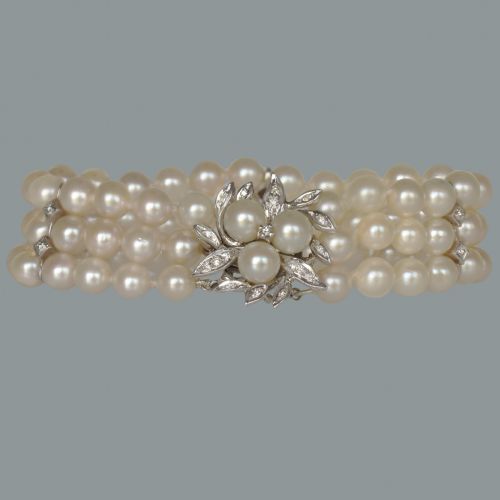


Gold Diamond Pearl Clasp
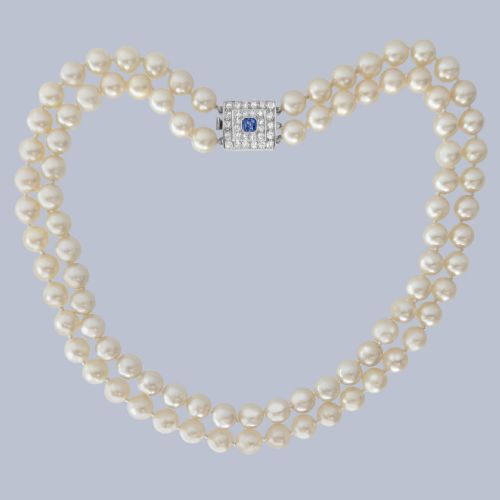
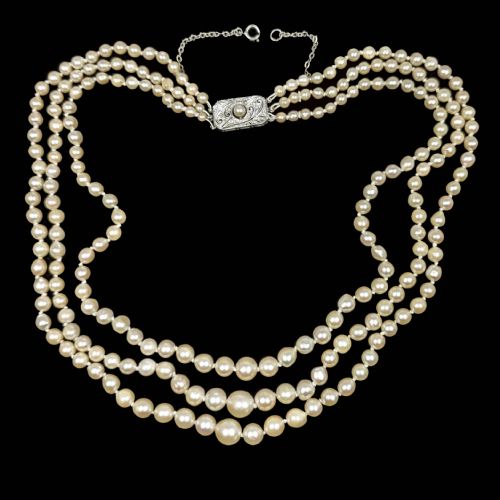
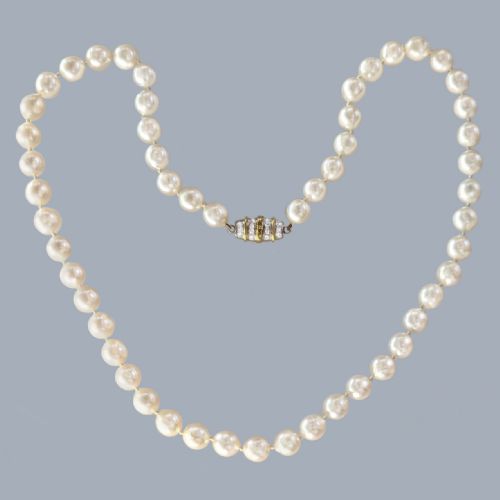
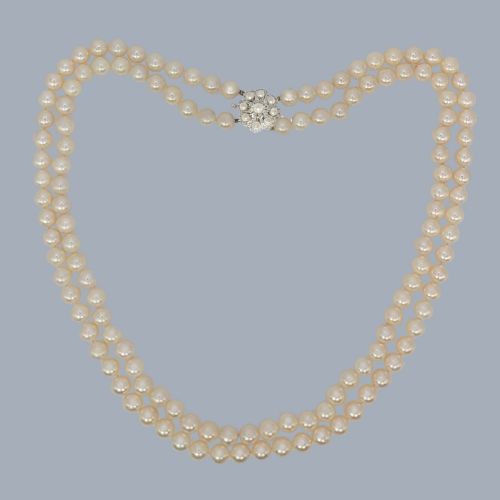
When you search for a gold diamond pearl clasp, you are looking at secure gemstone fastenings designed to unite multiple strands of pearls.
Gold Diamond Pearl Clasp
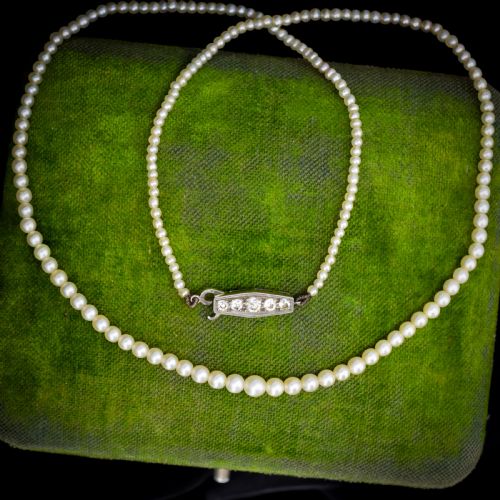
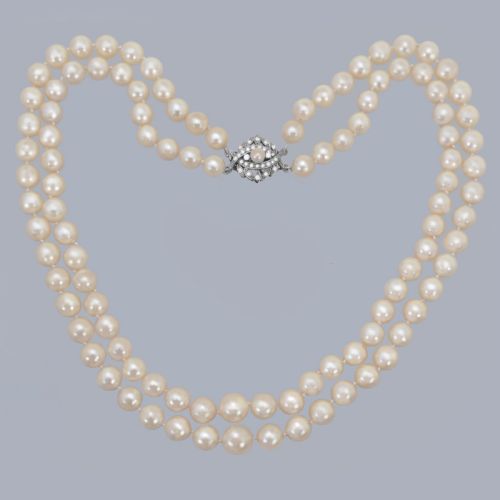
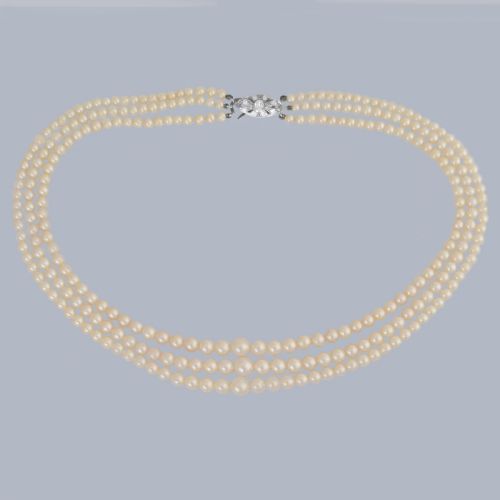
A gold diamond pearl clasp unites multi-strand necklaces and bracelets, functioning as both a secure fastening and a decorative centrepiece at the nape or front of the piece.
Most examples found here date from the Art Deco period through to the mid-twentieth century, commonly appearing on double or triple strands of cultured or saltwater pearls.
While single-strand necklaces and bracelets occasionally feature these gem-set fastenings, multi-row configurations dominate the selection across Edwardian, Victorian and 1950s eras.
Materials and Construction
Yellow gold, white gold, platinum and occasionally lower-carat alloys form the structural box or tongue fastenings that hold the tension of the pearl strands.
Diamonds cut in old mine, rose or brilliant styles are flush-set or claw-set into the metal framework, frequently accompanied by sapphires, emeralds, rubies or turquoise.
Pearls are drilled and strung onto silk or synthetic thread, often secured near the metal terminal boxes with knotting between individual beads to prevent friction.
Factors of Quality
The sophistication of the metalwork defines the upper tier, where intricate foliate, floral or geometric cluster designs integrate the mechanics of the clasp seamlessly.
Gemstone selection dictates overall value, separating uniform, certified natural saltwater pearls and high-colour diamonds from standard commercial cultured pearls and smaller melee stones.
The structural integrity of the box mechanism and the presence of safety catches or hallmarking indicate the original workshop standards.
The Gold Diamond Pearl Clasp Glossary
- Cultured pearl
- A pearl formed by the introduction of an irritant into an oyster by human intervention, resulting in layered nacre around a nucleus.
- Old cut diamond
- A precursor to the modern brilliant cut, characterised by a smaller table, higher crown and open culet typical of antique jewellery.
- Rose cut diamond
- A vintage diamond cut featuring a flat base and a domed crown with triangular facets arranged in a symmetrical pattern.
- Natural saltwater pearl
- A pearl developed organically in marine molluscs without human assistance, highly prized in older pieces for its formation.
- Box clasp
- A secure jewellery fastening where a curved metal tongue clicks into a hollow box housing, often released by a side push-piece.
Gold Diamond Pearl Clasp: Frequently Asked Questions
Were these clasps originally designed to be worn at the front?
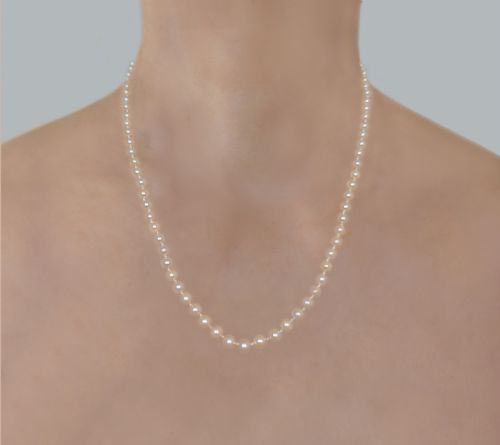
While traditional Edwardian and mid-century etiquette dictated that decorative clasps sit discreetly at the back of the neck, many intricate gemstone designs are intended to be rotated to the front.
Pieces featuring prominent sapphire, emerald or diamond clusters often double as interchangeable statement centrepieces. Inspect the reverse of the clasp for smooth finishing if you plan to wear it against the skin at the front.
How can I tell an Art Deco clasp from a 1950s one?
Art Deco clasps typically utilise platinum or white gold geometric frameworks set with old cut or rose cut diamonds in rigid linear patterns. They frequently accompany certified saltwater pearls.
By contrast, 1950s examples often employ yellow gold or 9ct white gold with floral, daisy or foliate cluster motifs alongside cultured pearls. Hallmarks stamped inside the box housing can also confirm specific assay office dates from the mid-century.
Do these necklaces need to be restrung?
Many vintage necklaces require periodic restringing as the original silk thread weakens and stretches over decades of use. Silk degrades when exposed to oils, perfumes and regular wear.
Look for evidence of loose spacing between the pearls or stretched threads near the clasp terminals. Professional restringing with fresh silk restores the graceful drape of multi-strand pieces.