



Gold Decorated Ceramic
Gold decorated ceramic pieces bring together fine porcelain, earthenware, and precious metallic highlights from Georgian, Victorian, and Meiji periods.
Gold Decorated Ceramic
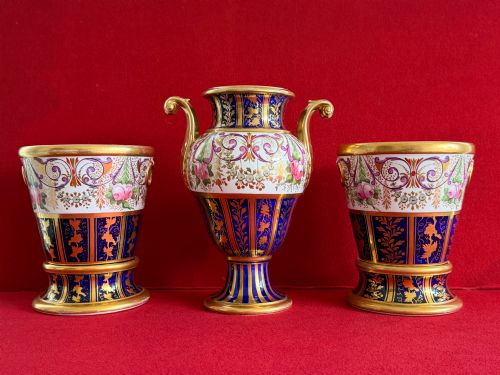
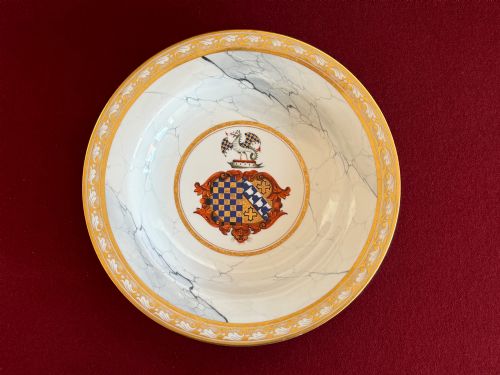
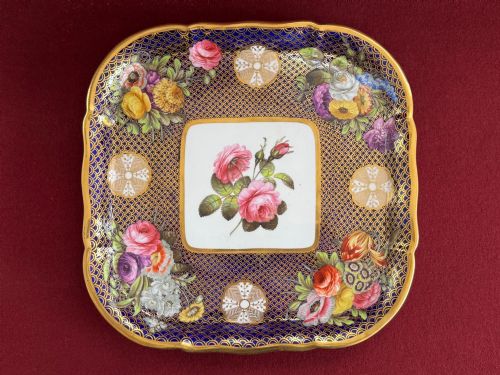
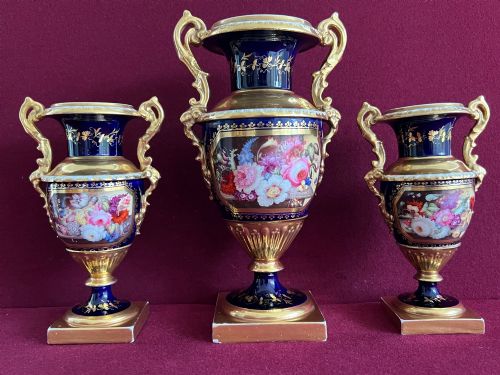
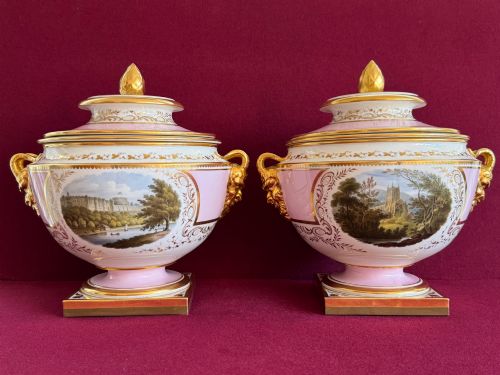
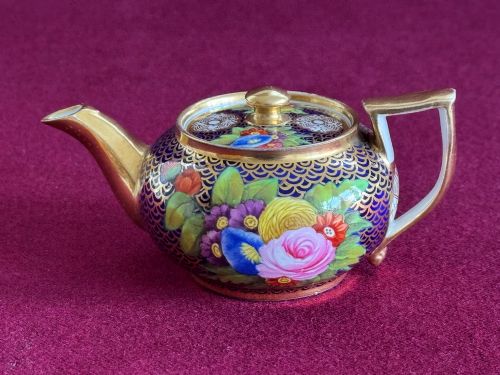
These gold decorated ceramic items span practical vessels and display pieces, taking the form of vases, urns, plates, dishes, ice pails, and miniature teapots. British factories and Japanese studios dominate the selection, bringing together traditional English porcelain and intricate earthenware.
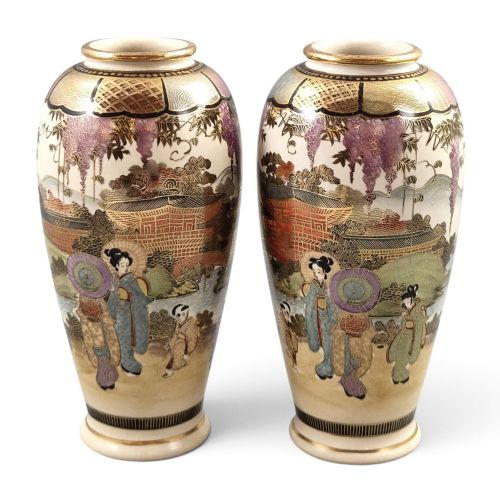
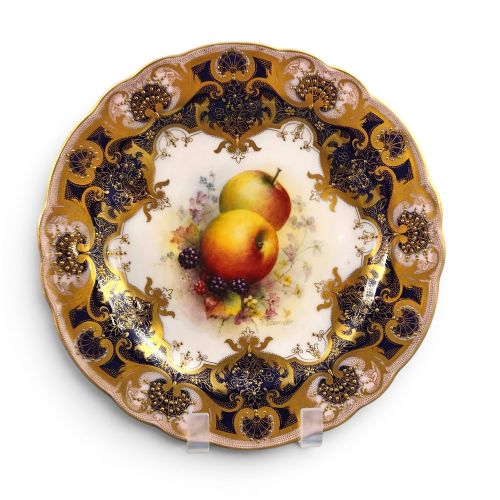
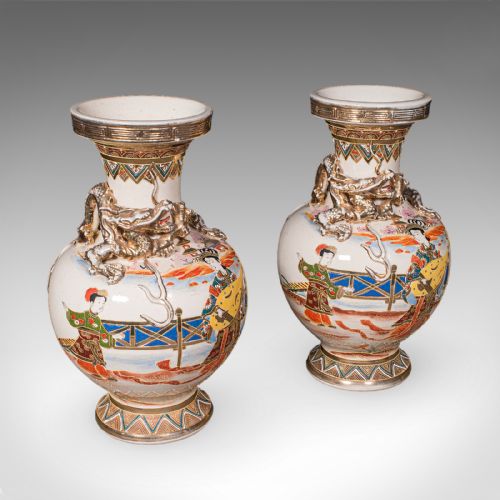
The English examples lean towards Regency and Victorian household wares, featuring named patterns and painted landscapes from factories such as Worcester, Spode, and Minton. Alongside these sit Japanese Satsuma ceramics from the Meiji period, decorated with figures, floral motifs, and dense metallic highlights.
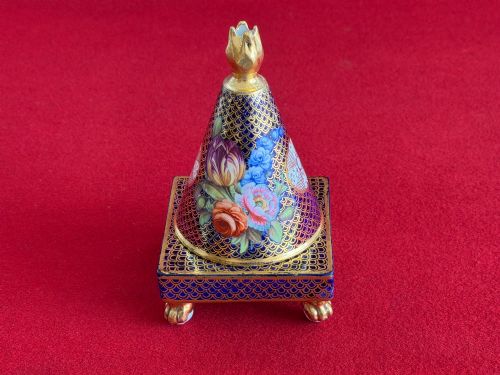
Buyers encounter everything from large garnitures and cabinet plates to small pastille burners and sugar bowls. The range covers centuries of ceramic production, showing how different cultures applied metallic enrichment to fired clay bodies.
Materials and Technique
Potters shaped porcelain and earthenware into vessels before applying glazes and enamel colours. Artisans then added gold leaf, gilding, and gilt highlights to the surface, often firing the pieces multiple times to bond the precious metal to the ceramic body.
Specialised techniques such as moriage built up raised relief patterns beneath the gilding, creating textured surfaces on Japanese Satsuma wares. English factories relied on precise hand-painted enamels combined with applied gold patterns to achieve formal decorative borders and armorial scenes.
Gold Decorated Ceramic Retail Price Guide 2026
Typical asking prices for gold decorated ceramic among the pieces listed under this phrase on Sellingantiques today, from the lower quarter to the upper quarter. They describe what is for sale here now, not the wider market.
Listings feature porcelain and earthenware from Regency, Victorian, and Meiji periods, utilising gold leaf, enamel, and glaze.
Craftsmanship and Painting
Quality rests upon the skill of the brushwork and the purity of the metallic application. Pieces painted by named artists display finer detail in landscapes and figures than standard factory output.
The crispness of the moulding and the preservation of the delicate gold leaf across the glaze distinguish finer examples. Heavier, more complex forms like multi-part garnitures and moulded relief structures demand greater technical mastery from the potter.
Spode Porcelain·Flight Barr And Barr·Minton Porcelain·Royal Worcester·Kinkozan Satsuma·Doulton Burslem·Ernst Wahliss·Shozan
The Gold Decorated Ceramic Glossary
- Gilding
- The application of gold leaf or powdered gold to the surface of a ceramic piece. This technique provides the metallic sheen seen across borders and handles.
- Moriage
- A Japanese decorating technique that uses clay slip to build up raised patterns before glazing and gilding. It creates a distinct textured surface on Satsuma ceramics.
- Garniture
- A set of three or more matching vases or urns designed to be displayed together on a mantelpiece or sideboard. These matching sets are often found in Regency porcelain.
- Armorial
- Ceramic decoration featuring a family coat of arms or crest. These bespoke commissions indicate high-status ownership during the Georgian period.
- Pastille Burner
- A small ceramic vessel used to vaporise scented paste or pastilles. They typically feature pierced lids to allow fragrance to escape.
Gold Decorated Ceramic: Frequently Asked Questions
Are these pieces safe for food use?
Antique gold decorated ceramic items are intended for display and decorative presentation rather than modern dining use. The historic glazes and metallic applications can wear away or contain materials unsuited for modern consumption.
Treat plates, jugs, and bowls as cabinet pieces to preserve their fragile painted surfaces.
How do I identify Satsuma ware?
Satsuma ceramics typically feature a crackled earthenware glaze decorated with dense enamel colours and heavy gold leaf. They often depict Japanese figures, landscapes, or geometric patterns and may carry studio signatures on the base.
Originating from Japan during the Meiji period, these pieces focus on intricate hand-painted detail and textured moriage relief.
What does a pattern number mean?
English factories like Spode assigned specific numbers to record successful decorative schemes and enamel combinations. These numbers help researchers and collectors identify the exact period and design lineage of a piece.
Finding a pattern number on the base links the item to factory archives and documented production years.