

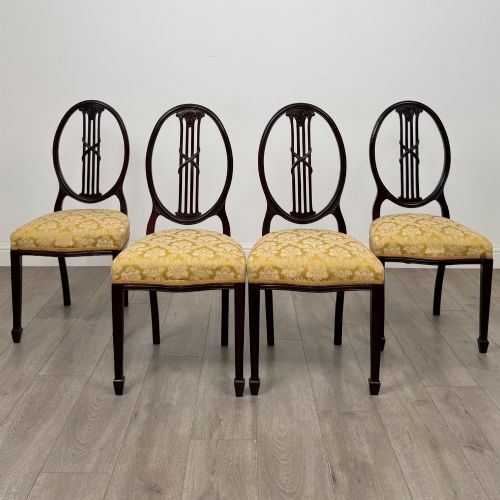
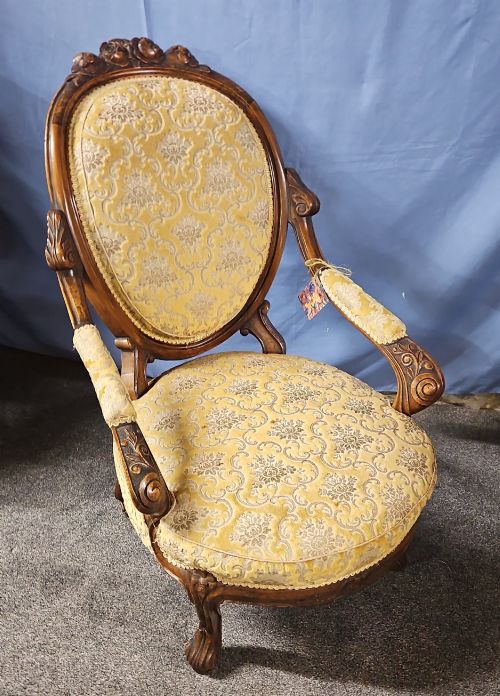
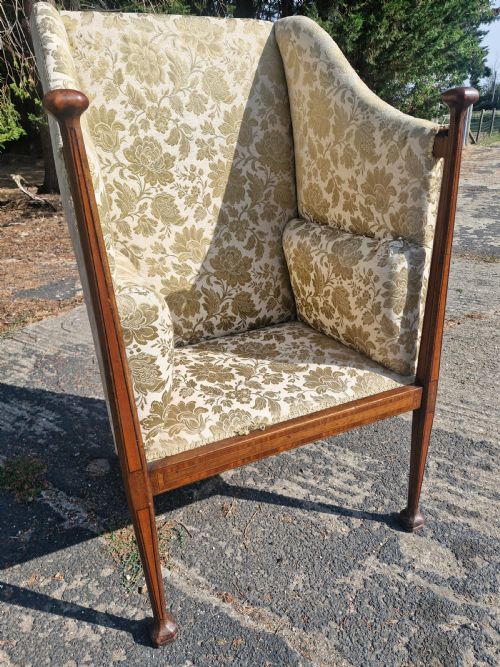
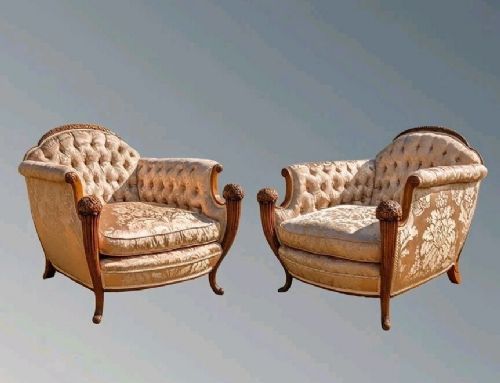



Gold Damask Upholstered Chairs
Gold damask upholstered chairs bring together rich textile patterns and carved wooden frames, offering seating that carries formal presence into a room.
Materials and construction methods
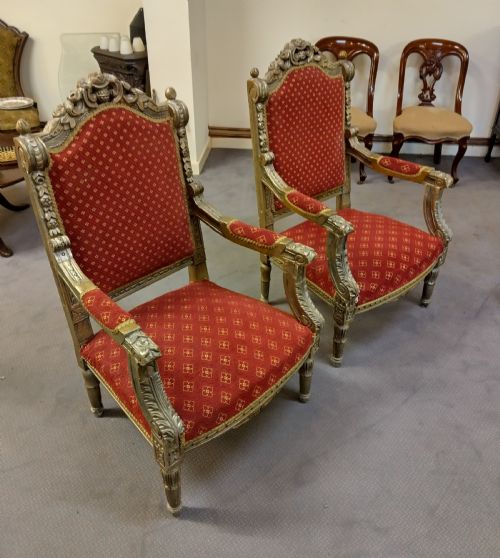
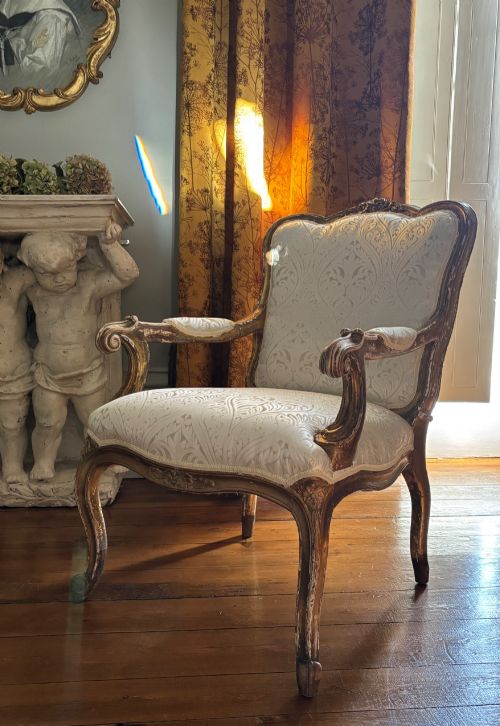
Makers shaped the structural frames of these chairs from hardwoods like mahogany, walnut, and rosewood, alongside softer timbers finished with giltwood or paint. Artisans employed traditional joinery techniques, carving intricate details directly into the wood for styles inspired by French Rococo and classical revival periods. Frames often received hand-carved ornamentation, such as floral motifs and scrolling arms, which complemented the formal character of the woodwork.
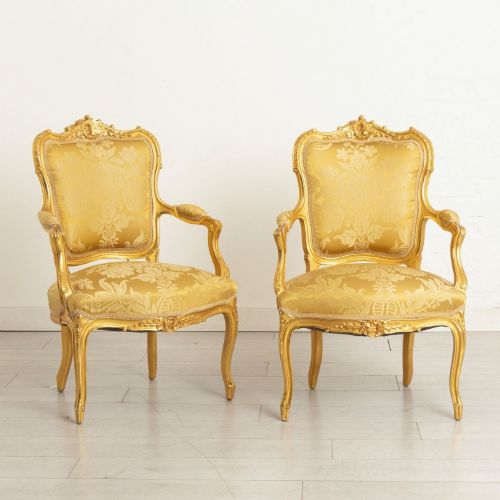
Upholstery involved securing patterned damask, silk damask, or standard damask fabric over internal stuffing and webbing to provide structured support. Silk and metallic threads woven into the damask created the characteristic flat, reversible patterns that catch the light from different angles. Craftsmen attached the textiles using decorative tacks or gimp braid to finish the edges cleanly against the wooden framework.
Factors determining quality
The refinement of the wood carving and the crispness of the gilt finish separate standard production from superior examples. Skilled carvers produced deep, undercut details on arms, legs, and crest rails, whereas lesser pieces display shallow or mechanically smoothed ornamentation. The choice of primary timber also dictates quality, with dense, well-figured mahogany or walnut commanding higher regard than secondary softwoods.
The grade and authenticity of the textile upholstery influence the overall integrity of the piece. Premium examples retain period-appropriate silk damask or utilise faithful reproduction weaves that match the tension and weight of historical textiles. Furthermore, the harmony between the scale of the frame and the complexity of the damask pattern determines the visual balance of the finished chair.
Listings feature pieces spanning the eighteenth, nineteenth, and twentieth centuries, incorporating mahogany, walnut, and silk damask materials.
Howard and Sons·Blaise Maucuy
The Gold Damask Upholstered Chairs Glossary
- Damask
- A reversible, figured fabric with patterns woven into the ground, traditionally produced in silk, wool, or cotton. This textile provides the characteristic sheen and textured surface seen on formal period seating.
- Giltwood
- Timber treated with gold leaf or metallic paint to simulate solid gold decoration. It appears frequently on frames influenced by French court styles.
- Bergère
- An enclosed upholstered armchair with wooden sides and a padded back, popular in French eighteenth-century design and later revivals. The design encloses the sitter for added comfort.
- Fauteuil
- An open-arm armchair with exposed wooden framing, originating in France. The arms typically feature padded elbow rests supported by carved uprights.
- Spoon back
- A padded chair back hollowed into a concave shape resembling the bowl of a spoon, common in Victorian seating. This contour fits the natural curve of the human spine.
Gold Damask Upholstered Chairs: Frequently Asked Questions
What is a gold damask upholstered chair?
A gold damask upholstered chair is a seat covered in woven patterned fabric, typically featuring a wooden frame of mahogany, walnut, or giltwood.
These pieces span various historical periods and revival styles, serving as both functional furniture and decorative elements in traditional interiors.
How do I identify a French style chair?
French style chairs often feature exposed giltwood or painted frames, carved floral motifs, and cabriole legs.
Details such as open arms on fauteuils or fully enclosed upholstered sides on bergères point directly to classical French workshop traditions.
Where were these chairs used historically?
These seats were primarily placed in formal reception rooms, drawing rooms, and private boudoirs of grand houses.
They provided comfortable seating during social gatherings while demonstrating the status and taste of the household through fine textiles and woodwork.
How do I care for antique damask upholstery?
Antique damask upholstery requires gentle maintenance, avoiding direct sunlight to prevent the silk or metallic threads from fading and weakening over time.
Regular light vacuuming with a soft brush attachment removes surface dust without catching the woven threads of the textile.