





Gold Cherub Mantel Clock
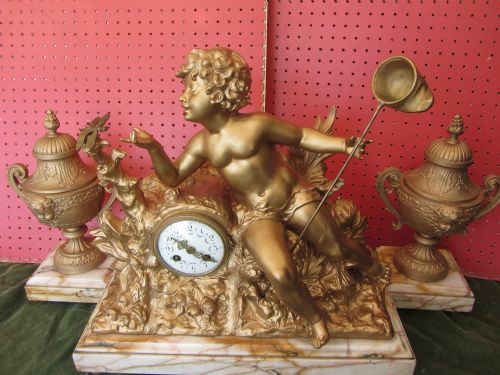
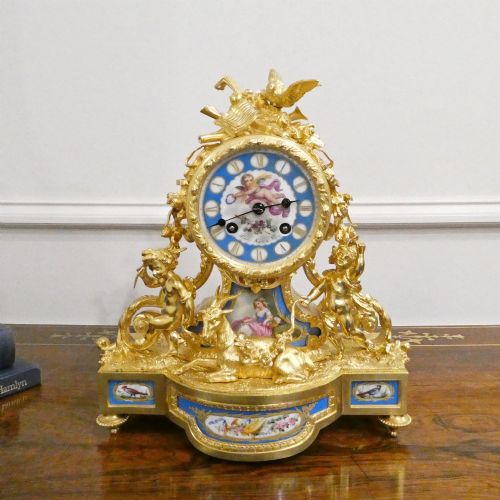
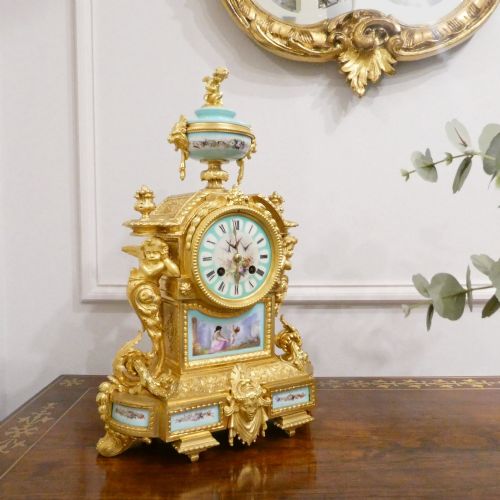
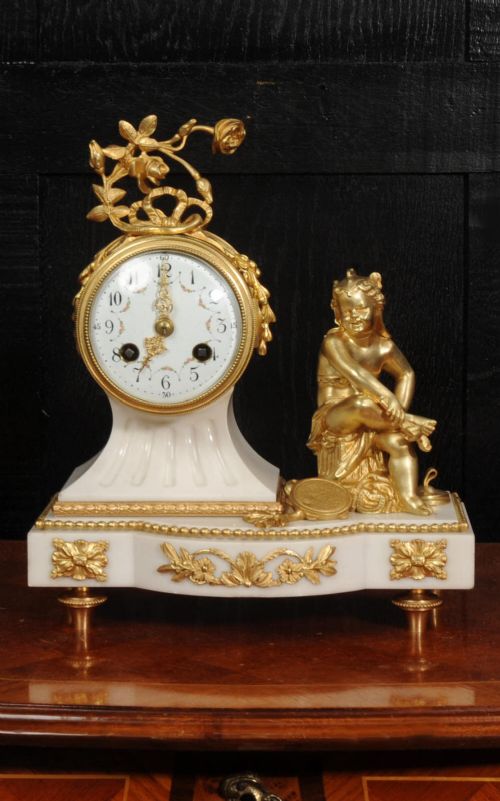
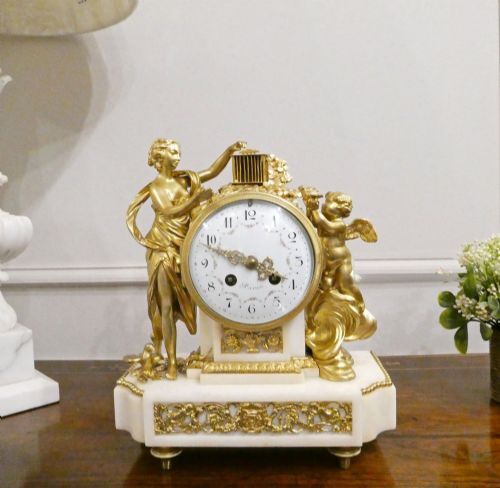
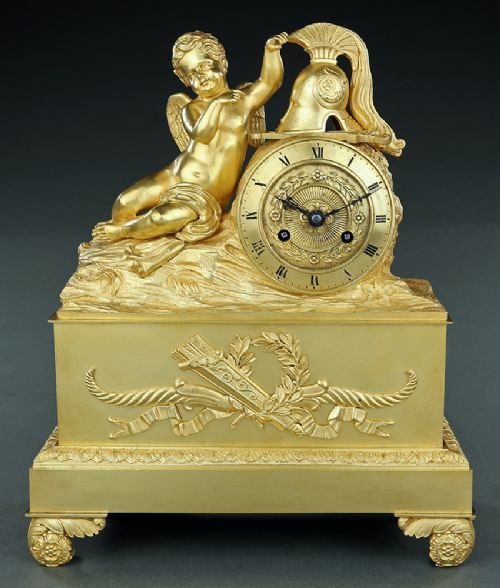
A gold cherub mantel clock brings theatrical French ormolu and classical marble to a room through figures of putti and winged cherubs.
Gold Cherub Mantel Clock
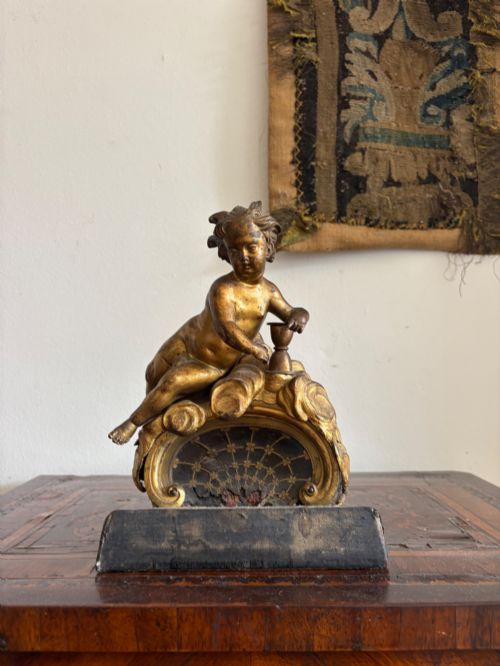
A gold cherub mantel clock combines the ornate presence of figural bronze casting with the steady tick of nineteenth-century horology. Buyers seek these pieces for their sculptural cherubs, putti, and cupids perched atop or beside the dial.
The versions most commonly met on this page originate from French workshops during the Victorian era, spanning the eighteenth and nineteenth centuries. Makers frequently pair cast bronze and ormolu with white marble bases and hand-painted porcelain panels.
Forms range from compact drum head timepieces to large garniture sets flanked by matching decorative urns or candelabra. Styles lean heavily towards French Rococo, Louis XVI, and Second Empire aesthetics, dominated by gilt metal and scrolling foliage.
Materials and construction
Foundry workers cast these pieces in bronze, brass, or gilt metal before applying mercury gilt or ormolu finishes to create a brilliant golden surface. Marble plinths provide heavy, contrasting foundations for the elaborate metalwork above.
Clockmakers integrate porcelain dials and plaques, often painted with floral motifs or pastoral scenes, alongside intricate champleve enamel details. Mechanical movements inside rely on brass wheel trains and escapements engineered by prominent Parisian firms.
Gold Cherub Mantel Clock Retail Price Guide 2026
Typical asking prices for gold cherub mantel clock among the pieces listed under this phrase on Sellingantiques today, from the lower quarter to the upper quarter. They describe what is for sale here now, not the wider market.
Cupid occasionally loses his bow to time, yet retains his golden wings and mischievous posture.
Judging execution and design
The crispness of the bronze chasing separates superior castings from softer, repetitive factory production. Master cormouliers hand-chased the metal after casting to sharpen feather details on cherub wings and the scrollwork of Rococo bases.
Signed movements by known Parisian makers carry greater weight than unsigned equivalents, reflecting the skill of the horologist behind the dial. The integration of high-grade porcelain panels and dense, unblemished marble also elevates the stature of the piece.
Henry Marc·Japy Freres·Henry Dasson·Le Roy Paris·Leon Message·Samuel Marti·Le Roy and Fils·JP Delettrez·Phillipe H. Mourey
The Gold Cherub Mantel Clock Glossary
- Ormolu
- Gilded bronze produced through a mercury amalgamation process, yielding a durable golden finish common on nineteenth-century French clocks.
- Putto
- A plump, winged child figure frequently depicted as a cherub or cupid in classical and Rococo design.
- Garniture
- A set consisting of a central mantel clock accompanied by matching side ornaments such as urns or vases.
- Champleve
- An enamelling technique where troughs are dug into a metal surface and filled with vitreous paste before firing.
- Drum head
- A clock case shaped like a circular drum, often mounted on a marble or bronze plinth.
Gold Cherub Mantel Clock: Frequently Asked Questions
How do I wind the clock?
Most mechanical movements require a matching winding key inserted into arbors on the dial face. Turning the key tensions the internal springs that power the timekeeping and striking trains.
Care must be taken not to overwind the mainspring, stopping as soon as resistance is felt against the key.
What periods do these clocks date from?
The pieces span the eighteenth and nineteenth centuries, with the majority originating during the Victorian period. French workshops active in the eighteen-fifties, sixties, and eighties produced most of the surviving examples.
Revival styles of the era draw heavily upon earlier Louis XIV, Louis XV, and Louis XVI designs.
Where should I place a marble clock?
Mantel clocks require a sturdy, level surface capable of supporting considerable weight from bronze and stone. Fireplace mantelpieces and heavy wooden sideboards provide traditional settings for display.
Direct sunlight and damp environments should be avoided to protect the gilded surfaces and painted dials.
How do garniture sets work?
A garniture comprises a central clock paired with two matching decorative objects, such as candelabra or urns. These matching pieces balance the visual weight of the mantel arrangement.
Individual components share identical foundry techniques, gilding styles, and marble bases to maintain visual harmony.