


Gold Cabochon Necklace
A gold cabochon necklace brings together smooth, polished gems and precious metal in wearable pieces spanning the Victorian era to the mid-century.
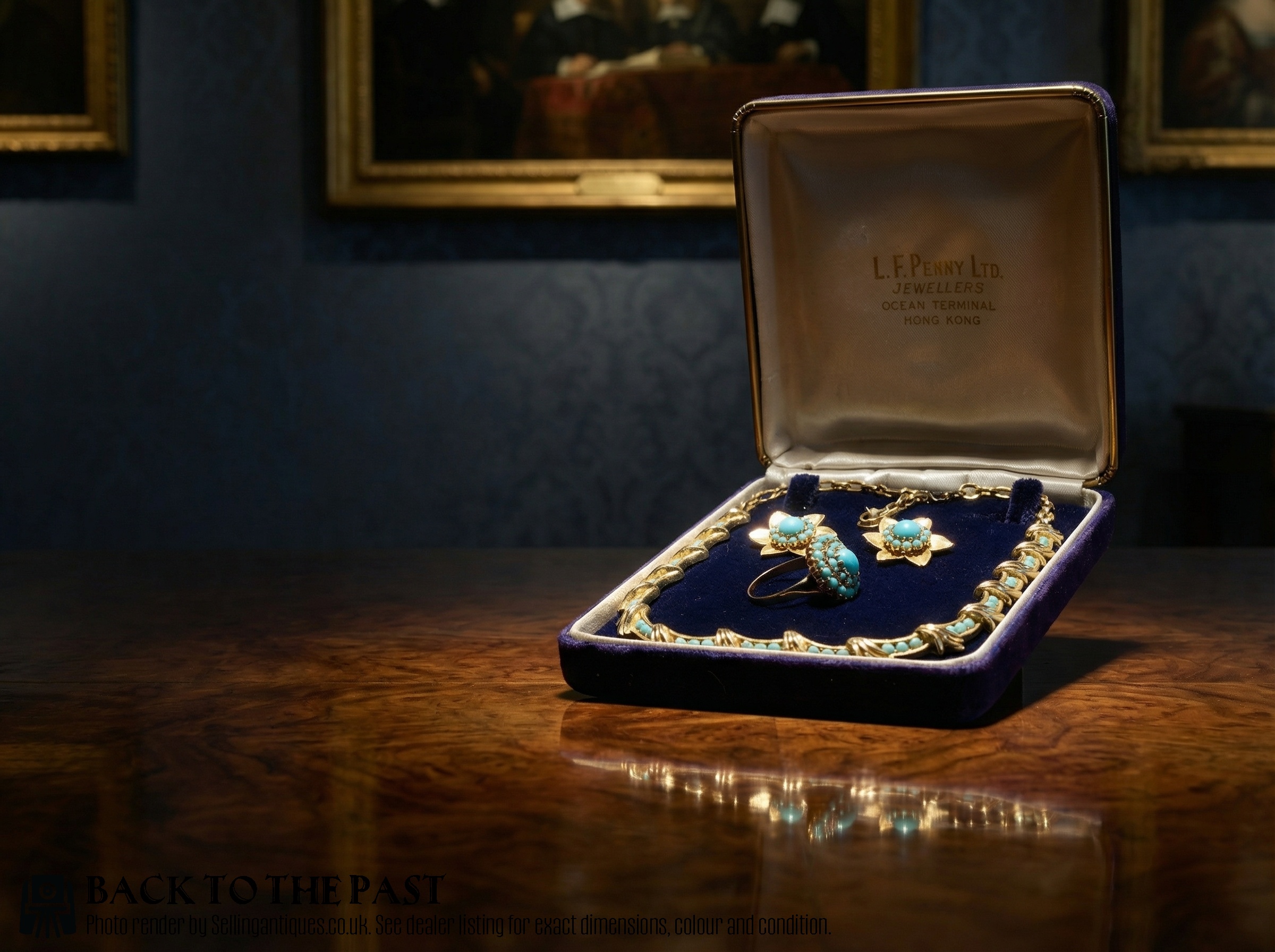
Gold Cabochon Necklace
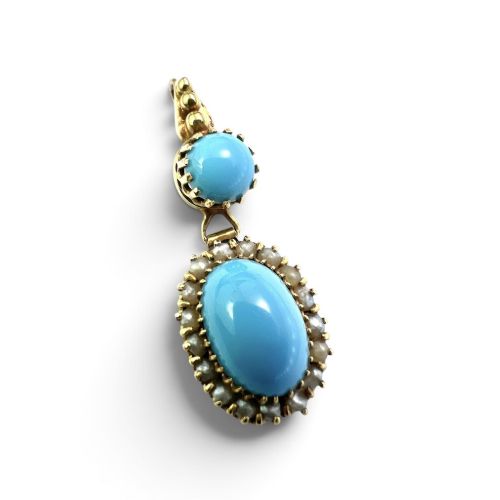
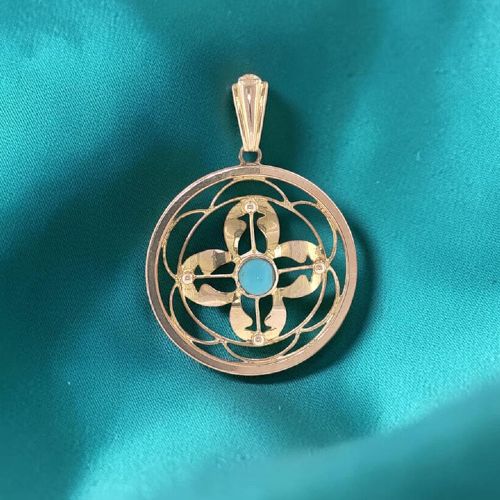
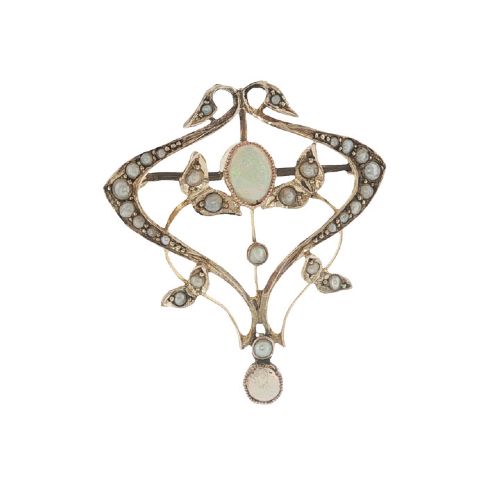
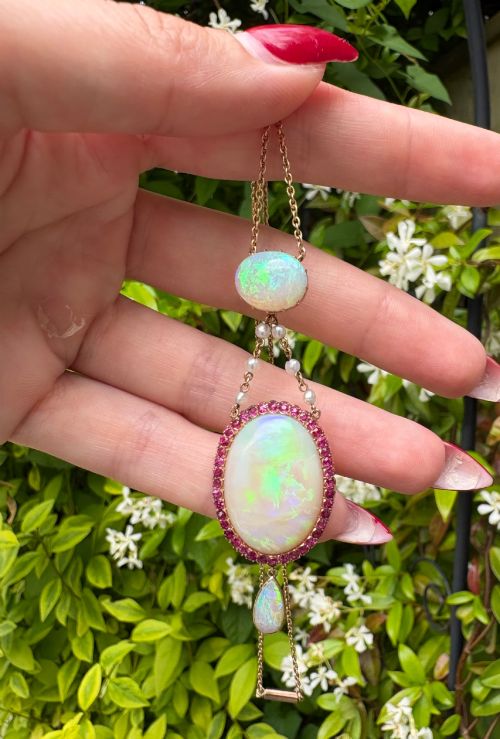
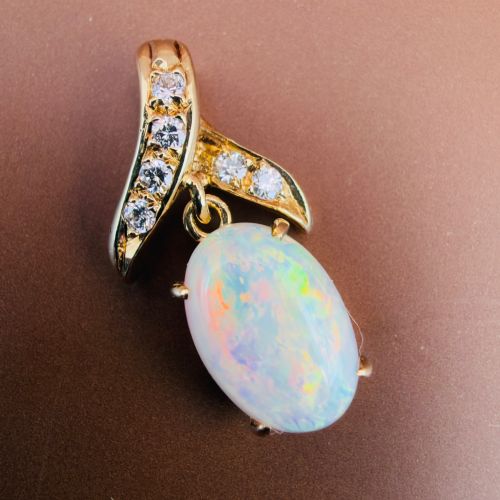
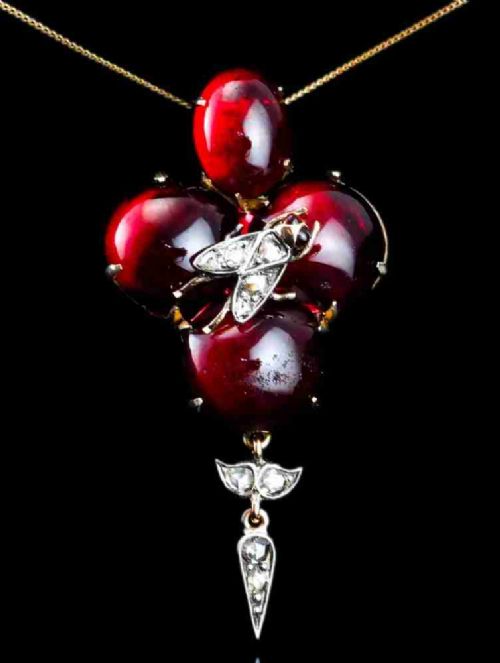
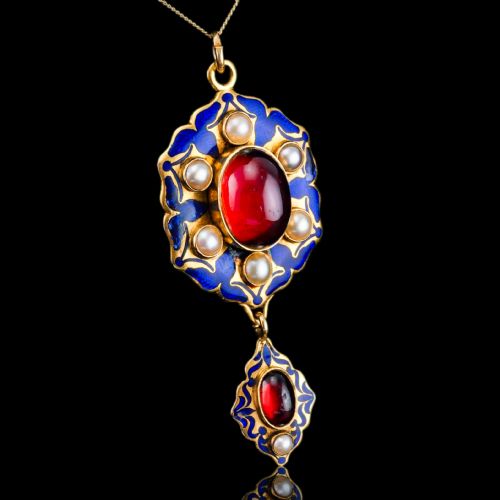
The selection ranges from delicate halo pendants to substantial lavalieres and longuards set with opal, turquoise, garnet, and moonstone. Pendants and necklaces dominate the forms, often incorporating secondary accents of small diamonds or pearls.
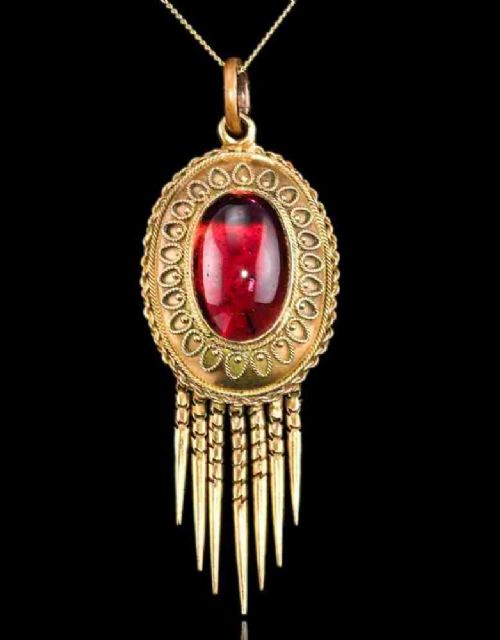
Makers from the Arts and Crafts and Etruscan Revival movements also contribute distinct designs, linking classical techniques with organic motifs.
Materials and construction
Goldsmiths utilised varying purities of yellow and rose gold, predominantly nine-carat, fifteen-carat, and eighteen-carat standards, alongside silver-topped gold settings typical of nineteenth-century work. Stones are secured in closed or open-backed collet settings designed to protect and enhance the natural luminescence of the domed material.
Techniques range from hand-forged filigree and granulation to intricate wirework, reflecting the aesthetic preferences of the Victorian and Edwardian periods. Chains often mirror the period work, incorporating handmade links, slide mechanisms, or dog clips.
Opal, turquoise, garnet, and moonstone dominate the domed gemstone selections across Victorian and Edwardian items.
Distinguishing quality across periods
Quality rests primarily on the optical depth and play of colour within the cabochon stone itself, such as the flash in an opal or the translucence of a moonstone. Superior examples display careful stone matching and balanced proportions between the central gem and the surrounding goldwork.
Execution of fine details, such as granulation in Etruscan Revival pieces or hand-twist wirework, separates standard commercial output from exceptional masterwork production.
Dorrie Nossiter·John Paul Cooper
The Gold Cabochon Necklace Glossary
- Cabochon
- A gemstone shaped into a smooth, rounded dome and polished rather than faceted. This ancient cutting style maximises the colour and internal phenomenon of stones like opal and moonstone.
- Lavaliere
- A pendant necklace featuring a central dangling drop, often articulated. Popularised during the Edwardian era, these pieces frequently incorporate pearls and cabochon gems.
- Collet
- A band of metal that holds a gemstone in place by folding or pressing the upper edge over the stone. This setting style secures smooth-domed cabochons safely.
- Granulation
- A decorative technique involving tiny spheres of gold fused to a metal surface in geometric or organic patterns. It is characteristic of Etruscan Revival jewellery.
- Longuard
- An exceptionally long chain, often exceeding fifty inches, designed to be doubled around the neck. They frequently terminate in a swivel clasp or dog clip for suspending pendants.
Gold Cabochon Necklace: Frequently Asked Questions
What is a cabochon cut?
A cabochon is a gemstone that has been shaped, rounded, and polished into a convex dome instead of being cut with flat facets. This traditional method highlights the natural body colour, lustre, and optical effects of stones like star quartz, opal, and garnet.
Cutters often reserve this style for opaque or translucent materials where internal reflection is less important than surface sheen.
How do I date a Victorian gold necklace?
Dating relies on hallmarks, gold standards, and stylistic markers such as Etruscan Revival motifs or Holbeinesque designs. Nineteenth-century pieces frequently utilise fifteen-carat or eighteen-carat gold before statutory changes introduced lower purities.
Structural evidence like hand-cut settings and closed-back foils also points securely to early or mid-Victorian manufacture.
Can I wear an antique necklace daily?
Gentle daily wear is possible for sturdier gold and gemstone necklaces provided they receive proper care. Softer stones like opals require protection from harsh chemicals, cosmetics, and impacts.
Checking the security of the claw or collet settings periodically prevents accidental stone loss.
What is an Etruscan Revival pendant?
Etruscan Revival jewellery draws inspiration from archaeological excavations in Italy during the mid-nineteenth century. These pieces feature characteristic elements like applied gold wirework, granulation, and classical geometric motifs.
Craftsmen paired these intricate gold frameworks with cabochon garnets, rock crystal, and archaeological-style drops.