


Gold Bronze Desk Ornament
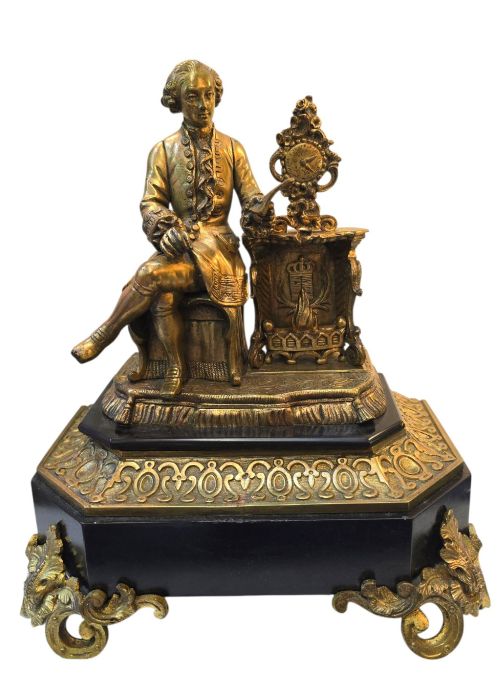
These gold bronze desk ornaments are tactile metallic pieces for the study, offering a blend of period craftsmanship and functional display.
Gold Bronze Desk Ornament
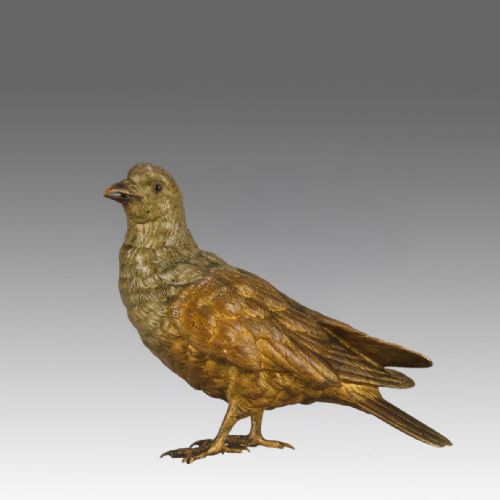
When you search for a gold bronze desk ornament, you enter a field of desk accessories and cabinet bronzes spanning the nineteenth century and the early twentieth century. The selections available here encompass items from the Victorian era through the Art Deco period, including French animalier studies, Viennese cold-painted bronzes, and American studio pieces.
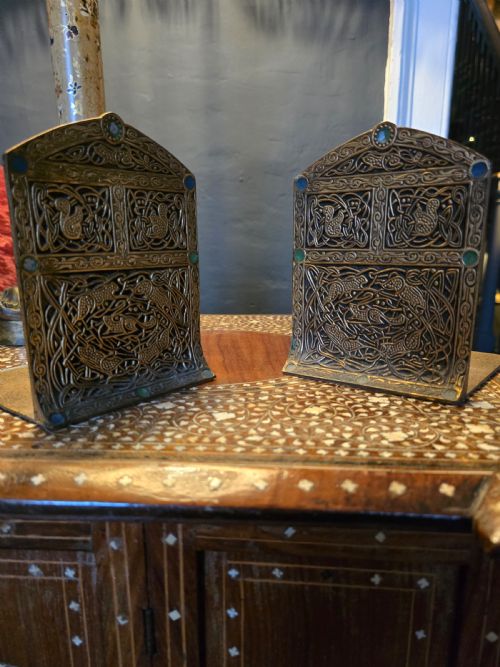
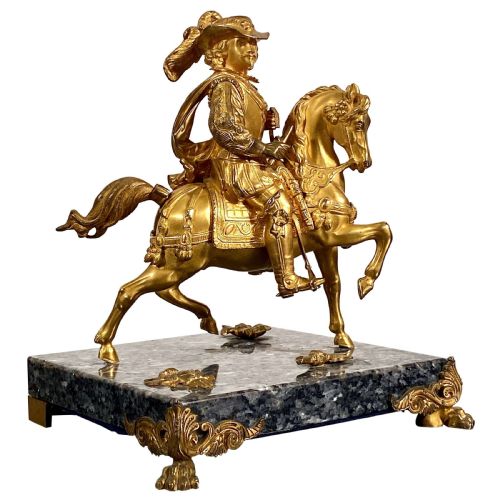
The functional forms take shape as inkwells with original glass eyes, figural letter openers, architectural bookends, and novelty desk clocks. Alongside these utilitarian items sit standalone portrait busts, equestrian statuettes, and figurative sculptures mounted on marble or onyx bases.
Makers and foundries represented stretch from European ateliers to American studios, utilising cast brass, gilt bronze, and ormolu. Each object serves to anchor a working desk with historical weight and metallic lustre.
Materials and casting methods
Foundries utilised bronze, cast brass, and spelter as base metals, applying surface treatments such as mercury gilding, ormolu, and cold-painting to achieve the characteristic golden finish. Enamel paint and champleve enamel added vibrant colour accents to clock faces and novelty fixtures.
Mounts incorporate natural mineral slabs, notably green malachite, white marble, and banded onyx, providing stable weight for desk use. Glass elements appear as functional inkwell inserts and inset eyes on figural animal studies.
One vigilant bronze stag watches over his inkwell using original glass eyes.
Judging execution and finish
The integrity of the surface treatment dictates value, with well-preserved fire gilding or original cold-painted pigments vastly outperforming stripped or heavily polished surfaces. Harmony between the metal sculpture and its stone base indicates thoughtful studio assembly.
Franz Bergman·Tiffany Studios New York·Antoine Louis Barye·Josef Lorenzl·Jennings Brothers
The Gold Bronze Desk Ornament Glossary
- Ormolu
- A gilded bronze technique utilising finely ground gold mercury amalgam applied to a cast brass or bronze base. This process creates a brilliant golden surface characteristic of nineteenth-century decorative objects.
- Cold-painted bronze
- A method where non-fired oil paints are applied directly to a finished bronze casting. This technique was widely utilised by Viennese and American foundries for brightly coloured animal and human figures.
- Champleve enamel
- A process where troughs or cells are hollowed out of the metal surface and filled with vitreous enamel powder before firing. It creates vibrant decorative patterns across clock cases and desk items.
- Animalier
- A nineteenth-century artistic movement dedicated to the realistic portrayal of animals. Sculptors in this tradition focused on anatomical precision and dynamic movement.
- Spelter
- An alloy of zinc and lead used as a cost-effective substitute for bronze. It frequently appears in twentieth-century figural castings mounted on stone bases.
Gold Bronze Desk Ornament: Frequently Asked Questions
What is the difference between ormolu and gilt bronze?
Ormolu specifically denotes mercury gilding on a bronze base, producing a deep, reflective golden hue through a hazardous chemical process that was later restricted.
Gilt bronze is a broader term encompassing any bronze object covered in a layer of gold, which might be achieved through fire gilding, electroplating, or leaf application.
How do I care for a cold-painted bronze?
Cold-painted bronzes require dusting with a soft, dry brush only, as moisture or liquid cleaners will immediately dissolve the fragile oil paints.
Keep these items away from direct sunlight and humid environments to prevent the original polychrome pigments from flaking or fading over time.
Why are some figures mounted on onyx or marble?
Stone bases provided necessary physical weight for functional desk accessories like bookends and inkwells, ensuring stability during daily use.
In Art Deco and late nineteenth-century pieces, contrasting marble and onyx slabs also served a stylistic purpose, framing the metallic sculpture above.
How can I tell an antique bronze from a later reproduction?
Examine the underside and interior of the casting for patination age, tool marks, and construction methods consistent with nineteenth or early twentieth-century foundry practices.
Original pieces often show honest wear to the gilding and patination in areas touched by human hands over generations of desk use.