




Gold Brass Urn Lamp
These gold brass urn lamp designs combine classical metalwork with period domestic lighting, bringing warm metallic lustre and stately proportion to a room.
Gold Brass Urn Lamp
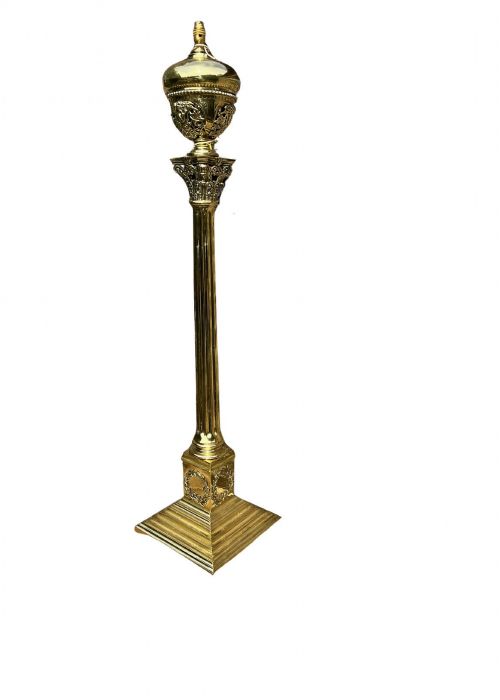
When searching for a gold brass urn lamp, a buyer encounters a range of metal lighting fixtures drawing on classical urn and ewer forms. The pieces span the nineteenth century through the Art Deco era, encompassing Victorian, Edwardian, and Neoclassical styles.
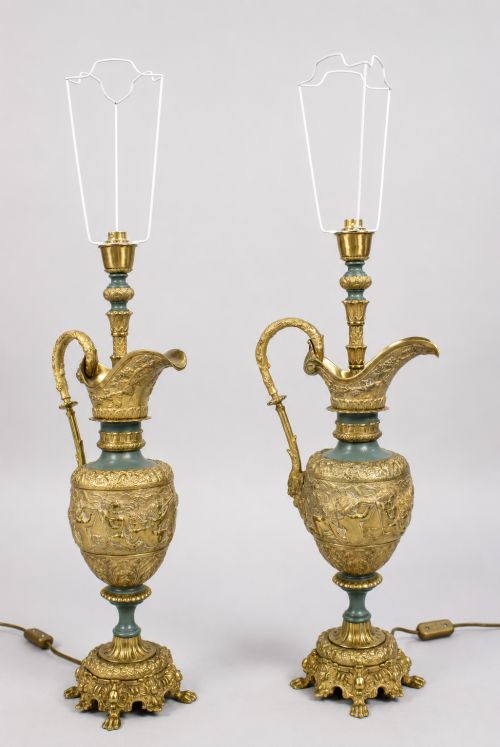
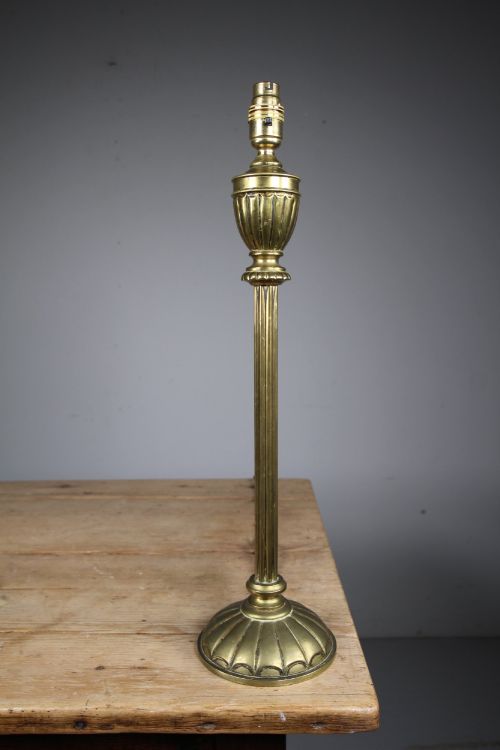
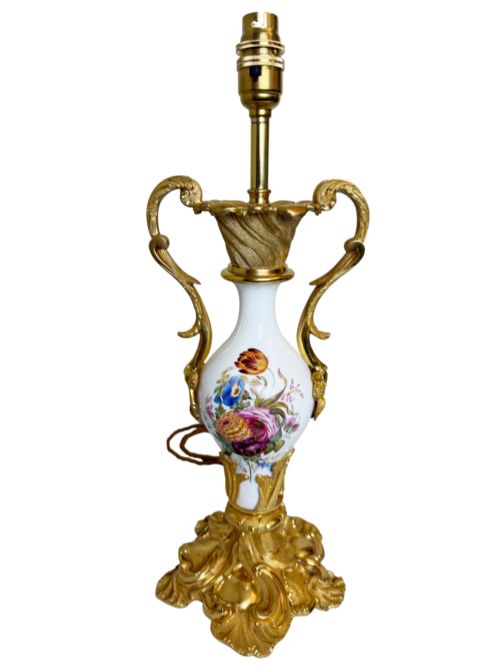
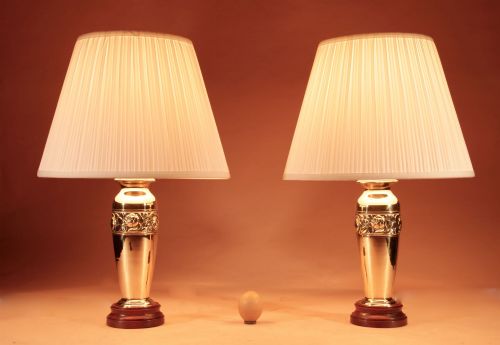
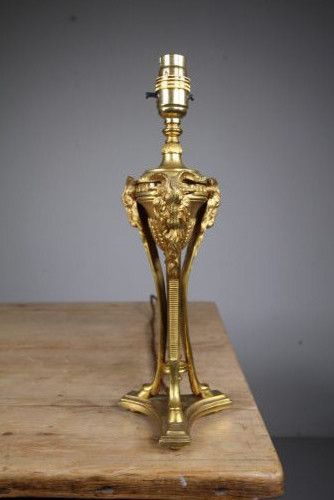
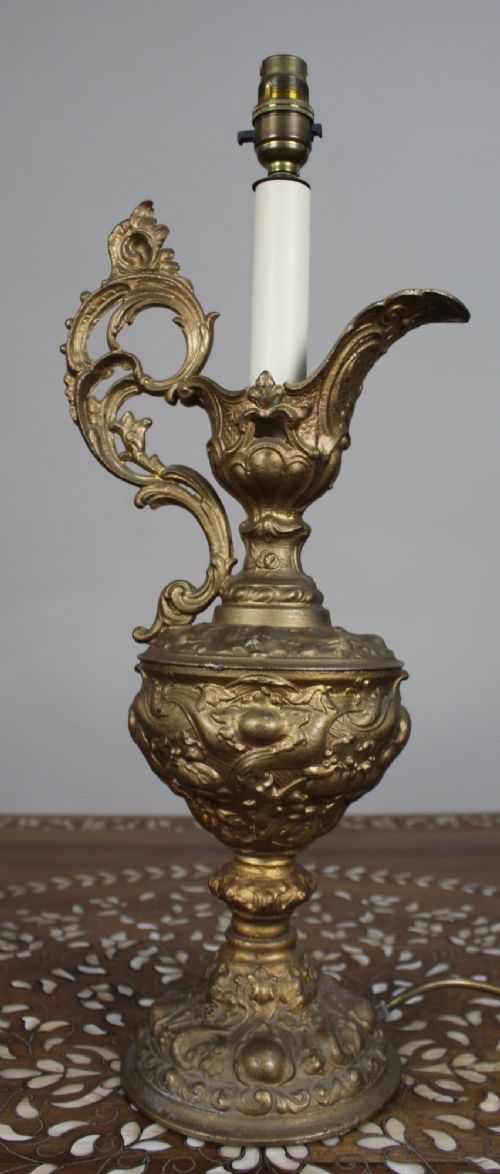
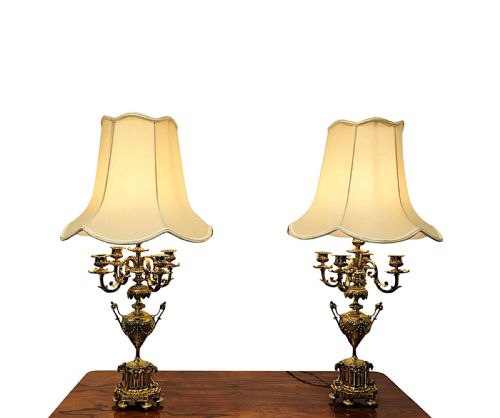
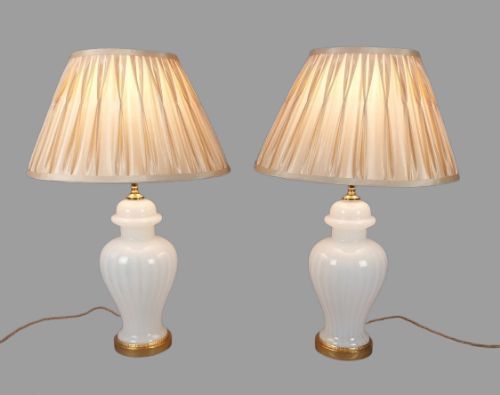
The version most commonly met on this page is a table lamp fashioned from gilt metal, brass, or ormolu, often paired with marble, porcelain, or onyx bases. Forms include converted candelabra, classical ewers, and column structures carrying fabric shades.
Origins stretch across English workshops and French ateliers, featuring decorative elements such as rams heads, classical masks, and floral designs. Standard floor lamps and occasional spirit kettles also appear alongside standard table lighting.
How they were made
Casting forms the foundation of these pieces, utilising brass, gilt bronze, and ormolu to achieve crisp classical motifs and weighted bases. Artisans employed detailed chording and chasing to sharpen the relief on mounts, masks, and handles.
Combinations of materials define the construction, pairing polished metals with contrasting elements of marble, porcelain, onyx, and opaline glass. Many items incorporate textile elements, including fabric shades and applied lacquers such as black and gold Toleware.
What varies in quality
The division between standard production and superior craftsmanship rests in the crispness of the metal casting and the depth of the gilding. Finer pieces display sharply rendered relief work on rams heads, cherubs, and classical masks without blurring.
Integration of secondary materials also separates the grades, with higher-tier examples using solid carved marble or fine Paris porcelain rather than simpler plated substitutes. Proportion, weight, and the harmonious balance between the metal body and the base determine overall presence.
The Gold Brass Urn Lamp Glossary
- Ormolu
- A technique of applying finely ground high-carat gold to a bronze base using mercury amalgamation. This creates a rich, lasting golden surface typical of French decorative pieces.
- Ewer
- A pitcher with a wide spout and elaborate handle. In lighting, these vessels were adapted into lamp bodies.
- Neoclassical
- A style drawing inspiration from the classical art and culture of ancient Greece and Rome. It emphasises symmetry, columns, urns, and restrained classical ornamentation.
- Toleware
- Metalware painted and lacquered with pigmented finishes. It frequently appears in black and gold lacquer combinations.
Gold Brass Urn Lamp: Frequently Asked Questions
How do I date a brass urn lamp?
Dating relies on stylistic clues and construction methods specific to the Victorian, Edwardian, and Art Deco periods. Cast mounts, wiring access points, and material combinations help establish the approximate decade of manufacture.
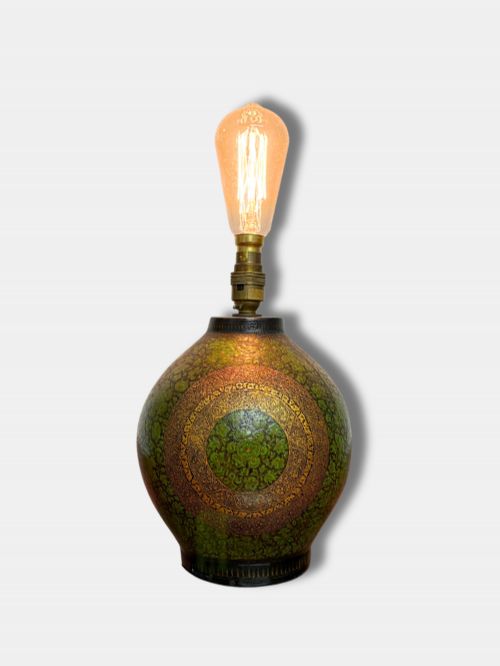
Nineteenth-century examples often favour heavier bronze and cast brass with classical revival details, whereas 1920s pieces lean towards cleaner geometric lines or distinct regional styles like Kashmiri work.
Were these always electric lamps?
Many of these pieces began life as something else entirely before conversion to electricity. Candelabra, oil lamps, spirit kettles, and decorative urns were frequently adapted during rewiring.
This conversion process preserves older metalwork for modern domestic use while retaining the original classical aesthetic of the base object.
How do I care for gilt metal and ormolu?
Cleaning requires a gentle touch to preserve the thin layers of gold leaf or mercury gilding. Dusting with a soft, dry cloth prevents the accumulation of grime without stripping the finish.
Harsh chemical polishes must be avoided entirely, as they strip away the historic surface layer and expose the underlying base metal.
What styles complement these lamps?
These lamps sit comfortably within traditional interiors, classical schemes, and eclectic spaces mixing antique and modern furnishings. Their metallic finishes reflect ambient light and coordinate well with marble and rich textiles.
Placing them on side tables or desks introduces height, structure, and a warm focal point to the room.