


Pair Sideboard Lamps
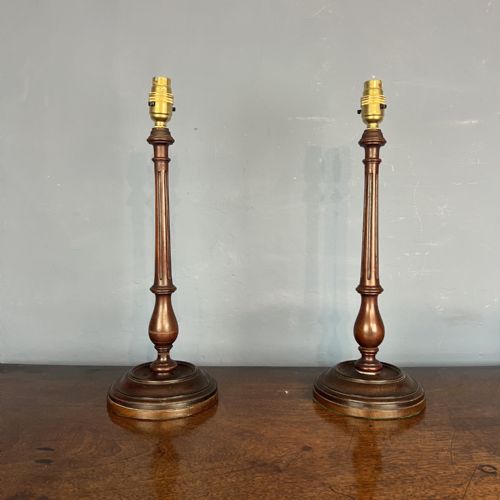
Pair antique sideboard lamps provide balanced illumination and decorative symmetry, bringing period character and warm light to any reception room.
Pair Sideboard Lamps
Pair antique sideboard lamps encompass matching table illumination designed for sideboards and side tables, drawing from nineteenth and early twentieth century English and continental workshops. These fixtures unite decorative form and functional lighting, often adapting earlier vases or columns into electrified lighting.
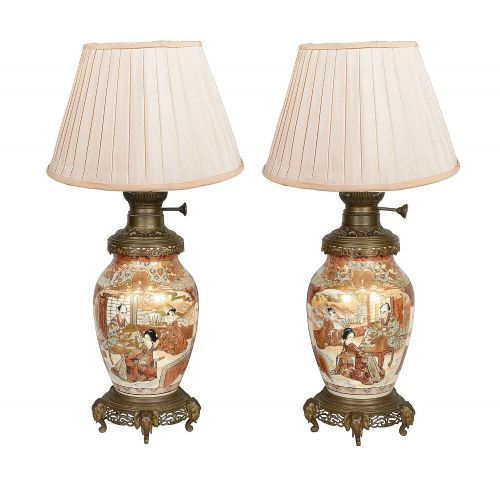
The selections available here span from Edwardian mahogany and Victorian Corinthian columns to French crystal and Ormolu designs. Buyers frequently encounter nineteenth century Japanese Kutani and Imari vases alongside classical brass candelabra and marble bodies.
Originating across the nineteenth century and into the nineteen twenties, these pairs display distinct regional preferences from English country robustness to French chateau elegance. Each matched set retains the proportions necessary to flank larger furniture pieces effectively.
Materials and construction methods
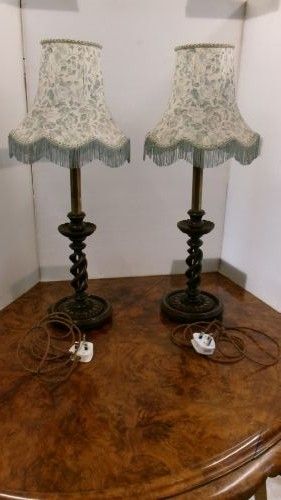
Makers utilised cast brass, bronze, and ormolu alongside carved mahogany and oak, building robust foundations for heavy glass or ceramic bodies. Crystal components and cut glass prisms reflect light while marble bases add substantial weight and stability.
Ceramic elements include Japanese Satsuma, Kutani, and Imari earthenware, often mounted with metal collars and fittings during later electrification. Fabric and silk shades complete the structures, complementing the rich textures of porcelain, bronze, and polished wood.
Current listings feature materials ranging from cut glass and silk to heavy bronze, earthenware, and mahogany across the nineteenth and early twentieth centuries.
Judging quality and proportion
Superior examples demonstrate precise matching in the natural shrinkage of wood, the hand-painting on porcelain bodies, and the crisp casting of bronze or brass mounts. Finer pairs maintain strict symmetry in their height and decorative detailing.
The Pair Sideboard Lamps Glossary
- Ormolu
- Gilded bronze ornamentation applied to furniture and lighting fixtures. This technique involves coating bronze with a finely ground mercury and gold amalgam before heating.
- Corinthian column
- A classical architectural order featuring ornate capitals decorated with acanthus leaves. Lamps employing this style mimic ancient stone pillars in brass or wood.
- Kutani ware
- A style of Japanese porcelain noted for vibrant polychrome glazes and intricate pictorial designs. These vessels are frequently converted into striking table lamps.
- Imari
- Traditional Japanese export porcelain decorated in underglaze blue and iron red with gold additions. Pairs of these vases add strong colour and pattern to a room.
- Candelabra
- Branched lighting fixtures designed to hold multiple candles or electric imitation candles. Antique examples often feature brass or crystal arms.
Pair Sideboard Lamps: Frequently Asked Questions
Where should I place sideboard lamps?
These matched lights sit best on sideboards, buffets, or large console tables where symmetry creates a formal focal point. They provide ambient illumination rather than direct task lighting.
Ensure the height of the pair matches the scale of the furniture piece and any mirror or artwork hanging behind the surface.
Are these lamps originally electric?
Many period examples began life as oil lamps, vases, or candlesticks before undergoing conversion to electricity during the twentieth century. This practice preserves decorative items by giving them a practical modern function.
Professional conversion maintains the structural integrity of the antique body while updating internal wiring to meet safety standards.
How do I clean antique metal and glass?
Dust metal components gently with a soft dry cloth to protect patination and gilding. Avoid harsh chemical polishes that strip historical surfaces.
Crystal and glass parts tolerate mild soapy water when detached from electrical fittings, provided they are dried completely before reassembly.
Can I replace the lampshades?
Shades are frequently replaced to suit modern interior colour schemes or lighting requirements. Silk and fabric shades diffuse light softly across the room. Nursery and collector standards encourage choosing shades that respect the period proportions and mounting style of the specific lamp base.