


Veined Marble Table Lamp
A veined marble table lamp brings substantial weight and natural mineral pattern to a room, offering both illumination and sculptural presence.
Veined Marble Table Lamp
A veined marble table lamp combines solid stone bases with metal mounts, fabric shades, and electrical fittings to serve as functional lighting. These pieces span several distinct eras, originating from periods such as the nineteenth century, the Edwardian decade, and the nineteen-thirties.
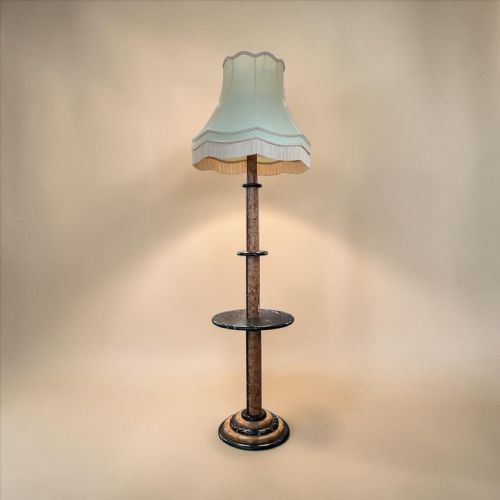
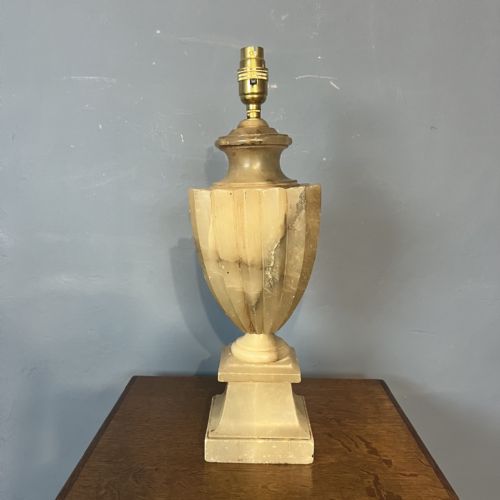
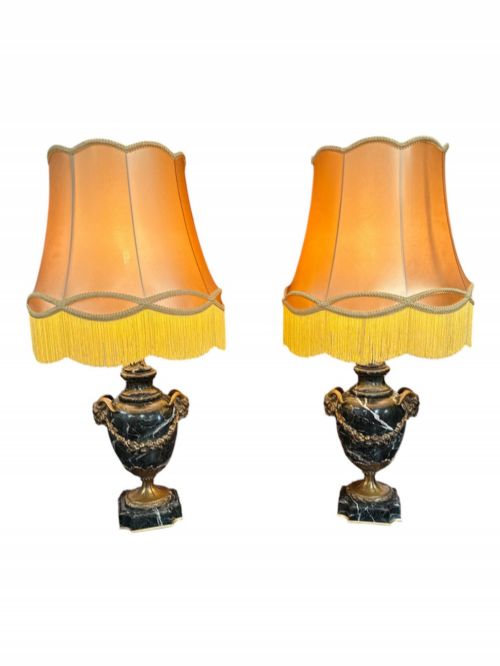
The selections on this page most frequently include French and Italian examples, alongside English country house pieces and hybrids that double as side tables. Common configurations range from classical urn forms to Art Deco designs featuring sculpted animals and geometric lamp bases.
Buyers encounter materials that extend beyond standard stone, including alabaster, onyx, brass, gilt bronze, ormolu, and glass. These combinations create varied silhouettes, from slender standard lamps to low night lights glowing beside sculpted figures.
How they were made
Makers shaped solid stone blocks on lathes or by hand to form columns, urns, and rectangular plinths, revealing the natural veining of the material. Metal components in brass, ormolu, and gilt bronze were cast and chased separately before being mounted onto the stone.
Several lamps feature sculpted stone dogs, including Art Deco Alsatians keeping watch beside the light source.
What varies in quality
Quality rests in the mineral depth of the stone and the crispness of the cast metal mounts. Pieces with rich, dynamic veining and finely chased ormolu or gilt bronze sit at the upper end of the range.
The integration between the heavy stone base and the upper fittings determines the structural stability of the lamp. Superior examples maintain balanced proportions where the weight of the marble securely anchors the height of the lamp and shade.
The Veined Marble Table Lamp Glossary
- Ormolu
- Gilt bronze mounts applied to furniture and decorative objects. This technique involves coating cast bronze with a finely ground gold-mercury amalgam and heating it.
- Alabaster
- A fine-grained, translucent stone similar in appearance to marble. It allows light to pass partially through its surface when illuminated.
- Neoclassical
- A style drawing inspiration from classical antiquity during the eighteenth and nineteenth centuries. It relies on symmetrical forms, columns, and architectural motifs.
- Art Deco
- A design style prominent in the nineteen-thirties characterised by streamlined geometric shapes and stylised animal figures. It favoured sleek materials like polished stone and metal.
- Standard lamp
- A tall floor-standing lamp designed to illuminate a wider area of a room. Some historical variants incorporated small tables directly into the wooden or stone shaft.
Veined Marble Table Lamp: Frequently Asked Questions
How do I date a marble lamp?
Dating relies on stylistic clues found in the metal mounts, the shape of the stone base, and the overall aesthetic movement. Pieces reflect the design vocabularies of periods like the Victorian era or the Art Deco nineteen-thirties.
Examining the wiring methods, mount construction, and wear patterns helps place the piece within its historical decade. Makers often adopted contemporary artistic trends of their respective centuries.
Are these lamps heavy?
Solid stone and metal components contribute to a substantial overall weight. This heavy construction provides a stable footing that prevents the lamp from tipping easily.
Placement requires a sturdy surface capable of supporting considerable weight alongside the physical dimensions of the base and shade.
How do I clean marble and alabaster?
Maintenance requires gentle dusting with a soft, dry cloth to prevent surface scratching. Moisture should be kept away from porous stone and exposed metal electrical components.
Harsh chemical cleaners strip finishes and damage the natural mineral structure. Professional advice should be sought for deep cleaning or restoration work.
Did these always have electricity?
Many older pieces began as oil lamps, candlesticks, or decorative urns before being converted for electrical use. Conversions often happened at different points in a lamp's history.
Internal wiring allows historical stone and metal bodies to function safely within modern homes. Expert rewiring ensures electrical compliance without altering the exterior aesthetic.