

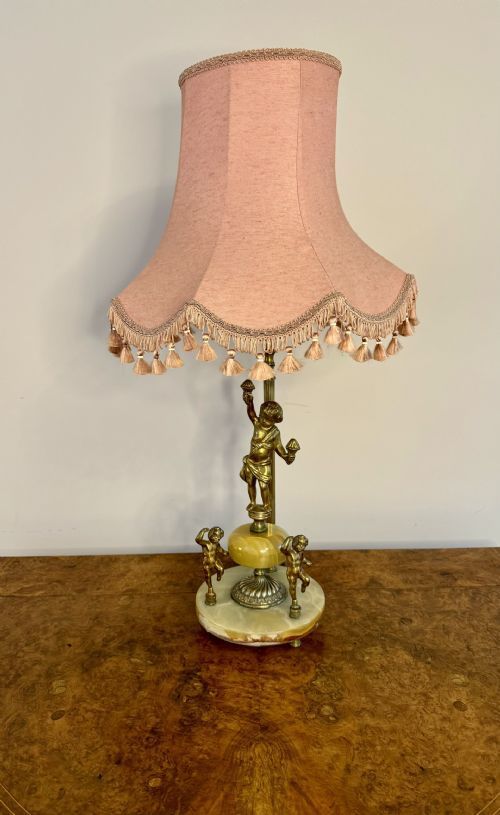


Brass and Onyx Lamp
A brass and onyx lamp brings warmth and a striking blend of metallic lustre and banded stone to an interior.
Brass and Onyx Lamp
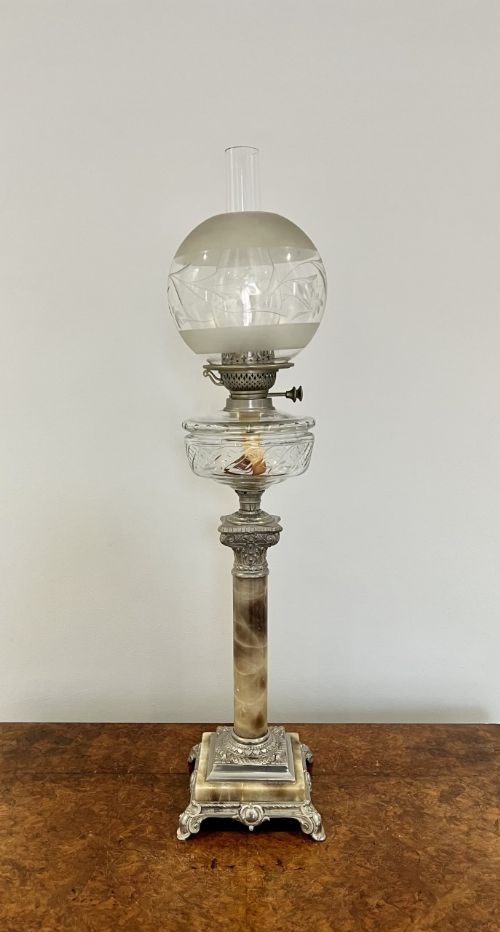
A brass and onyx lamp combines cast or spun brass components with sections of banded stone, appearing in forms such as table lamps, tall floor standards, and converted oil lamps. These pieces span from the Victorian and Edwardian eras into the Art Deco period, drawing heavily on Neoclassical and French Revival design influences.
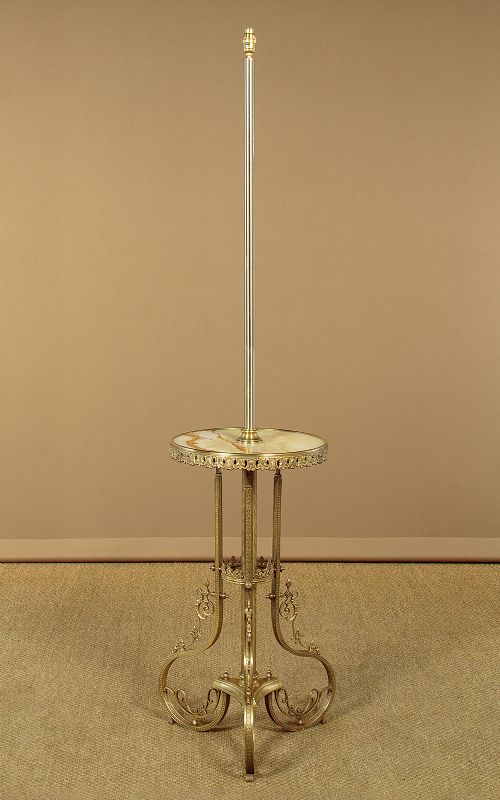
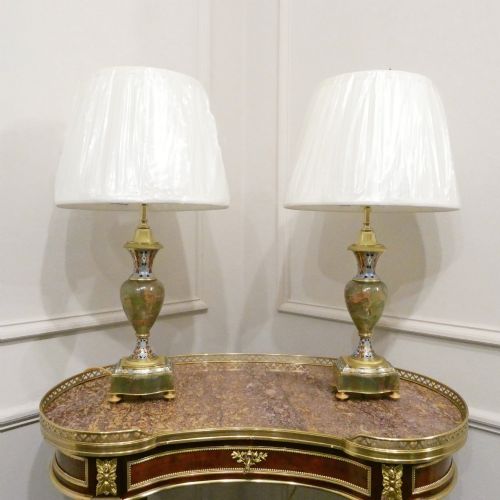
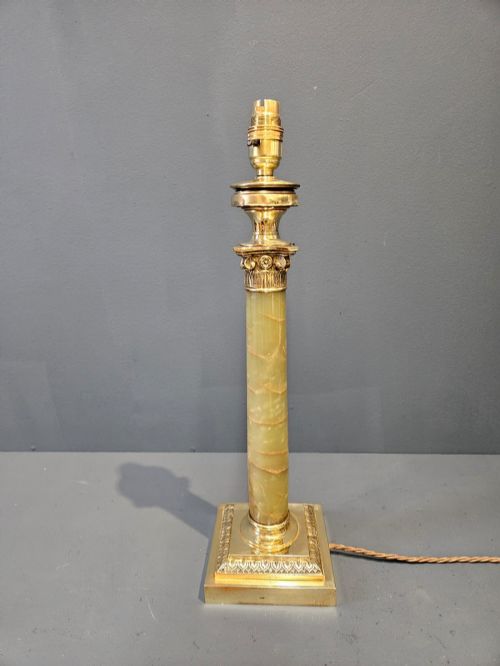
The version most commonly met on this page is the table lamp, frequently featuring a stepped or Corinthian column design where onyx shafts sit upon heavy brass bases. Alongside these are larger standard lamps designed to stand directly on the floor, occasionally incorporating adjustable heights or attached wine tables.
Materials and construction methods
The structural framework relies on brass, gilt metal, or ormolu, shaped through casting, turning, and sometimes champlevé enamelling or gilt bronze mounts. These metallic elements provide the rigid skeleton and decorative collars, capitals, and paw feet seen across the pieces.
Onyx and sometimes related stones such as white marble or alabaster form the central columns and bodies, turned on lathes and polished to highlight the natural banding and grain. Fabric shades often complete the structure, paired with electrical or original oil-burning hardware.
Brass and Onyx Lamp Retail Price Guide 2026
Typical asking prices for brass and onyx lamp among the pieces listed under this phrase on Sellingantiques today, from the lower quarter to the upper quarter. They describe what is for sale here now, not the wider market.
Materials recorded across the inventory include brass, onyx, marble, gilt bronze, ormolu, gilt metal, enamel, and fabric.
Distinctions in craftsmanship and design
The quality of a brass and onyx lamp is evident in the crispness of the metal casting and the depth of the stone polishing. Finer examples display intricate chasing on the ormolu or brass mounts, substantial weight in the base, and carefully matched stone sections without heavy structural patching.
Proportion and decorative ambition also divide the range, from simple turned columns to elaborate compositions involving cherubs, dolphins, or amphora shapes. The integration of adjustable mechanisms and high-grade materials like gilt bronze further separates standard production from exceptional workshop pieces.
The Brass and Onyx Lamp Glossary
- Ormolu
- Gilt bronze produced by applying a finely ground high-carat gold-mercury amalgam to a bronze object. This technique creates a rich, durable golden surface seen on many French revival mounts.
- Champlevé
- An enamelling technique where troughs or cells are carved into the metal surface and filled with vitreous enamel powder before firing. It adds colourful decorative detail to brass lamp bodies.
- Corinthian column
- A classical architectural order featuring an ornate capital decorated with acanthus leaves. This motif is frequently adapted for the shafts of heavy table and floor lamps.
- Cassolette
- A decorative vessel or vase, often fitted with a reversible lid to function as a burner or perfume pot, which is sometimes adapted into a lamp base.
- Standard lamp
- A tall floor-standing lighting fixture designed to illuminate a room from standing height rather than resting on a table or surface.
Brass and Onyx Lamp: Frequently Asked Questions
How do I date a brass and onyx lamp?
Dating relies on stylistic clues, manufacturing techniques, and wiring types where original components survive. Pieces showing heavy Victorian ornamentation or classical Corinthian revival forms typically date to the late nineteenth or early twentieth century.
Later examples often transition towards the cleaner geometric lines associated with the 1930s Art Deco period. Examining the construction of the brass fittings and the turning of the stone provides further chronological context.
Were these lamps originally electric?
Many of the earlier examples began life as oil lamps or paraffin lamps before being converted to electricity at a later date. Metal burners, reservoirs, and wick adjusters are frequently retained in converted pieces.
Later twentieth-century iterations were manufactured specifically for electrical components from the outset. Conversion work is standard practice for antique lighting to ensure modern usability.
How do I care for onyx and brass?
Onyx is a relatively soft and porous stone that requires gentle cleaning with a dry or barely damp soft cloth. Harsh chemical cleaners can damage the polished surface and dull the natural stone.
Brass and gilt metal should be dusted carefully without aggressive metal polishes that might strip away thin gilt layers or ormolu finishes. Preserving the natural patina is generally preferred by collectors.
Where should I place a standard lamp?
Floor-standing standard lamps work effectively in corners of reception rooms or beside reading chairs where they provide ambient or task illumination. Tall columns with heavy brass bases require stable flooring to prevent tipping.
Models that incorporate adjustable height mechanisms or small attached tables offer additional versatility for seating arrangements.