
Gold Brass Travel Clock
These gold brass travel clock pieces are robust yet refined timekeepers designed for portability, offering the convenience of a clock on the move.
Gold Brass Travel Clock
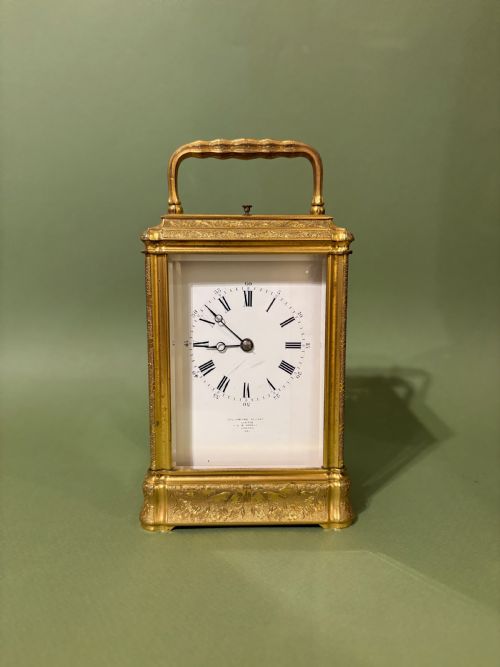
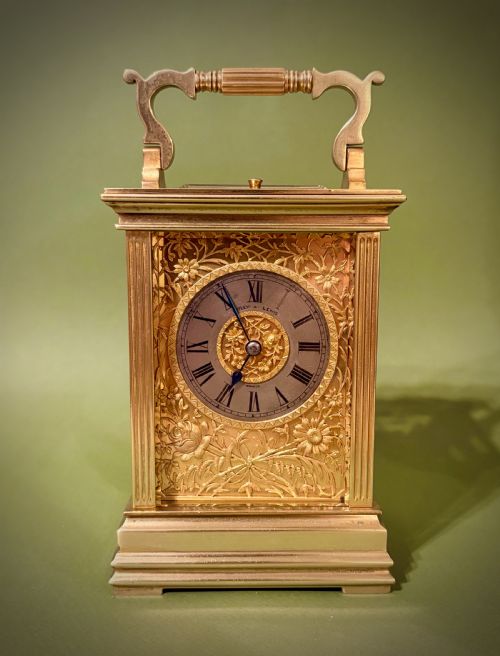
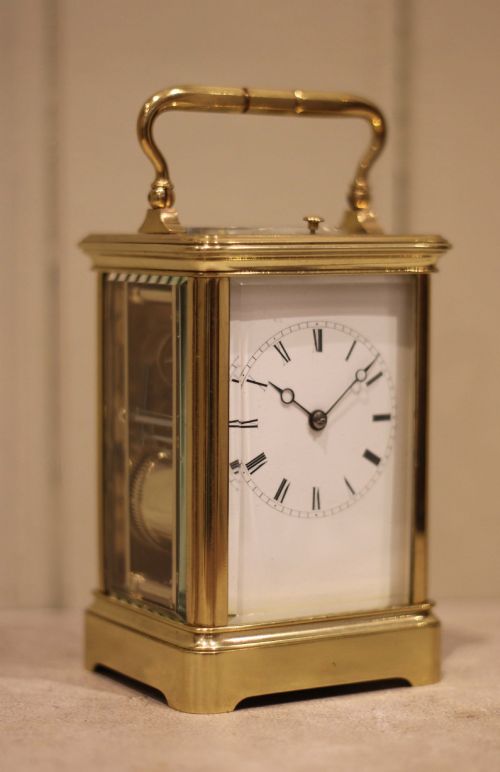
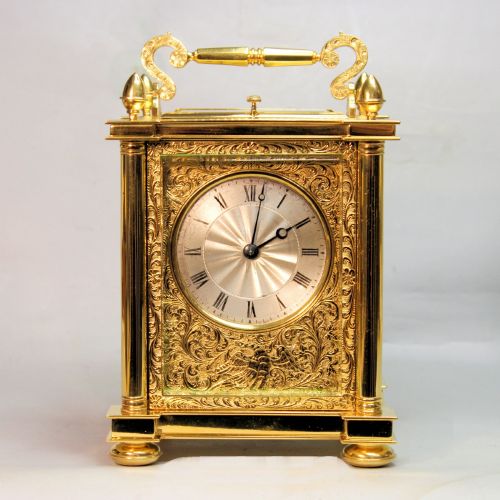
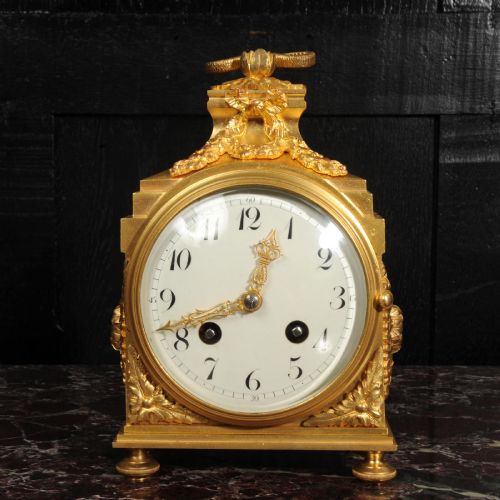
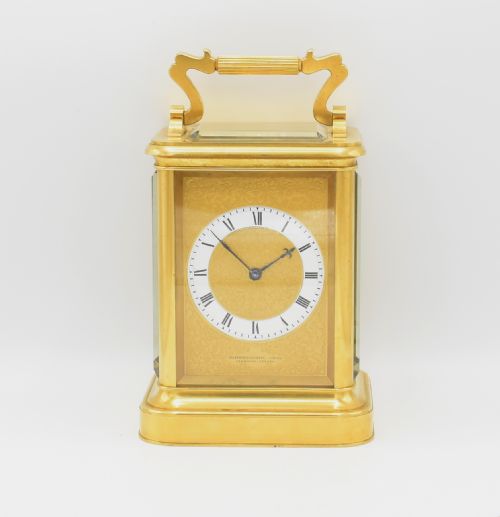
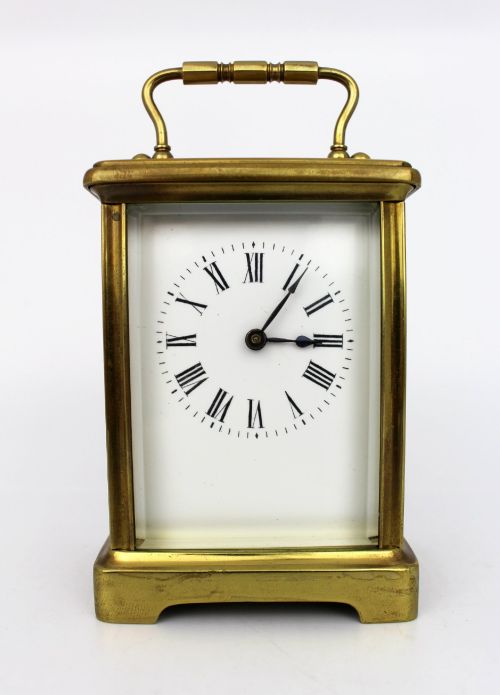
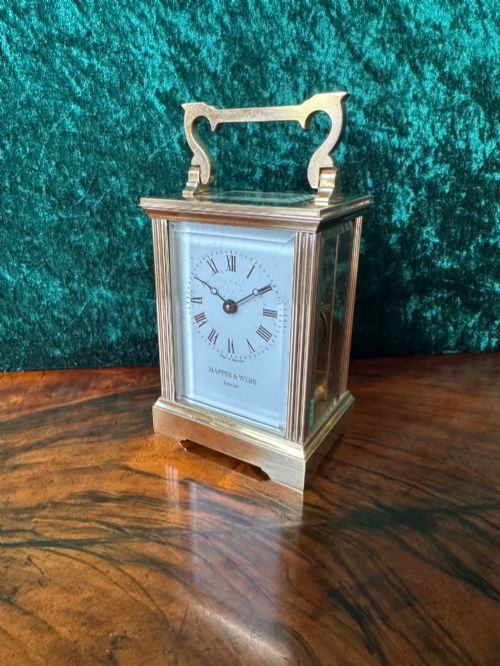
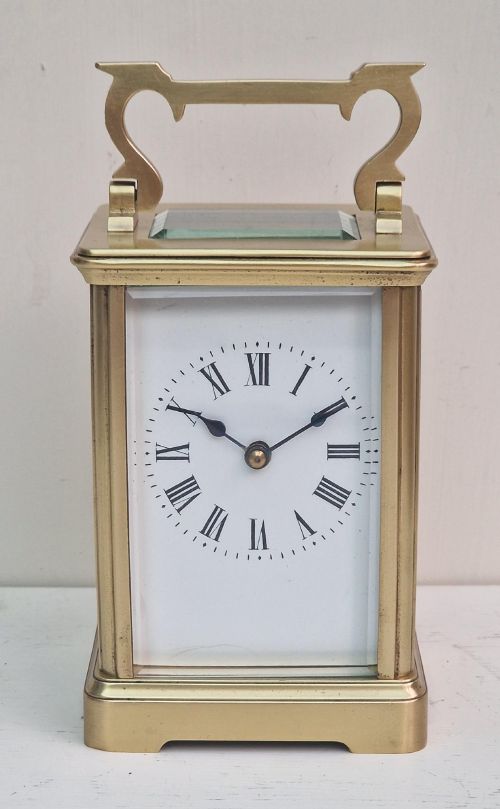
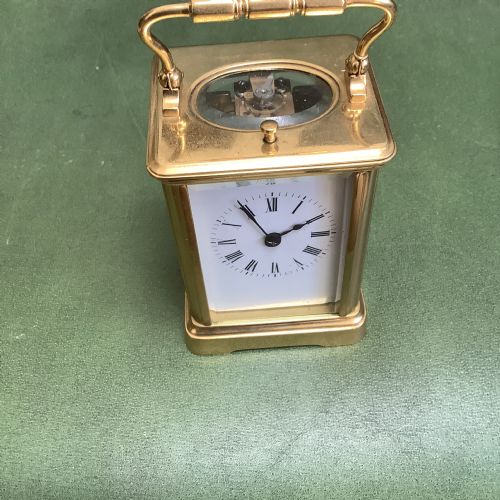
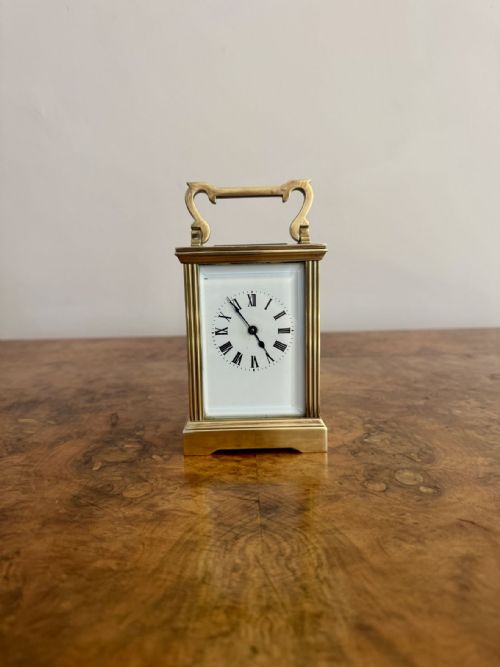
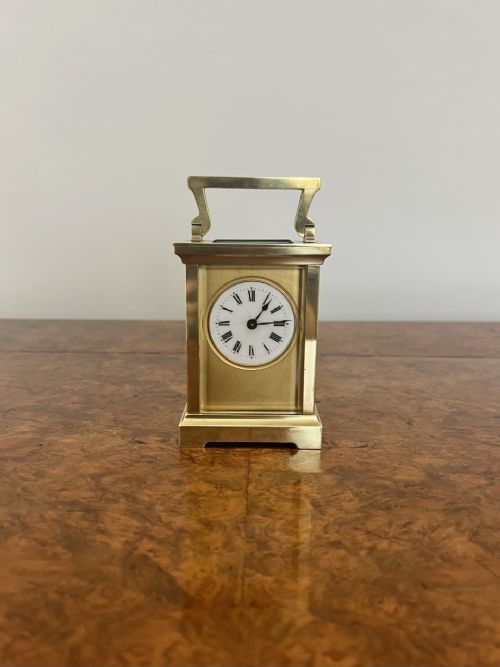
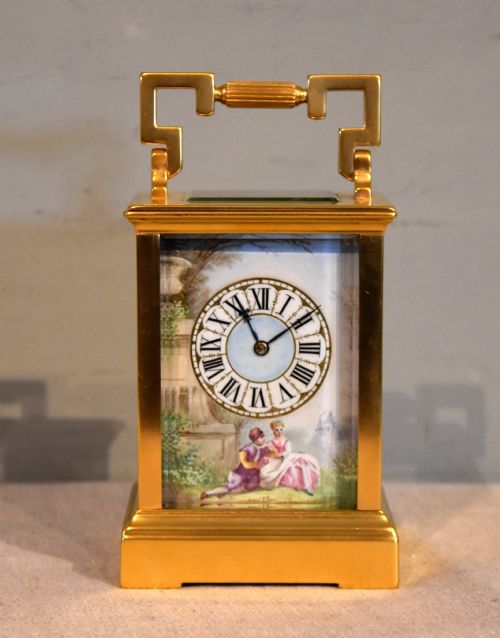
When searching for a gold brass travel clock, you encounter portable timepieces primarily formed as carriage clocks and desk clocks. These pieces span the Victorian, Edwardian, and nineteenth-century periods, showcasing origins from French workshops and British makers alike.
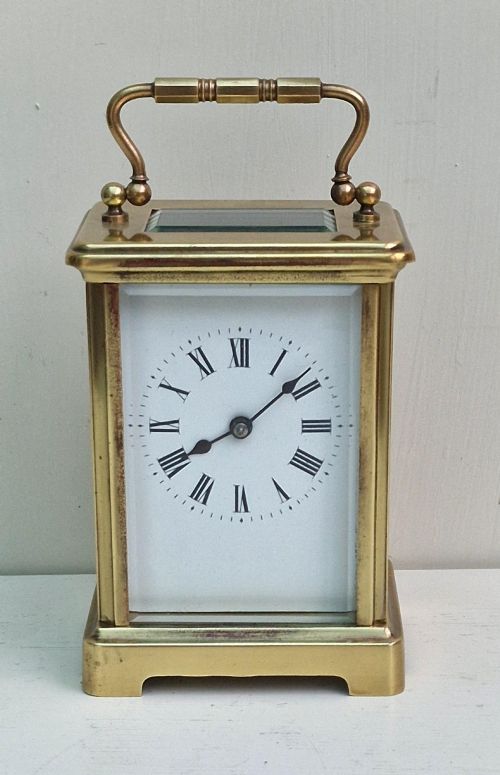
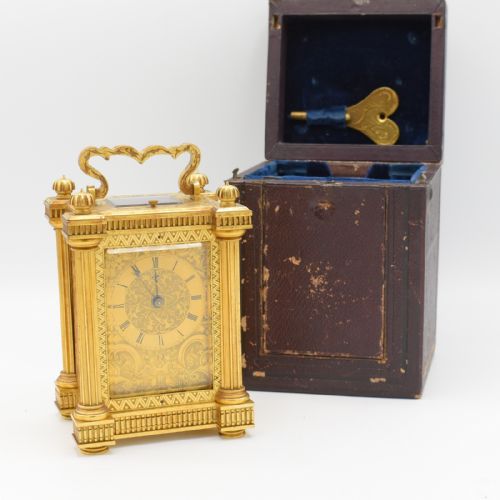
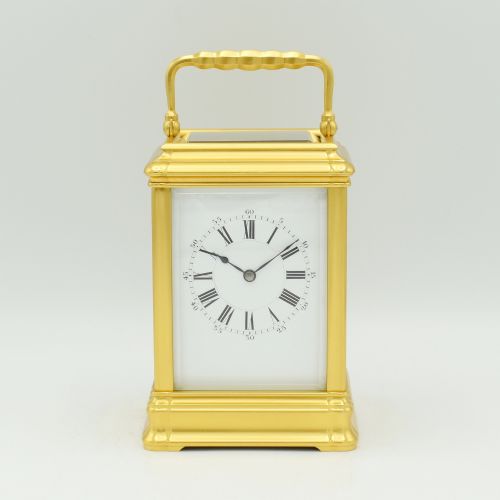
The most common examples you meet on this page are French carriage clocks featuring brass and gilt brass gorge cases, often accompanied by glass panels and travel cases. Miniature versions and larger striking models also appear frequently within these dates.
Makers and retailers such as Henri Jacot, Drocourt, and Goldsmiths Alliance Ltd feature among the examples. The styles range from traditional French nineteenth-century designs to Edwardian and Second Empire pieces.
Materials and construction
Makers utilised heavy brass, gilt brass, and ormolu to form the structural cases, housing delicate mechanical movements alongside steel components. Glass panels enclose the mechanisms, allowing views of the escapement and gear trains.
Enamel dials provide the surface for Roman or Arabic numerals, while leather frequently forms the protective outer travel cases accompanying the clocks. Gilded finishes and engraved brass details enhance the visual depth of the metalwork.
Distinctions in quality
The standard of execution in the metal engraving and the gilding separates finer pieces from simpler items. Fully engraved gilt brass cases and complex movements, such as grand sonnerie or quarter striking mechanisms, demonstrate superior craftsmanship.
The inclusion of original leather travel cases and signed movements by renowned makers elevates the standing of an individual piece. Weight, substantial glass bevelling, and the complexity of the striking or repeating functions further define the upper tier of these items.
HENRI JACOT·COUSENS & WHITESIDE·Goldsmiths Alliance Ltd·Howell & James London·Mappin and Web·DROCOURT·T. Martin & Co·C. Detouche·Antoine Redier·Duverdrey & Bloquel
The Gold Brass Travel Clock Glossary
- Carriage clock
- A small, spring-driven clock designed for travellers, featuring a carrying handle on top and glass panels to view the movement. They emerged in the nineteenth century for use on journeys.
- Gorge case
- A stepped brass case design typical of traditional French carriage clocks. It provides a distinctive architectural profile to the housing.
- Repeating movement
- A mechanism that chimes the hours or quarters on demand when a button or pendant is pressed. This complication added utility in low light during travel.
- Grand sonnerie
- A striking train that sounds both the hours and the quarters automatically as each quarter passes. It represents a high level of horological complexity.
- Platform escapement
- The tiny, self-contained escapement unit mounted visibly inside the top of the clock. It allowed portable clocks to keep accurate time while moving.
Gold Brass Travel Clock: Frequently Asked Questions
What is a gold brass travel clock?
A gold brass travel clock is a portable timepiece housed in a sturdy metal case, originally designed for journeys during the nineteenth and early twentieth centuries.
These pieces typically feature glass panels and a carrying handle, combining mechanical precision with robust portability.
How do you wind a carriage clock?
You wind these clocks using a dedicated key fitted to the winding arbours located on the backplate of the movement. Care must be taken not to overwind the mainspring.
Some models feature separate arbours for time, striking, and alarm functions, each requiring attention to keep the movement running.
Where were these clocks made?
The majority of these pieces originate from French workshops in Paris and surrounding regions, alongside British makers based in London.
French makers like Henri Jacot and Drocourt produced many of the repeating and striking examples found in this category.
How do you date a travel clock?
Dating relies on stylistic clues, case design evolution, serial numbers, and signatures inscribed on the backplate or enamel dial.
Victorian and Edwardian examples often display registration marks, specific maker stamps, or distinct escapement types that correspond to known working decades.