


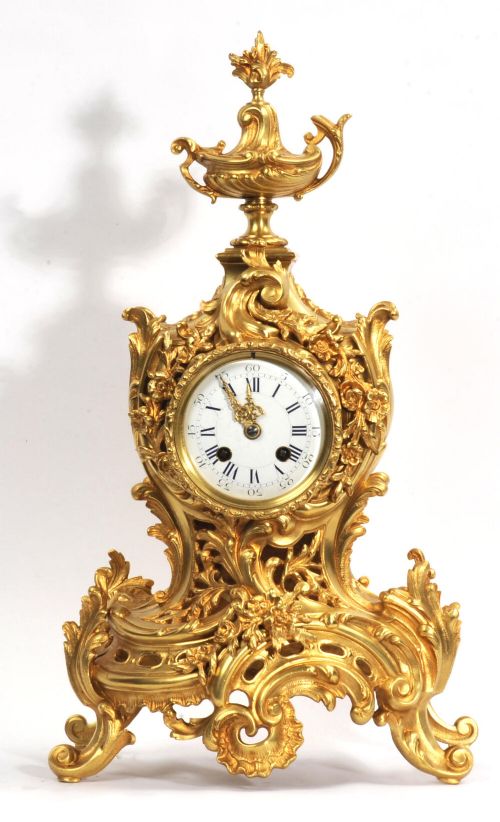

Gold Brass Tabletop Clock
These gold brass tabletop clock pieces combine functional timekeeping with ornamental metalwork, offering striking desk and mantel displays.
Gold Brass Tabletop Clock
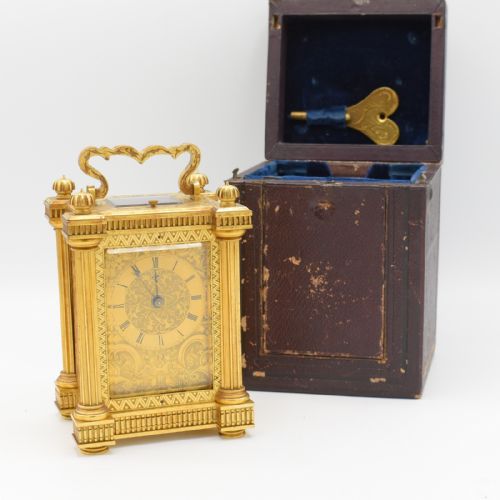
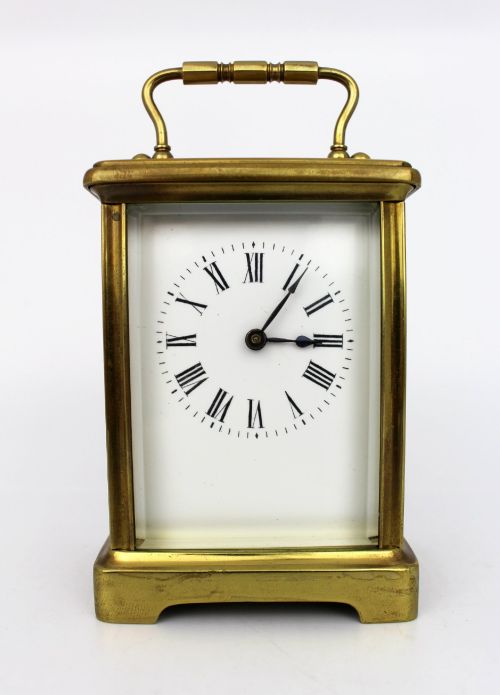
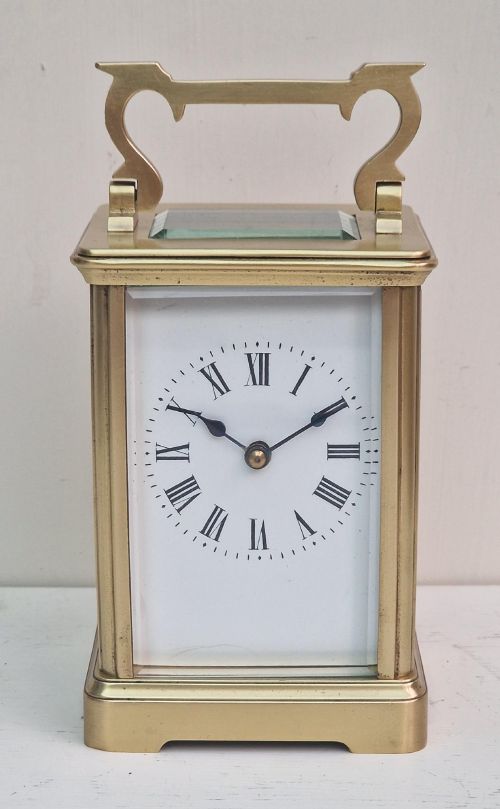
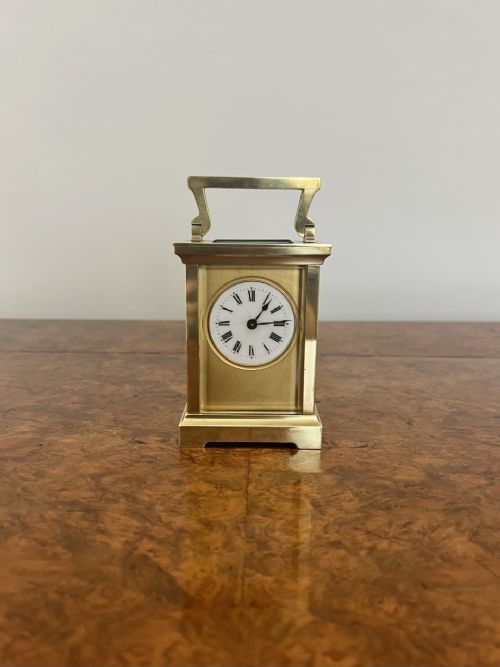
A gold brass tabletop clock spans practical timepieces designed for desks, mantels, and travel, with carriage clocks forming a significant portion of the selection. These pieces date across the nineteenth century, Edwardian era, and mid-twentieth century.
Forms range from traditional English and French carriage clocks with travel cases to ornate mantel clocks, desk clocks, and miniature longcase variations. Examples incorporate specific decorative movements and striking mechanisms alongside simpler timepieces.
Stylistic influences draw heavily on Victorian and Rococo Revival aesthetics, alongside later Art Deco and mid-century modern designs. Buyers encounter everything from small English skeleton clocks to elaborate champleve enamel and gilt bronze creations.
Materials and construction methods
Construction relies heavily on brass, gilt brass, gilt bronze, and ormolu, often paired with glass panels to reveal the intricate internal mechanics. Many pieces incorporate enamel dials and detailed filigree masks for visual depth.
Makers utilised specialised techniques such as champleve enamelling and gilding to enrich the metallic surfaces. Travel cases wrapped in leather frequently accompanied portable carriage clocks to protect the delicate housing during transit.
Carriage clocks dominate the selection, accompanied by desk, mantel, and Atmos models.
Evaluating craftsmanship and execution
Quality separates standard timepieces from exceptional examples through the intricacy of the cast brass ornamentation and the precision of the dial work. Finer models feature elaborate hand-chased gilt bronze cases, repeater mechanisms, and complex bell strikes.
The integration of materials like champleve enamel and the clarity of glass panels define the upper tier of production. Renowned makers and Swiss movements further distinguish high-end pieces from simpler domestic timepieces.
Howell & James London·Jaeger LeCoultre·Dent·Alfred Hollinge·Penlington & Batty
The Gold Brass Tabletop Clock Glossary
- Carriage clock
- A portable spring-driven timepiece originally designed for travel, typically featuring a rectangular brass case with glass panels.
- Gilt bronze
- Bronze metal treated with a thin layer of gold or gold-coloured alloy, frequently utilised in ornate nineteenth-century clock cases.
- Champleve enamel
- A technique where troughs are dug into the metal surface and filled with enamel powder before firing.
- Repeater
- A clock mechanism that chimes the hours and quarters upon demand when a lever or button is pressed.
- Atmos clock
- A mechanical clock manufactured by Jaeger-LeCoultre that is powered by minute temperature changes in the environment.
Gold Brass Tabletop Clock: Frequently Asked Questions
What is a carriage clock?
A carriage clock is a portable timepiece developed in the nineteenth century for officers and travellers. They are enclosed in brass frames with glass panels that allow the escapement to be viewed from the exterior.
These pieces sit easily on desks, shelves, or tables. Their robust design made them practical for movement while retaining high aesthetic appeal.
How do repeater clocks work?
A repeater mechanism allows the owner to trigger a chime that sounds the last hour or quarter-hour on demand. This was particularly useful during the night before electric lighting was common.
Activation usually involves pressing a plunger or pulling a cord on the clock case. This complication requires precise internal gear work.
What distinguishes an Atmos clock?
An Atmos clock operates without a key or battery by utilising a hermetically sealed chamber containing a gas and liquid mixture. Temperature fluctuations cause this mixture to expand and contract, winding the mainspring continuously.
Invented in the mid-twentieth century, these Swiss timepieces require stable placement to function accurately. They offer a unique mechanical alternative to traditional spring-driven clocks.
Where should I place a mantel clock?
Mantel clocks suit stable horizontal surfaces such as fireplace mantels, sideboards, and heavy desks. Their prominent brass and gilt bronze cases make them natural visual focal points in a room.
Ensure the surface is level to keep the pendulum or balance wheel beating evenly. Avoid areas with excessive moisture or direct sunlight to protect enamel dials and gilding.