


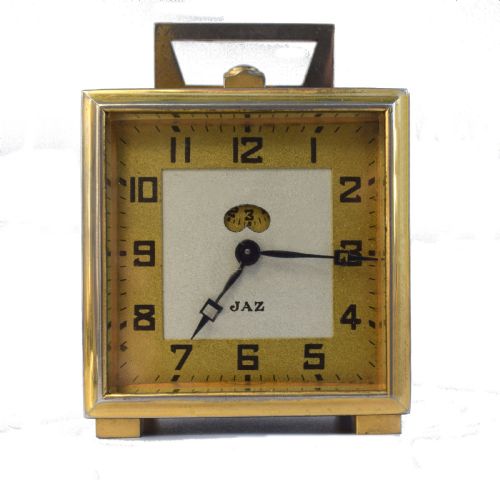


Brass Bedside Clock
A brass bedside clock is a small timekeeper designed for travel or tabletops, prized for combining solid metal construction with decorative craftsmanship.
Brass Bedside Clock
When you search for a brass bedside clock, you encounter a variety of compact timepieces spanning the Victorian era through the mid-twentieth century. The selection ranges from portable travel pieces designed to fold or pack away to miniature mantel and desk clocks intended for domestic interiors.
You are most likely to meet French carriage clocks, Art Deco electric models, and novelty designs formed into shapes like prayer books or framed in leather struts. These pieces utilise metals such as gilt brass, ormolu, and gilt bronze, often paired with glass panels and enamel dials.
How they were made
Maker workshops constructed these timekeepers using heavy cast or pressed brass frames, frequently applying mercury gilding, ormolu, or a gilt finish to achieve a lustrous metallic sheen. Bevelled glass panels were fitted into the housing to protect delicate interior movements while allowing visibility of the dial.
Listings feature periods spanning the Victorian era through to the 1950s, utilising brass, gilt metal, glass, leather, and ormolu.
What varies in quality
The distinction between standard production items and superior examples lies in the crispness of the cast brass ornamentation and the presence of fine hand-finishing on the ormolu or gilt bronze. Well-executed novelty forms and heavy, solid frames indicate a higher grade of manufacture than lightweight pressed alternatives.
The reputation of the maker and the complexity of the movement, such as eight-day alarms or specific French and Swiss engineering, elevate the standing of a piece. Original components, undamaged enamel dials, and intact bevelled glass preserve the integrity and visual coherence of the clock.
Van Cleef and Arpels·Smiths·Howell James and Co·Jaeger LeCoultre·Jaz·Mappin and Webb
The Brass Bedside Clock Glossary
- Ormolu
- Gilded bronze produced by applying a mixture of gold and mercury to a bronze base, creating a rich golden surface finish. This technique was widely utilised on French decorative pieces from the nineteenth century.
- Carriage clock
- A small, spring-driven timekeeper originally designed for travellers during the nineteenth century. These portable clocks typically feature a rectangular brass case with glass panels and a swing handle on top.
- Strut clock
- A timepiece supported by a hinged prop or stand attached to the rear, allowing the dial to be viewed at an angle on a desk or bedside table. They often incorporate leather or metal frames.
- Enamel dial
- A clock face made by fusing powdered glass to a metal substrate at high temperatures, resulting in a smooth, glossy finish. They frequently feature hand-painted roman or arabic numerals.
- Gilt brass
- Brass that has been treated with a thin layer of gold or a gold-coloured wash to impart a bright metallic appearance. It provides the durability of brass with the aesthetic appeal of solid gold.
Brass Bedside Clock: Frequently Asked Questions
How do I wind a mechanical brass clock?
Mechanical timekeepers require a key or an attached winder to tension the mainspring inside the movement. Care must be taken not to over-wind the mechanism when resistance is felt.
Most traditional bedside clocks operate for a day or up to eight days before requiring another wind. Consulting the specific movement type ensures you do not force the internal gears.
What is a carriage clock?
A carriage clock is a portable spring-driven timepiece developed for travel in the nineteenth century. They feature robust brass frames, protective glass panels, and a folding handle on top.
These pieces were built to withstand movement while remaining decorative enough for a bedside table. Many retain their original leather travelling cases for protection.
How do I date a brass clock?
Dating relies on stylistic clues such as the decorative motifs of the Art Deco or Victorian periods, alongside any maker marks or signatures inscribed on the movement or dial. Materials like gilt bronze, Bakelite, or specific glass colours also point to particular decades.
Form and construction methods further narrow down the origin. Novelty shapes and heavy cast ormolu frames often indicate nineteenth-century French manufacture.
Where should I place a bedside clock?
These timepieces suit flat surfaces such as bedside tables, dressing chests, or mantelpieces where their decorative cases can be appreciated. Ensure they sit away from direct moisture and extreme temperature fluctuations.
Positioning them out of reach of accidental knocks protects fragile bevelled glass panels. Strut clocks require a stable surface to support their rear stands.