
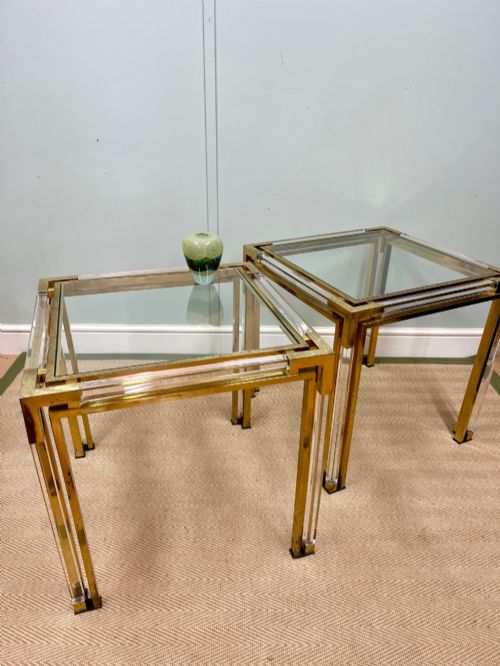
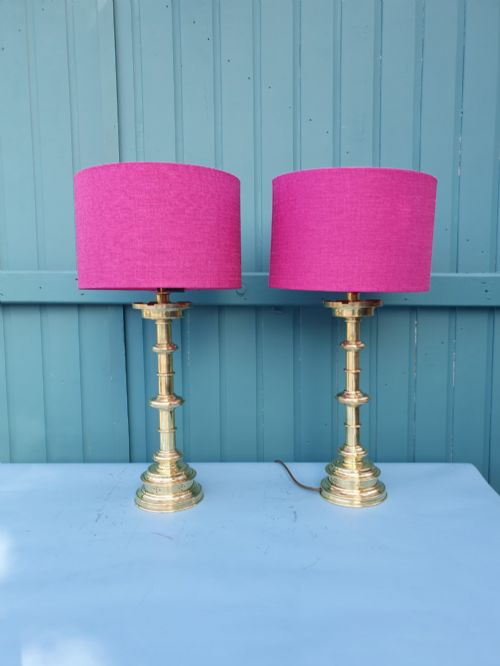


Gold Brass Side Lamps
Gold brass side lamps bring warmth and architectural presence to a room, combining metallic lustre with functional illumination.
Gold Brass Side Lamps
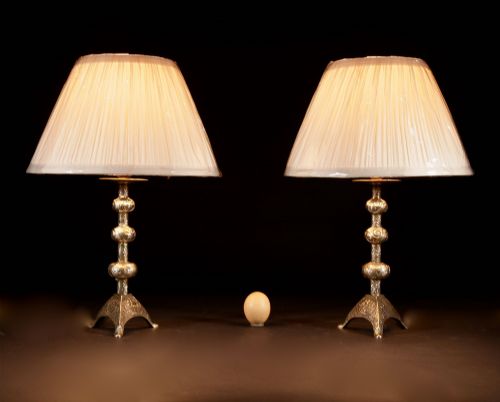
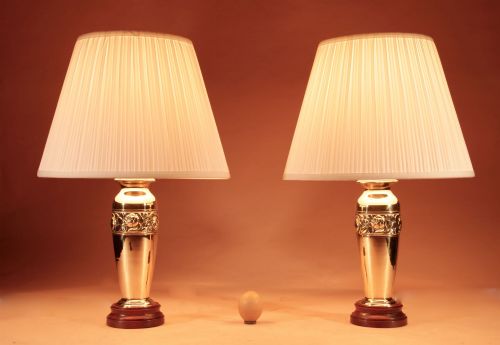
When you search for gold brass side lamps, you encounter a mix of dedicated table lamps, converted candelabra, and dual-purpose lamp tables originating from the nineteenth and early twentieth centuries. These pieces span Victorian, Edwardian, Art Deco, and revival styles such as Neoclassical and Louis XV.
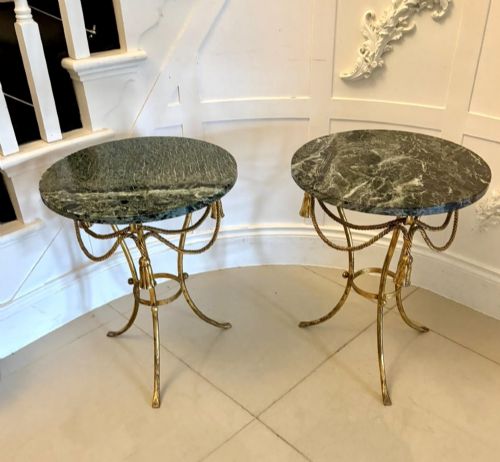
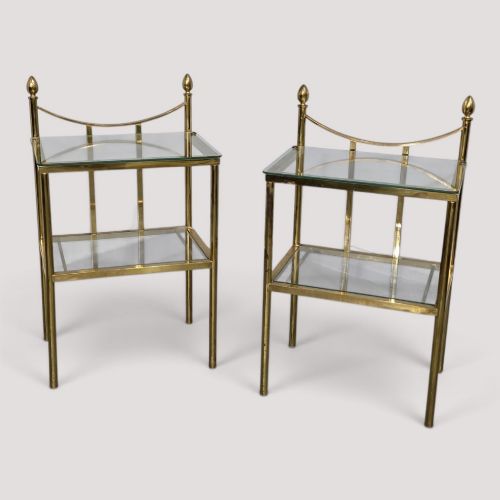
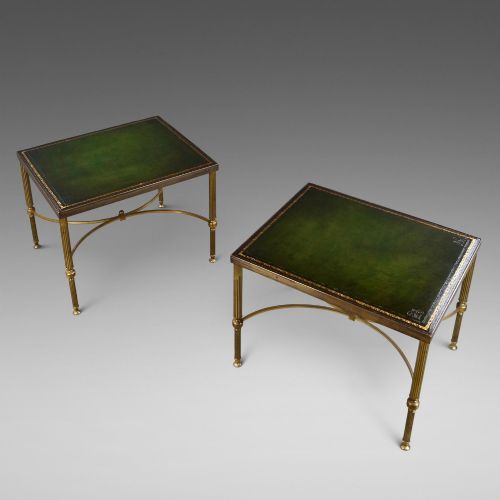
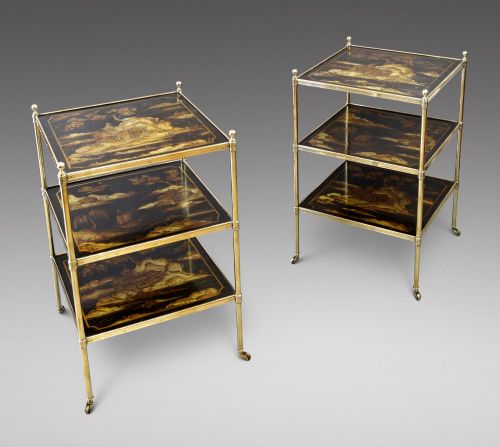
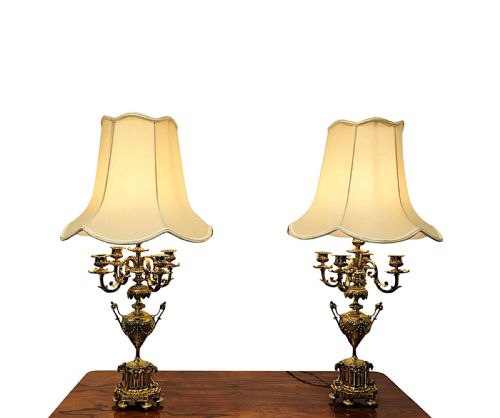
The most common forms on this page are matched pairs of table lamps and combined side tables incorporating lamp fittings, frequently utilising marble bases, glass tiers, or gilt metal structures. Dating ranges from the 1880s through to the 1930s, reflecting domestic lighting developments across the Victorian and Edwardian eras.
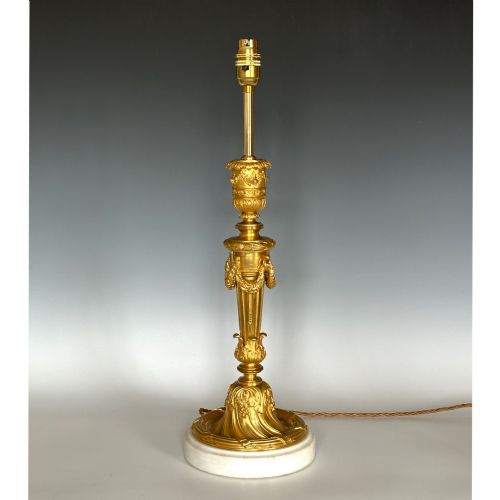
Origin varies between English domestic designs and continental European workshops, particularly French pieces exhibiting ormolu and detailed cast ornamentation. Occasional tables and plant stands adapted for lighting also appear within the selection, demonstrating period versatility.
Materials and Construction
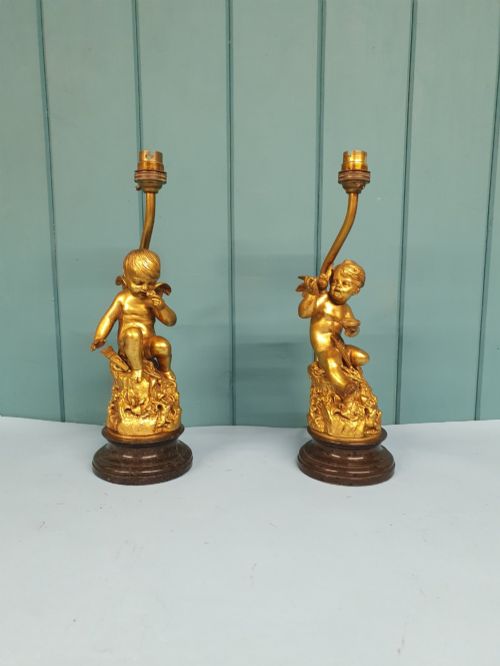
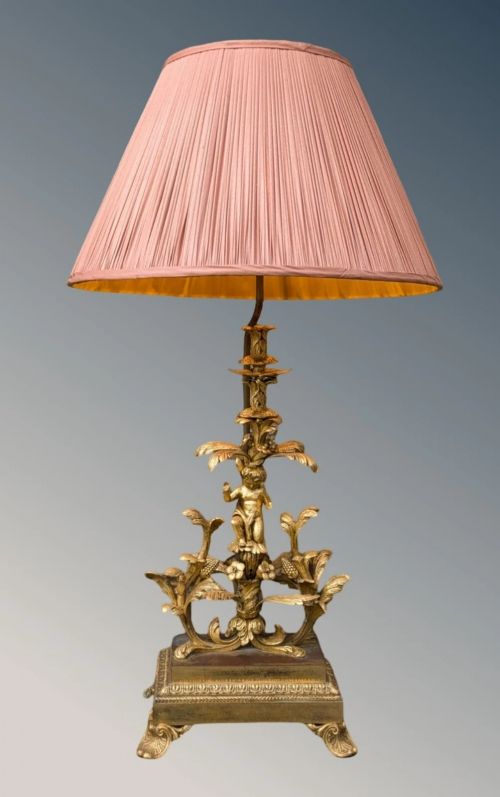
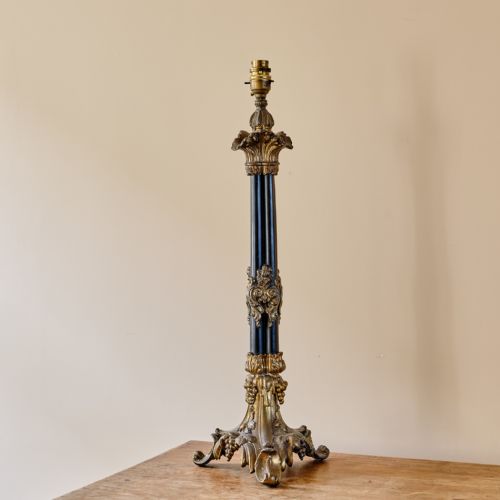
Makers utilised brass, gilt bronze, ormolu, and gilded metal as primary structural elements, often combining them with verde marble, onyx, or glass to add weight and textural contrast. Casting, chasing, and metal-spinning techniques created the columns, cherubs, and intricate mounts seen across the period.
Surfaces were finished with fire-gilding, lacquering, or left in natural polished brass, while earlier conversions adapted existing candelabra or candlesticks by boring stems for electrical wiring. Many examples integrate wooden elements, fabric shades, or turned barley twist shafts within the overall composition.
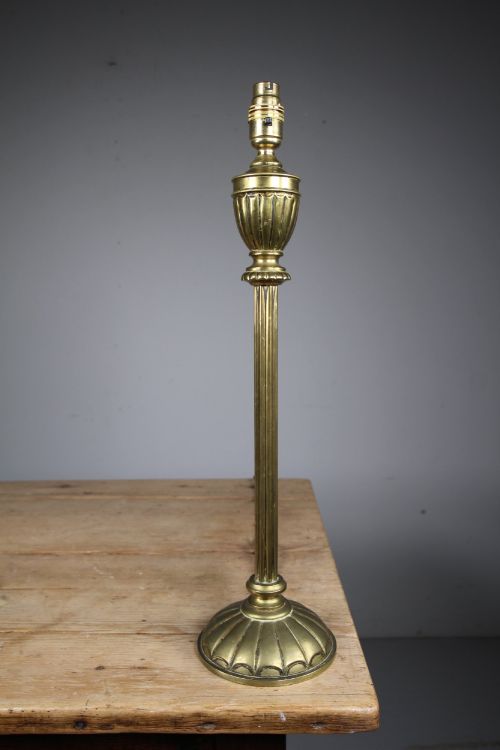
Continental European examples frequently incorporate French Louis XV and Neoclassical revival styles alongside English Edwardian columnar designs.
Quality and Execution
The distinction between ordinary and superior pieces lies in the crispness of the metal casting and the depth of the gilding or ormolu work. Finer examples display hand-chased detail on mounts, substantial weight in the bronze or brass body, and high-grade inset marble rather than lighter pressed metal.
Proportion and architectural coherence also separate standard production from exceptional items. Pieces demonstrating deliberate stylisation, such as unified Amsterdam School or Neoclassical designs, maintain greater design integrity than utilitarian adaptations.
The Gold Brass Side Lamps Glossary
- Ormolu
- Gilded bronze produced by applying a mercury and gold amalgam to cast bronze before heating. This technique creates a durable, warm golden finish characteristic of French decorative arts.
- Gilt Bronze
- An alloy of copper and tin coated with a layer of gold. It provides structural strength alongside a rich metallic surface.
- Verde Marble
- A dark green ornamental marble with lighter veining, frequently utilised for bases and table tops. It offers a heavy counterweight to polished brass fixtures.
- Barley Twist
- A spiral turning technique applied to wooden or metal shafts. This decorative turn creates dynamic light reflection along the stem of a lamp.
- Etagere
- A piece of furniture comprising multiple open shelves for displaying objects. Versions listed here combine display tiers with integrated lighting functions.
Gold Brass Side Lamps: Frequently Asked Questions
How do I date an antique brass lamp?
Dating relies upon stylistic markers such as Neoclassical motifs, cast construction methods, and material combinations like verde marble bases.
Examining switch mechanisms, wiring channels, and the patina of the brass helps confirm whether a piece belongs to the Victorian, Edwardian, or Art Deco periods.
Were all these lamps originally electrical?
Many nineteenth and early twentieth-century pieces began as oil lamps, gas fixtures, or candlesticks before conversion to electricity.
Conversions often occurred decades after manufacture to accommodate modern domestic lighting standards while retaining the original metal body.
How do I style a lamp table?
Lamp tables combine surface space for small objects with integrated illumination, making them suitable beside seating or in hallways.
Matching pairs work well flanking a mirror or fireplace, while single pieces anchor reading corners or occasional spaces.
What is the difference between brass and ormolu?
Brass is an alloy of copper and zinc, valued for its bright golden tone and malleability in spun or cast forms.
Ormolu specifically denotes gilded bronze, generally found on higher-end French pieces where the chased surface displays greater textural depth.