




Embossed Brass Table Lamps
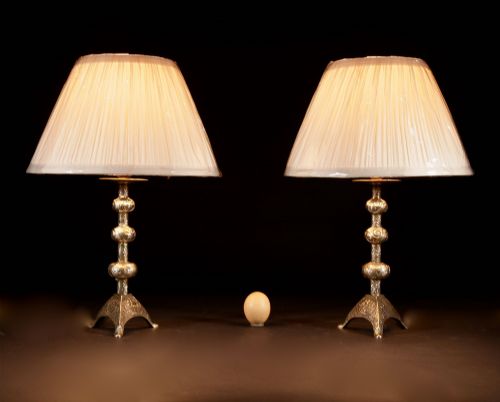
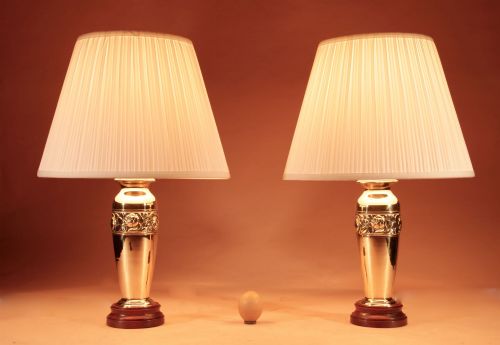
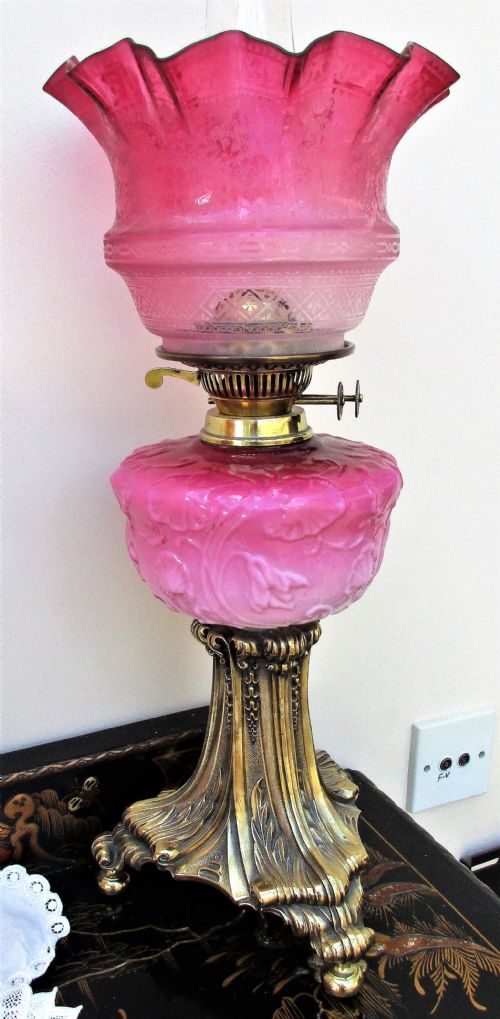
These embossed brass table lamps bring heavy metal texture and warm light to a room, spanning Victorian oil lamps to Art Deco pairs.
Embossed Brass Table Lamps
Embossed brass table lamps combine functional lighting with raised metal ornamentation across several distinct periods. When buyers search for embossed brass table lamps, they encounter items ranging from nineteenth century conversions to early twentieth century designs.
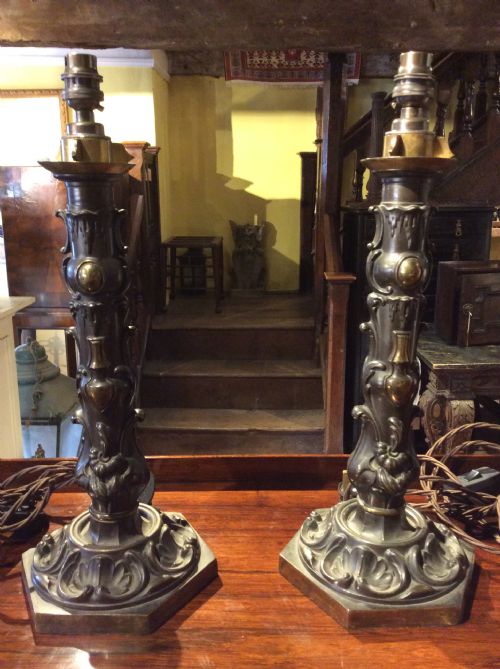
The selection includes pairs and single pieces shaped in Victorian, Art Deco, Arts and Crafts, and Romanesque Revival styles. Many examples begin life as oil lamps before later conversion to electricity.
Forms span heavy reading lamps, stamped metal columns, and hybrid pieces incorporating porcelain, glass, and bronze. Origins stretch from English workshops to French makers.
Materials and construction
Makers utilise brass as the primary medium, shaping it through repoussé work, stamping, and embossing to create raised surface patterns. Bronze and general metal components also appear in the structural framework.
Many designs integrate additional materials such as fabric shades, cranberry glass, tinted glass shades, and Paris porcelain bodies. Wooden elements sometimes provide a stable base for the metal work.
Some nineteenth century lamps retain the exact weight of their original fuel reservoirs long after losing their wicks.
Assessing quality and character
The crispness of the repoussé or stamped detailing separates standard production from finer work. Deep, hand-chased relief work demonstrates superior craftsmanship compared to shallow machine pressing.
Integration of secondary materials dictates overall elegance, particularly where glass shades, porcelain bodies, and bronze mounts meet the brass structure. Original components and period conversion methods preserve historical integrity.
The Embossed Brass Table Lamps Glossary
- Repoussé
- A metalworking technique where the metal is hammered from the reverse side to create a raised design on the front. This method defines much of the surface texture on nineteenth century pieces.
- Oil lamp
- A lighting device that burns liquid fuel through a wick before conversion to electricity. Many surviving examples date from the Victorian era.
- Romanesque Revival
- An architectural and decorative style drawing on medieval forms. Lamps in this aesthetic often feature heavy, architectural brass casting.
- Paris porcelain
- Fine ceramic material produced in various French factories. Several large table lamps combine this ceramic body with brass mounts.
Embossed Brass Table Lamps: Frequently Asked Questions
Are these lamps safe to use today?
Many older pieces have been converted to electricity from their original oil-burning function. Modern buyers should have wiring checked by a qualified electrician before daily use.
Rewiring preserves the antique metal body while ensuring compliance with contemporary safety standards for domestic lighting.
How do I date a brass lamp?
Dating relies on stylistic clues, manufacturing techniques, and material combinations seen in the piece. Victorian and nineteenth century examples often display heavier casting and hand-finished repoussé.
Later pieces from the 1920s and 1930s tend to exhibit Art Deco geometry or simpler stamped brass construction methods.
What is an oil lamp conversion?
An oil lamp conversion involves adapting a nineteenth century fuel-burning lamp to accept electrical wiring and bulb fittings. This process retains the original brass reservoir and burner assembly.
Such modifications allow period lighting to function as standard table lamps in modern homes.
How should I clean embossed brass?
Cleaning requires gentle dusting with a soft cloth to protect the raised relief work and patinated surfaces. Avoid harsh chemical polishes that strip away the aged character accumulated over decades.
Preserving the natural surface tone maintains the visual depth of the repoussé details.