


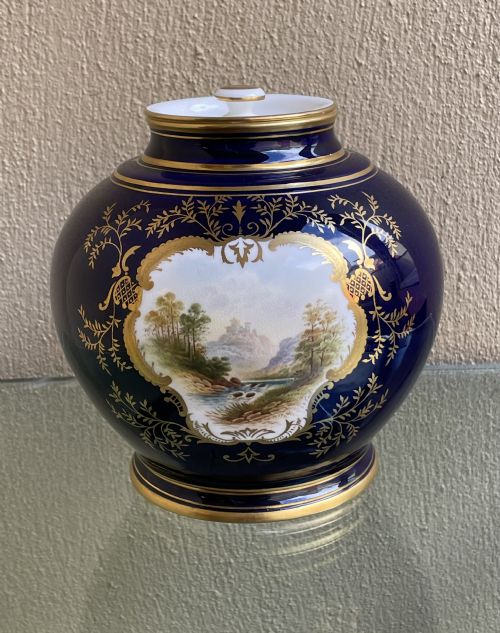


Gold Blue Ceramic Urns
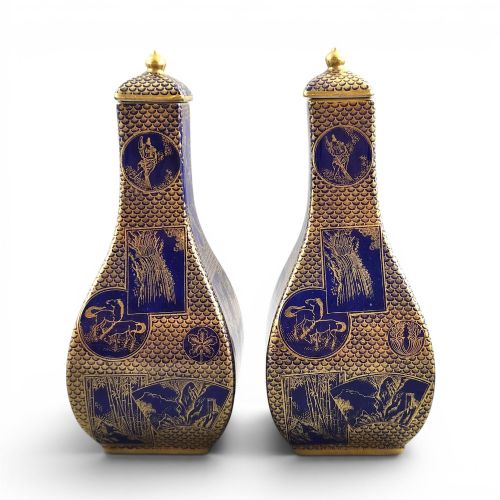
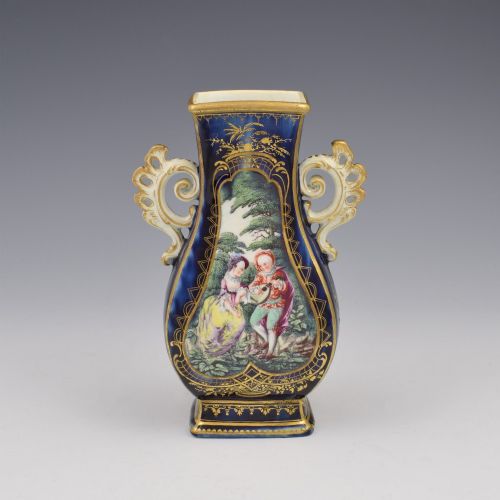
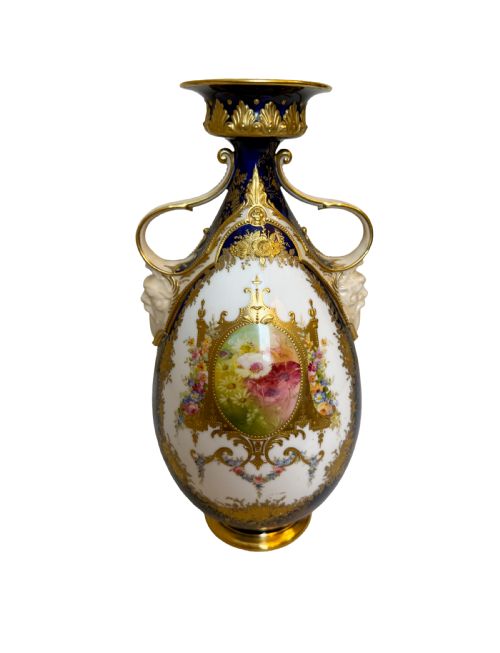
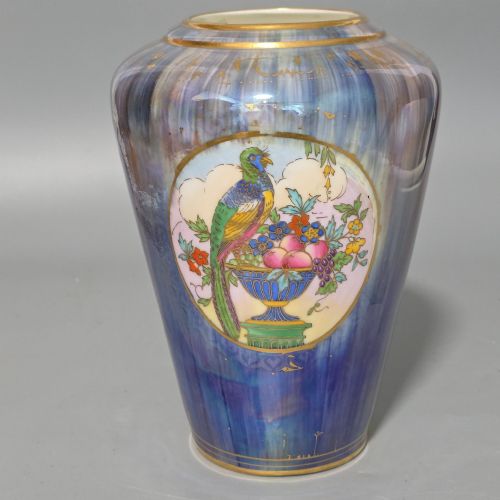
These gold blue ceramic urns bring together rich cobalt grounds and meticulous metal leaf work, offering a striking display for any interior.
Gold Blue Ceramic Urns
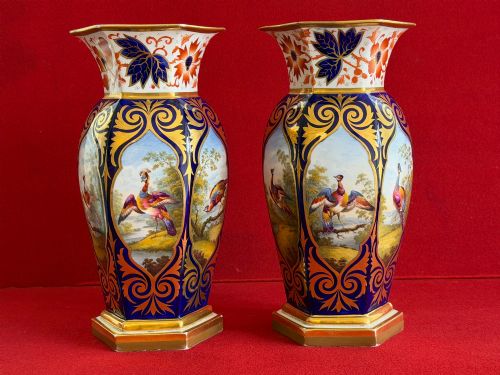
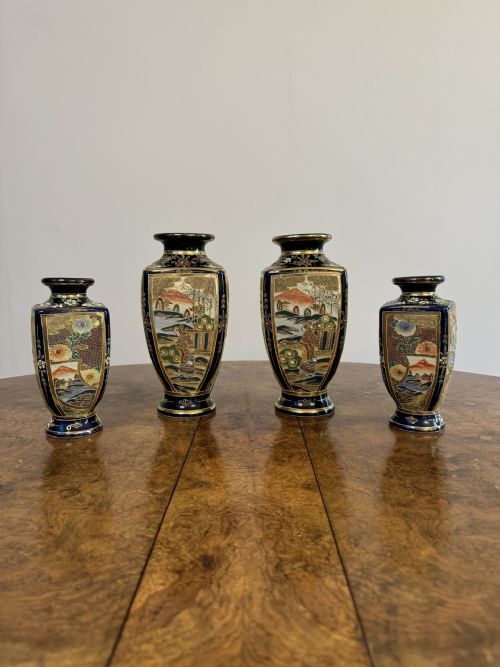
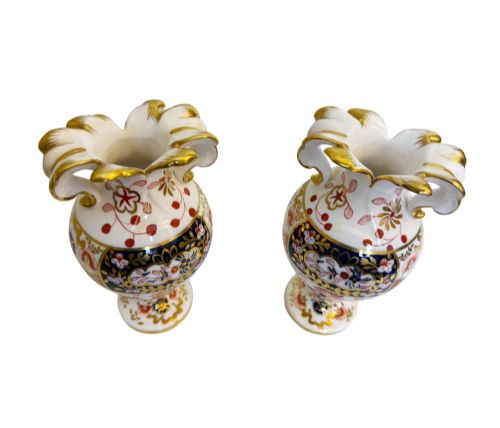
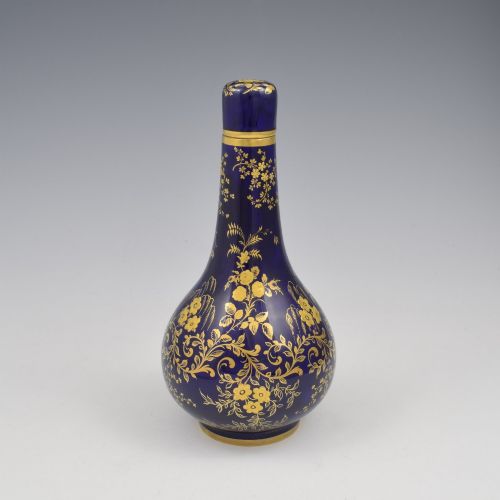
When searching for gold blue ceramic urns, collectors encounter a diverse range of decorative vessels designed primarily for visual display rather than utility. The examples found here span from the eighteenth century through the early twentieth century, encompassing British porcelain factories, continental makers, and Japanese export ware. Most commonly, buyers meet twin-handled campagna urns, lidded garnitures, and cabinet vases finished in deep cobalt or mazarine blue grounds.
The aesthetic bridges several distinct periods, including Regency neoclassical designs, Victorian porcelain, Art Nouveau styling, and Meiji period Japanese satsuma production. Forms vary from monumental palace urns to delicate bottle vases and jardinières, reflecting the changing tastes of European and Asian ceramic traditions. This variety allows collectors to select pieces ranging from formal British porcelain painted with Watteau scenes to heavily gilded oriental earthenware.
Materials and Craftsmanship
The creation of these vessels relies on high-fired porcelain, earthenware, or stoneware bodies coated in rich cobalt and mazarine blue glazes. Artisans applied rich coloration using powdered cobalt or enamel mixtures before subjecting the pieces to intense kiln firings to achieve depth and permanence. Surface decoration frequently incorporates hand-painted panels depicting landscapes, figures, or floral motifs.
Gilding forms the essential counterpart to the blue ground, executed using gold leaf, gold gilt, or liquid gold applications. Many pieces feature raised moriage work or intricate tooling, where gold sits in deliberate relief against the smooth glazed ceramic body. Additional decorative elements include enamel highlights and, in certain instances, cast ormolu mounts fitted to the ceramic bases.
The selection includes eighteenth-century anchor-marked porcelain alongside early twentieth-century lustre pottery and Japanese satsuma garnitures.
Assessing Quality and Execution
The distinction between ordinary production and superior work rests heavily on the precision of the hand-painting and the execution of the gilding. Master artists achieved remarkable control over fine brushwork, particularly in miniature landscape scenes, floral arrangements, and intricate gold tooling. Lesser examples often feature transfer-printed outlines or flat, hastily applied metallic paint that lacks the dimensionality of genuine leaf and heavy gilt work.
The depth of the blue ground itself signals the calibre of the piece, with rich, even cobalt coatings outperforming patchy or dull glazes. Furthermore, the crispness of the porcelain or earthenware moulding dictates overall refinement, where sharp architectural details on campagna shapes remain distinct rather than softened by thick glazing. Signature marks from notable decorators or established factories also elevate the standing of a vessel.
Flight Barr And Barr·Royal Doulton·William Moorcroft·Royal Crown Derby·Royal Worcester
The Gold Blue Ceramic Urns Glossary
- Gilding
- The application of gold leaf or powdered gold onto the ceramic surface. This technique creates the brilliant metallic highlights that contrast with the blue background.
- Campagna
- A bell-shaped urn form popular during the neoclassical and Regency periods. These vessels typically feature prominent handles and rest upon a square pedestal base.
- Moriage
- A Japanese ceramic technique using clay slip piped onto the surface before firing to create raised relief designs. These raised areas are then typically highlighted with gold.
- Imari
- A style of Japanese export porcelain characterised by underglaze blue and iron red highlights with supplementary gold. Pieces in this tradition display dense patterning across the ceramic body.
- Jardiniere
- A large decorative pot or container designed to hold growing plants or flower arrangements. They frequently match the stylistic vocabulary of contemporary urns and vases.
- Ormolu
- Gilt-bronze mounts applied to the rims, handles, or bases of ceramic vessels. This French finishing technique adds structural weight and ornamental splendour.
Gold Blue Ceramic Urns: Frequently Asked Questions
How were these urns originally used?
These vessels served primarily as decorative garnitures on mantelpieces, sideboards, or console tables in formal rooms. They were designed to showcase wealth and taste rather than to hold cut flowers.
Larger urns and centrepieces often anchored symmetrical arrangements of smaller vases across grand domestic interiors. Their striking colour palettes ensured they commanded attention within nineteenth-century drawing rooms.
What is the difference between porcelain and earthenware?
Porcelain is fired at extremely high temperatures until the clay vitrifies into a dense, non-porous material that often rings when struck. It allows for thin, refined walls and brilliant white grounds beneath transparent glazes.
Earthenware is fired at lower temperatures, resulting in a more porous and opaque body that requires complete coverage by coloured glazes or enamels. Many decorative items and larger satsuma pieces utilise this absorbent body.
How do I identify the period of a piece?
Dating relies on examining the factory marks stamped or painted on the base, alongside stylistic clues such as form and palette. Regency and Georgian pieces lean towards classical neoclassical lines, while later Victorian and Edwardian items embrace eclectic revival styles.
Changes in ceramic bodies and gilding techniques also offer strong chronological markers for experienced buyers. Comparing decoration styles against documented factory production eras confirms the timeline.