
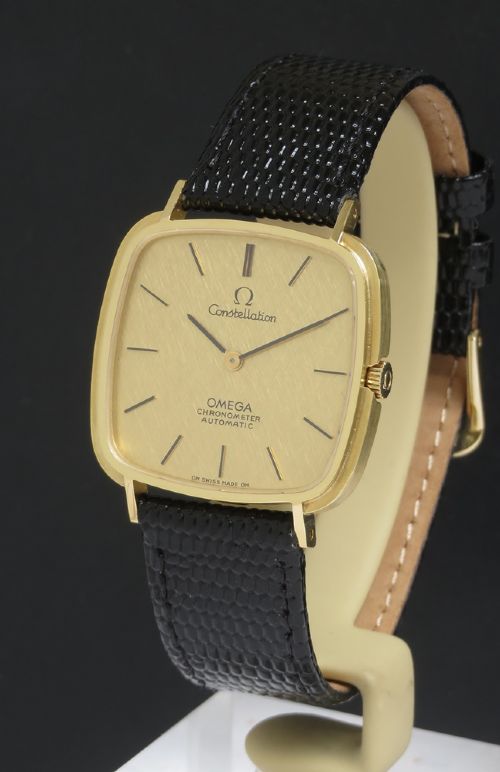
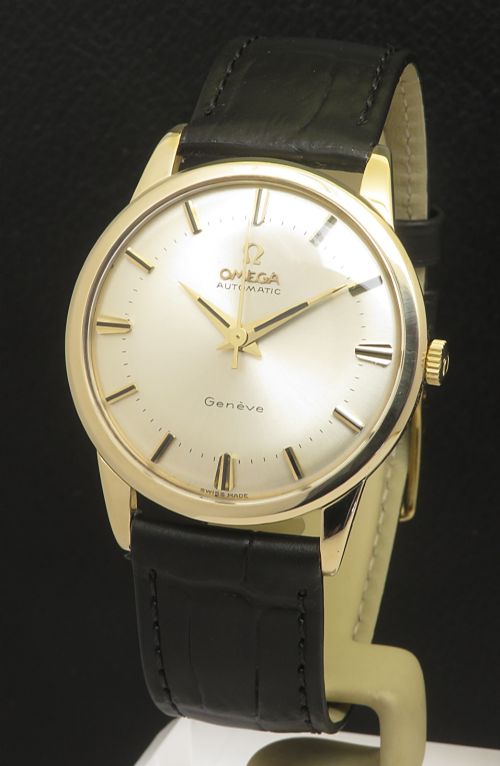
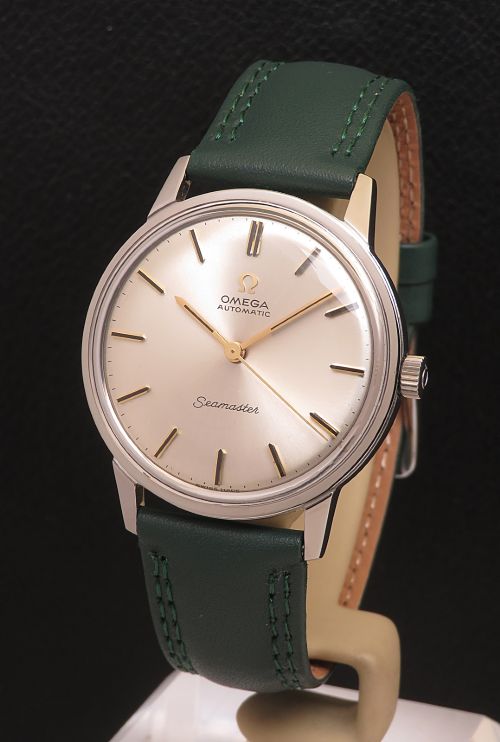
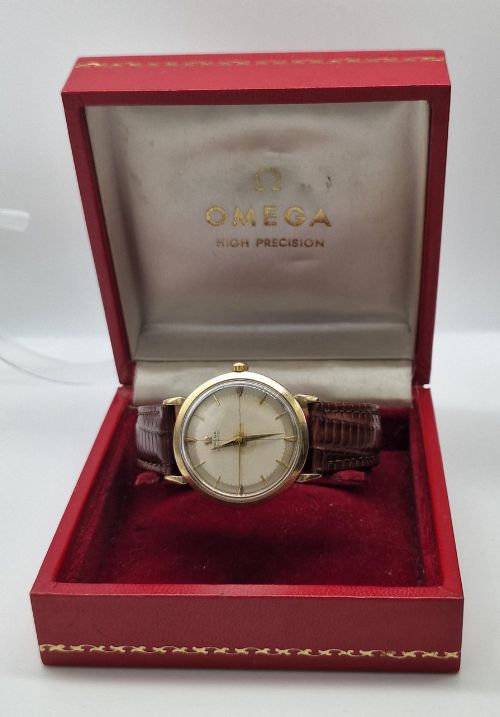
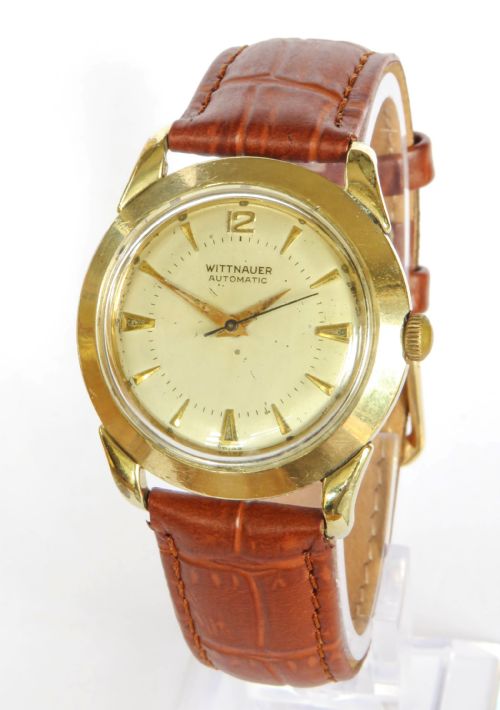


Gold Automatic Wristwatch
A gold automatic wristwatch is a self-winding timepiece combining precious metal cases with mid-century engineering that collectors seek for daily wear.
Gold Automatic Wristwatch
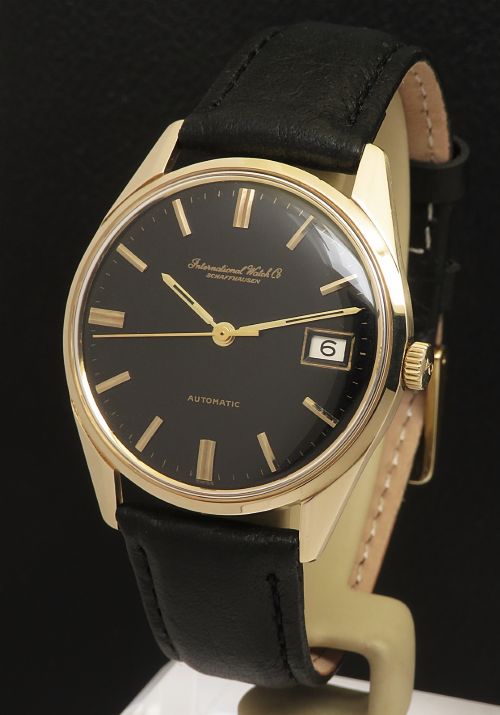
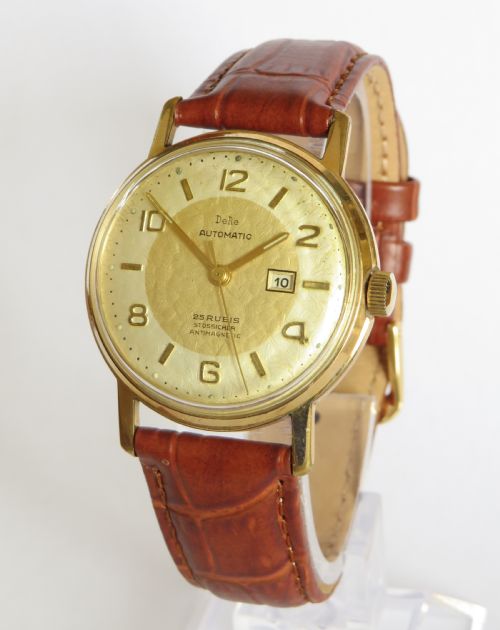
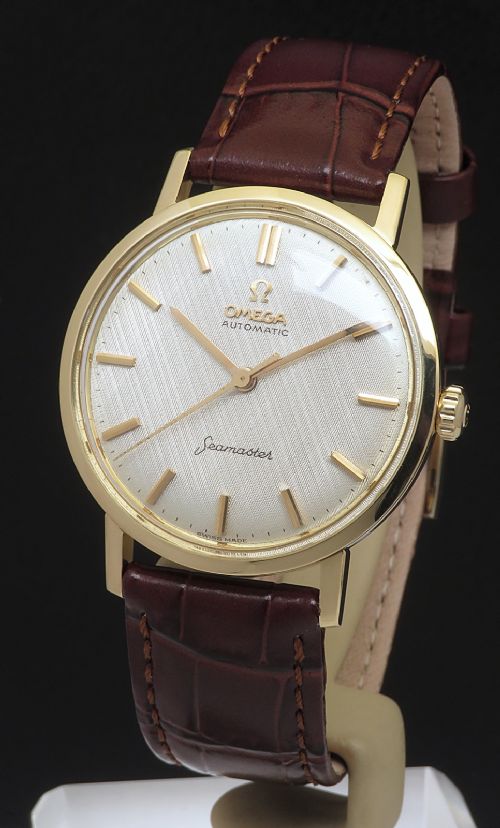
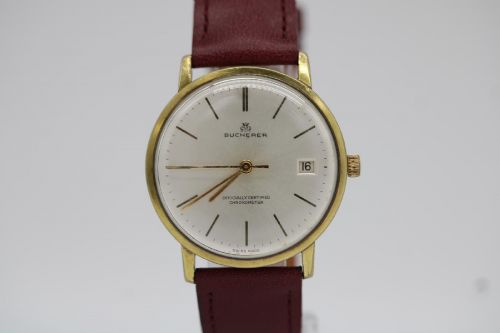
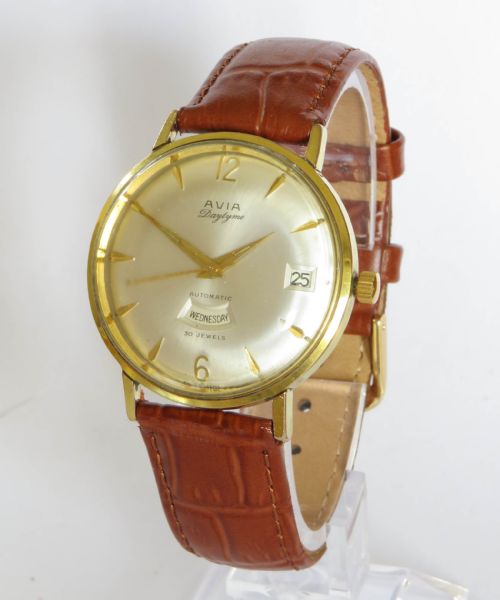
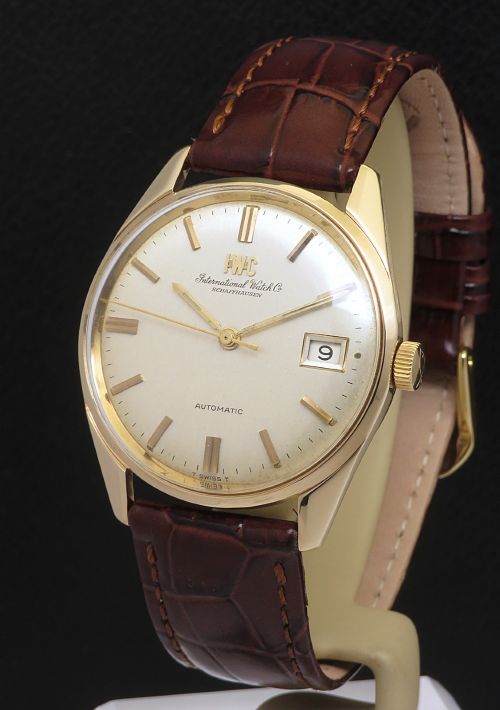
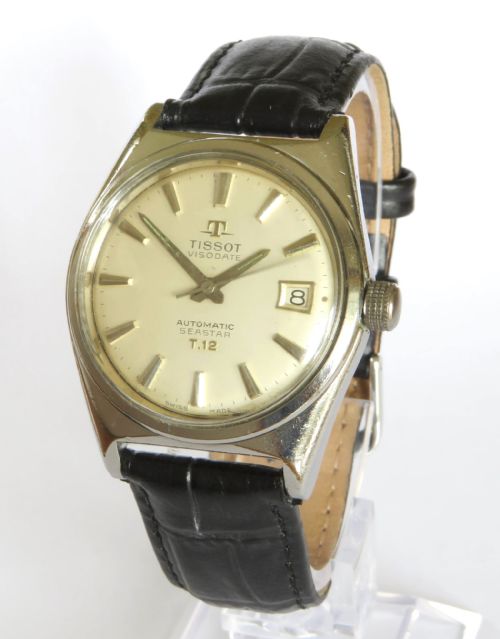
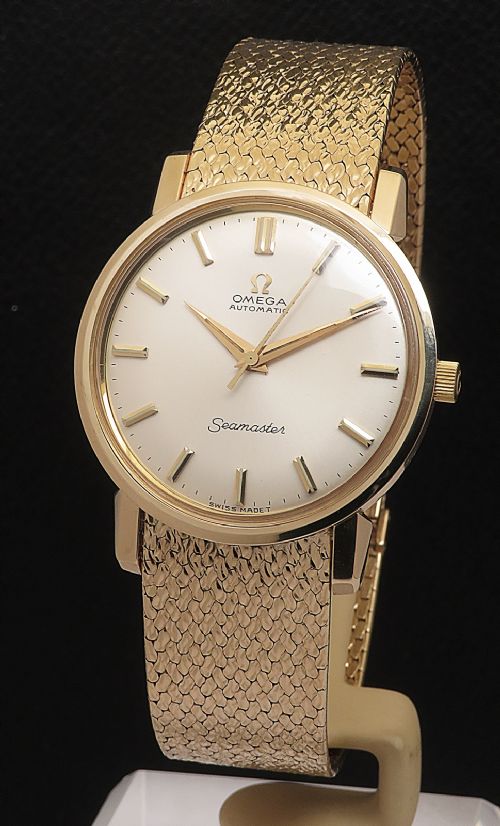
When you search for a gold automatic wristwatch, you find self-winding mechanical timepieces produced predominantly during the 1950s and 1960s. These items encompass Mid-Century Modern and classic dress designs driven by internal rotor movements rather than manual winding.
The version you are most likely to meet on this page is a men's wristwatch housed in solid 9ct gold or 18ct gold, or alternatively gold-plated and gold-filled housings. Brands such as Omega dominate the offerings, alongside examples from IWC, Eterna, Rolex, and Longines.
Cases span decades from the early twentieth century through the late 1960s, paired with leather straps and protected by acrylic or glass crystals. These pieces reflect the shift toward automatic calibre movements in post-war horology.
How they were made
Watchmakers utilised precious metals including solid 9ct gold and 18ct gold alongside gold plate for the exterior cases, pairing them with durable stainless steel case backs where appropriate. Acrylic glass and standard glass protected the dials, while straps were fashioned from leather.
The internal mechanics relied on automatic movements, encompassing both early bumper automatic calibres and full rotor systems that wound the mainspring through the natural motion of the wearer's wrist.
Listings feature automatic wristwatches spanning the 1950s and 1960s, constructed in solid 9ct gold, 18ct gold, and gold-plated finishes with leather straps.
What varies in quality
The distinction between tiers rests upon the composition of the case, separating solid precious metals like 18ct gold from gold-plated alternatives. Originality of components, including dials, crowns, and movement calibres, dictates the standing of an individual piece.
Inclusion of original boxes, papers, and manufacturer details elevates the integrity of a timepiece. The precision of the automatic movement and the preservation of case geometry separate standard production models from chronometer-grade examples.
Omega·IWC·Eterna·Rolex·Longines
The Gold Automatic Wristwatch Glossary
- Automatic
- A self-winding mechanical movement that uses a weighted rotor to wind the mainspring automatically during wear. This mechanism removes the need for daily manual winding.
- Bumper automatic
- An early type of self-winding movement where the rotor swings through a limited arc and bounces against springs. Collectors often find this system in watches dating from the 1940s and 1950s.
- Chronometer
- A high-precision watch movement that has passed official accuracy tests. These movements are adjusted for temperature and positions to ensure exact timekeeping.
- Gold-filled
- A manufacturing method where a thick layer of gold is mechanically bonded to a base metal core. This layer is substantially thicker than standard gold plating.
- Calibre
- The specific manufacturer's designation for a particular watch movement design. Knowing the calibre helps identify the exact mechanical lineage of the timepiece.
Gold Automatic Wristwatch: Frequently Asked Questions
How do automatic wristwatches work?
Automatic wristwatches contain a weighted metal rotor that spins as the wearer moves their arm. This rotational energy winds the mainspring, powering the mechanical movement without a battery.
Early automatic pieces utilised bumper rotors that swung back and forth against internal springs. Later designs adopted full rotor systems that rotated completely around the central axis for continuous winding.
How do I wind a vintage automatic watch?
While automatic watches wind themselves through movement, resting pieces require manual priming via the crown. Turning the crown clockwise several times tensions the mainspring to jumpstart the internal mechanism.
Once the watch is running, normal daily wear maintains the power reserve. Avoid over-winding when setting the time on vintage calibres.
What is the difference between solid gold and gold-plated cases?
Solid gold cases consist entirely of precious metal, such as 9ct or 18ct gold, throughout their structural thickness. These pieces retain their material value and resist the wearing through of the outer finish.
Gold-plated or gold-filled cases apply a thin outer layer of gold over a base metal core like brass or steel. Heavy wear over decades can expose the underlying metal on plated edges.
How should I care for a vintage gold watch?
Vintage gold watches require protection from moisture, magnetic fields, and heavy impacts to preserve their mechanical integrity. Keeping the acrylic crystal clear and replacing worn leather straps maintains the condition of the piece.
Periodic servicing by a professional watchmaker ensures the internal oils remain fluid and the automatic movement functions accurately. Avoid wearing vintage pieces during rigorous physical activities.