



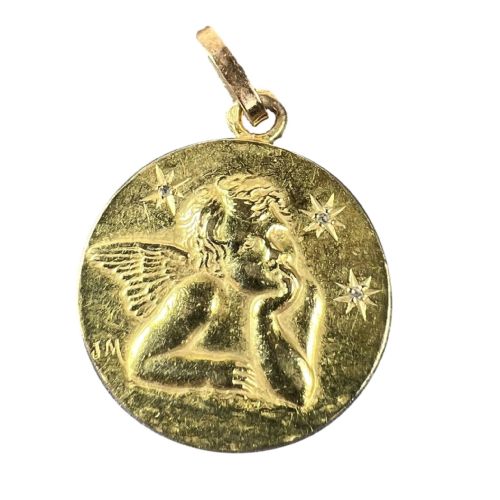


Gold Angel Pendant
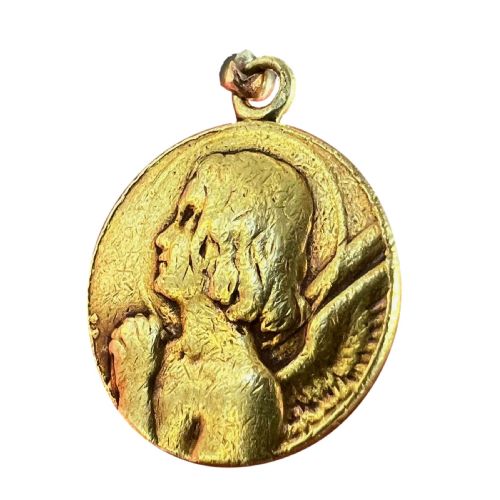
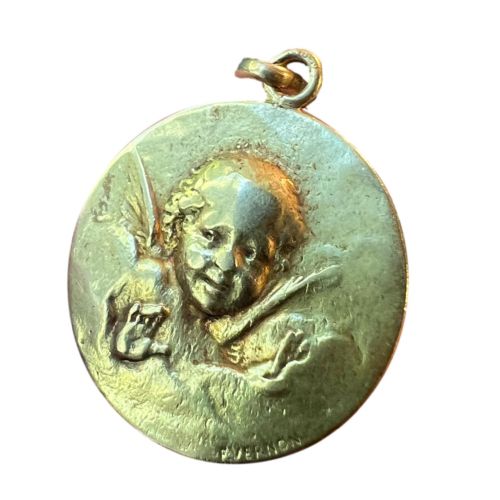
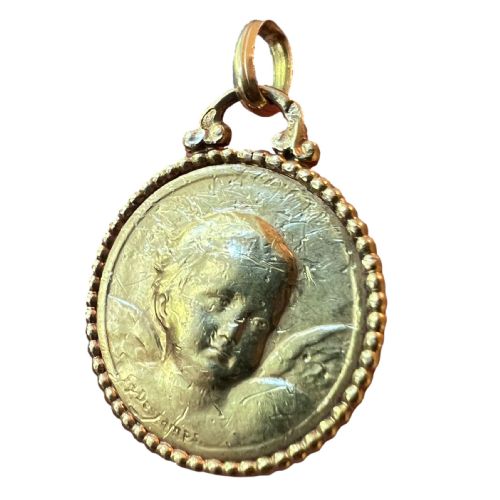
These gold angel pendant pieces range from delicate 18k yellow gold medallions to charming winged cherub designs.
Gold Angel Pendant
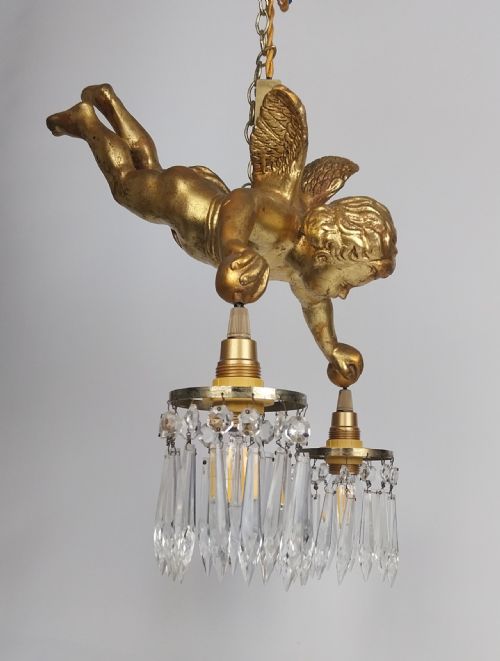
The pieces on this page span several decades and styles, crossing paths with 19th Century French antique traditions, Belle Epoque elegance, and mid-century commemorative medals. You will encounter delicate charm pendants alongside larger gilt metal ceiling lights and chandeliers featuring flying cherubs.
French origins dominate the selection, often bearing connections to master medallists and Parisian workshops. Whether you prefer the subtle iridescence of mother of pearl paired with seed pearls or solid 18ct yellow gold, each item offers a distinct interpretation of the angelic form.
How they were made
The jewellers and metalworkers behind these pieces utilised 18k yellow gold, 18k white gold, and gilt metal to shape their celestial figures. Delicate castings capture the feathered wings of cupids and the serene expressions of angels with notable precision.
Selected items incorporate luminous materials like mother of pearl, seed pearls, and sparkling diamonds to accent the central gold angel figures. Larger lighting pieces combine gilt metal and spelter with cut glass and crystal spike elements to catch the light.
Gold Angel Pendant Retail Price Guide 2026
Typical asking prices for gold angel pendant among the pieces listed under this phrase on Sellingantiques today, from the lower quarter to the upper quarter. They describe what is for sale here now, not the wider market.
Listings feature items spanning the 19th Century, 1890, 1910, 1920, 1930, 1940, and 1950 in various gold and gilt metals.
What varies in quality
Materials also dictate the tier of the piece, with solid 18ct yellow gold and signed French medals representing the upper range of jewellery. Gilt metal and spelter constructions appear more frequently in decorative light fittings rather than fine wearable pieces.
Monnaie De Paris·Ovide Yencesse·Grun
The Gold Angel Pendant Glossary
- Cherub
- A winged celestial being, often depicted as a chubby child or putto. These figures appear frequently across both jewellery pendants and antique lighting fixtures.
- Medallion
- A large medal-like pendant worn on a chain. Many French examples are struck from 18k gold and commemorate peace or artistic subjects.
- Belle Epoque
- A period of decorative arts spanning the late nineteenth and early twentieth centuries. This era favoured ornate, elegant designs with floral and celestial motifs.
- Gilt Metal
- A base metal treated with a thin layer of gold wash or leaf. It offers the appearance of solid gold at a different scale for decorative items.
- Spelter
- A zinc alloy commonly utilised for figural castings in antique lighting and decorative objects. It provides a durable base for detailed cherub sculptures.
Gold Angel Pendant: Frequently Asked Questions
What periods do these pieces come from?
The selection spans from the 19th century through the early decades of the twentieth century, including pieces from the 1910s, 1920s, 1930s, 1940s, and 1950s. French classic and Art Nouveau styles strongly influence the earlier designs.
Later items often reflect mid-century commemorative medal traditions from Paris while maintaining the classic angelic imagery.
How do I wear a gold angel pendant?
These pendants work well suspended from a fine gold chain as a standalone statement piece. They pair easily with both modern and vintage attire.
Smaller charm versions can be added to a charm bracelet or layered with other delicate gold necklaces.
Who is Raphael's cherub?
The term refers to the famous pair of winged cherubs depicted at the bottom of Raphael's Renaissance painting, the Sistine Madonna. These iconic figures became a popular motif in French jewellery and art.
Medals and charms from the early twentieth century frequently adapted this specific imagery.