


Gold and Diamond Ring
A gold and diamond ring brings together the enduring warmth of precious metal and the distinct fire of old cut stones.
Gold and Diamond Ring
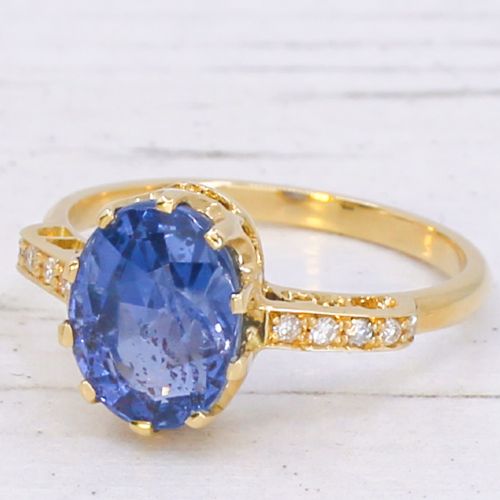
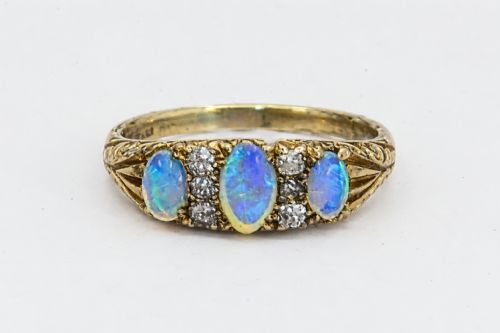
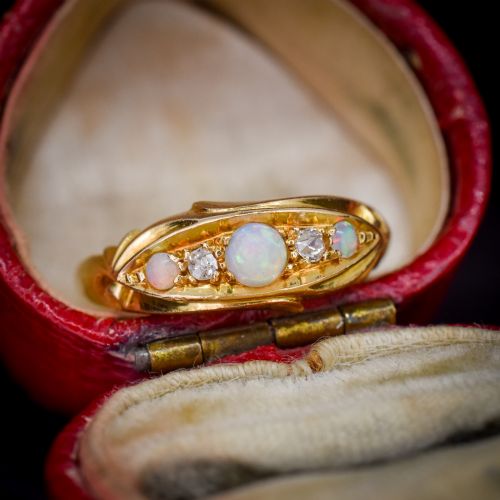
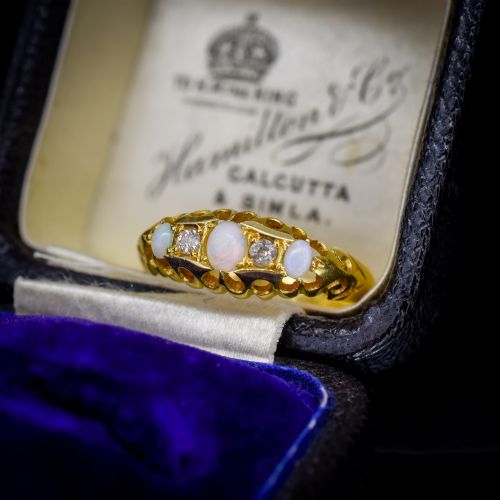
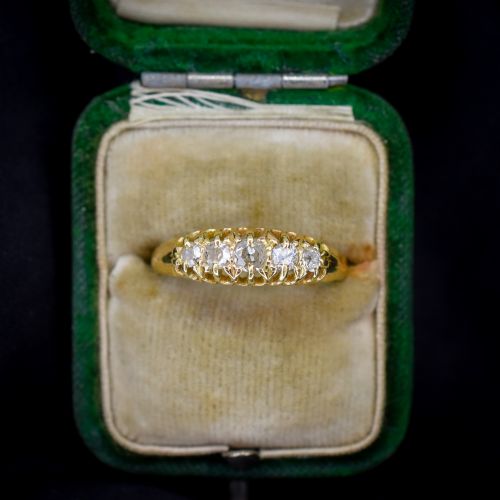
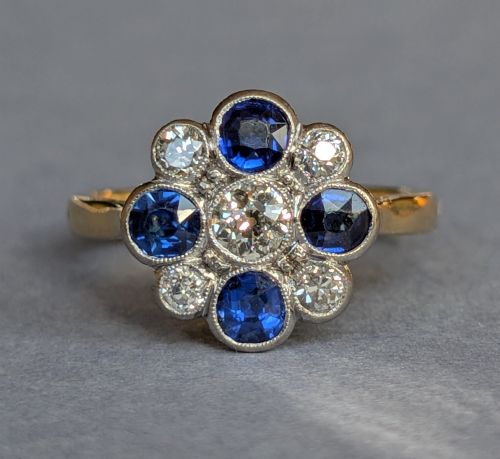
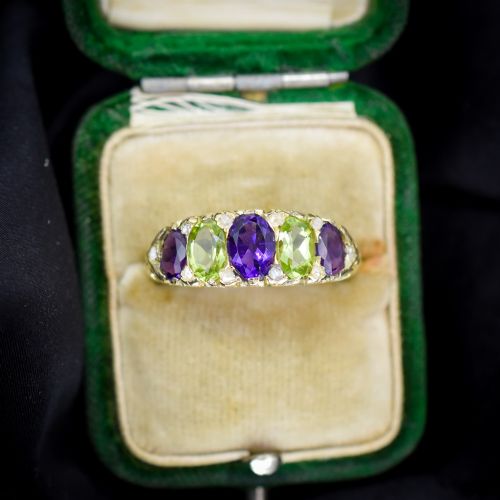
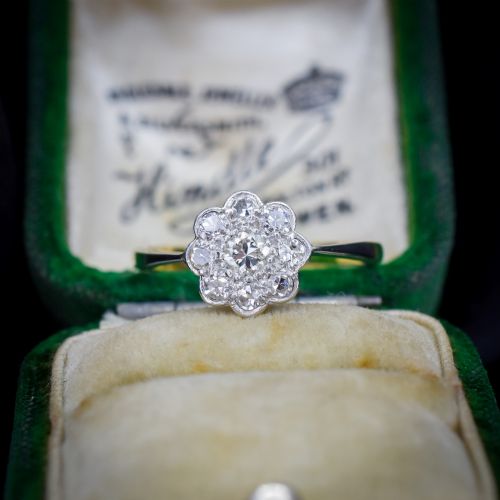
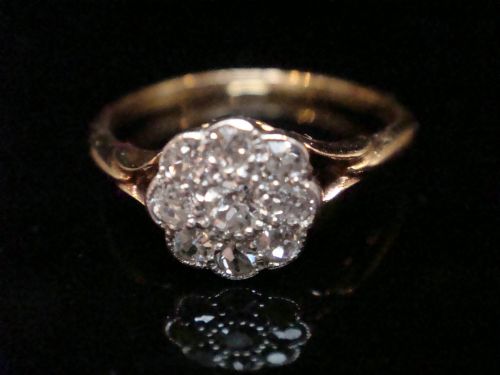
A gold and diamond ring spans over a century of design, originating from late Victorian workshops, Edwardian parlours, and the geometric precision of the Art Deco era. Buyers encounter everything from understated five-stone bands and boat shapes to elaborate cluster rings flanked by coloured gemstones.
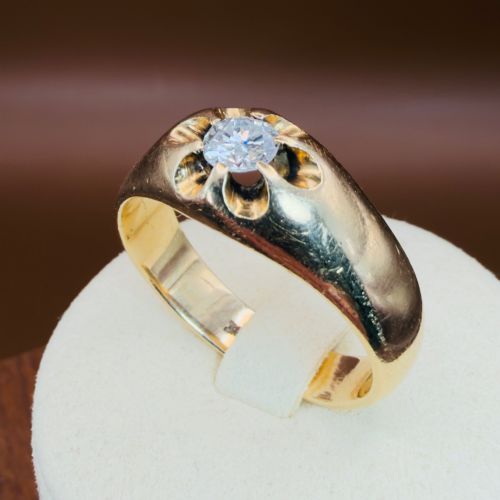
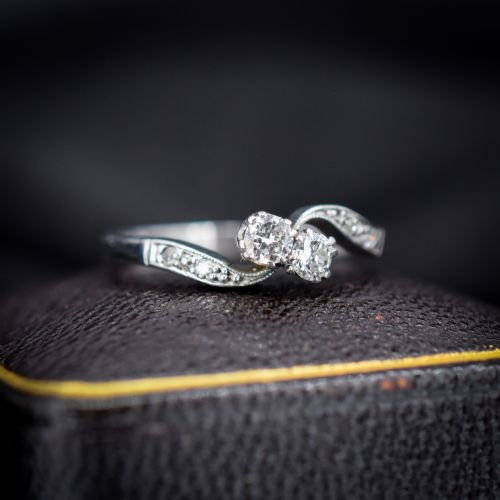
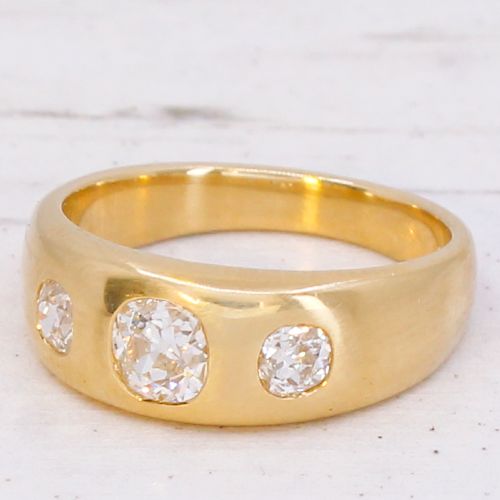
The selection frequently includes traditional configurations such as the toi et moi, gypsy settings flush with the band, and asymmetrical navette forms. These pieces reflect the prevailing tastes of their respective decades, transitioning from romantic floral motifs toward streamlined modernist geometry.
How They Were Made
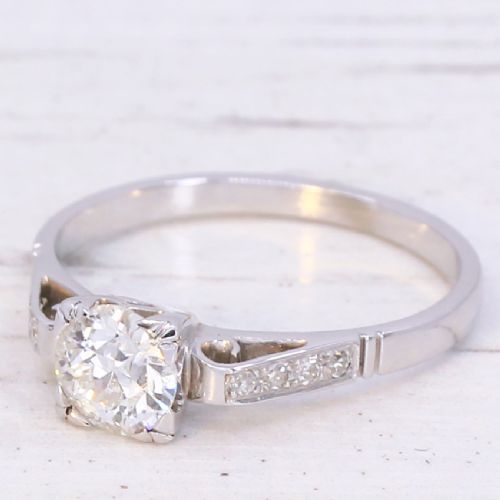
Goldsmiths utilised 18ct yellow and white gold alongside platinum, often combining the two metals during the Edwardian and Art Deco periods to frame stones securely while maximising light reflection. Stones were hand-set into bezels, starburst engravings, or delicate milgrain edges that required considerable bench skill.
Diamonds from this period are predominantly old cut, including old mine, old European, and old cushion shapes, faceted by hand rather than by modern automated machinery. This traditional cutting method yields softer, broader flashes of light compared to contemporary brilliant cuts.
Some Victorian serpents coil around the finger with ruby eyes, proving that historical sentiment could be delightfully dramatic.
What Varies in Quality
The standard of a piece rests upon the harmony of the setting and the character of the central stones, whether diamond, ruby, sapphire, or opal. Superior examples display careful matching of stone sizes and colours, alongside crisp hand-engraving that remains sharp despite decades of wear.
The integrity of the structural metalwork dictates longevity, with finer pieces maintaining robust shank thickness and secure, unblemished claw or bezel settings. Master goldsmiths ensured that delicate gallery wirework supported the stones without excess bulk.
Kutchinsky
The Gold and Diamond Ring Glossary
- Old cut
- A diamond faceted by hand before the standardisation of the modern brilliant cut in the early twentieth century. These stones typically feature smaller tables and higher crowns.
- Boat ring
- A traditional ring style featuring a curved, boat-shaped face set with a row of graduated stones. This design was particularly popular during the late Victorian and Edwardian periods.
- Toi et moi
- A ring design featuring two main stones positioned side by side or in a gentle twist. The French term translates to you and me.
- Milgrain
- A decorative border of tiny metal beads worked along the edges of a setting. It was extensively utilised in Edwardian and Art Deco jewellery to soften transitions.
- Gypsy setting
- A style where stones are flush-set directly into the thick metal band of the ring. The metal is pushed up around the girdle to hold the stone securely in place.
Gold and Diamond Ring: Frequently Asked Questions
How do I identify an Edwardian ring?
Edwardian rings are typically recognised by their use of platinum-topped yellow gold, intricate openwork filigree, and milgrain detailing. The overall aesthetic leans towards lightness and lace-like delicacy.
Motifs often include garlands, ribbons, and floral clusters, frequently pairing diamonds with sapphires, rubies, or emeralds.
Are these rings suitable for daily wear?
Most 18ct gold and diamond rings are durable enough for everyday wear, provided the settings are inspected periodically by a jeweller. However, softer stones like opals require additional care to avoid impact and moisture.
Consider the profile of the ring and the height of the stone settings when planning continuous daily use.
What does a three stone ring signify?
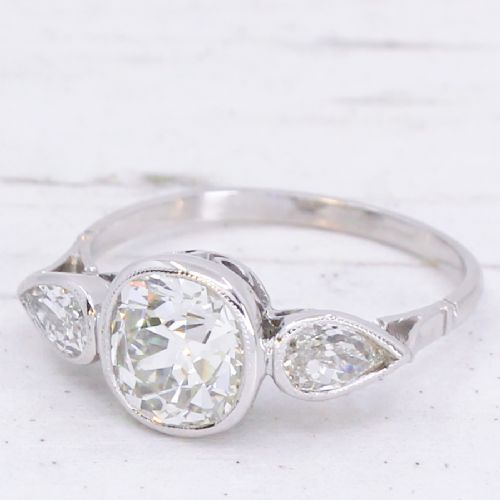
A three stone ring, often called a trilogy ring, traditionally represents the past, present, and future of a relationship. The central stone is usually larger, flanked by two matching side stones.
In period pieces, these stones are commonly graduated old cuts mounted in yellow gold or platinum-faced bands.