
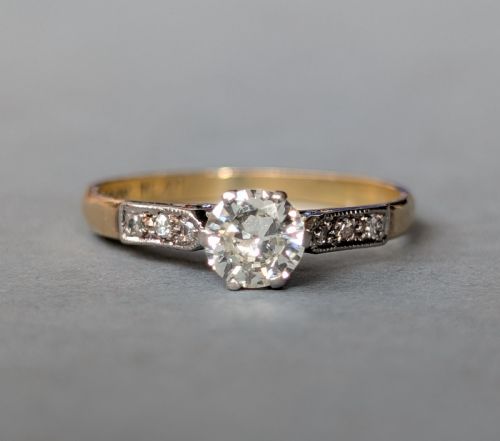


1920s Gold Engagement Ring
A 1920s gold engagement ring captures the geometric spirit and meticulous craftsmanship of the period, offering a distinct alternative to modern jewellery.
1920s Gold Engagement Ring
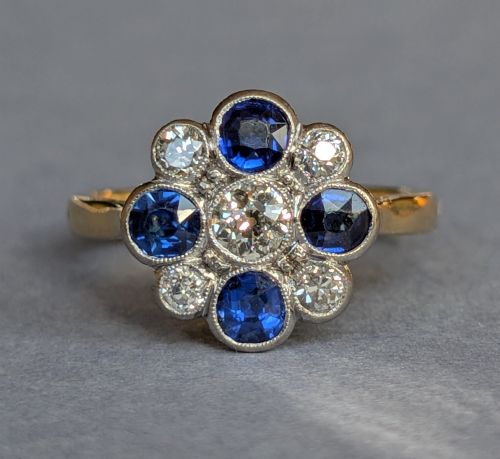
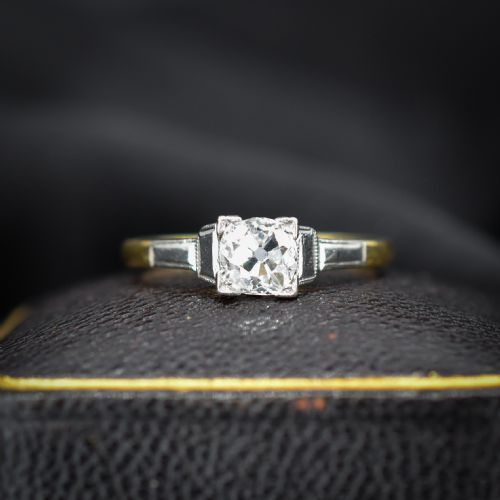
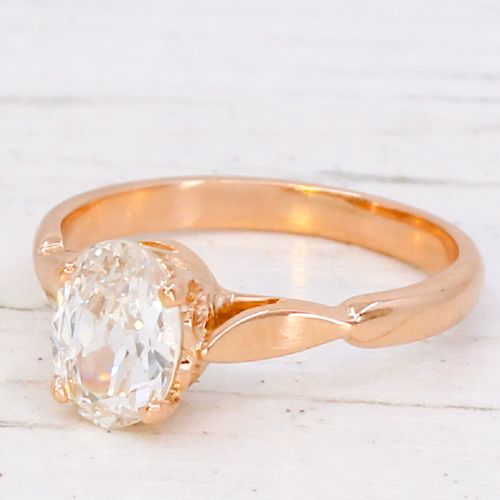
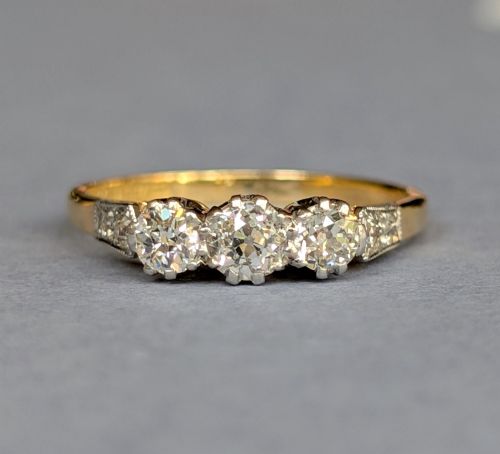
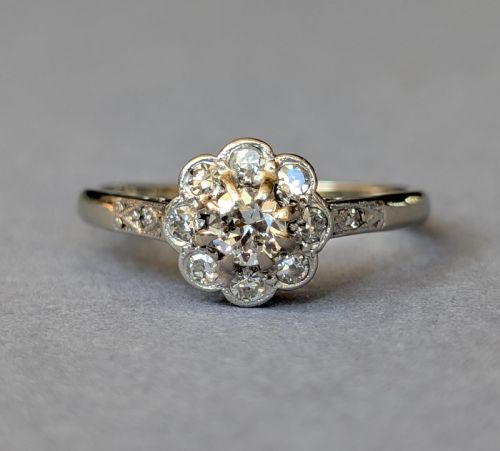
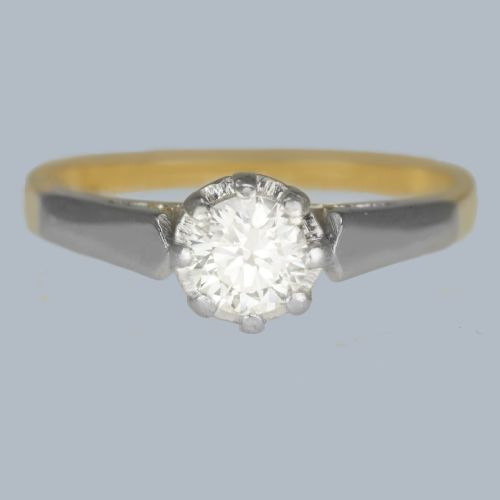
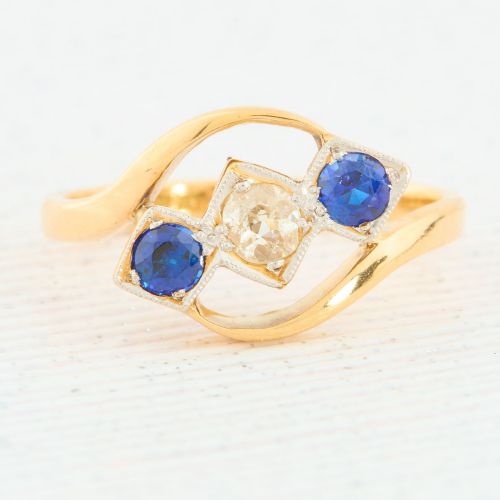
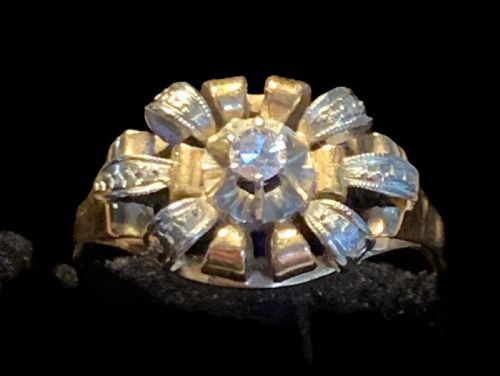
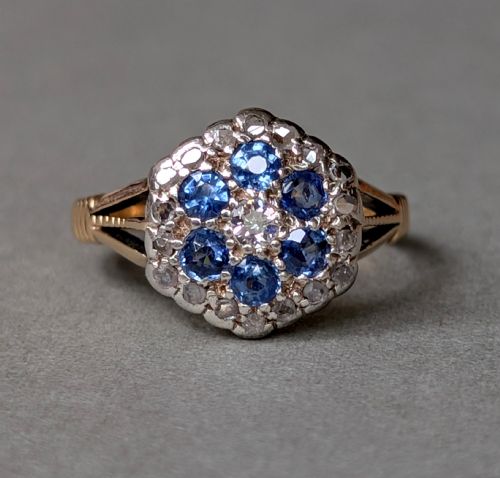
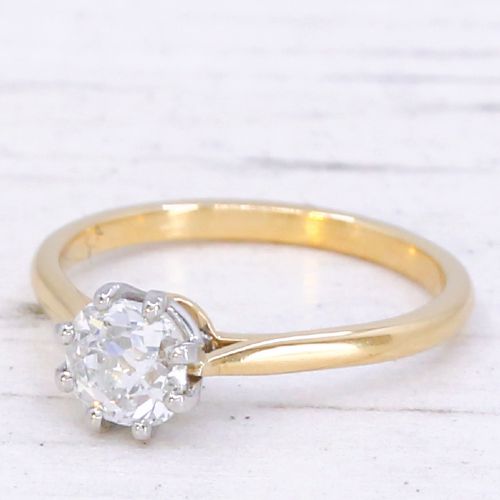
A 1920s gold engagement ring brings together the bold geometry of the Art Deco movement and the softer floral motifs of the preceding Edwardian era. Buyers encounter numerous variations on this page, ranging from single stone solitaires to intricate multi stone clusters.
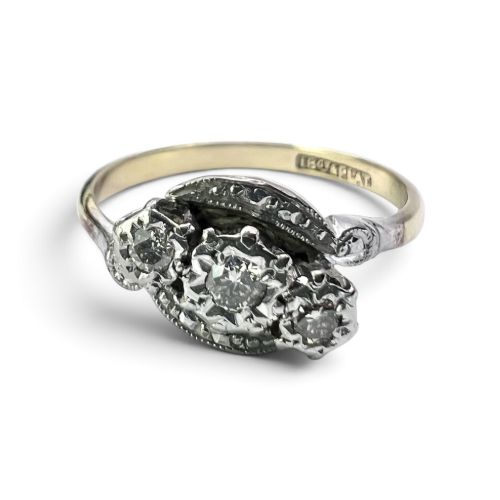
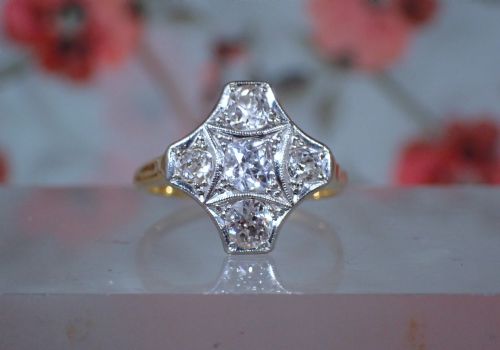
The dominant forms rely heavily on platinum topped 18ct yellow or white gold settings that hold old cut diamonds alongside blue sapphires, emeralds, and rubies. Configuration styles span classic three stone trilogies, daisy clusters, and elongated navette shapes.
Most examples originate from the 1920s and 1930s, though pieces spanning into the 1940s maintain the same foundational design vocabulary. Geometric bezel settings and calibre cut coloured stones define the typical architectural silhouette.
Materials and construction methods
Goldsmiths combined 18ct yellow and white gold with platinum overlays to provide a bright, durable framework for securing fragile gemstone edges. Platinum top plates allowed jewellers to form razor thin claws and intricate millegrain bead borders without sacrificing structural integrity.
Stones predominantly feature old European cuts, old mine cuts, and flat table cuts shaped by hand rather than modern automated machinery. Coloured gemstones such as sapphires and emeralds frequently utilise calibre cutting to fit tightly within geometric channel layouts.
Listings feature 18ct yellow gold, 18ct white gold, and platinum materials housing diamonds, sapphires, emeralds, and rubies.
Quality factors and distinctions
The degree of hand finishing on the metalwork separates ordinary production from superior examples, particularly in the crispness of pierced openwork and the evenness of millegrain borders. Superior pieces maintain delicate proportions where structural strength meets refined artistry.
Gemstone selection dictates overall hierarchy, with old cut diamonds showing varied facet symmetries and inclusions that influence light return. The precision with which calibre cut sapphires or emeralds follow complex bezels indicates the skill of the original workshop.
The 1920s Gold Engagement Ring Glossary
- Millegrain
- A decorative technique involving tiny raised metal beads along the edge of a setting. This border softens the transition between metal and stone.
- Old Cut
- A diamond faceting style predating modern brilliant cuts, characterised by a smaller table and higher crown. These stones produce a distinctive deep candlelit sparkle.
- Calibre Cut
- Gemstones shaped specifically to fit tightly into geometric channel or bezel settings. This method requires exact hand cutting.
- Navette
- A boat shaped ring design that tapers to sharp points at either end. The elongated silhouette sits flat along the finger.
- Trilogy
- A three stone ring configuration symbolising the past, present, and future. Central stones typically outweigh the flanking side gems.
1920s Gold Engagement Ring: Frequently Asked Questions
How do I care for my ring?
Clean your piece gently using warm soapy water and a soft brush to remove everyday oils from beneath the stones. Avoid harsh ultrasonic cleaners that can loosen delicate antique settings.
Have a professional jeweller inspect the claws and platinum tops annually to ensure the old cut stones remain secure in their original mounts.
Can antique rings be resized?
Most gold and platinum bands can be adjusted by a skilled bench jeweller who understands antique construction methods. Laser welding is often utilised to protect surrounding millegrain work during the process.
Intricate gallery work or continuous channel set stones may limit the adjustment range, so professional evaluation is essential prior to purchase.
Are these rings suitable for daily wear?
Sturdier 18ct gold and platinum mountings handle everyday use well, provided the structural metal remains thick and healthy. Removing the ring during heavy manual tasks prevents unnecessary wear on delicate prongs.
Older settings benefit from occasional checks to confirm that centuries of hand wear have not compromised the security of the central diamonds.
How do I identify a genuine period piece?
Examine the construction for hand cut components, integrated platinum tops on yellow gold shanks, and period specific gemstone cuts. Hallmarks and assay stamps provide official temporal markers when legible.
Stylistic cues such as symmetrical geometric motifs and calibre cut surrounds point directly to the manufacturing techniques of the era.