
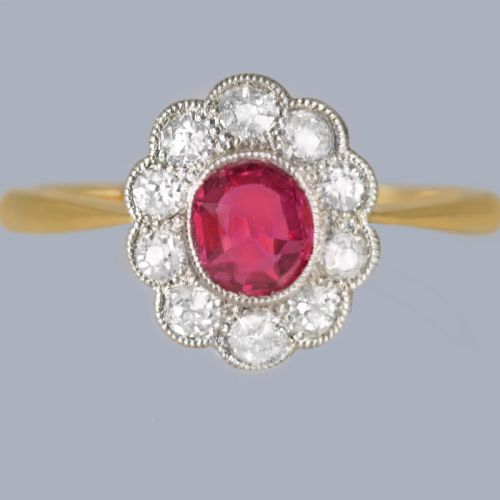


Art Deco Flower Ring
An art deco flower ring brings geometric symmetry and botanical grace together on the hand, combining crisp metals with carefully clustered stones.
Art Deco Flower Ring
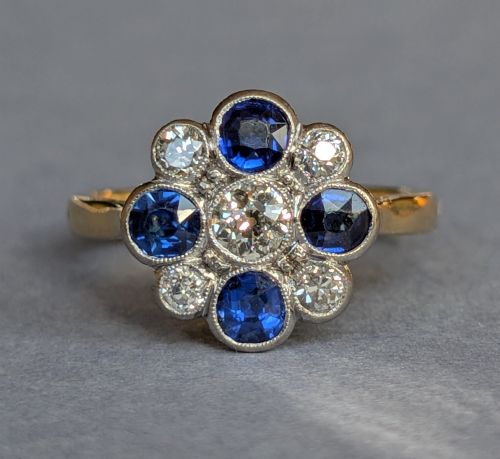
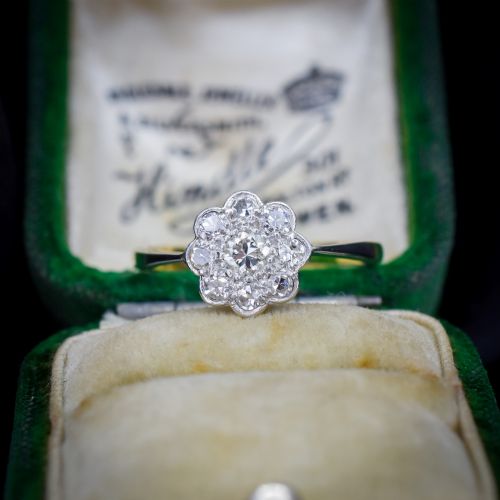
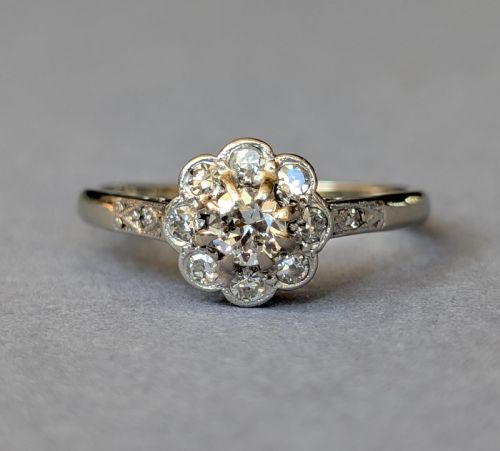
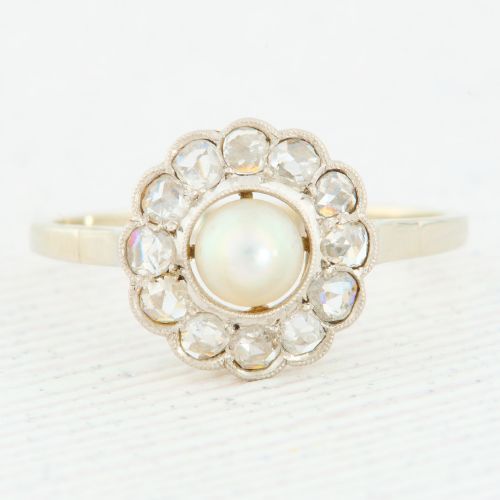
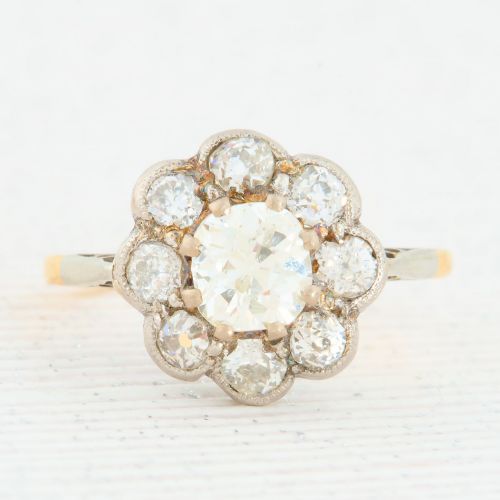
An art deco flower ring uses concentric circles of gemstones to form a botanical cluster, frequently styled as a daisy or formal bloom. These pieces draw heavily on the aesthetic principles of the nineteen-twenties and nineteen-thirties, pairing structural lines with organic shapes.
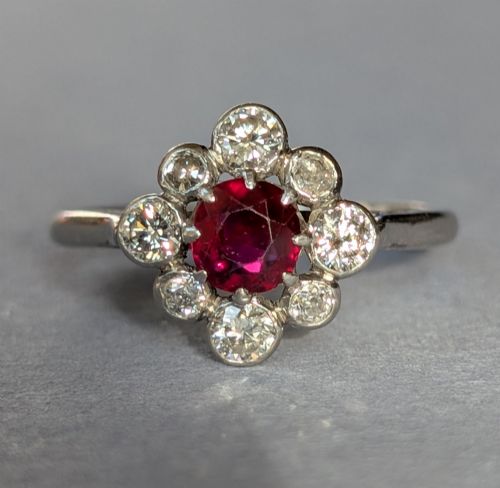
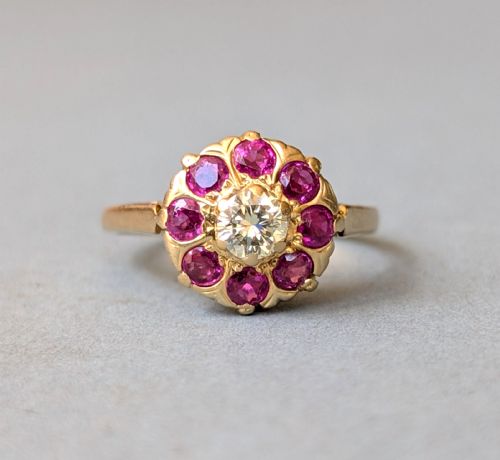
The most common version found here is an eighteen-carat gold or platinum mounting holding a central diamond encircled by smaller diamonds, sapphires, or rubies. Variants stretch from nineteen-hundred Edwardian cluster designs through to mid-century forms incorporating pearls and emeralds.
How they were made
Master jewellers constructed these mounts using platinum, yellow gold, and eighteen-carat white gold, often combining platinum-topped yellow gold for structural strength and bright contrast. Stones were held securely in delicate claw or bezel settings designed to mimic petals and leaves without obscuring the light.
Gemstones such as diamonds, cornflower sapphires, and rubies were hand-cut into round, oval, and melee shapes to fit the strict geometric layouts demanded by the period style. The metalwork underneath was frequently pierced or milled with fine millegrain edges to soften the profile.
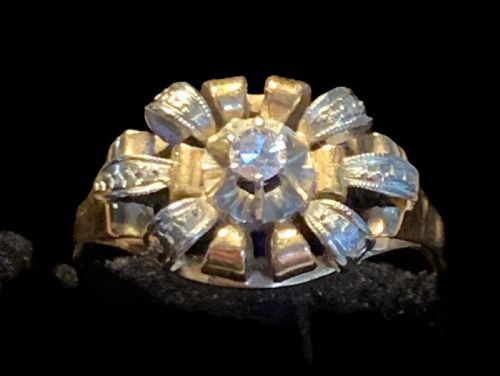
Listings feature platinum, yellow gold, and white gold mountings set with diamonds, sapphires, rubies, and pearls across decades from nineteen hundred to nineteen sixty.
What varies in quality
The distinction between ordinary and exceptional examples rests upon the uniformity of the stone selection and the crispness of the metalwork. Superior pieces display meticulously matched diamond colour and clarity within the cluster, alongside stones that sit flush and level.
The Art Deco Flower Ring Glossary
- Daisy cluster
- A ring arrangement featuring a central stone surrounded by a ring of smaller stones, resembling a simple flower head. This configuration forms the backbone of many period floral designs.
- Millegrain
- A decorative technique involving a row of tiny raised metal beads along the edge of a setting. It adds a soft, textural border typical of fine period jewellery.
- Platinum
- A dense, durable, and naturally white metal utilised extensively in the period to hold stones securely with minimal visible metal. Its strength allowed for ultra-fine settings.
- Boule
- A dome-shaped cluster setting that rises high off the finger to create a three-dimensional floral effect. This form gives the ring significant visual volume.
- Halo ring
- A design where a central coloured gemstone, such as an emerald or sapphire, is encircled by a border of diamonds. The contrasting outer ring accentuates the colour of the middle stone.
Art Deco Flower Ring: Frequently Asked Questions
How do I wear a flower ring daily?
These rings suit everyday wear provided you take sensible precautions with older settings and delicate stones. Avoid wearing them during heavy manual tasks to protect the underlying metalwork and claws.
Pairing the ring with plain bands prevents rubbing against other jewellery. Periodic checks by a professional jeweller ensure the stones remain tight in their original mounts.
Are these rings suitable for engagements?
Many buyers choose these clusters specifically as engagement rings because they offer substantial finger coverage and distinct period character. The floral motifs symbolise enduring affection and individuality.
Matching wedding bands can sit flush depending on the height and gallery design of the specific flower cluster. Low-profile versions slide easily beneath modern apparel.
How do I clean a vintage ring?
Warm soapy water and a very soft brush gently lift everyday oils from the diamonds and precious metals without harming the setting. Dry the piece thoroughly with a lint-free cloth afterwards.
Harsh chemical dips and ultrasonic cleaners risk damaging organic materials like pearls or destabilising older pastes and foils. Professional cleaning remains safer for fragile antique mountings.
How do I spot a genuine period piece?
Examine the fabrication style under magnification to look for hand-cut stones, subtle tool marks, and traditional platinum-topped gold construction. Genuine items show natural wear consistent with decades of gentle use.
Period rings often feature characteristic hand-stamped hallmarks or metal purities typical of early twentieth-century British and continental European workshops. Modern reproductions usually display laser engraving and overly uniform casting.